

Chania is one of the most expensive areas in Greece to buy a house.

Expensive and affordable regions in Greece
The price trend for owner-occupied and rental properties varies considerably depending on where you look. In the fourth quarter of 2025, asking prices for owner-occupied flats rose significantly on average across the country.
However, this does not affect all regions equally. Coastal and tourist areas remain expensive, while rural or more remote locations attract buyers with significantly lower prices per square metre.
The highest asking prices for properties for sale are found in the southern suburbs of Athens. This is hardly surprising, as demand is high there, the infrastructure is good and transport links are usually excellent.
Many island regions with a lot of tourism and some affluent suburban districts in the north of Athens are also among the most expensive. Island and coastal regions also often experience seasonal price fluctuations, which keep prices high.

The situation is quite different in northern and western Greece, where prices per square metre are fairly low. Small towns, few people, hardly any economic activity – that’s how it looks.
This can be exciting for price-conscious buyers. However, the market there is often somewhat sluggish, and new construction projects are rare.
If you are looking for affordable entry-level prices, you should still take a look at these areas. There are opportunities to find a bargain, but you will have to make some compromises.

Rental prices follow a similar pattern: expensive rents are mainly found in urban and tourist hotspots. Centres with high demand for short-term or long-term rentals command the highest prices per square metre.
 In some northern and central counties, however, rents are significantly lower. For people on a tight budget, these are real rays of hope.
 Tourism, infrastructure, proximity to jobs, standard of living and modern flats – these are the major factors driving price differences. Anyone looking to buy or rent should take a close look at all of these factors.
Low prices per square metre often mean less demand, longer distances to services and, in some cases, less comfort.
A look at the Attica region
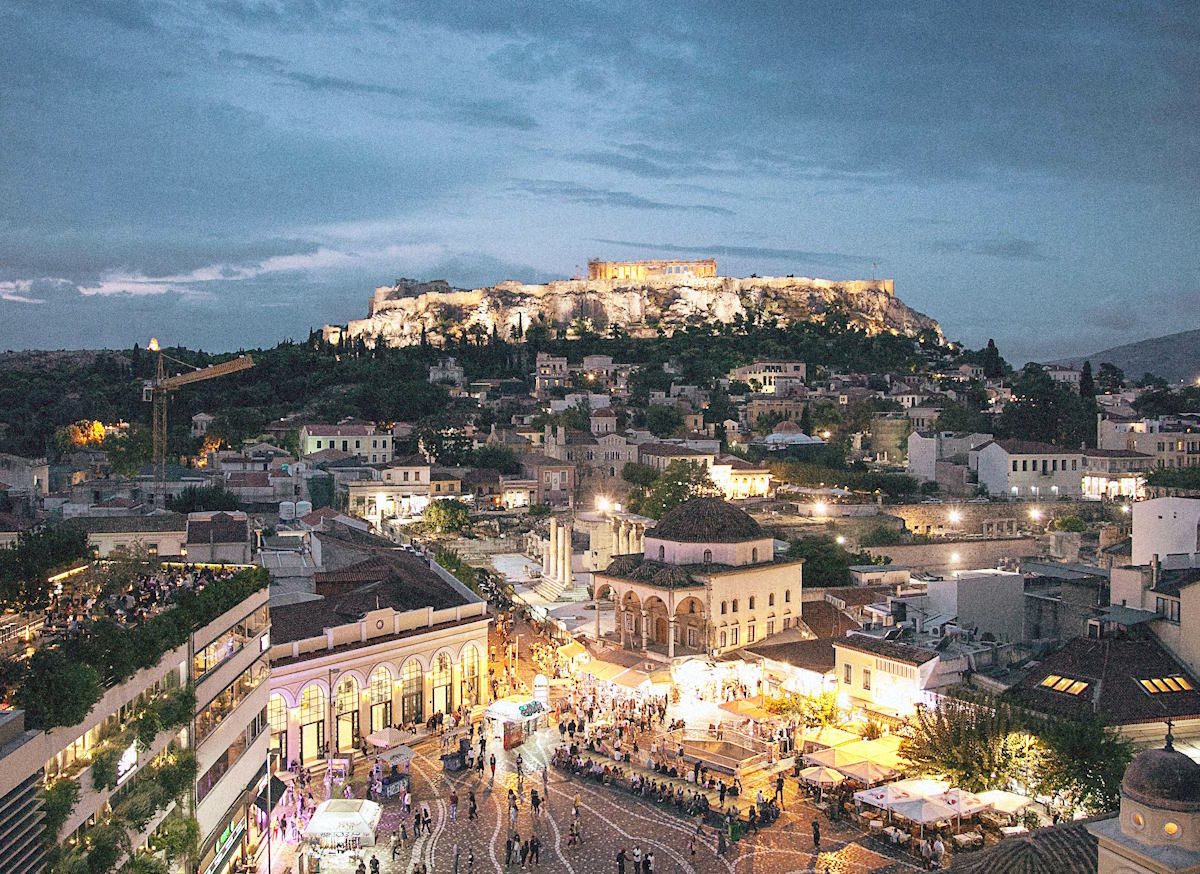
Attica is quite a patchwork in terms of prices. The southern suburbs of Athens lead the way – this is where you pay the most per square metre.
Many people are attracted to the location, proximity to the sea and chic amenities. Demand for premium apartments and villas remains high, which keeps prices stable.
But there are also cheaper areas in Attica. The western and eastern suburbs and some parts of the city centre are significantly more affordable.
These areas attract people who want to live as close to the city as possible but don’t want to spend a lot of money. Of course, there are often older buildings or renovation needs, which pushes prices down.
The same pattern can be seen in rents: expensive locations remain expensive, while less sought-after neighbourhoods offer better deals. Short-term rent fluctuations are sometimes more pronounced here than in purchase prices, mainly due to students and seasonal demand.
Many investors find Attica exciting because it is densely populated and demand remains stable. But it is important to take a close look: location, condition, renovation costs and potential rental returns are what really count in the end.
Market situation in Thessaloniki
Thessaloniki remains moderately priced, but the differences within the city cannot be overlooked. The centre and trendy neighbourhoods are more expensive than the outskirts.
Demand comes mainly from professionals, students and families. This ensures a fairly stable rental market.
Compared to Athens, peak prices in Thessaloniki are lower. Nevertheless, you often get better value for money here without having to forego city life.
The many universities ensure steady demand on the rental market. So if you are looking for an investment, you should not underestimate this.
Outside the centre, prices drop noticeably. In the suburbs, you can often find larger flats at lower prices per square metre.
Families or buyers who need more space in particular look around here – even if they then have to accept longer journeys into the city. Construction activity in these peripheral areas varies: sometimes new projects are being built, sometimes older properties dominate.
Rental prices in Thessaloniki have changed only moderately recently. In some cases, they have even fallen slightly, but there has still been growth year-on-year.
The market appears to be stabilising, but continues to respond to local demand and supply.
Table overview (selection)
Category | Examples of expensive areas | Examples of affordable areas |
|---|---|---|
Purchase prices (high MZT) | Southern suburbs, Cyclades, Northern suburbs | Kastoria, Kozani, Florina |
Rental prices (high MZT) | Southern suburbs, Northern suburbs, Athens city centre | Pella, Imathia, Kilkis |
Important influencing factors
- Tourism: Drives up prices on islands and in coastal towns.
- Infrastructure: Good transport links cause values to rise.
- Demand: Urbanisation and jobs push up prices.
- Supply: Where housing is scarce, the price per square metre rises.
Practical tips for prospective buyers
- Keep an eye on your budget – location often determines the price.
- Set priorities: Proximity to work or services can be crucial.
- Think long term: Keep an eye on value appreciation and rental yields.
- Check the condition of the property – don’t underestimate renovation costs.
Note on data and trends
All patterns mentioned are based on real offer data from the fourth quarter of 2025. The average prices per square metre and comparisons between quarters provide the basis for this classification.
However, trends can change quickly. Anyone seriously interested in buying or renting should check current market reports before getting started.
Hania News
Growing demand from abroad: buyers are showing greater interest in Greek property this year

This year, a striking number of foreign buyers are interested in property in Greece. Many see the country as a safe place for holiday homes, second homes or even as an investment property.
According to a large real estate network, most buyers in Athens come from Israel. They are followed by Turkey, Lebanon, China and Ukraine.
Israeli buyers are also at the top of the list in Thessaloniki. Many buyers from Bulgaria, Germany, Turkey and Albania are also looking for properties there.
Outside the major cities, Germans are particularly active buyers. Buyers from Bulgaria and France are also quite active.
Israeli and Turkish buyers also often appear there.

The largest group of foreign buyers is between 41 and 50 years old, accounting for around 40%. This is followed closely by the 51–60 age group, which accounts for around 27%.
Buyers over 61 account for around 16%. The 31–40 age group accounts for around 14%.
Only a small proportion, around 3%, are younger than 30.
Many visit Greece several times before making a decision. Some want to move permanently, others only use the property as a second home.
Some finance the purchase from their own funds, others take out loans.
Common reasons for buying:
- Holiday use and holiday residence
- Long-term capital investment
- Relocation or retirement to a warmer climate
Typical regions in focus:
- Athens and suburbs
- Thessaloniki
- Islands and coastal regions
- Popular rural areas for holiday homes
Some features that buyers find attractive:
- Stable property market compared to the region
- Good infrastructure in popular locations
- Climate and quality of life
- Relatively affordable prices compared to the rest of Europe
Brief profile of buyers by origin (simplified overview):
Region | Common countries of origin |
|---|---|
Attica (Athens) | Israel, Turkey, Lebanon, China, Ukraine |
Thessaloniki | Israel, Bulgaria, Germany, Turkey, Albania |
Rest of Greece | Germany, Bulgaria, France, Israel, Turkey |
Different buyer groups prefer different regions. Buyers from neighbouring countries and Western Europe tend to look for rural or coastal properties, while many from the Middle East and Eastern Europe prefer to buy in cities.
Strong demand is creating more movement in the property market. Estate agent networks are reporting more transactions through their branches.
This provides better data on the origin, age and purchase intentions of foreign buyers.
Many check legal and tax issues before buying. They seek advice from estate agents, solicitors or tax advisors.
Mostly, this concerns property rights, permits or possible subsidies.



