

Prime Minister Mitsotakis’s speech at the 90th Thessaloniki International Fair, protests by the residents of Athanatoi, and the latest migrant arrivals.
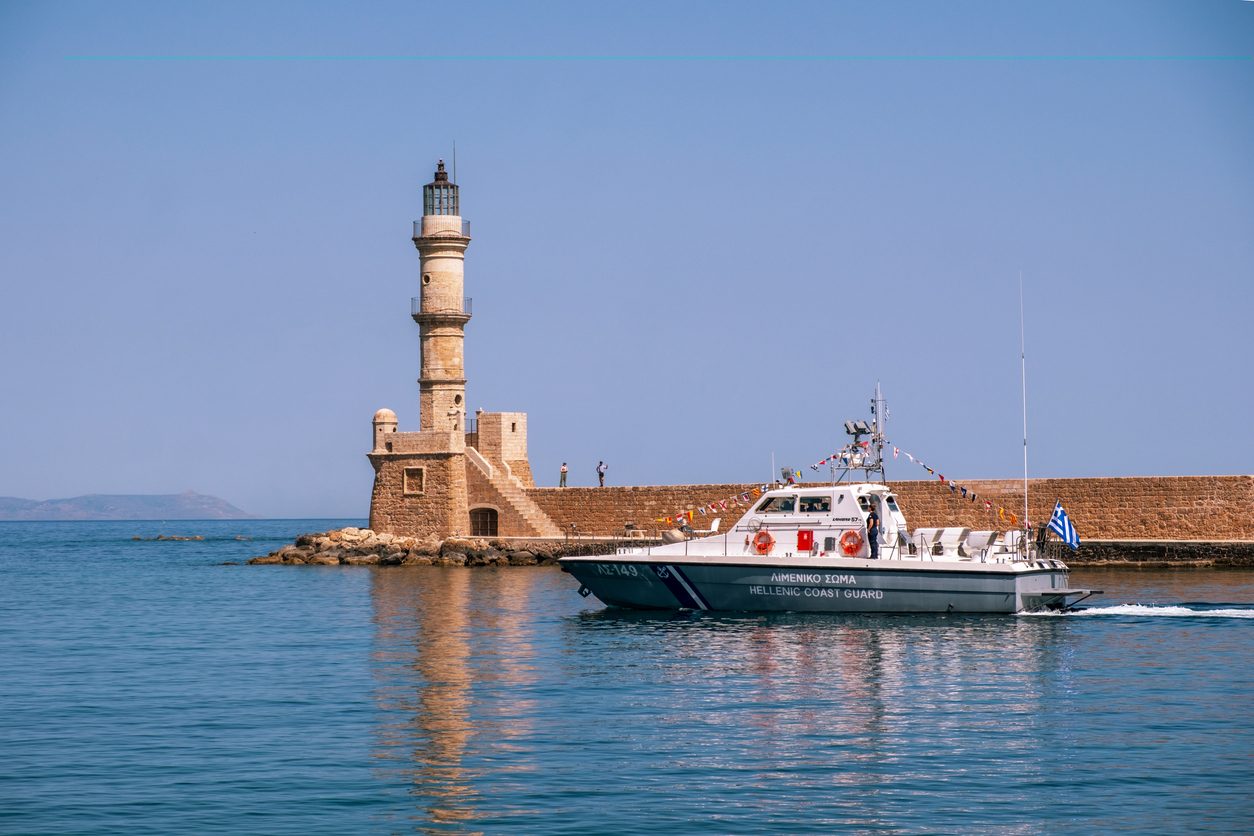
Mitsotakis Drops a Bombshell Line: “Crete Isn’t Drowning in Migrants — It’s Drowning in Tourists”
Speaking at the 90th Thessaloniki International Fair (Διεθνής Έκθεση Θεσσαλονίκης), Prime Minister Kyriakos Mitsotakis addressed migration pressure on Crete directly.
He confirmed that Heraklion (Ηράκλειο), Crete’s largest city, will get a new temporary reception and management facility, similar to the one already operating in Chania (Χανιά), western Crete.
“We need a facility — common sense demands it. I’ve given clear direction to the Migration Ministry,” he said.
Migration levels called “manageable”
Mitsotakis insisted migrant arrivals to Crete remain manageable, stressing the government’s focus on returns policy.
His most striking remark: “Crete isn’t sinking under migrants — it’s sinking under tourists.”

Anger Boils Over in Crete: Locals Block Major Highway After PM Confirms Migrant Centre Plans
Tensions are rising near Heraklion (Ηράκλειο), Crete’s largest city, following Prime Minister Kyriakos Mitsotakis’s recent confirmation that a new migrant reception facility will be built in the area.
Residents of Athanatoi (Αθανάτοι), a locality south of Heraklion, have escalated their protests against the plan, staging repeated demonstrations against the proposed site.
Road blocked again on Monday evening
At 6:00 p.m. local time, residents of the wider Athanatoi area [Google Maps] will gather once more to block the Heraklion–Moires (Ηράκλειο–Μοίρες) road, a major route connecting Heraklion to the southern part of the island.
This marks yet another instance of residents shutting down the highway in protest, as opposition to the planned facility continues to intensify.
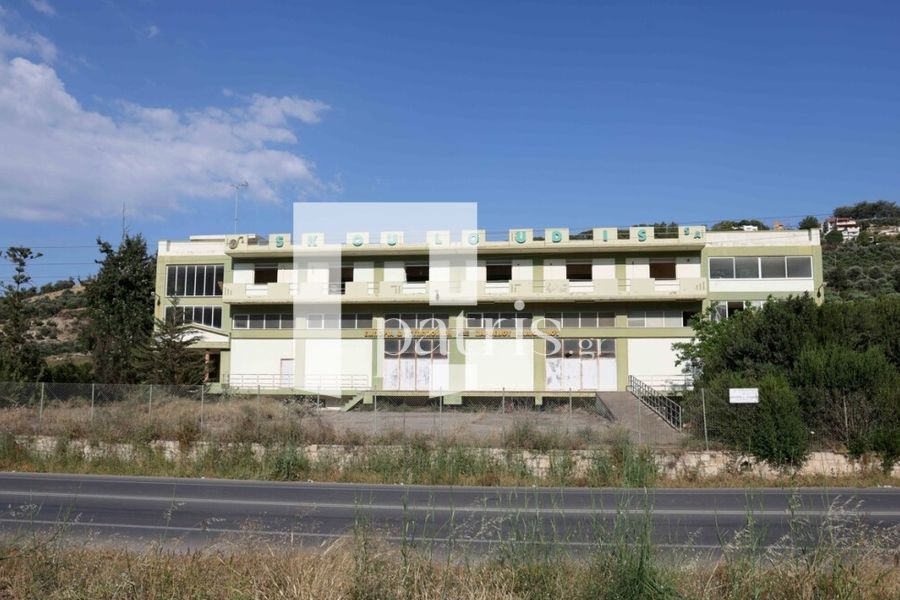
The site: former Skouloudis warehouses
The facility is planned for the former Skouloudis warehouses (αποθήκες Σκουλούδη), located at approximately the 10th kilometer of the Heraklion–Moires national road.
Residents are demanding clear answers on two key points:
- How exactly this specific property was selected
- What process was followed before the decision was finalized
They have also raised concerns about the site’s overall suitability for such a facility.
Allegations of building code violations
Locals describe the building as privately owned and claim it contains violations of building and urban planning regulations.
They are calling for full public disclosure of information regarding the property’s legal status and its suitability to host a reception facility.
What does this mean for visitors?
If you’re driving between Heraklion and southern Crete — including popular destinations like the Messara plain or Moires (Μοίρες) — via the Heraklion–Moires road, be prepared for possible road closures or delays during protest gatherings, particularly in the evening hours.
Check local traffic updates before traveling this route, especially if demonstrations are ongoing or expected.
Consider alternative routes if you need to reach southern Crete during announced protest times, as blockades have recurred multiple times in recent days.
This situation is centered on a local, specific area (Athanatoi, south of Heraklion) and does not currently affect other parts of the island or main tourist areas in central and northern Crete.

Greece Cuts Illegal Migration by 35%: 20,000 Fewer Arrivals in Just One Year
Greece’s Migration Minister, Thanos Plevris (Θάνος Πλεύρης), unveiled striking new figures during the opening of the Migration Ministry’s pavilion at the 90th Thessaloniki International Fair (Διεθνής Έκθεση Θεσσαλονίκης, TIF).
According to the minister, illegal arrivals in Greece dropped by nearly 20,000 over the past year — a decline of about 35%.
The numbers, compared
Between August 2024 and August 2025, Greece recorded 61,012 illegal arrivals.
In the following twelve months — from August 2025 to July 2026 — that number fell to 41,998, according to the minister.
Plevris credited the drop to a new legal framework introduced a year ago, which links unauthorized entry to the risk of imprisonment for migrants who fail to leave voluntarily.
He attributed the results to strong work by the Hellenic Coast Guard and to newly passed deterrent measures, while also noting an increase in deportations during the same period.
A “prison or return” doctrine
The minister described the government’s overall approach as a strategy built on border protection and deterrence, paired with strict rules for those not entitled to asylum.
“Our whole program is based on deterrence through border protection, and a strict framework for those who don’t qualify for asylum — the doctrine of prison or return,” Plevris said.
He noted that the Aegean Sea region has seen historically low migration flows, while numbers along the Evros land border (Greece’s northeastern frontier with Turkey) remain close to yearly averages.
The minister flagged Libya as the government’s main ongoing concern, saying Greece must stay ready to respond quickly if flows from that direction increase.
A shared European return center abroad
Plevris also revealed that Greece has reached an agreement with four other EU countries — Germany, the Netherlands, Austria, and Denmark — to jointly establish a return center located outside Europe, in an African country.
The idea: migrants whose asylum applications are rejected, but who refuse to return to their home country, would instead be relocated to this center under EU-backed conditions.
Plevris expressed confidence that, once relocated there, many would ultimately choose to return home voluntarily.
A “fair but strict” policy, says deputy minister
Deputy Migration Minister Sevi Voloudaki (Σέβη Βολουδάκη) echoed the minister’s remarks, stating that Greece enforces a policy that is both fair and strict.
“We’ve shown that we have borders, and we guard them. Anyone who enters our country illegally has only two options: detention, or voluntary return to their home country,” she said.
She added that the government is simultaneously cracking down on smuggling networks while strengthening legal migration channels — including Greek language courses and job-market integration from day one for those granted asylum.
Wider European context
Plevris noted that, EU-wide, the first half of the year saw the lowest migration flows ever recorded in Europe, as most member states adopted similarly strict policies — with the exception of one southern country.
He said the next critical step for European policy is full implementation of the EU’s new Migration and Asylum Pact, along with a proper returns regulation.
Migrant Boat Arrivals Surge in Crete: 4 Rescues in Just Days — 44, 91, 45, and 35 People Recovered
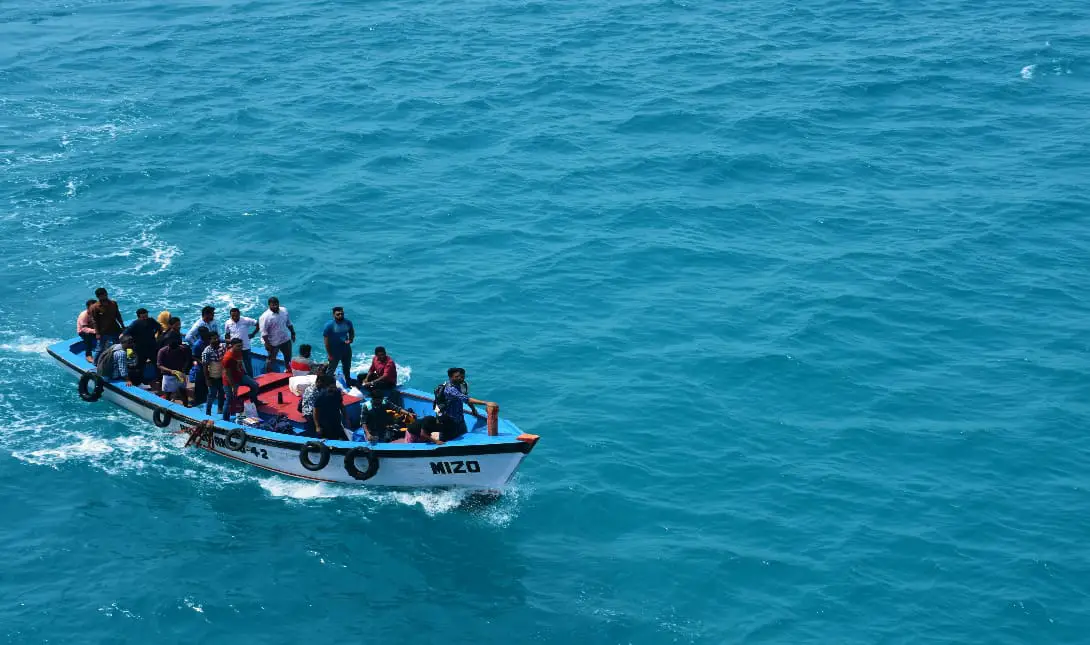
Crete’s southern coastline has seen a wave of migrant boat arrivals in recent days, with Greek authorities carrying out multiple rescue operations off the island.
Yesterday: 44 migrants rescued south of Heraklion
The Hellenic Coast Guard (Λιμενικό Σώμα) rescued approximately 44 irregular migrants from a boat located about 35 nautical miles southeast of Kaloi Limenes (Καλοί Λιμένες), a small coastal area in southern Heraklion (Ηράκλειο), Crete.
The vessel was spotted by a Frontex drone, and the operation was coordinated by Greece’s Search and Rescue Coordination Center (ΕΚΣΕΔ).
According to their own statements, the migrants said they came from Sudan. The group included one woman, a 4-year-old girl, and a 12-year-old boy.
They were transported to the port of Kaloi Limenes and then to the site of the former “Psygeio” (Ψυγείο) facility, a former refrigeration plant now used as a temporary reception area.
Saturday: 91 migrants arrive, including nationals from four countries
In a separate rescue, the Coast Guard recovered 91 migrants near Kaloi Limenes.
The group included:
- 51 nationals of Bangladesh, including one woman
- 33 nationals of Egypt
- 4 nationals of Sudan
- 3 nationals of Eritrea
They were transferred shortly after midnight to the former Psygeio site and handed over to the relevant authorities for standard processing procedures.
Friday: Two boats, 45 and 35 migrants, reach Crete’s south coast
On Friday, the Coast Guard carried out two more rescue operations.
The first involved 45 migrants (26 men, 15 women, and 4 minors) found aboard a boat approximately 42 nautical miles south of Gavdos (Γαύδος), a small Greek island south of Crete — Europe’s southernmost point.
The boat was located by a Frontex aircraft, with the operation coordinated by ΕΚΣΕΔ. The migrants were safely transported to the port of Palaiochora (Παλαιόχωρα), in Chania (Χανιά) region, western Crete, and then taken to a temporary shelter in Agyia (Αγυιά), also in Chania.
A preliminary investigation is being carried out by the Central Port Authority of Chania.
Separately, another boat carrying 35 migrants arrived at Kaloi Limenes the same day.
What does this mean for visitors?
These rescue operations are taking place along Crete’s southern coast, particularly near Kaloi Limenes, Gavdos, and Palaiochora — areas that are also popular for swimming, boat trips, and day excursions.
Travelers should not expect any impact on typical tourist activities in central and northern Crete (Heraklion, Chania town, Rethymno, Agios Nikolaos), as these operations are concentrated in remote southern coastal zones.
If you’re sailing, boating, or diving off Crete’s south coast — especially near Gavdos — be aware that Coast Guard and Frontex vessels may be actively patrolling the area.
Migrants are being processed through official reception facilities (such as the former Psygeio site and temporary shelters), so there is no expected disruption to public spaces, beaches, or transport routes used by tourists.
As always, follow official Greek Coast Guard and local authority guidance if boating in southern Cretan waters.
Sources
NeaKriti
CretaLive.gr: Th. Plevris: Around 20,000 fewer irregular entries between August 2025 and July 2026
CretaLive.gr: New rescue operation for irregular migrants south of Heraklion
Neakriti.gr
CretaLive.gr
CretaLive.gr
Patris.gr: Reactions to the migrant centre in Athanatoi are escalating – local residents are blocking the road from Heraklion to Moiron



