

Newsflash from Wednesday, 12 August 2026: 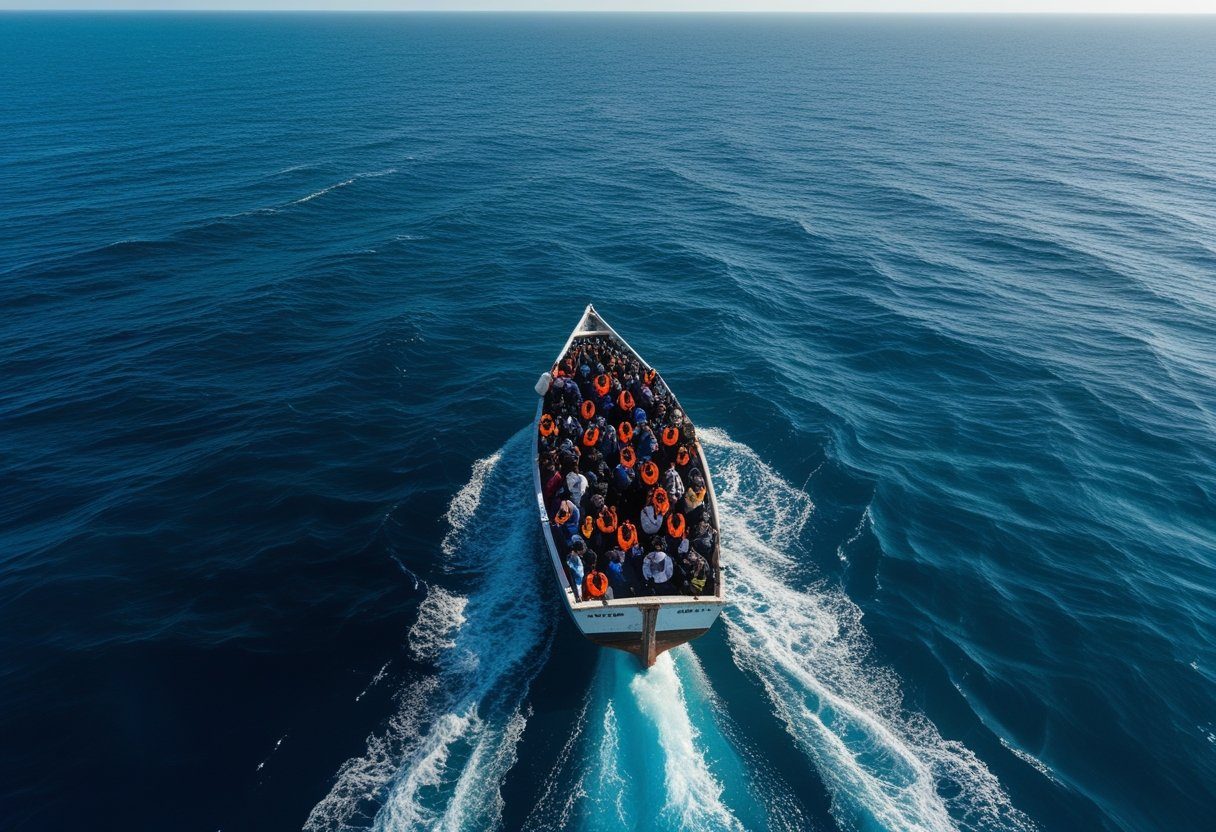
Crete has experienced a new surge in migrant arrivals, with at least 147 people located in three separate incidents overnight and during the early morning hours. The latest operations took place in the sea area southeast of Kaloi Limenes, as authorities continued efforts to locate, rescue and safely transfer those on board.
Three incidents near Kaloi Limenes
Approximately 46 people were initially reported in the wider maritime area overnight, although the exact figure was still awaiting official confirmation. Two further incidents followed at dawn, involving 32 and 69 people respectively.
The 32 and 69 people were expected to disembark at Kaloi Limenes around midday before being transferred to Heraklion. Authorities were preparing to register and process the arrivals in accordance with standard procedures.
Earlier rescues south of Gavdos and near Kapetaniana
The latest arrivals follow two other rescue operations reported in recent days. On Monday, 26 people were rescued from a boat south of Gavdos in difficult weather conditions. The vessel was spotted by a Frontex aircraft, and the passengers were taken aboard a Liberia-flagged cargo ship before being transferred to the port of Paleochora.
On Friday afternoon, authorities located another boat near Kapetaniana, in the Municipality of Gortyna, carrying 57 people. The group included 50 men, three women and four children aged between five and 11. They were expected to be taken to Heraklion for registration, identification and further administrative procedures.
Authorities remain on alert
In total, the three reported operations involved at least 230 migrants: 147 in the latest incidents, 26 rescued south of Gavdos on Monday and 57 found near Kapetaniana on Friday afternoon.
The Hellenic Coast Guard and other authorities remain on heightened alert as migrant flows toward Crete continue. Strong winds, including northerly winds of up to 7 Beaufort in the Gavdos operation, have added to the challenges faced by rescue teams.
Figures in the latest incident may be revised following the official count by the authorities.
Sources
- Nea Kriti: 147 migrants reported in three incidents near Kaloi Limenes
- eKriti: 26 migrants rescued south of Gavdos
- Nea Kriti: 57 people found near Kapetaniana
Greece’s Dark Secret: Legal Migrant Workers Trapped in Exploitation Networks

They came to Greece legally. They signed employment agreements. They passed medical tests and paid visa fees. Yet thousands of migrant workers recruited through Greece’s official labor migration program are finding themselves trapped in a shadowy world of wage theft, passport confiscation, and systematic exploitation—with little recourse and nowhere to turn.
A Perfect Agreement on Paper, Exploitation in Reality
A young Kenyan worker arrived in Greece through the government’s labor migration program with a seemingly ironclad employment contract. His agreement promised €39 per day for a 40-hour workweek as a cleaner at a tourist resort in the Peloponnese. The reality was starkly different.
“They kept me on as a ‘ghost’ worker,” he explained in a June email to Generation 2.0 RED, an Athens-based NGO. Instead of eight hours, he worked more than 14 hours daily across multiple roles—without additional compensation. After two months, he had received only €300 and four days off. Paid in cash with no paper trail, he was invisible to the system. “I’m trapped in this remote place,” he wrote.
His story is not unique. Generation 2.0 RED has fielded similar complaints since early 2025 from workers across the country—Nepalese farm laborers in Karditsa, Filipino women in Rhodes, and many others.
The Network of Control: Intermediaries, Passports, and Fear
A Nepalese national working as a seasonal farm laborer described a chilling dynamic. He found his job through a Pakistani intermediary who held his passport and threatened visa cancellation if he complained or left. “I had to rely on the intermediary for the work and for my legal status,” he explained. “He threatened that if I complained or left, my visa would be canceled.”
Another Nepalese worker hadn’t received payment for five months and was never registered for a social security number (AMKA). A Filipino woman described borrowing money for visa fees, medical tests, and travel costs, only to be exploited by a tourism business on Rhodes.
As noted by Nikos-Deji Odubitan, founder and managing director of Generation 2.0 RED: “No one checks whether they are associated with the employer who appears on the documents; no one explains their rights and obligations to them; they don’t know where they can turn to if they’re being exploited. They come here legally and some just end up in a void.”
The Scale of the Crisis: From Manolada to Crete
While official figures on the prevalence of migrant labor exploitation remain scarce, a single case from earlier this year reveals the scope of the problem. Law enforcement officials on Crete formed a case file against 32 suspects—including office owners, Pakistani middlemen, and local farmers—on charges of human trafficking and related crimes.
The suspects allegedly exploited the guest worker scheme on 48 separate occasions. The victims paid €9,000 for tickets and intermediary fees, only to be sent to farms other than those listed in their employment agreements. Their passports were withheld. Employment contracts were never signed. They were forced to surrender their entire—or nearly entire—wage packets to middlemen.
Police investigators noted: “They exploited their need to make a living, the fact that they could not speak the language and could not assert their rights, their lack of ties to the state and the fear of deportation that prevented them from turning to the authorities.”
The System’s Vulnerabilities
Attorney Vasilis Kerasiotis points to a dangerous “gray area” in Greece’s migrant labor legislation. Foreign nationals can enter the country legally on a visa, only to have their employer fail to submit the necessary documents for their residence permit. They work for three months before being dismissed, left completely unprotected and undocumented.
The consular authorities of Bangladesh in Greece have recently raised concerns about such incidents with the Labor Inspectorate.
Government Reforms: A Step Forward?
Greece has taken some measures to address these issues. Law 5275, passed in February 2026, has accelerated permit processing and reduced the backlog of residence permit applications by up to 34%. The law also allows migrant workers to change employers if their employment terms are violated.
A new ministerial decision permits temporary employment agencies (TEA) to hire third-country nationals directly and assign them to workplaces—a measure aimed at reducing dependence on trafficking networks and preventing exploitation.
Migration Minister Thanos Plevris stated that if a worker faces mistreatment, the agency will be able to reassign that person to another job in the same field. Additionally, the integration of the Migration and Labor ministries’ information systems is expected within the month, providing real-time visibility into the employment status of every worker in the invitation framework.
Despite these reforms, Odubitan emphasizes: “The state needs to step up. There are some employers who treat invited workers merely as tools, stripping them of their human dignity.”
A Call for Action
Greece’s migrant worker invitation framework was designed to address critical labor shortages in tourism, agriculture, food services, and construction. The government set a maximum quota of 94,240 workers for 2026. Yet actual labor needs are estimated to be far higher, and the available slots remain unfilled due to bureaucratic obstacles.
More importantly, the system itself has become a vehicle for exploitation. Workers who arrived through legal channels now face wage theft, document confiscation, and coercion—crimes that exploit their desperation, language barriers, isolation, and fear of deportation.
Until stronger enforcement mechanisms, better worker education, and genuine accountability for employers are in place, Greece’s migrant workers will remain hostages to a system that promised opportunity but delivered abuse.



