

Newsflash from Tuesday, 19 May 2026:

Six months after the shocking violence that shook Vorizia, authorities have dismantled a sophisticated criminal organization operating under the guise of livestock farming—revealing a chilling system of extortion, intimidation, and fraud that devastated rural Crete.
The Dark Side of Rural Crete: Organized Crime Hidden Behind Agriculture
The recent arrests of six individuals from Voriza and surrounding areas have exposed what authorities describe as a family-based mafia operation that transformed pastoral communities into zones of fear and silence. Operating from their base in Voriza in the Phaistos municipality, the criminal organization—led by an uncle and his two nephews—systematically extorted, intimidated, and terrorized local residents across the wider Rethymno region, particularly targeting villages in Amari.
What began as seemingly isolated incidents of livestock trespassing and crop damage has now been revealed as part of a coordinated, organized criminal enterprise with devastating human and financial consequences.

A System of Terror: How the Gang Operated
According to police investigations by Crete’s Organized Crime Suppression Unit, the criminal organization employed a calculated strategy of intimidation and violence:
- Forced land seizures: Armed members would violently occupy agricultural properties belonging to small farmers, forcing them to surrender land or face consequences.
- Systematic extortion: Residents who resisted were subjected to threats, acts of vandalism, arson, and physical violence.
- Retaliatory attacks: Those who dared report crimes or resist found their property destroyed. One victim’s car was burned completely, resulting in €27,000 in damages.
- Creating a climate of fear: For nearly five years, entire villages lived under what witnesses describe as a “regime of terror,” with residents afraid to leave their homes or even visit their own fields.
The impact was profound. At least 40 documented victims reported losses exceeding €200,000 in property damage and agricultural destruction between 2021 and 2024. Some residents were forced to abandon their ancestral lands and homes entirely.
The EU Subsidy Scam: Stealing Hundreds of Thousands from Europe
What made this operation particularly audacious was its financial dimension. While terrorizing local farmers, the gang simultaneously engaged in massive agricultural subsidy fraud.
According to investigators, the organization falsely declared inflated livestock numbers and fictitious agricultural lands to the Greek Agricultural Payment Organization (OPEKEPE), the EU body responsible for distributing Common Agricultural Policy (CAP) subsidies.
The scale was staggering:
- The gang declared double the number of sheep and goats they actually owned
- They registered land they didn’t possess or had seized through intimidation
- Over a five-year period, they illegally pocketed more than €500,000 in European Union subsidies
- Their spouses were active participants in the scheme, authorities confirmed
- Younger family members were gradually integrated into the criminal operation
These weren’t petty criminals—they were systematically defrauding European taxpayers while simultaneously terrorizing their neighbors.
Silence, Fear, and Desperation: The Human Cost
For years, victims remained silent. Fear was their primary barrier to justice.
One resident described how he abandoned his village after enduring years of pressure and intimidation. Another woman testified that within days of her father’s death, the gang seized their family’s livestock pen. A farmer who refused to surrender his land was subjected to repeated threats and witnessed the systematic destruction of his crops and property.
In some cases, there were even familial connections between perpetrators and victims, making the psychological burden of reporting crimes even heavier.
“You will hear much more about this. May justice finally be served, because we cannot endure any longer,” one victim told media outlets, expressing the collective exhaustion of communities held hostage by organized crime.
How Authorities Finally Broke the Silence
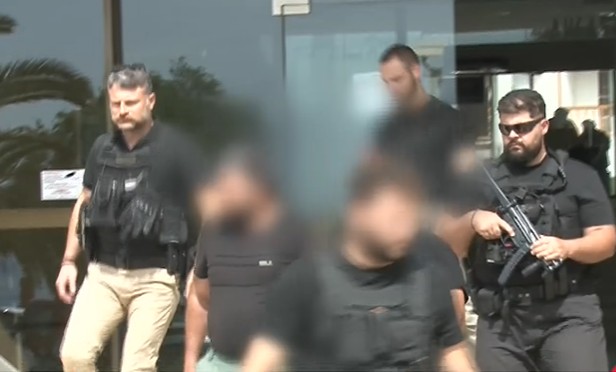
The turning point came after last November’s violence in Voriza, which shocked the region and prompted a comprehensive police investigation. Over the following months, officers from the Organized Crime Suppression Unit methodically tracked the criminal network, gathered evidence, and—crucially—convinced terrified residents to come forward and testify.
The fact that witnesses finally felt safe enough to speak represented a critical breakthrough. These testimonies allowed authorities to construct detailed dossiers documenting years of systematic criminal activity.
In a coordinated early-morning operation on Monday, May 18, 2026, police arrested the leadership and key members of the organization. The uncle and his two nephews—identified as the commanding leaders who ordered extortions, arsons, and thefts—faced initial hearings. The two nephews were transferred to Rethymno Court, where they were granted a postponement to present their defense on Friday.
A Wider Pattern Across Rural Crete
The Voriza case is not isolated. Throughout 2024, similar complaints emerged from communities across Crete:
- Kissamos – residents described a “society in despair”
- Amari – widespread intimidation and property seizures
- Kalamafka, Mylopotamos, Messara, Malevizi, Meramvello – the same pattern repeated everywhere
In June 2024, a major police operation in Kissamos involving over 100 officers and dozens of suspects signaled that authorities were beginning to view these crimes not as isolated agricultural disputes, but as organized criminal activity requiring comprehensive investigation and prosecution.
From Fragmentation to Integration: A Shift in Law Enforcement Strategy
Perhaps the most significant aspect of the Voriza case is what it represents: a fundamental shift in how Greek authorities approach rural crime.
Previously, incidents of livestock trespassing, crop damage, and even intimidation were treated as separate, isolated offenses. Victims felt abandoned and unprotected. Now, law enforcement is connecting the dots, recognizing that many seemingly disparate crimes are actually components of coordinated organized criminal enterprises.
As officials noted, this represents the first time such a comprehensive approach has been undertaken—treating the phenomenon as a whole rather than addressing it piecemeal.
Justice and the Road Ahead
The criminal organization’s members face serious charges including:
- Extortion under threat of violence
- Organized crime
- Arson and property destruction
- Agricultural subsidy fraud
- Creating a regime of terror
The investigation serves as a stark reminder that in some rural areas of Greece, organized crime has operated with near impunity, exploiting not only local residents but also EU institutions and European taxpayers.
For the residents of Voriza and surrounding villages, the arrests represent a potential turning point—an opportunity to reclaim their communities, their safety, and their dignity after years of systematic exploitation and fear.
As one victim stated: “We’ve endured enough. Now it’s time for justice.”



