

Newsflash from Tuesday, 19 May 2026:
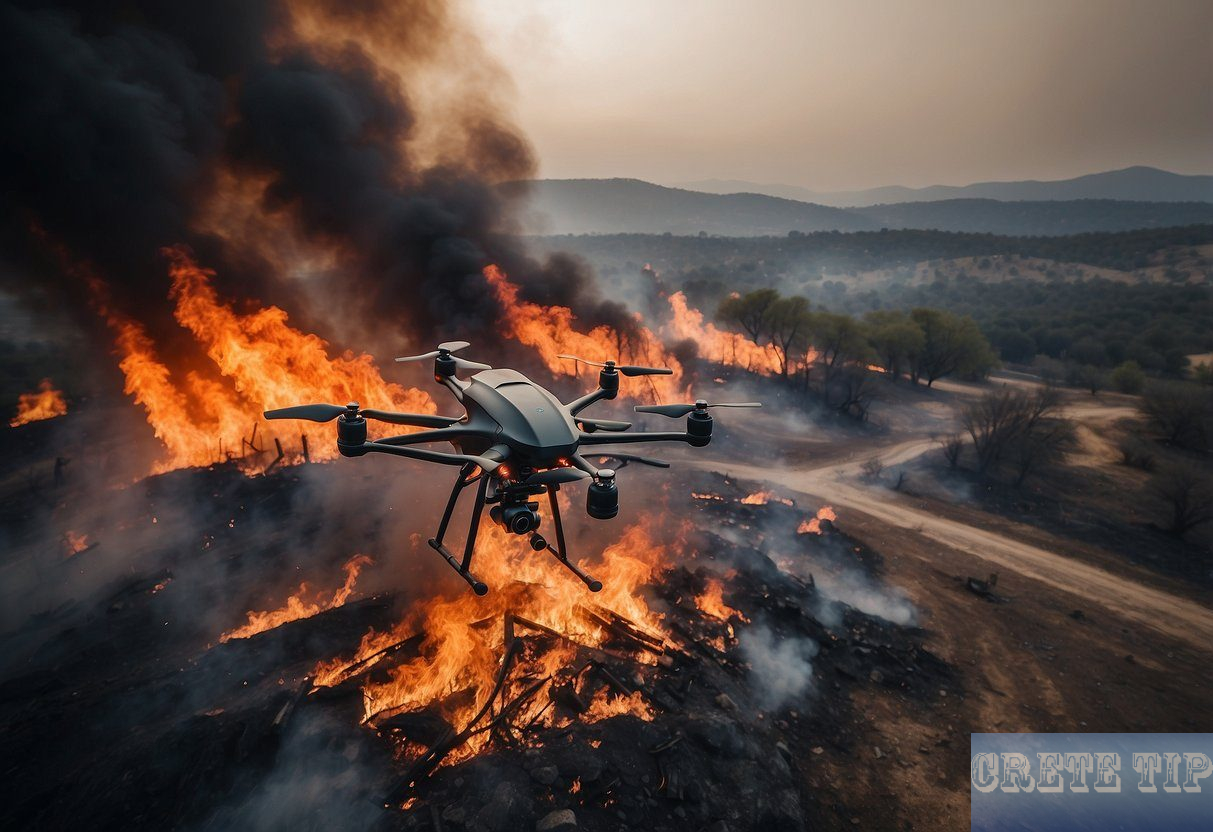
Greece is deploying cutting-edge drone technology across all 13 regions to detect fires in their earliest stages, transmitting real-time thermal imaging to emergency command centers and potentially saving lives and forests during the 2026 fire season.
The Evolution of Wildfire Detection: From Ground to Sky
Traditional wildfire detection has relied on ground-based observation posts, helicopter patrols, and citizen reports—methods that are reactive rather than proactive. By the time a fire is spotted, it has often already spread beyond initial containment efforts.
This year, Greece is fundamentally changing that approach with a pioneering national drone surveillance program that promises to transform how the country detects and responds to wildfires.
“We cannot address natural disasters with the tools and logic of the past,” stated Climate Crisis and Civil Protection Minister Evangelos Tournas, highlighting the need for constant adaptation in the face of climate-driven challenges.
By the Numbers: Greece’s Drone Arsenal
The scale of this initiative is unprecedented:
- Over 100 unmanned aerial vehicles (UAVs) strategically distributed across Greece
- Presence in all 13 regions of the country
- 24/7 operational capability with continuous surveillance
- Three specialized mobile monitoring units based in Attica, Thessaloniki, and Crete—capable of rapid deployment to high-risk areas
Regional Distribution
The drone network isn’t distributed evenly; instead, it’s strategically concentrated in high-risk areas with historical fire patterns and difficult accessibility:
- Attica: 27 drones (highest concentration due to proximity to capital and population density)
- Central Macedonia: 15 drones
- Peloponnese: 8 drones
- Central Greece, Eastern Macedonia & Thrace, Western Greece, Ionian Islands: 7 drones each
- Thessaly, Epirus, Ionian Islands: 5 drones each
- North Aegean: 4 drones
- Crete: 4 drones
- South Aegean, Western Macedonia: 3 drones each
Advanced Technology: What These Drones Can Do
These aren’t simple surveillance cameras. Greece’s fire-detection drones are equipped with cutting-edge sensor technology:
- Thermal imaging cameras: Detect heat signatures and identify thermal hotspots even in complete darkness
- High-zoom optical cameras: Provide detailed visual reconnaissance from significant distances
- Laser rangefinder systems: Precisely measure distance and location data
- GPS systems: Ensure accurate positioning and mapping
- Advanced telemetry systems: Transmit real-time data to command centers
The combination of these technologies creates a comprehensive surveillance platform that can detect fires at their absolute earliest stages—sometimes even before human observers would notice.
Day and Night Operations: Thermal Vision Changes the Game
One of the most significant advantages of drone-based surveillance is 24-hour continuous monitoring, including overnight operations.
During daylight hours, drones use high-resolution optical cameras to scan forest areas, agricultural zones, and interface areas between rural and urban landscapes. However, nighttime is when thermal imaging becomes game-changing.
At night, when visibility is severely limited, thermal cameras essentially replace sight with heat detection. This allows operators to:
- Identify thermal hotspots and suspicious heat signatures
- Detect smoke and fire indicators even in remote, inaccessible areas
- Monitor overnight arson attempts or unattended fires
- Track fire spread in darkness when ground-based crews have limited visibility
For a country historically vulnerable to nighttime fires that spread unchecked until dawn, this represents a critical advancement in emergency response capability.
Real-Time Intelligence: From Sky to Command Center to First Responders
Detection is only valuable if information reaches decision-makers instantly. Greece’s drone program incorporates sophisticated real-time data transmission systems:
Multi-Level Information Distribution
Regional Operations Centers receive live video feeds and thermal data from all drones in their jurisdiction. The National Coordination Center for Operations and Crisis Management (ESKEDIK) maintains a birds-eye view of all drone surveillance nationwide. Field crews and first responders receive critical data via tablets and smartphones, ensuring everyone—from command centers to boots on the ground—operates from the same real-time intelligence picture.
This unified information ecosystem is revolutionary. A firefighter on the ground, a pilot in a water-dropping helicopter, and a commander in an operations center can all see exactly what a thermal camera 500 meters above a forest is seeing, at the exact same moment.
The Critical Operational Doctrine: Speed Saves Lives
Greece’s new approach to fire management rests on three pillars, according to government guidance:
- Early Detection & Warning: Identify fires in their infancy, before they reach critical size
- Rapid Force Mobilization: Deploy firefighting resources with minimal delay
- Aggressive Early Intervention: Attack fires within the first critical minutes when containment is most achievable
As Minister Tournas emphasized: “The key to effective response is twofold: first, minimize fire starts as much as possible; second, intervene early.”
Drones serve both objectives. They monitor for threats and intervene by providing precise, real-time intelligence that allows firefighters to respond before fires become uncontrollable.
Mobile Strike Forces: Rapid-Response Drone Centers
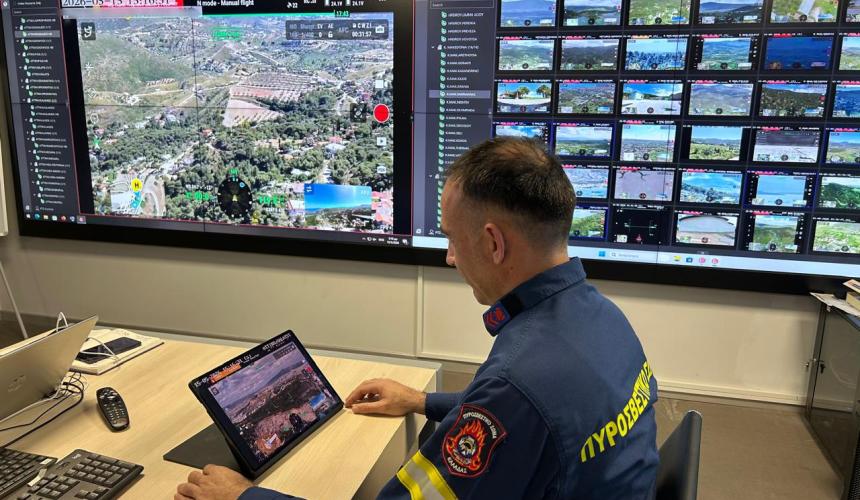
Beyond the 100 stationary drones, Greece has created three specially equipped mobile drone monitoring units positioned in Attica, Thessaloniki, and Crete.
Advanced Mobile Infrastructure
These aren’t simply trucks with drones. They’re fully operational aerial command centers equipped with:
- Redundant communication systems: Multiple backup channels ensure uninterrupted data flow
- Multi-screen control consoles: Operators monitor multiple drone feeds simultaneously with complete situational awareness
- Advanced processing units: Analyze data in real-time, providing crews with critical intelligence on demand
- Rapid deployment capability: Can relocate to high-risk areas within hours as conditions demand
Once positioned in a threatened area, these mobile centers launch continuous patrol flights, capturing video and thermal data and transmitting it directly to firefighting operations.
Strategic Placement: Protecting High-Risk Zones
Drone deployment isn’t random. Civil Protection authorities have strategically positioned surveillance based on multiple factors:
- Historical fire data: Areas that have experienced multiple fires in previous years
- Vegetation density: Forests and heavily vegetated regions with high fuel loads
- Accessibility challenges: Remote areas where ground crews face difficulties responding quickly
- Interface zones: The critical boundary between rural forests and residential areas where fires pose greatest risk to human life
- Current risk assessments: Areas identified as high-danger under current weather and drought conditions
This targeted approach ensures maximum coverage of the areas where fires are most likely to occur and most difficult to control.
Climate Crisis Demands New Tools
The expansion of drone surveillance reflects a broader recognition: climate change is fundamentally altering fire risk patterns.
Longer, hotter, drier summers; earlier fire seasons; and more intense weather extremes require more sophisticated detection and response capabilities than previous decades demanded.
As officials note, Greece cannot afford to rely on yesterday’s tactics when facing today’s environmental challenges. Drones represent a critical step forward in operational preparedness and crisis management planning.
The Human Element: Operators and Expertise
Advanced technology requires skilled operators. The Fire Service and Civil Protection agencies have trained specialized drone pilot teams stationed across the country. These professionals:
- Operate UAVs in complex terrain and challenging weather
- Interpret thermal and optical data in real-time
- Communicate findings instantly to decision-makers
- Maintain equipment to ensure continuous operational readiness
This represents a significant investment in human capital and expertise—recognition that technology alone cannot solve complex problems without skilled professionals to operate and interpret it.
From Detection to Prevention: The Bigger Picture
While fire detection is critical, it’s part of a larger prevention and management strategy:
- Forest maintenance: Clearing dead wood and reducing fuel loads
- Infrastructure hardening: Creating defensible space around communities
- Public awareness: Educating citizens about fire prevention
- Rapid response: Pre-positioning firefighting resources in high-risk areas
- Advanced surveillance: Using drones for early detection
Drones excel at the detection portion of this integrated approach, but success requires coordination across all components.
Looking Forward: The 2026 Fire Season and Beyond
As Greece enters the 2026 fire season with this advanced drone surveillance network operational, the hope is clear: fewer fires will reach dangerous size, fewer lives will be threatened, and fewer forests will be lost.
The deployment of over 100 drones represents not just a technological upgrade, but a philosophical shift—from reactive firefighting to proactive fire prevention, from slow response to instant intervention, from scattered information to unified intelligence.
In the face of intensifying climate-related challenges, Greece is demonstrating that adaptation, innovation, and investment in modern capabilities can help protect communities and ecosystems from increasingly severe natural disasters.
The sky sentinels are now watching—24 hours a day, 7 days a week—ready to detect danger before it becomes disaster.
Crackdown Begins: First Hefty Fines Issued for Illegal Burning as Fire Season Intensifies

Authorities in Chania have issued the first significant fines of the 2026 fire season, sending a clear warning that illegal burning practices will not be tolerated during the high-risk summer months.
According to the Fire Service of Chania, two administrative fines were imposed on Monday, May 18, following violations of fire prevention regulations now in force across Greece.
Costly Violations in the Middle of Fire Season
The penalties highlight how seriously authorities are treating even seemingly routine activities that can trigger devastating wildfires.
- A fine of €1,875 was issued to an individual who burned waste in violation of current legislation within the Municipality of Chania.
- A second fine of €1,125 was imposed on another individual for burning agricultural residues, also in breach of fire safety regulations.
Both incidents occurred just weeks after the official start of the fire prevention period on May 1, when strict restrictions on open burning come into effect nationwide.
Why Authorities Are Taking a Hard Line
The Fire Service emphasizes that wildfires are becoming increasingly frequent and intense, largely due to the ongoing climate crisis. As a result, prevention has become a top priority.
“Forest fires remain a constant and demanding challenge,” officials noted, stressing that early prevention is the most effective defense against large-scale disasters.
Even small, controlled fires—such as burning garden waste or crop residues—can quickly spiral out of control under dry and windy conditions.
Strict Rules and Shared Responsibility
Authorities are urging residents and landowners to fully comply with fire safety regulations, particularly regarding:
- Prohibition of burning waste, dry grass, and branches during summer months
- Mandatory clearing of plots and fields to reduce fire risk
- Avoidance of activities that produce sparks, such as welding or using cutting tools outdoors
- Respecting access restrictions in high-risk forest areas
The message is clear: prevention is everyone’s responsibility, and negligence—whether intentional or accidental—can have severe consequences.
What to Do If You Spot a Fire
The Fire Service is also reminding the public of the correct response in case of smoke or flames:
- Call the Fire Service immediately at 199 or the European emergency number 112
- Provide clear information about the exact location, direction of the fire, wind conditions, and type of vegetation
- Do not assume someone else has already reported it
- Move away from the area and allow emergency crews access
Fines Are High—But Prevention Is the Goal
Officials underline that the purpose of these penalties is not punitive, but preventative. However, the fines can be substantial, especially in cases where negligence leads to actual fire outbreaks.
“The goal is not the fine itself, but preventing fires before they start,” the Fire Service stated, calling on citizens to act responsibly and protect lives, property, and the natural environment.
As Greece heads deeper into what is expected to be another challenging fire season, these first fines serve as a stark reminder: one careless act can have devastating consequences.



