

Newsflash from Tuesday, 13 October 2026:

Driving across eastern Crete is about to become easier for residents and holidaymakers alike. On Friday, 16 October, the first 10 kilometres of the upgraded highway connecting Neapoli and Agios Nikolaos will officially open to traffic.
The announcement was shared by Stavros Arnaoutakis, the Regional Governor of Crete (Perifereiarchis Kritis), during an appearance on the news show Ora Aichmis on KRITI TV with journalist Manos Daskalakis. Greece’s Minister of Infrastructure and Transport, Christos Dimas, will visit the new roadway to mark the rollout.
Governor Arnaoutakis emphasized that this visit is not a formal ribbon-cutting inauguration ceremony. Instead, it is the practical opening of a completed stretch of the motorway directly to regular drivers.
Key Locations and Highway Milestones
The road forms part of the BOAK (Greek abbreviation) or VOAK (Voreios Odikos Axonas Kritis, or the Northern Road Axis of Crete), which is the island’s primary east-west highway corridor. The newly opened 10-kilometre segment links Neapoli, an inland town in the eastern region of Lasithi, with Agios Nikolaos, the coastal capital of Lasithi.
According to Arnaoutakis, construction on the wider section between Hersonissos (a major coastal resort area in the Heraklion region) and Agios Nikolaos has reached approximately 40% completion. While works continue across other parts of the route, this newly finished section represents a key milestone for transport in eastern Crete.
The governor also highlighted targeted completion dates for bypasses around the island’s major urban centers:
- Chania (western Crete) and Rethymno (central Crete): bypasses projected to be completed by the end of 2026.
- Heraklion (Irakleio, the administrative capital of Crete): bypass scheduled to be completed by February 2027.
What does this mean for visitors?
If you are exploring Crete by car, staying in eastern Crete, or heading out to the beaches and resorts around the Gulf of Mirabello, you can now drive on this upgraded 10-kilometre roadway between Neapoli and Agios Nikolaos. However, because overall progress on the broader Hersonissos–Agios Nikolaos route is currently around 40%, drivers should stay mindful of active construction zones elsewhere on the journey.
Behind the Celebrations: The “Forgotten” Old Road That Could Have Eased Crete’s Highway Chaos
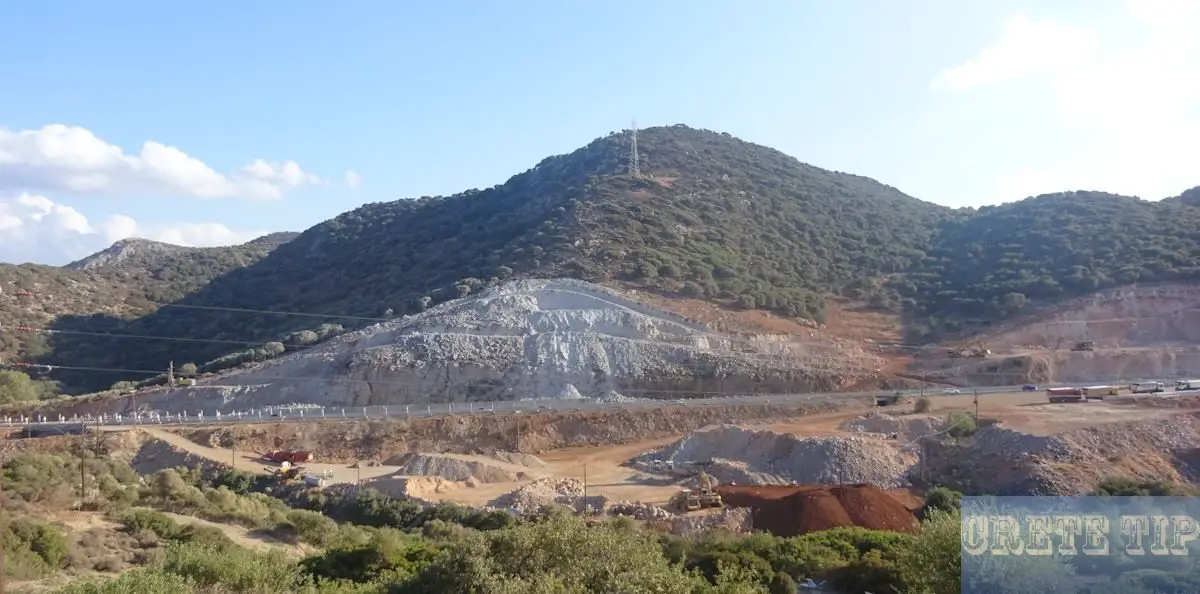
As the Greek government prepares to celebrate the opening of a new 10-kilometre stretch of the BOAK (Voreios Odikos Axonas Kritis, the Northern Road Axis of Crete), eastern Crete remains gripped by what locals describe as an enormous, chaotic construction zone.
Daily traffic along the route has become a serious test of patience for thousands of drivers, and public frustration is growing. Business and trade organizations in the region have raised repeated concerns that the disruption is damaging both the local economy and the tourism sector.
A Forgotten Side Project
Amid the controversy, one overlooked element of the original BOAK plan has drawn little public attention — not even from local authorities, who are responsible for pushing the central government to deliver on it.
The main BOAK project is designed to carry all tourist and commercial traffic along a new, closed-access highway built over the existing route. Because of this, engineers originally planned a companion project: the full reconstruction of the Palaia Ethniki Odos (Old National Road, often abbreviated as P.E.O.) between Neapoli and Agios Nikolaos, both towns in the Lasithi region of eastern Crete.
This companion project — with a budget set aside of €16–17 million — included widening the road, building reinforced retaining walls, and repaving the surface.
Why the Old Road Mattered
The plan served two clear purposes:
- Short-term: An upgraded P.E.O. would have functioned as a safe bypass route for private cars, heavy vehicles, and tourist buses, allowing the main contractor to close off large sections of the central highway and speed up construction work.
- Long-term: Once the BOAK was completed and tolls introduced, the Old National Road would remain as a free, good-quality alternative route connecting neighboring communities within the municipality, supporting local residents and the agricultural sector.
A Plan That Never Materialized
Despite this rational planning, Greece’s Ministry of Infrastructure and Transport never activated this companion project, and the construction company AKTOR did not move forward with it either.
While company representatives reportedly claimed in public meetings — including sessions of the Region of Crete — that they “remained open to dialogue,” no actual work began behind the scenes.
The likely reason, according to the article, is that the company wanted to avoid financial risk from unpredictable geological landslides and new land expropriations that could sharply increase costs. The Ministry, for its part, stayed silent, effectively sidelining traffic planning in favor of fiscal caution.
A Dangerous Bottleneck
The result is what the article calls a glaring failure of project sequencing: a massive construction site operating alongside single-lane traffic, right next to heavy machinery — a recipe for total gridlock.
The technical challenges are considerable. In the Limnes area, excavation trenches exceed 20 metres in depth. Necessary rock-blasting operations have already caused dangerous incidents, including one near the village of Agia Fotini, where flying debris caused damage and put lives at risk.
Unanswered Questions
With the Prime Minister expected to visit Lasithi for the inauguration of the new 10-kilometre BOAK section, the article raises pointed questions:
- How can the state justify risking road safety for an entire region to avoid a contractor’s financial exposure of €17 million?
- Who will take political responsibility for the fact that a planned project has not moved forward?
- What are local authorities actually doing to push this specific part of the project forward?
What does this mean for visitors?
If you’re driving through eastern Crete between Neapoli and Agios Nikolaos, expect ongoing single-lane traffic, delays, and active construction alongside the road for the foreseeable future — the old alternative route that could have eased congestion has not been upgraded.
- Allow extra travel time when moving through this corridor, especially during peak tourist season.
- Be cautious around construction zones, particularly near Limnes and Agia Fotini, where blasting work has caused safety incidents.
- Watch for traffic changes or road closures around the time of official inauguration events, as these can temporarily affect access.
Sources:



