

Newsflash from Friday, 28 August 2026:

A trip to Paris almost came with an unexpected price tag for a couple from Heraklion (Iraklio), the largest city on the island of Crete. Their experience shows that even bookings made through major, trusted platforms can be hijacked by fraudsters.
A 37-year-old man was planning the trip with his 27-year-old wife and a group of friends and family. Searching a well-known international booking platform, they came across an apartment listing that seemed almost too good to be true.
The photos showed a view of the Eiffel Tower, elegant interiors, and generous amenities, all at a surprisingly low price. More than 180 reviews from other users appeared to back up the listing’s credibility.
Because the apartment was listed on a platform used by millions of travellers worldwide, the group assumed the necessary security checks had already been carried out.
A Link That Looked Legitimate
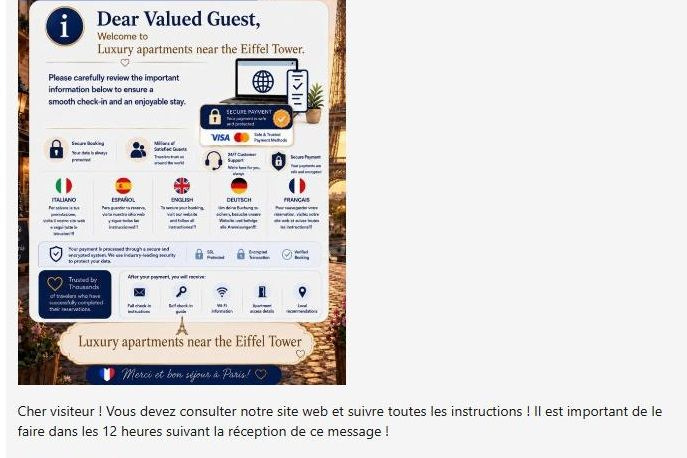
A few days after booking, the wife received a text message carrying the platform’s logo. It asked her to click a link to confirm the reservation.
Nothing about the message seemed out of place, as it fit naturally into the booking process they were already going through. In reality, it was a phishing attempt designed to steal their banking details.
Shortly afterward, the couple’s bank called to ask whether they recognised a transaction currently being processed. When the man confirmed he had recently booked accommodation in Paris, the bank told him plainly: he was in the middle of being scammed.
Quick Action Saved Their Money
The bank cancelled the card and halted the transaction before any funds were lost, sparing the couple a financial hit.
The case drew attention to a wider and more troubling trend: fraudsters increasingly seem to know real reservation details, including the property, dates of stay, and personal information of the guest. This method has been described as “reservation hijacking.”
According to industry reports, criminals may obtain this information through stolen passwords, malware, or breaches of accommodation and booking-system accounts. They then craft highly personalised messages, sent by SMS or email, urging travellers to “update” or “confirm” their payment details through a link.
Platform Agrees to Reimburse the Cost
Rather than letting the matter drop, the couple pursued the issue with those responsible. The travel platform reportedly acknowledged shortcomings in its security and agreed to cover the amount corresponding to the Paris apartment they had originally booked.
Additional reports indicate that similar scams have targeted users of other major booking services, including Booking.com and Expedia. In some cases, fraudulent messages were sent from phone numbers with international dialling codes, urging recipients to confirm or update payment information.
What does this mean for visitors?
- Avoid clicking links in unsolicited SMS messages or emails related to a booking, even if they look official.
- Log in directly through the platform’s website or app to check or manage your reservation, rather than following a link from a message.
- Do not provide banking details or approve any payment unless you have verified the request independently.
- Contact your bank right away if you notice a suspicious transaction or think you may have entered information on a fake page.
- Review your bank statements regularly in the days following a travel booking.
As this case shows, booking through a reputable, well-known platform doesn’t automatically guarantee protection. If reservation data or a hotel’s account has been compromised, scammers can produce messages realistic enough to fool even cautious travellers.
Source: Patris.gr – the Heraklion traveller’s case and Patris.gr – security gaps and compensation



