

Current rental rates per square metre in Crete, what are the current construction costs, and how much do properties cost?

Rents in Crete 2026: What You’ll Pay Per Square Metre in Chania, Rethymno, and Heraklion
If you’re planning to rent a home in Crete, new data reveals just how much prices vary between the island’s three major cities.
According to figures from the RE/MAX real estate network, rental prices across Crete are notably higher than the average for the rest of Greece — and the gap between cities on the island itself is striking too.
Average Rent Per Square Metre
Chania (Hania) currently averages €10 per square metre, putting it on par with Volos on the mainland and well above the national average outside Athens and Thessaloniki, which stands at €7.8 per square metre.
Rethymno, another major city on Crete’s north coast, ranks even higher at €11 per square metre — among the highest rates recorded anywhere in the survey.
Heraklion (Iraklio), Crete’s largest city and regional capital, comes in lower at €8.5 per square metre. While cheaper than Chania and Rethymno, it still sits above the average for regional areas covered in the study.
What Would You Actually Pay?
Based on these average rates, here’s what tenants can expect to pay monthly for typical homes:
For an 80 m² home:
- Rethymno: approximately €880/month
- Chania: approximately €800/month
- Heraklion: approximately €680/month
For a 100 m² home:
- Rethymno: approximately €1,100/month
- Chania: approximately €1,000/month
- Heraklion: approximately €850/month
Keep in mind these are indicative averages — actual rent depends heavily on exact location, building age and condition, floor level, energy efficiency, furnishings, and available amenities.
How Crete Compares Nationally
Nationwide, rents through RE/MAX transactions rose by 3.8% compared to 2025. Athens (Attica) saw the biggest increase at 4.3%, followed by the rest of Greece at 4%, and Thessaloniki at 3%.
Out of 124 areas surveyed across Greece, more than 30 now have average rents at or above €10 per square metre — including both Chania and Rethymno.
The highest rents nationally were recorded in Kolonaki (Athens), Thessaloniki’s Old Waterfront (Palia Paralia), and Santorini, all at €14 per square metre. Rethymno’s €11 rate places it among the priciest areas in the entire country, alongside Paros.
A Tale of Two Cretes
The report doesn’t include separate figures for Agios Nikolaos or other areas in the Lasithi region, nor does it break down year-on-year changes specifically for Chania, Rethymno, and Heraklion — so it’s not possible to say definitively which Cretan city saw the sharpest rent increase since 2025.
What is clear is the significant gap between the island’s tourist-heavy cities and more affordable regional areas elsewhere in Greece — places like Thassos (€4.7/m²), Pyrgos (€5.1/m²), and Karditsa (€5.2/m²) sit at the opposite end of the spectrum.
A Note on the Data
It’s worth noting that these figures come from actual rental agreements completed through RE/MAX offices — not asking prices from listings. This means they reflect real, agreed-upon rents rather than aspirational ones.
However, the survey doesn’t capture the full rental market. It excludes leases registered directly with Greece’s tax authority (AAAE), transactions handled by other real estate agencies, and private arrangements made directly between landlords and tenants. The total number of transactions and how they were weighted to calculate the national average also haven’t been disclosed.
What does this mean for visitors and emigrants?
If you’re considering a long-term stay in Crete, budgeting matters — and location makes a big difference.
- Rethymno and Chania are the priciest options on the island for renters, largely due to strong tourist demand and limited housing stock in popular areas.
- Heraklion offers relatively better value, especially if you’re not tied to the old town or waterfront areas.
- Expect real prices to vary significantly based on the property’s condition, floor, and whether it’s furnished — always ask for specifics beyond the “average” rate.
- If you’re relocating for work, teaching, or study, factor in these elevated costs when comparing Crete to mainland Greek cities.
- Since data for Lasithi (including Agios Nikolaos) isn’t included here, it’s worth checking with local agents directly if you’re considering that area.
Building a House in Crete: Construction Costs Have Surged — Here’s What You’ll Actually Pay
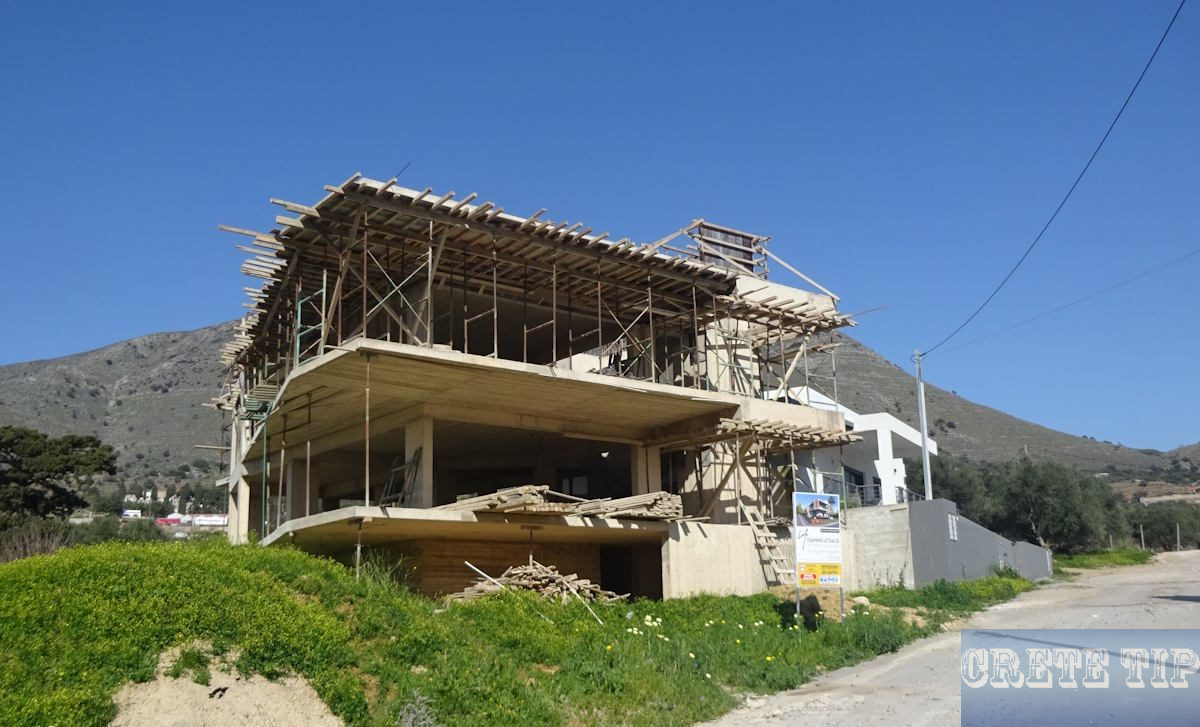
If you’ve been dreaming of building your own home in Crete, brace yourself: construction costs have climbed sharply in recent years, and the pressure shows no signs of easing.
Many hoped that after the shock of the war in Ukraine, prices for building materials would eventually come down. Even oil prices, which spiked to $120 a barrel in the summer of 2022, later dropped to around $60. But relief was short-lived.
A new crisis in the Persian Gulf has reignited price pressure on construction materials. Official data now shows that since the post-Covid inflation crisis began, the cost of building materials has risen by around 40%.
What’s Driving the Costs Up?
Breaking it down, prices for key materials have all risen sharply:
- Bricks: up 11.6%
- Concrete: up 6.2%
- Plastic piping: up 5.2%
- Aluminium window frames: up 4.8%
- Reinforcing steel: up 3.4%
- Copper piping: up 10%, driven by international market pressures
According to Mecha Engineering, modern energy-efficiency requirements — such as enhanced insulation, heat pump installation, and high energy ratings — also push up upfront construction costs, even though they deliver long-term energy savings.
How Much Does It Actually Cost Per Square Metre?
Even the simplest build today can exceed €1,400 per square metre, with recent estimates placing the average net cost closer to €1,700 per square metre.
For a modern, energy-efficient home compliant with Greece’s New Building Regulation (Neos Oikodomikos Kanonismos), prices break down into three tiers:
- Economy build: €1,600–€1,800/m² — conventional construction with mid-range materials and standard energy performance (typically class B+ or A).
- Premium build: €1,900–€2,300/m² — a “turnkey” finish with high-quality materials, A+ energy class, heat pumps, underfloor heating, and advanced window frames.
- Luxury build: €2,500+/m² — includes smart home automation, architectural features like large openings and exposed concrete, swimming pools, and premium finishing materials.
On top of these figures, you’ll also need to budget for the building permit. In 2025, permit costs ranged from €100 to €150 per square metre of the building. Permits remain valid for 4 years, giving builders time to complete the project. This cost typically covers all required studies, issuance fees, contributions to public bodies (such as IKA/EFKA and TMEDE), and the supervising engineer’s fee.
The Ripple Effect on Property Prices
With demand still high, it’s no surprise that overall property prices continue climbing — and it’s not just new builds feeling the pressure.
Many buyers have shifted toward older, supposedly cheaper properties, but this trend is actually pushing prices up across the entire market.
According to data from indomio, July remained a hot month for property sales, with the average asking price reaching €2,769 per square metre — up 5.6% year-on-year. Looking back over five years, that’s a cumulative increase of 37.8%.
These figures vary significantly by region. In Attica (the region around Athens), which tracks close to the national average, prices have jumped as much as 13.2% compared to last year.
Rising sale prices are also pushing up rents. The average nationwide rent has now reached €10.70 per square metre — a 3.8% rise year-on-year, and a striking 39.5% cumulative increase over five years.
Is Help on the Way?
One pillar of the European Housing Plan specifically targets rising construction costs, but proposed measures appear to only scratch the surface of the problem.
Suggested remedies include boosting innovation in the construction sector, addressing labour shortages, and simplifying and speeding up permit approval — for example, through digitalizing bureaucratic processes.
What does this mean for visitors and emigrants?
If you’re considering building a home in Crete rather than renting or buying an existing property, here’s what to keep in mind:
- Budget realistically: Even a basic build now starts around €1,600/m², so an 80m² home could cost upwards of €128,000 in construction alone — before land and permits.
- Factor in permit costs: Add €100–€150/m² for the building permit process, which covers engineering fees and mandatory contributions.
- Energy efficiency costs more upfront: If you want a high energy rating (A or A+), expect to pay toward the premium end of the scale, though you’ll save on running costs long-term.
- Older properties aren’t necessarily a bargain: Rising demand for existing homes is pushing overall market prices higher too, so don’t assume buying old will save you significant money.
- Act with updated quotes: Given the volatility in material costs (especially copper and bricks), get current quotes from local contractors rather than relying on outdated estimates.
Greek Island Property Prices Soar: How Crete Compares to Antiparos, Mykonos, and Beyond

Property prices on the Greek islands continue their dramatic climb, with some destinations recording annual increases of more than 30%.
New data from Spitogatos, covering the second quarter of 2026, shows asking prices in several popular island destinations now far exceed national averages. Meanwhile, figures from Elxis – At Home in Greece reveal shifting motivations among foreign buyers, with nearly one in three now looking to relocate permanently to Greece.
Antiparos Tops the Islands — Even Above Mykonos
Antiparos, a small island near Paros in the Cyclades, has overtaken even Mykonos to become the most expensive Greek island for residential property. The average asking price there reached €7,600 per square metre, despite the island’s notably limited housing stock.
Of the 149 apartments listed for sale in Antiparos during the second quarter of 2026, 104 were newly built properties — highlighting strong demand for move-in-ready homes.
Crete’s Prices Keep Climbing
In Crete, the average asking price reached €2,250 per square metre, up 6.9% compared to last year. Over the past five years, prices on the island have risen by a striking 50%.
By comparison, the Aegean Islands averaged €2,941/m² (up 5.9% annually, with Patmos topping that region), while the Ionian Islands reached €2,531/m² (also up 5.9%, with particularly strong price growth in Paxos).

Who’s Buying, and Why?
Foreign interest remains strong, with buyers from the United States leading the way, followed by the United Kingdom, Germany, Netherlands, and France. Notably, interest from Australia — largely driven by the Greek diaspora — has doubled compared to last year.
Foreign buyers show a clear preference for the Cyclades and Dodecanese islands, though Chania, Corfu, and Heraklion also attract high levels of interest.
Among the regions tracked by Elxis, Crete ranks first in buyer demand at 42.9%, followed by the Peloponnese (22.9%) and the Ionian Islands (12.7%).
What Are Buyers Looking For?
Despite growing interest in permanent relocation, the largest share of foreign buyers — 44.4% — are still primarily searching for holiday homes. Another 17.8% are motivated mainly by investment purposes, while just 7% cite obtaining a Golden Visa residence permit as their main goal.
This relatively low Golden Visa interest is partly linked to current restrictions, which prohibit Golden Visa property owners from renting out their homes on short-term rental platforms.
Meanwhile, permanent relocation is being encouraged by Greece’s tax incentive program for foreign pensioners. Qualifying retirees can transfer their tax residence to Greece and pay a flat 7% tax rate for 15 years. To qualify, applicants need a double taxation agreement between Greece and their pension-paying country, must reside in Greece at least 183 days per year, and must not have been a Greek tax resident for five of the previous six years.
Foreign buyers also show strong preferences in property type: 71.7% are looking for newly built or move-in-ready homes, and 68.2% prefer villas over other property types. Only 17.2% are searching specifically for apartments. The average budget among foreign buyers ranges between €320,000 and €340,000, according to Elxis.
What does this mean for visitors?
If you’re considering buying property in Crete or elsewhere in Greece, here’s what the latest data suggests:
- Act with realistic expectations: With Crete’s average at €2,250/m² and rising nearly 7% annually, budget for continued price growth rather than a market cooldown.
- Villas are in demand: If you’re looking for a holiday or investment property, note that most foreign buyers prefer villas and move-in-ready homes over apartments — this may affect availability and pricing in popular areas.
- Consider Chania and Heraklion: These areas are specifically highlighted as attracting strong foreign interest within Crete.
- Golden Visa buyers, take note: If short-term rental income is part of your plan, be aware that Golden Visa properties are restricted from platforms like Airbnb.
- Retirees may benefit from tax incentives: The 7% flat tax rate for qualifying foreign pensioners could make permanent relocation to Crete more financially attractive — but check the residency and prior tax status requirements carefully.
- Budget expectations: Most foreign buyers are working with budgets between €320,000–€340,000, which can serve as a useful benchmark when house-hunting.
Sources:
Hania News
Flashnews.gr
Fonien.gr



