

Newsflash from Saturday, 22 August 2026:
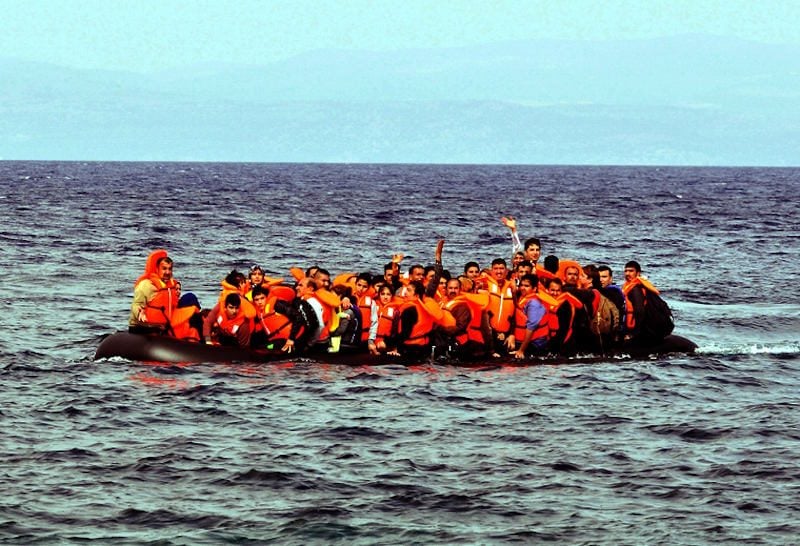
Crete is facing an unprecedented surge in migrant arrivals, with authorities struggling to keep pace. On Friday, 21 August, seven separate incidents brought 356 migrants to the island’s southern shores in just a few hours.
Before authorities could even complete their response operations, Saturday morning brought another 33 arrivals, highlighting the relentless pressure on rescue and processing services.
Friday’s massive influx: 356 people in seven incidents
Seven consecutive maritime incidents unfolded across Crete’s southern coast on Friday, stretching the capabilities of the Hellenic Coast Guard, Frontex and local police to their limits.
The incidents spanned from Gavdos island in the west to the eastern coast near Ierapetra, with arrivals also recorded at Paleochora, Kaloi Limenes, Psari Forada and the island of Chrysi.
Incident-by-incident breakdown
Gavdos area: A Frontex vessel rescued 43 migrants—41 men and two minors—from a boat approximately 20 nautical miles south of Gavdos. A 17-year-old from South Sudan was identified as the smuggler.
Further south of Gavdos: Two additional boats were located 34 nautical miles south of the island. The first carried 49 people (45 men, 1 woman, 3 minors); the second held 39 (36 men, 1 woman, 2 minors). All 88 were brought safely to Paleochora.
Paleochora beach: A Coast Guard patrol boat found 51 migrants (46 men, 1 woman, 4 minors) on Gyaliskari beach and transferred them to Paleochora’s Tigani port.
Kaloi Limenes: A Frontex vessel rescued 44 people (42 men, 1 woman, 1 minor) from a boat 35 nautical miles south of Kaloi Limenes. They were brought to Heraklion port.
Eastern Crete: Fifty-four migrants landed on Vatos beach near Myrtos in Ierapetra and were taken to the former Makrylias Primary School for processing.
Chrysi island: Forty-three people were found on the island and transferred to Ierapetra, also accommodated at the former Makrylias school.
Psari Forada: Thirty-three migrants (29 men, 2 women, 2 minors) landed in the Viannos municipality and were transported to Heraklion port.

No rest for authorities: 72 more arrive Saturday morning
On Saturday morning, before Friday’s operations had even concluded, another group of 39 migrants was spotted on a beach near Kaloi Limenes, including women and children.
Simultaneously, a second boat with approximately 33 people was detected 16 nautical miles south of Gavdos. The migrants were rescued by a tanker vessel and brought to Gavdos port.
The Saturday incidents unfolded in rough seas, with northwest winds reaching 4–5 Beaufort scale, adding to the danger and complexity of rescue operations.
The scale of the crisis
In less than 48 hours, Crete received approximately 428 migrants across nine documented incidents. The continuous nature of arrivals—with barely a pause between Friday’s mass influx and Saturday’s fresh incidents—paints a picture of overwhelming pressure on island resources.
Coast Guard, Frontex and police personnel have been in constant operation across the entire southern maritime frontier, from Chania to Lasithi, with no respite in sight.
Daily reality, not isolated incidents
These incidents are not anomalies. Similar arrivals have been recorded almost daily in recent weeks, with comparable operations reported just days before.
The pattern suggests organised smuggling networks operating at scale, coordinating multiple departures from North African ports to exploit gaps in surveillance or capitalise on favourable weather windows.
Processing and accommodation under strain
With hundreds of new arrivals daily, the island’s accommodation facilities are stretched to breaking point. Former schools and temporary facilities are being used to house and process migrants while their claims are assessed.
The strain extends beyond accommodation to food services, medical care, security and administrative processing. Each new wave compounds the backlog.
Questions about sustainability
As migration flows continue unabated, questions mount about how Crete—and Greece more broadly—can sustain this pace. The financial, logistical and social costs are substantial.
Local authorities have repeatedly called for stronger support from the EU and central government to manage what is becoming a persistent humanitarian and operational crisis rather than a sporadic emergency.
Sources:
- Nea Kriti: “Rain” of arrivals in Crete — 356 migrants in seven incidents in just a few hours
- Cretalive: Migration crisis — authorities cannot keep up with rescue operations in Crete



