

Newsflash from Sunday, 3 May 2026:
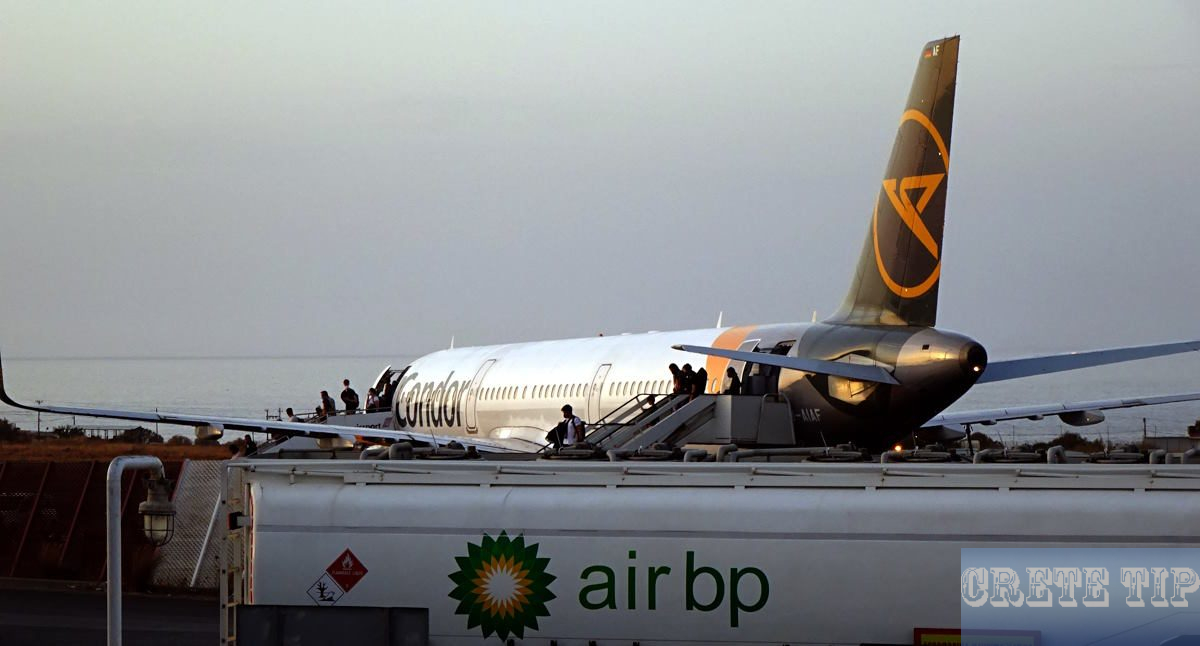
Summer is knocking on the door, and with it comes the promise of sun, sea, and sandy beaches. But there’s a dark cloud on the horizon—and it has nothing to do with weather forecasts.
As travelers dream of escaping to the idyllic shores of Crete, a pressing question looms: Will there even be flights to get us there? The culprit isn’t a pandemic or lockdown. It’s something far more complicated: a global kerosene crisis triggered by geopolitical tensions and dwindling fuel supplies.
Welcome to the summer of 2026—where your holiday to Crete might be grounded before it even begins.
The Kerosene Crisis: What’s Really Happening?
It sounds like science fiction, but the reality is sobering. As tensions escalate in the Middle East, particularly around the Strait of Hormuz—a critical global oil transportation route—the world is facing severe kerosene shortages.
Why Should You Care About the Strait of Hormuz?
For most people, the Strait of Hormuz is just a geographic footnote. But for the aviation industry, it’s everything. This narrow waterway is responsible for transporting roughly one-third of the world’s seaborne oil. When political instability threatens this route, crude oil prices skyrocket—and jet fuel costs follow suit.
Germany and the UK, among the world’s largest kerosene importers, are particularly vulnerable. And if these major European nations can’t secure adequate fuel supplies, flights to popular destinations like Crete will become either:
* Prohibitively expensive (ticket prices already rising 20-30%)
* Completely cancelled (airlines grounding flights entirely)
The Summer of Uncertainty: What Travelers Need to Know
Tourism boards and airlines paint a rosy picture with statements like “there’s plenty of fuel.” But the headlines tell a different story: “Tourists must prepare for scarce kerosene and soaring ticket prices.”
The disconnect is jarring. On one hand, we’re told everything is fine. On the other, we’re warned to expect flight cancellations and astronomical costs.
The Real Impact on Your Holiday Plans
If kerosene supplies remain tight through summer 2026:
For flights to Crete:
* Economy tickets could increase by 40-60% or more
* Premium cabin seats may become entirely unavailable
* Flights may be consolidated or cancelled altogether
* Airlines might reduce service to less profitable routes
For other Mediterranean destinations:
* Direct flights from Northern Europe may disappear
* Travelers might be forced into expensive connecting flights
* Budget airlines will cut capacity significantly
The domino effect:
* Long-haul flights to Asia and Australia will suffer the most (these routes rely on Middle Eastern hub airports for refueling)
* Return flights from destinations like Thailand or Australia could see dramatic price increases
* Even trains and ferries are affected—they need fuel too
The Recovery Timeline: When Will Things Return to Normal?
Here’s the uncomfortable truth: even if the Strait of Hormuz reopens tomorrow, it will take 3-6 months for oil production and refining capacity in the Middle East to normalize, according to Allianz Trade analysis.
That means:
* Summer 2026 is likely to be chaotic and expensive
* Early autumn may see some improvement
* A true return to affordable flying probably won’t happen until late 2026 or 2027
Which Destinations Will Still Be Accessible?
Not all hope is lost. Some regions are already seeing increased bookings as travelers pivot their plans:
The Winners:
* Spain: +32% year-over-year booking increase
* Italy: +20% increase
* Greece and Portugal: +20% increase each
These southern European destinations benefit from shorter flight times and don’t require expensive Middle Eastern hub connections. A flight from London to Barcelona is far less vulnerable to the kerosene crisis than one to Bangkok.
The Losers:
* Middle East destinations (obviously—too politically unstable)
* Long-haul Asian and Australian routes (expensive connections required)
* Remote or far-flung locales requiring multi-leg journeys
The Silver Lining: Should We Rethink Travel?
Before you panic, consider this: the kerosene crisis might be forcing us to reconsider how we travel—and that’s not entirely bad.
The days of casual flying—hopping to Mallorca for a weekend, jetting to New York for Christmas shopping, or taking a quick afternoon trip to Sylt—are largely behind us. The environmental cost of such casual aviation has always been steep. The economic reality is simply catching up.
What This Means for Conscious Travelers:
1. Embrace staycations: If you live in Germany: Black Forest, the Alps, the Baltic Coast, and the Lüneburger Heath are stunning alternatives
2. Plan ahead: If you must fly, book well in advance with a credit card (highest chargeback protection if flights are cancelled)
3. Support sustainable aviation: Some airlines are investing in biofuels and electric aircraft—prioritize these carriers
4. Consider rail travel: European train networks connect major destinations affordably and sustainably
5. Travel less, stay longer: One two-week trip produces far fewer emissions than four weekend getaways
The Booking Dilemma: Should You Book Now?
If you’re determined to reach Crete this summer, the answer is yes—but with caveats:
Best Practices for Booking:
✓ Use a credit card (not debit or PayPal)—you’ll have maximum recourse if your flight is cancelled
✓ Book with major carriers like Lufthansa (though cancellations happen)
✓ Avoid ultra-budget carriers like Ryanair if you’re booking far in advance (who knows their fuel strategy months out?)
✓ Consider package deals with ATOL protection (offers more security than flights alone)
✓ Be prepared to pay more than you would have in 2024 or 2025
What NOT to Do:
✗ Don’t assume “low-cost carrier + good reviews = reliability” in this environment
✗ Don’t book months in advance with airlines known for fuel hedging problems
✗ Don’t expect refunds if flights are cancelled—credit card chargebacks are your best defense
The Bigger Picture: A Wake-Up Call for Tourism
The kerosene crisis isn’t just about price gouging or inconvenience. It’s a signal that our globalized travel culture is unsustainable—both environmentally and economically.
Airlines have long operated on razor-thin margins, betting on low fuel costs and high passenger volumes. When external shocks (geopolitical tensions, climate impacts, supply chain disruptions) hit, the entire system becomes fragile.
Meanwhile, the environmental argument has always been clear: aviation accounts for 2-3% of global carbon emissions. A summer with fewer flights might actually be better for the planet.
Will You Make It to Crete?
Probably yes—but at a higher price and with more uncertainty than ever before.
The real question isn’t whether you can get to Crete. It’s whether now is the right time to go.
If Crete is non-negotiable for you this summer:
* Book immediately with maximum protection
* Budget 30-50% more than normal
* Have a backup destination in mind
* Consider traveling in May or September (shoulder seasons with lower demand)
If you have flexibility:
* Explore Mediterranean destinations reachable by train or short flights
* Embrace domestic tourism in your own country
* Consider postponing until late 2026 or 2027
Either way, the carefree days of cheap, casual flying are over. Welcome to the new reality of travel in 2026.
Grounded for Good: Spirit Airlines Becomes the First Major Casualty of the 2026 Global Fuel Crisis

The era of ultra-low-cost travel has hit a devastating turbulence. In a move that has sent shockwaves through the aviation industry, Spirit Airlines has officially filed for bankruptcy and ceased all operations.
As of May 2026, the “Yellow Bird” is no more, marking the first major economic “victim” of the spiraling energy crisis linked to the conflict in the Middle East.
The $2 Billion Crash: What Went Wrong?
While Spirit Airlines had been navigating turbulent financial waters for years—having entered bankruptcy protection twice in the last 18 months—the final blow came from the global oil markets.
The airline’s restructuring plan was built on a gamble that jet fuel would cost roughly $2.24 per gallon in 2026. However, the escalating conflict in Iran and the subsequent blockade of the Strait of Hormuz—a vital artery for global oil—pushed prices to a staggering $4.51 per gallon almost overnight.
This single miscalculation added an unmanageable $360 million in additional costs to a company already struggling with over $2 billion in debt.
A Failed Bailout and 17,000 Jobs Lost
The shutdown isn’t just a corporate failure; it’s a human tragedy. Approximately 17,000 employees are now facing unemployment.
The collapse also represents a significant political and economic blow to the Trump administration. Reports indicate that Spirit rejected a $500 million US government bailout offer, concluding that even with the infusion of cash, the astronomical rise in fuel costs made the business model fundamentally unsustainable.
Is This the End of Budget Flying?
Spirit’s demise is a “canary in the coal mine” for the rest of the industry. The same pressures that grounded Spirit are being felt globally:
* Lufthansa has already announced the cancellation of nearly 20,000 flights through October 2026 to mitigate rising operating costs.
* Ticket prices across all carriers are expected to rise as capacity shrinks and fuel surcharges become the new norm.
For decades, Spirit Airlines pioneered the “unbundled” fare model in the U.S., allowing millions to fly for the price of a bus ticket. With their exit, the market for ultra-affordable air travel faces an uncertain future.
What Should Passengers Do Now?
If you have a booking with Spirit Airlines, the situation is critical:
1. Check Your Flight Status: Most, if not all, flights have been grounded immediately.
2. Contact Your Credit Card Provider: If you paid by credit card, your best path to a refund is likely through a “chargeback” for services not rendered.
3. Look for “Rescue Fares”: Traditionally, when an airline collapses, competitors may offer discounted “rescue fares” for stranded passengers, though with fuel prices this high, these may be limited.
The Bottom Line
The fall of Spirit Airlines marks a turning point in modern aviation. It serves as a stark reminder of how quickly geopolitical instability can dismantle even the most established low-cost business models. As we move further into 2026, the question is no longer who will offer the cheapest flight, but who will be able to afford to fly at all.



