

Greece’s new housing strategy, which may include rent caps; when are rent increases permitted; and how a housing shortage encourages rent fraud.

The rapid growth of tourism across Europe—especially in popular destinations like Greece—is increasingly linked to rising rents and housing prices, according to a recent study conducted by the New Economics Foundation (NEF) on behalf of the European Federation for Transport and Environment.
The analysis, covering the period from 2019 to 2025, highlights a clear correlation between the surge in air travel and tourism arrivals and the escalation of housing costs. Countries such as Greece, Spain, Portugal, and Italy have experienced some of the most pronounced effects.
In Greece, the increase in air tourist arrivals by 27.2% over recent years is estimated to have contributed to an average rise of €8,500 in property purchase prices. Rental costs have also been affected, with an average increase of up to €342 (around 3.6%). Looking ahead, rents could climb by an additional €217 by 2031 due to this ongoing trend.

The study notes that tourism is not the sole factor behind the housing crisis. Structural issues—such as limited housing supply, bureaucratic hurdles, overlapping regulations, poor urban planning, and labor shortages in construction—also play a significant role in driving prices upward.
At the same time, the expansion of short-term rental platforms and increased property purchases by foreign buyers are intensifying pressure on local housing markets, particularly in high-demand areas and islands.
Data further reveals the scale of tourism pressure in certain regions. In the South Aegean, for example, the ratio of tourists to permanent residents has reached an estimated 19.2 to 1, illustrating the immense strain placed on local infrastructure and housing availability.
While tourism remains a cornerstone of the Greek economy, the findings underscore the need for balanced policies that support economic growth while ensuring access to affordable housing for residents.
Greece’s Bold New Housing Strategy: Opening the Door to Rent Caps and Affordable Homes
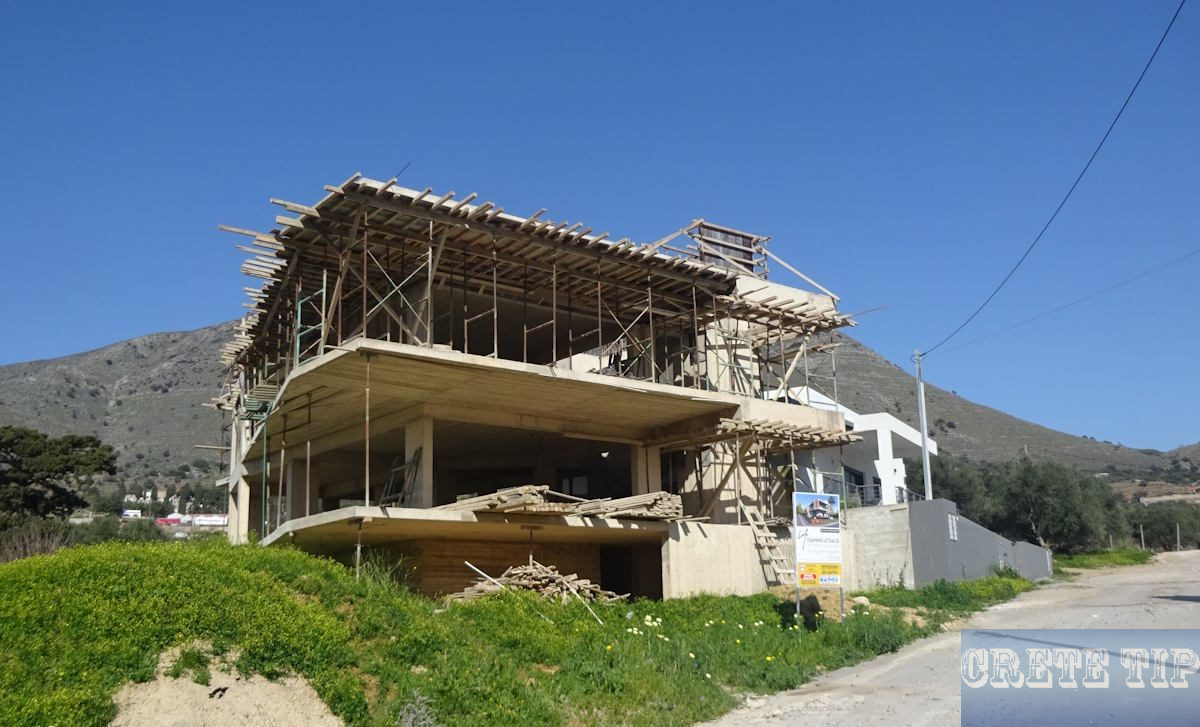
Greece is tackling one of its most pressing social crises with an ambitious new National Housing Strategy for 2026-2035, which recently concluded its public consultation phase. The strategy introduces groundbreaking measures that could reshape the country’s housing market, including the possibility of implementing rent caps on lower-quality properties and making homeownership more accessible to young people and middle-income families.
The Housing Crisis: Numbers Don’t Lie
The scale of Greece’s housing problem is staggering. While the entire European Union requires over 2 million new homes annually to meet demand—a gap of approximately €150 billion per year—Greece faces a unique structural challenge.
More than 80% of Greece’s residential stock was built before 2000, leaving most properties energy-inefficient and requiring significant renovations. The most paradoxical aspect? Greece has approximately 800,000 empty homes while rents skyrocket and demand peaks. This supply-demand mismatch, combined with demographic shifts toward smaller but more numerous households, has created an untenable situation for low and middle-income earners.
The situation is particularly acute on Crete, where roughly 55,500 older homes remain off the market due to multi-ownership complications, unresolved inheritance issues, lack of capital for upgrades, and strict zoning regulations in traditional settlements.
Four Game-Changing Measures
The new strategy proposes four major interventions designed to increase housing supply and alleviate pressure on renters:
1. A National Property Price Index—With Rent Cap Potential
The strategy calls for establishing a unified national property price index tracking rental and sale prices at national, regional, and local levels. This index would compile data from property transfers, rental agreements, bank appraisals, tax filings, and market indicators.
Here’s where it gets interesting: the index isn’t just for monitoring. The strategy explicitly opens the door to using this data as a reference tool for setting maximum rent ranges for lower-quality or energy-inefficient properties. This targeted approach mirrors Germany’s successful Mietspiegel system, which establishes official local rent benchmarks based on actual market data.
Properties could be classified based on location, construction quality, condition, and energy efficiency. Those meeting higher standards would remain in a free market, while lower-quality housing could fall under tenant protection rules with capped rents.
2. An Enhanced “My Home” Program for Affordable Mortgages
Building on the current “My Home II” initiative, the strategy proposes a more permanent mechanism to help young people and low-to-middle-income households purchase their first homes.
Rather than directly subsidizing interest rates from public funds, the new model offers tax incentives to banks that provide mortgages with reduced interest rates to eligible buyers. This shift makes the program more sustainable, as it doesn’t depend on temporary recovery fund financing.
The approach aligns with successful models used in France, including the Prêt à Taux Zéro (zero-interest loan) program, which supports first-time homebuyers through favorable financing embedded in standard banking procedures.
3. A Specialized Golden Visa for Long-Term Rentals
The strategy reimagines Greece’s Golden Visa program to serve a social purpose. Rather than simply facilitating property purchases by foreign investors, the new framework would allow investors to acquire multiple properties—provided they commit to long-term rentals within a specific timeframe.
Crucially, short-term rentals like Airbnb would be explicitly prohibited, with monitoring mechanisms ensuring compliance. This clever pivot transforms a real estate investment tool into an instrument for expanding affordable housing supply on the Greek market.
4. Reduced VAT for Affordable and Social Housing Construction
Leveraging European Union regulations that permit lower VAT rates for socially-oriented housing, Greece proposes applying reduced VAT to construction projects building affordable or social housing units. This tax incentive would encourage developers to invest in properties offering affordable or social rents, directly increasing supply.
Addressing Deep Inequalities
While Crete and some regions show lower poverty risk rates and housing cost burdens compared to other parts of Greece, the strategy recognizes that statistics mask profound structural inequalities. Empty properties, energy inefficiency, inheritance complications, and zoning restrictions function as barriers preventing these idle assets from entering the market.
The strategy proposes that property upgrades through existing incentive programs like “I Save Energy” and “I Upgrade My Home” could serve as prerequisites for reclassifying properties into less-regulated rental frameworks.
Why This Matters
Greece’s new housing strategy represents a pragmatic, multi-faceted approach to a crisis affecting millions. By combining market monitoring tools, financial incentives, regulatory frameworks, and tax measures, the government is signaling serious commitment to expanding affordable housing supply.
The possibility of rent caps—even if limited to lower-quality properties—marks a significant policy shift in a country where housing has long been treated as a purely free-market commodity. Whether these measures prove effective will depend on implementation details and political will, but the strategy demonstrates recognition that housing is fundamentally a social issue, not merely an investment opportunity.
Rent Increases Explained: When Landlords Can Raise the Price—and When They Can’t

With rental prices rising across Greece, many tenants are asking the same question: when is a rent increase actually legal? The answer depends not only on market conditions, but also on the terms of the lease agreement and key provisions in Greek law.
Understanding your rights—and obligations—can make the difference between a fair adjustment and an unlawful demand.
The 3 Key Cases Where Rent Can Increase
In general, a rent increase is only permitted under specific conditions. These include:
- If the lease includes a rent adjustment clause: Many contracts specify annual increases, often tied to a fixed percentage (e.g., 2%–3%) or inflation (Consumer Price Index). In such cases, the landlord can apply the agreed increase.
- If both landlord and tenant agree: A rent increase can be implemented at any time, but only with mutual consent. This agreement should always be documented in writing.
- After the mandatory three-year period: Greek law (Law 1703/1987) sets a minimum lease duration of three years, even if a shorter period is stated in the contract. After this period, a new rent can be negotiated freely—but again, only if both parties agree.
When Rent Increases Are NOT Allowed
Not every request for a higher rent is legal. Tenants should be aware that an increase is considered unlawful when:
- It is imposed unilaterally by the landlord during an active lease without a relevant clause in the contract
- It is requested before the end of the three-year minimum period without prior agreement
- It is demanded without the tenant’s consent or without signing a new agreement
In such cases, tenants have the right to refuse the increase and continue paying the originally agreed rent until the lease expires.
What Happens After the Lease Ends?
Once the lease duration is completed, the landlord may propose a new rental price as part of a renewal. However, this is not automatic. The tenant must agree to the new terms.
If no agreement is reached, the landlord may initiate legal procedures to terminate the lease and reclaim the property, following the applicable rules.
Why the Lease Agreement Matters
The most important document in any rental relationship is the lease itself. The presence—or absence—of a rent adjustment clause determines what can legally happen during the tenancy.
Tenants are advised to:
- Carefully review all terms before signing
- Request written confirmation of any changes
- Avoid accepting verbal agreements or informal pressure
- Be cautious about paying increased rent without formally agreeing, as this may be seen as acceptance
A Market Under Pressure
Rising housing demand and limited availability continue to push rents higher across Greece, turning lease renewals into difficult negotiations. Still, legal protections remain in place to ensure that increases are applied fairly and transparently.
Both tenants and landlords are encouraged to base decisions not only on market trends but also on clear agreements and legal guidelines.
Housing Shortage Fuels Rental Scams in Crete: What Tenants Need to Know

The growing housing shortage in Crete—especially in Heraklion—is not only pushing rents higher, but also creating fertile ground for rental scams. As demand surges and available properties shrink, experts warn that fraud attempts are becoming increasingly common, particularly during peak student housing season.
Rising Demand, Limited Supply
Recent data shows that rental prices in Heraklion have increased by around 10% within a year, with average rents reaching approximately €10 per square meter. The sharp rise is largely driven by strong student demand, a limited number of available homes, and the continued expansion of short-term rentals such as Airbnb.
This imbalance has intensified competition among tenants—students, workers, and permanent residents alike—making it harder to secure affordable housing.
Scammers Exploit the Pressure
According to the Association of Real Estate Agents of Eastern Crete, there has been a noticeable increase in reports of fraudulent listings and fake intermediaries posing as licensed agents.
In many cases, unsuspecting renters are asked to pay deposits upfront for properties they have only seen in photos. When they arrive, they often discover that:
- The property does not exist or has already been rented
- The photos were misleading—or even generated artificially
- The person they dealt with was not a licensed agent or the property owner
Some scams go even further, advertising incorrect property sizes or details to lure in victims.
“Don’t Pay Without Verification”
Industry experts are sounding the alarm. Prospective tenants are strongly advised not to transfer any money unless they have verified the identity and credentials of the person they are dealing with.
Licensed real estate agents in Greece are required to have a GEMI (General Commercial Registry) number and official professional identification. If someone refuses to provide this information, it is considered a major red flag.
It is also standard practice for legitimate agents to receive their fee only after the lease agreement is completed, not in advance without documentation.
Tips to Stay Safe
To avoid falling victim to rental fraud, tenants should:
- Always verify the agent’s or owner’s identity and credentials
- Request official documentation and a GEMI number
- Avoid sending deposits without viewing the property (in person or via verified channels)
- Be cautious of deals that seem too good to be true
- Confirm property details such as size, location, and availability
A Market Under Strain
The combination of rising rents and limited housing availability is creating a challenging environment for renters across Crete. As the search for housing becomes more competitive, the risk of exploitation grows.
Authorities and real estate professionals stress that awareness and due diligence are the best defenses against fraud in an increasingly pressured market.
Sources:
- Money Tourism
- Anatolh.com – The New National Housing Strategy and the Next Day for Crete
- CretalIve.gr – A Window for Rent Caps Opens with the New National Housing Strategy
- EKriti.gr – Housing Crisis: Window for Rent Caps and Cheap Loans
- Cretalive.gr – When a Landlord Can Request an Increase and When the Tenant Has Rights
- CretaTimes.gr – Rent Increases: When They Are Legal and How Tenants Can Protect Themselves
- Cretaone.gr – Rent Prices Surge in Heraklion
- Neakriti.gr – Warning Over Fake Listings and Rental Scams



