

Newsflash from Tuesday, 9 June 2026:
Crete is welcoming one of nature’s most remarkable annual events: the nesting season of the protected loggerhead sea turtle (Caretta caretta) has officially begun. At the same time, a powerful moment of hope and conservation unfolded as a rehabilitated turtle from the CreteAquarium was released back into the wild.
First Nests Signal Start of Nesting Season
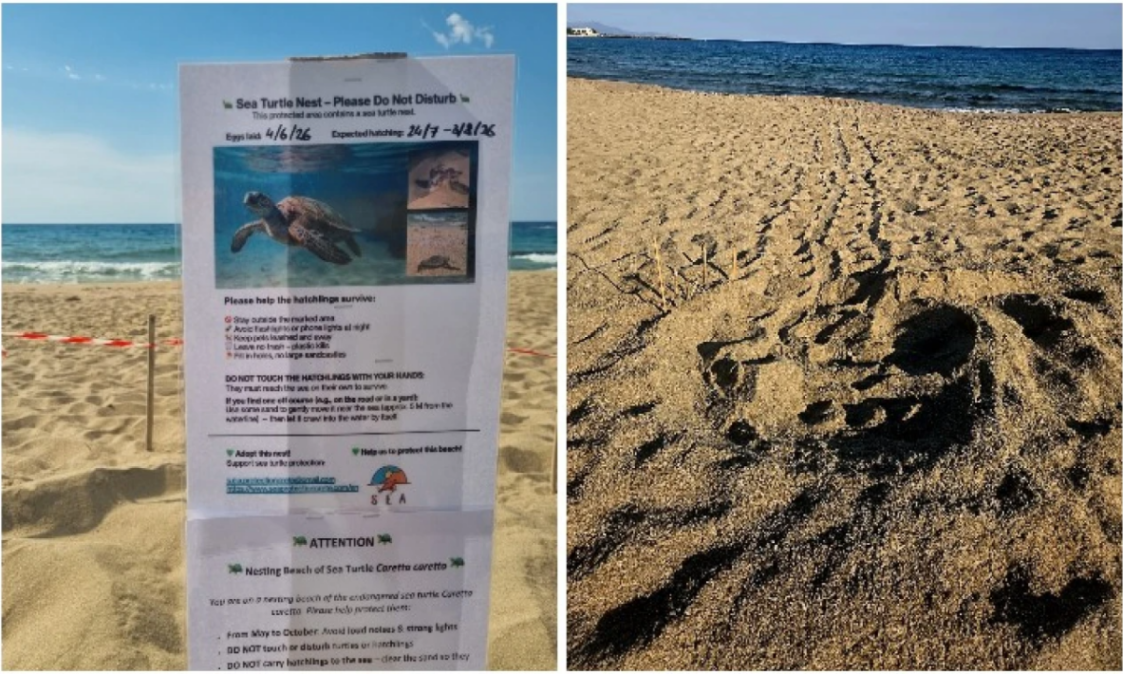
The first nests of the season were recently identified on Pachia Ammos beach in Stavros, Chania—one of the island’s most important breeding habitats for loggerhead turtles. Volunteers monitoring the area recorded two nests, marking the official start of this year’s nesting period.
According to observations, a young female turtle had been approaching the shore repeatedly in recent days before finally selecting suitable spots to lay her eggs. The nests have been confirmed and documented, with hatching expected in approximately 50 to 60 days.
Experts anticipate more nesting activity in the coming weeks, making this a critical time for conservation efforts and public awareness.
A Moving Return to the Sea
In a separate but equally inspiring event, the CreteAquarium hosted the release of a young loggerhead turtle named “Martis,” who had been rescued and rehabilitated over several months.

The small turtle, discovered earlier this year and cared for by specialists, made its emotional return to the sea in front of a crowd of locals and visitors. As “Martis” made its way from a small red container toward the water, onlookers watched in silence before breaking into applause.
The moment was made even more special by the presence of the person who originally found and saved the turtle, highlighting the vital role that public awareness and quick action play in wildlife protection.
CreteAquarium has successfully treated and released around 100 sea turtles, reinforcing its key role in marine conservation and environmental education.

Protecting a Fragile Ecosystem
The start of nesting season also serves as a reminder of how sensitive these coastal ecosystems are. Pachia Ammos, in particular, has faced environmental pressures in recent months, including pollution incidents and nearby construction activity.
Conservation groups stress that protecting nesting beaches is essential for the survival of the species. Visitors and residents are encouraged to:
- Avoid beaches at night when turtles come ashore to nest
- Refrain from using artificial lighting or making loud noises
- Fill in holes dug in the sand, which can trap hatchlings
- Respect marked nesting areas and follow local guidelines
A Season of Hope
The discovery of the first nests, combined with the successful rehabilitation and release of a young turtle, sends a strong message: conservation efforts are making a difference.
As the summer unfolds, Crete’s beaches once again become both a sanctuary for wildlife and a shared responsibility for all who enjoy them. With continued care and awareness, more hatchlings will soon make their journey to the sea—continuing a cycle that has lasted for millions of years.
This season is not just about nature—it’s about coexistence, respect, and the chance to protect something truly extraordinary.



