

Newsflash from Tuesday, 26 May 2026:
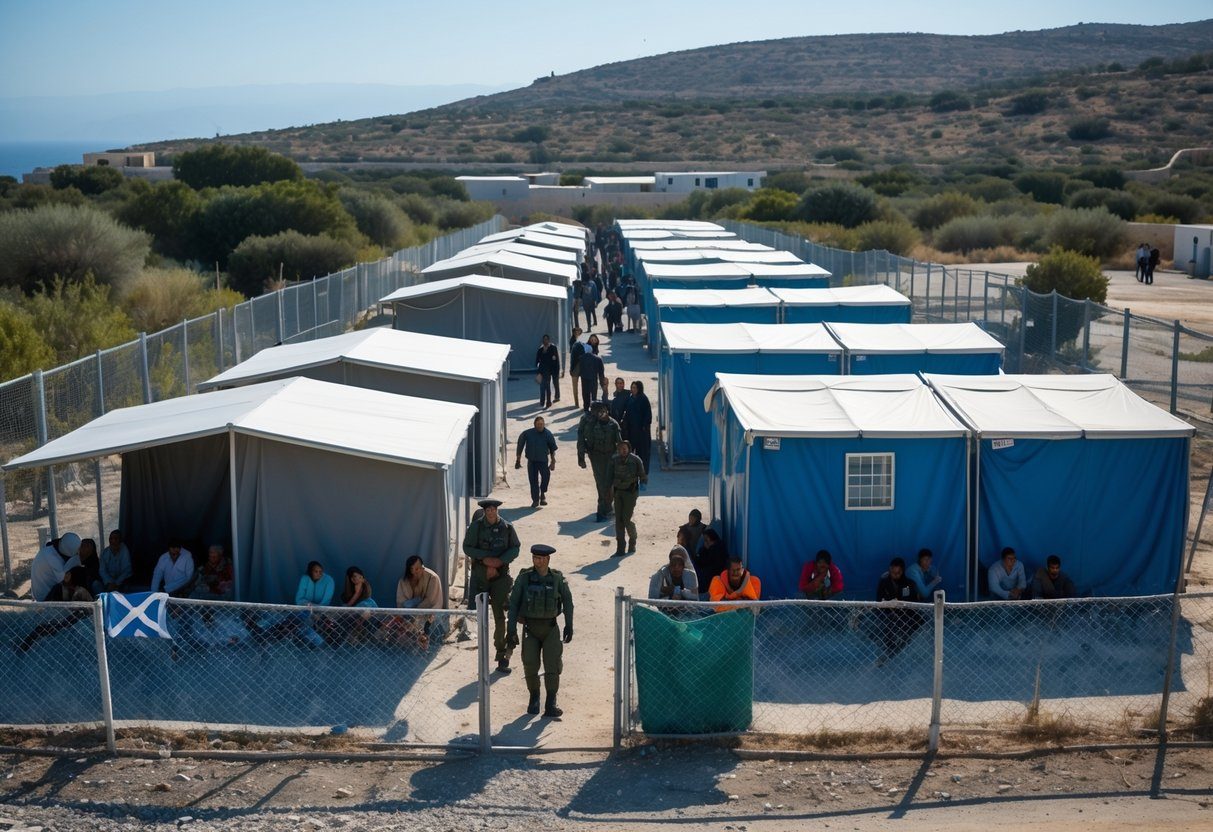
The Greek government is moving forward with plans to establish migrant reception facilities across Crete, even without the consent of local municipalities, as new arrival operations continue to strain island resources. Migration Minister Thanos Pleuris has made clear that the state will proceed with facility development regardless of local resistance, signaling a hardline approach to managing an escalating migrant crisis.
Government’s Unilateral Stance
In recent statements to the media, Minister Pleuris declared that the government will “proceed with the sites” for reception centres, warning that failure to establish proper facilities would result in migrant processing occurring at ports—a situation he characterized as “unsustainable” given Heraklion’s role as a primary entry point.
“The ministry will move forward on the sites,” Pleuris stated unequivocally, effectively dismissing local municipality objections and indicating that government interests supersede local consent in this matter.
Multiple proposals for facility locations—including former military camps and sites in Kalami and Gazi near Heraklion—have been rejected by the local municipality without offering viable alternatives, further hardening the government’s resolve to act independently.
Rising Arrival Numbers
The government’s determination to establish reception infrastructure comes amid continuing migrant arrivals across Cretan waters. According to the migration minister, 2025 saw approximately 19,000 to 20,000 arrivals in Crete, with current year targets expected to remain at similar levels, despite significant reductions anticipated from the Eastern Aegean region.
The urgency of facility development is underscored by ongoing rescue operations, with multiple incidents reported in recent weeks:
- Yesterday’s Operations Near Gavdos: Two separate rescue operations coordinated by the Coast Guard and assisted by Frontex vessels resulted in the salvation of 83 migrants total. The first operation rescued 38 individuals (36 men and 2 women) approximately 1.5 nautical miles from Gavdos’s Trypiti beach, while a subsequent Frontex operation saved an additional 45 migrants (44 men and 1 woman) south of the island. All rescued individuals were transported to temporary accommodation in Agia, Chania.
- Today’s Operations South of Crete: A Frontex aerial unit identified a migrant-laden boat approximately 35 nautical miles south of Kalos Limenes, resulting in the rescue of 36 individuals. The operation was coordinated by the Unified Search and Rescue Centre of the Coast Guard and proceeded without incident under favorable weather conditions.
Libyan Pressure and Prevention Efforts
The migration minister highlighted significant pressure originating from Libya, where approximately 500,000 migrants are seeking passage to Europe. During the first half of May, authorities recorded roughly 1,200 illegal arrivals in Crete alongside 530 prevention operations—a figure Pleuris described as a “first-time” indicator of cooperation from eastern Libyan authorities.
However, prevention operations present significant challenges, particularly when migrants are located in international waters, where intervention becomes legally and logistically complex. Cooperation with Libyan maritime authorities and Greece’s Ministry of Shipping continues to be developed.
Local Resistance and Regional Disparities
While Heraklion presents serious facility location challenges due to municipal resistance, the situation differs markedly in Chania. The government reports “very good cooperation” with Chania’s local authorities and has assured that “there will be no problems during summer” in that region.
This disparity highlights a growing divide across Crete’s municipalities, with some jurisdictions actively cooperating with national migration management strategies while others resist facility establishment through non-engagement and rejection of proposals.
New European Framework for Returns
The government’s aggressive domestic stance on reception facilities is accompanied by support for a stricter European migration framework. Under the new EU Migration Pact, Pleuris outlined forthcoming measures designed to increase deportation effectiveness:
- Individuals without asylum profiles will be placed in detention status
- Asylum applications will be examined within 12-week timeframes
- Increased pressure will be applied to third countries for returns of rejected applicants
- Five-nation EU collaboration (including Germany, Denmark, and the Netherlands) is establishing return centers outside EU territory, where non-immediately returnable migrants will be transferred
Currently, only approximately 20 percent of individuals with rejected asylum claims actually return to their countries of origin. The new framework aims to substantially increase this figure through third-country placement and incentivized voluntary returns.
The Path Forward
As migrant arrivals continue and rescue operations remain frequent, the tension between national government capacity-building and local municipal resistance shows no signs of resolution. The government’s determination to proceed without local consent represents a significant assertion of state authority over regional preferences—a dynamic likely to shape Cretan politics and migration management for months to come.
Whether facility establishment will proceed as unilaterally planned, or whether local resistance will eventually force negotiated solutions, remains to be seen. What is clear is that the migrant crisis affecting Crete is neither subsiding nor generating consensus among stakeholders.
Source:



