

Newsflash from Monday, 22 June 2026:

Greece’s short-term rental market is experiencing unprecedented growth, with soaring demand and accelerating price increases reshaping the competitive landscape for traditional hospitality. However, this expansion is creating mounting pressure on conventional hotels, which face declining occupancy rates and intensifying competition from the booming Airbnb sector.
Greece Defies European Downtrend in May 2026
While the broader European short-term rental market contracted in May 2026, Greece emerged as a remarkable exception to the continental decline. According to AirDNA data, Greek demand for short-term rentals increased by 2% year-over-year—a stark contrast to the 1.1% decline recorded across Europe as a whole.
This countertrend performance underscores Greece’s distinctive appeal in the global tourism market and its capacity to attract sustained visitor interest even as other major European destinations experience softening demand.
Explosive Price Growth Leads European Market
The pricing trajectory across Greece’s short-term rental sector has been particularly striking. The average daily rate (ADR) surged 9.1% year-over-year to €135.50, positioning Greece among Europe’s strongest performers in revenue generation per available unit.
Most impressively, Greece now ranks second among major European markets (those recording over 600,000 annual overnight stays) in average daily rate growth, trailing only the Netherlands (+10.3%) and narrowly ahead of Croatia (+9.5%).
At the destination level, premium properties command exceptional premiums. Santorini has seen price increases of 31%, making it one of Europe’s most expensive short-term rental destinations. Mykonos and other high-profile destinations similarly report double-digit price appreciation.
Source: Hania News – Greece’s short-term rental market surges with rising demand and prices
Occupancy Rates Climb Amidst Market Rebalancing
Beyond pricing, the core health indicator of occupancy rates has strengthened substantially. Greek short-term rentals achieved a 58.1% occupancy rate in May, representing a 5.4% year-over-year increase—a particularly significant metric because it demonstrates that revenue growth stems from genuine demand expansion rather than merely higher pricing.
This occupancy improvement resulted from a confluence of factors: increased visitor demand combined with a 2.3% contraction in available listings (down to 142,633 units). The reduction in inventory supply appears partially attributable to regulatory changes implemented in October 2025, which introduced stricter qualification standards for short-term rental listings.
The regulatory tightening appears to have filtered out marginal properties, creating a more balanced and professional market environment while simultaneously supporting pricing and occupancy strength for compliant operators.
Revenue Performance Reaches New Heights
The combined effect of increased occupancy and rising prices has generated exceptional revenue growth. Revenue Per Available Room (RevPAR)—the standard metric for measuring accommodation sector performance—increased 15.1% year-over-year to €78.70 per available unit.
This substantial revenue acceleration reflects genuine market strength rather than artificial price inflation. As market analysts emphasize: “The revenue increase is not merely a result of higher prices, but reflects the improvement across all major metrics. The simultaneous increase in demand, occupancy rates, and prices demonstrates that the short-term rental market in Greece is strengthening in both volume and yields.”
The Hotel Sector Under Mounting Pressure
While the short-term rental sector flourishes, traditional hotels face an increasingly challenging competitive environment. On Crete, the island exemplifies the pressures confronting conventional hospitality.
The scale of the competitive challenge is evident in the raw numbers: Crete hosts approximately 170,000 legal short-term rental beds, with an estimated additional 30,000 unlicensed units operating. This compares to only 220,000 hotel beds across the entire island—meaning short-term rentals now represent 77% of the hotel sector’s capacity.
According to Nikos Chalkiadakis, president of the Heraklion Hotel Union, this proliferation of short-term rental alternatives is reshaping visitor behavior in ways that directly impact hotel performance.
“The increased supply of non-hotel accommodations affects the average length of stay among visitors, resulting in fewer overnight stays despite maintained high demand levels,” Chalkiadakis noted. This phenomenon—where visitor volume remains stable but duration of stay contracts—creates a particularly pernicious competitive dynamic for traditional hotels.
Source: Hania News – Crete hotel sector faces pressure from short-term rental expansion
Visitor Redistribution and Length-of-Stay Compression
The competitive dynamic between hotels and short-term rentals has created a particularly challenging scenario for traditional hospitality operators. While absolute visitor numbers remain strong—indeed, Crete reports hotel occupancy rates near 85% and tourism revenues up approximately 15%—the composition of that demand has shifted dramatically.
Airbnb and similar platforms offer several competitive advantages that appeal to contemporary travelers:
- Greater perceived authenticity and local integration
- Flexible check-in/check-out arrangements
- Self-catering options reducing meal-service dependency
- Increased privacy and personalization
- Pricing flexibility and promotional opportunities
These attractions have incentivized shorter stays, reducing the total number of room-nights required to accommodate the same visitor volume. For hotels, this compression of average length of stay directly translates to reduced occupancy days and lower overall revenue, even as visitor traffic remains robust.
Profitability Squeeze Despite Revenue Growth
Adding to the hotel sector’s challenges, operational costs have escalated substantially. Rising labor expenses, energy costs, supply chain expenses, and maintenance requirements have created a significant margin compression dynamic.
While tourism revenues in regions like Crete have grown approximately 15%, this growth must be weighed against increased operational expenses and reduced occupancy rates. For many hotels, absolute profit margins have stagnated or contracted despite top-line revenue growth.
Strategic Outlook and Market Evolution
Industry analysts expect this competitive dynamic to intensify throughout the remainder of 2026. Demand projections suggest June will experience modest softness (down 1.5% year-over-year), but July and August are forecast to surge 7.7% above prior-year levels. The shoulder season (September) is projected to show particularly strong growth at 10.3%, reflecting a structural shift toward extended season travel.
This evolution toward extended-season demand creates opportunities for properties offering flexibility, but intensifies competitive pressure for traditional hotels operating within conventional seasonal frameworks.
The Broader Implications
Greece’s short-term rental expansion represents a fundamental restructuring of the nation’s accommodation sector. While the growth in this segment demonstrates Greece’s enduring appeal and tourism resilience, it simultaneously creates structural challenges for the traditional hotel industry.
The question facing Greek hospitality stakeholders is not whether short-term rentals will continue expanding—the data clearly indicates they will. Rather, the question is whether hotels can adapt their offerings, pricing strategies, and operational models to compete effectively in an environment where flexibility, authenticity, and cost-consciousness increasingly drive visitor preferences.
For policymakers and tourism authorities, balancing the growth of short-term rentals against the preservation of a healthy traditional hotel sector represents an ongoing challenge requiring careful regulatory calibration and strategic industry dialogue.
Urban Tourism Explosion: How Airbnb Is Transforming Greece’s City Destinations Into Global Travel Hotspots
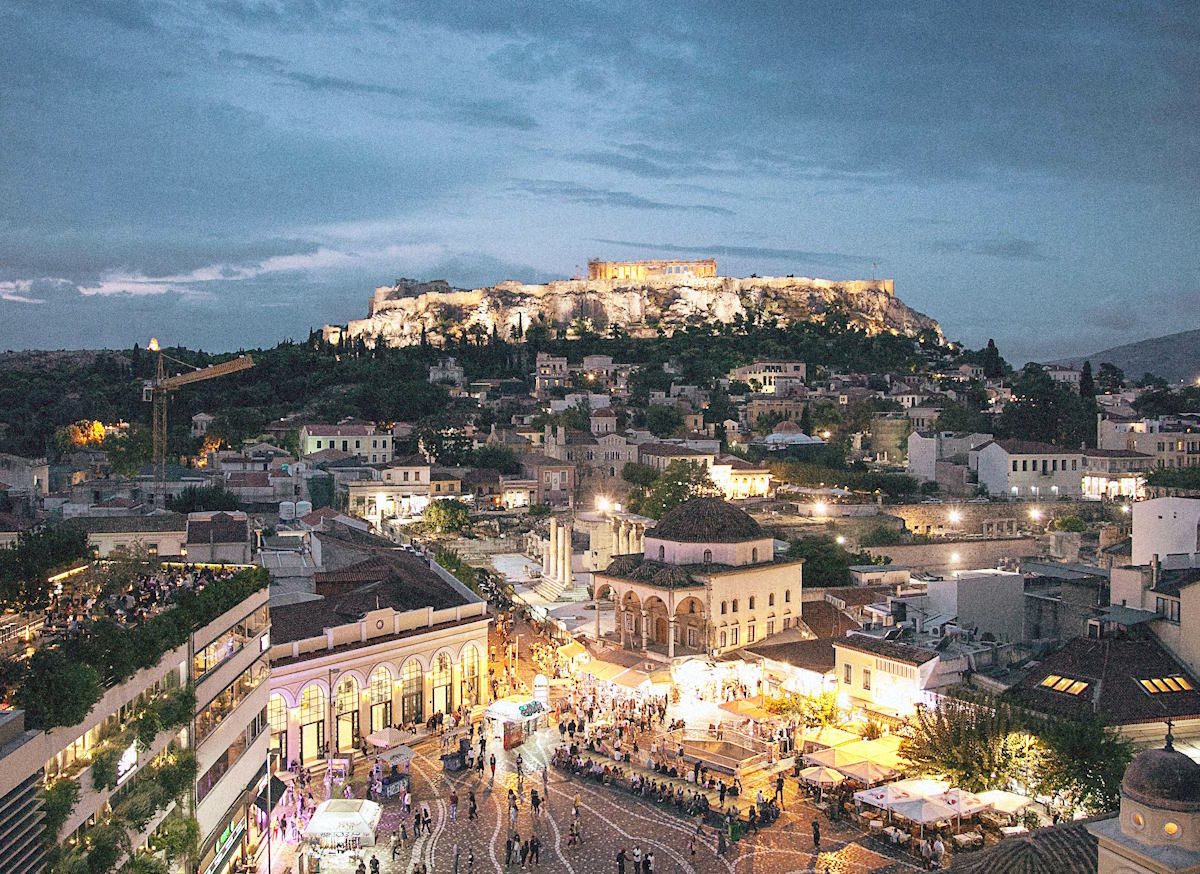
Greece’s urban tourism landscape is undergoing a dramatic transformation, with short-term rental platforms like Airbnb catalyzing unprecedented growth in city destinations. The data reveals a fundamental shift in how travelers experience Greece, as formerly overlooked urban areas and periurban destinations evolve into major tourism hubs alongside the nation’s traditional island and coastal strongholds.
The Urbanization of Greek Tourism
For decades, Greece’s tourism narrative centered on island destinations—Santorini, Mykonos, Crete—and coastal resort areas. However, analysis of short-term rental distribution patterns reveals a dramatic rebalancing toward urban tourism, particularly in Athens and Thessaloniki.
According to data from Greece’s Independent Authority of Public Revenue (AADE), which maintains a registry of all properties generating short-term rental income, the concentration of tourism activity in metropolitan areas is now substantial and growing.
In 2025, Athens-based properties dominated the short-term rental landscape, with 25,994 properties registered in the Attica region declaring short-term rental income. This represents a commanding 22% of all short-term rental activity nationwide and underscores the unprecedented scale of urban tourism growth.
Nationwide Dispersion: Short-Term Rentals Everywhere
While Athens and other major cities lead in absolute numbers, perhaps the most striking finding is the virtually universal dispersion of short-term rentals throughout Greece. Data demonstrates that 325 out of 332 municipalities (98%) have at least one property generating income from short-term rentals.
More impressively, 65 municipalities reported short-term rental income from more than 500 properties each in 2025—a threshold that indicates a genuine, self-sustaining tourism ecosystem rather than isolated, opportunistic listings.
This distribution pattern fundamentally contradicts the traditional geographic concentration of Greek tourism. The short-term rental phenomenon has not merely enlarged the existing tourism pie; it has geographically redistributed that pie across the nation in unprecedented fashion.
Source: Hania News – Massive growth in urban tourism in Greece through Airbnb expansion
The Rise of Non-Traditional Tourism Destinations
One of the most significant implications of short-term rental proliferation is the emergence of tourism viability in regions previously considered peripheral to Greece’s tourism economy. The data reveals Airbnb-style platforms have created tourism opportunities in areas that would never have attracted traditional hotel investment.
As urban planner and researcher Dimitris Kourkouridis notes, this phenomenon extends to genuinely rural areas and non-coastal destinations: “There is clear evidence of short-term rental activity in agricultural regions and inland areas that bear no resemblance to classical Greek tourism patterns.”
This represents a qualitative break from previous decades. During the 1980s and 1990s, Greece’s tourism expansion followed predictable patterns: coastal development preceded island expansion, which preceded adventure tourism in mountain regions. Each wave required substantial capital investment and infrastructure development by formal hospitality operators.
Short-term rentals eliminate this gatekeeping function. A rural homeowner in an inland Peloponnesian village can now monetize their property without awaiting hotel development or tour operator investment. This democratization of tourism supply has generated entirely new destination opportunities.
The “Former Weekend Homes” Phenomenon
A particularly significant driver of short-term rental growth involves the conversion of traditional second-home properties into income-generating tourist accommodations. During the 1960s-1990s, affluent Greek families constructed weekend villas and summer homes in periurban areas around Athens and Thessaloniki—properties designed for family leisure use rather than commercial hospitality.
The rise of Airbnb has created powerful economic incentives to convert these idle properties into revenue-generating tourist accommodations. Rather than remaining vacant except during family holiday periods, these properties now generate substantial income from tourists seeking authentic local experiences.
As tourism scholar Pari Tsartas observes: “The ‘elephant in the room’ is formerly used weekend properties that have ceased to serve traditional Greek family purposes. Their management has been transformed into tourism entrepreneurship. What were once family leisure assets have become income-generating tourist businesses.”
This repurposing represents a fundamental economic restructuring in which underutilized residential assets have been mobilized as productive tourism infrastructure without requiring new construction or formal hotel development.
Regional Revenue Concentration and Performance
While short-term rentals have dispersed geographically, revenue concentration reveals distinct regional patterns. The highest-earning properties cluster in premium destinations and urban centers:
- Central Athens: 1,722 properties generated annual income exceeding €10,000, establishing the capital as the dominant revenue source
- Corfu: 1,554 high-revenue properties reflecting island premium positioning
- Chania (Crete): 1,282 properties in the €10,000+ annual income category
- Chalkidiki: 1,281 properties demonstrating strong coastal-area performance
- Rhodes: 741 high-revenue properties from island tourism strength
- Paros: 499 high-revenue properties
- Kefalonia: 469 properties in premium revenue category
This hierarchy reveals that while short-term rentals have dispersed geographically, premium pricing and highest revenues remain concentrated in established tourism destinations and urban centers. However, the emergence of secondary and tertiary destinations as viable tourism zones represents a substantial economic opportunity for previously marginalized regions.
Central Macedonia’s Emergence as Tourism Powerhouse
Beyond Athens, Central Macedonia has emerged as a tourism powerhouse, with 17,748 registered properties declaring short-term rental income in 2025. This places the region second nationally and reflects both Thessaloniki’s urban tourism potential and substantial growth in periurban and coastal municipalities throughout northern Greece.
The Aegean regions similarly demonstrate strong growth, with the Southern Aegean (16,100 properties) and Crete (12,870 properties) maintaining significant market presence. The Ionian Islands (11,664 properties) complete the top tier of short-term rental concentration.

Eastern Macedonia and Thrace: The Surprising Contender
Perhaps most surprising is the rapid emergence of Eastern Macedonia and Thrace as a meaningful short-term rental destination. Growth in Kavala’s regional unit (encompassing the municipalities of Kavala, Pangaio, and Thassos) and Alexandroupoli has positioned this historically peripheral region to approach the performance levels of the far more tourism-developed Peloponnese.
This convergence reflects both increased accessibility to these regions and the availability of relatively affordable accommodation options, which attract budget-conscious travelers and extended-stay visitors seeking alternatives to premium coastal destinations.
Professional Travel as Underestimated Demand Driver
Tourism analysts have identified an often-overlooked demand factor: professional travelers. Business professionals, contractors, consultants, and project managers traveling within Greece for work frequently prefer short-term rentals over hotels, citing greater flexibility, cost efficiency, and convenience.
This professional demand segment explains the presence of substantial short-term rental activity in non-touristy urban neighborhoods—such as Kallithea and Moschato in Athens—areas with minimal appeal to leisure tourists but significant utility for traveling professionals requiring longer-term accommodation in urban centers.
This dynamic suggests that short-term rental demand encompasses a broader spectrum than traditional tourism analysis recognizes, encompassing business travel, professional relocation, and extended-stay segments that traditional hotel metrics may undercount.
Implications for Greece’s Tourism Strategy
The dramatic expansion of urban tourism and geographic dispersion of short-term rentals has profound implications for Greece’s tourism positioning. The nation is no longer primarily marketed as an island and coastal destination; it is increasingly a diverse, multidestination tourism market offering urban experiences, cultural immersion, rural authenticity, and adventure tourism opportunities.
This diversification enhances Greece’s resilience by reducing dependency on specific geographic regions or tourism segments. Extended-season travel to urban destinations and non-coastal areas extends the tourism calendar beyond the traditional summer peak, creating more stable year-round employment in tourism-adjacent sectors.
The Transformation of Greek Tourism Identity
The rise of Airbnb-enabled urban tourism represents a qualitative transformation in how Greece presents itself to global travelers. Rather than exclusively emphasizing Mediterranean beaches and island romanticism, Greece now offers cosmopolitan urban experiences, cultural tourism, food tourism, and authentic local encounters across geographically dispersed destinations.
This evolution reflects broader global tourism trends: travelers increasingly seek authentic experiences and local integration rather than isolated resort experiences. Short-term rentals, by their nature, facilitate this preference by embedding visitors within residential neighborhoods and local communities.
For Greece’s tourism industry, the Airbnb phenomenon represents neither unalloyed benefit nor unmitigated challenge. Rather, it represents a fundamental restructuring of the nation’s tourism economy—one that creates opportunities for previously marginalized regions while simultaneously intensifying competitive pressure on traditional hotel operators and raising questions about sustainable tourism management in increasingly saturated destinations.



