

The agricultural protests and the blockade of Heraklion Airport have consequences that many people are unaware of. It’s about more than just political demands – it’s about people.

For example, urgently needed radioactive medication for a PET scan laboratory could not be delivered by plane. Twenty cancer patients had to cancel their appointments, causing a great deal of uncertainty for them and their families.
A professor of pneumology reported an almost eerie calm in a place that is usually bustling with life. He asks the question: how can a protest movement ultimately cause suffering to people who have nothing to do with the whole thing?
He wonders how young people come to use a symbol of hard work – the farmers’ stick – as a tool of violence. And why are they destroying property, even the cars of ordinary workers at the airport?
He does not see the responsibility lying solely with the farmers. Rather, it is a social problem that affects us all.
The original message from Mr Tzanakis:

Mr Tzanakis went to the PET scan laboratory at Pagnis Hospital to collect patient results. He noticed how quiet it was there – normally it is a hive of activity.
He learned that twenty scheduled appointments had been cancelled because the radiopharmaceutical could not be delivered due to the airport occupation. Now twenty cancer patients and their families are desperately waiting for a new appointment.
He wonders: how can people so recklessly put the lives of others at risk? Who taught these young people that a stick, which actually stands for hard work, can be used to commit violence?
Who allows them to simply destroy other people’s property? Even the cars of employees who have nothing to do with the protest?
Mr Tzanakis believes that everyone should honestly recognise their own responsibility. It is not only farmers and livestock breeders who are called upon to act, but society as a whole.
Further comment:
The professor of nuclear medicine at the University of Crete and head of the nuclear medicine department at Pagnis Hospital, Ms Sophia Koukouraki, shared Mr Tzanakis’ post. She wrote:
‘I hope our patients’ suffering will soon come to an end.’
Sophia Koukouraki
Police officially deny using plastic bullets against protesters

The Greek police headquarters has stated clearly that no plastic bullets were used against farmers and cattle breeders in Heraklion. According to an official statement, the allegations are simply not true.
Key points from the police statement:
Point | Description |
|---|---|
No use of plastic bullets | The police units at the protests did not carry or use such equipment. |
Use of mild measures | Only legal and mild crowd control measures were used. |
Protection of public safety | The aim was to protect the population, the demonstrators and public order. |
False information | The dissemination of unfounded claims is considered harmful to public discourse. |
Police measures during the protests
- Use of visual contact and communication to de-escalate the situation
- Use of only approved, non-dangerous means
- Protection of passers-by and peaceful participants
Why the police reject the allegations
The authorities emphasise that such false reports distort the picture of events and make genuine dialogue difficult. The police maintain that their forces adhere to laws and regulations and have not used prohibited weapons.
Police union calls for measures to protect police officers
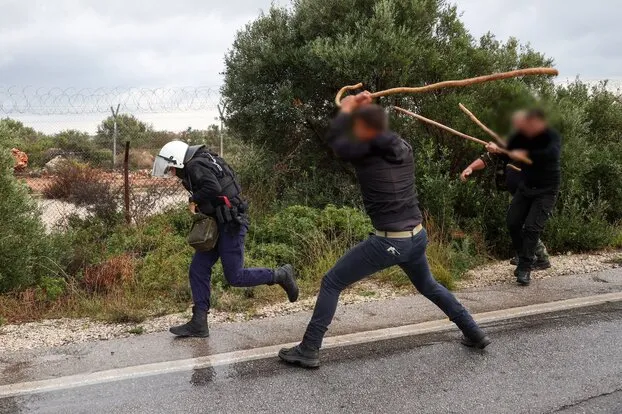
The police in Heraklion are quite concerned about the riots during the farmers’ protests in Heraklion and Chania.
These incidents have even made it into the international news—Reuters, AP News, Sky News, all have reported on them.
Now the Heraklion police union is demanding that the police be given better legal protection. They want to prevent something like this from happening again.
Key points of the statement:
- The police support the farmers’ concerns and understand their worries.
- Many police officers come from farming families themselves and feel a connection to them.
- The incidents in Heraklion and Chania not only posed physical risks to the officers, but also caused damage to their property.
- The police officers remained calm and professional despite provocations.
- They are not demanding special rights—only the legal protection that should actually be a matter of course.
- They wish their injured colleagues in Chania a speedy recovery.
- The police union is demanding that those responsible be severely punished.
Table: Demands and concerns of the Heraklion police union
Concern | Description |
|---|---|
Support for farmers | Recognition of and solidarity with the concerns of farmers |
Legal protection for the police | Introduction of laws that better protect the police during operations |
No special privileges | Demand for equal rights, no desire for extra or special rights |
Severe penalties for perpetrators | Consistent legal prosecution and punishment of those who contributed to the riots |
Protection of the police and citizens | Prevention of dangerous situations for police officers and the population |
Background to the demands:
The events have truly shaken the communities in Heraklion and Chania.
Police officers had to protect themselves and citizens, even though they often lacked the legal means to do so.
They say they urgently need more protection and freedom of action, especially in difficult situations.
Quotes from the statement:
‘We are not asking for privileges, but for what should be a matter of course: that the police finally be protected by law.’
“We are pained by the images of injured colleagues and destroyed property. The police stand by all citizens and the agricultural sector.”



