

The tyrants will not rule the island – Far-reaching measures against gun ownership in Crete.

New measures against crime announced by the Minister for Citizen Protection

New crime measures: Stricter framework for weapons
The minister has presented some tough changes to weapons legislation. The aim is to impose significantly harsher penalties for illegal possession of weapons.
- Severe penalties for illegal possession of weapons: Anyone who possesses or transports pistols or revolvers is now committing a crime.
- Up to 10 years’ imprisonment: Anyone who has violated the Weapons Act within the last ten years must go to prison – with no prospect of a stay of execution on appeal.
- Aggravating circumstances: Repeat offences or the use of weapons in cattle theft or extortion will result in severe penalties.
- Preventive measures: Public prosecutors can issue restraining orders if someone is threatened.
- Gun ownership checks: The authorities now check licences for sport shooters more closely to prevent abuse.
- Incentive to surrender weapons: Anyone who voluntarily surrenders their weapons will not be prosecuted.
- Extension to public events: The weapons ban now also applies to public places, weddings and markets.
The upgrading of the ‘Greek FBI’ and Crete
An important part of the new measures: the government is strengthening a special unit that many call the ‘Greek FBI’. This unit will be permanently based in Crete, where it will take targeted action against organised gangs and local mafia structures.
- Permanent presence: The unit will remain permanently on the island in order to respond quickly to crimes.
- Combating local gangs: It will prevent local criminals or thugs from calling the shots in Crete.
- Massive checks: Officers will carry out increased checks, especially during large-scale police operations against shootings and weapon abuse.
- Expanded police resources: The unit will receive more personnel and better equipment.
- Support for social security: Programmes are underway to strengthen people’s sense of security.
Measure | Objective | Effect |
|---|---|---|
Strict gun laws | Reduction in illegal gun ownership | Longer prison sentences |
Preventive interventions | Prevention of threats | Restraining orders in cases of threat |
Expansion of the ‘Greek FBI’ | Better fight against organised crime | Permanent presence in Crete |
Increased controls | Reduction in shooting incidents | Less public violence |
Immunity from prosecution for handing in weapons | Promotion of voluntary disarmament | More weapons surrendered |
Illegal weapons are used by criminals in Crete to intimidate people
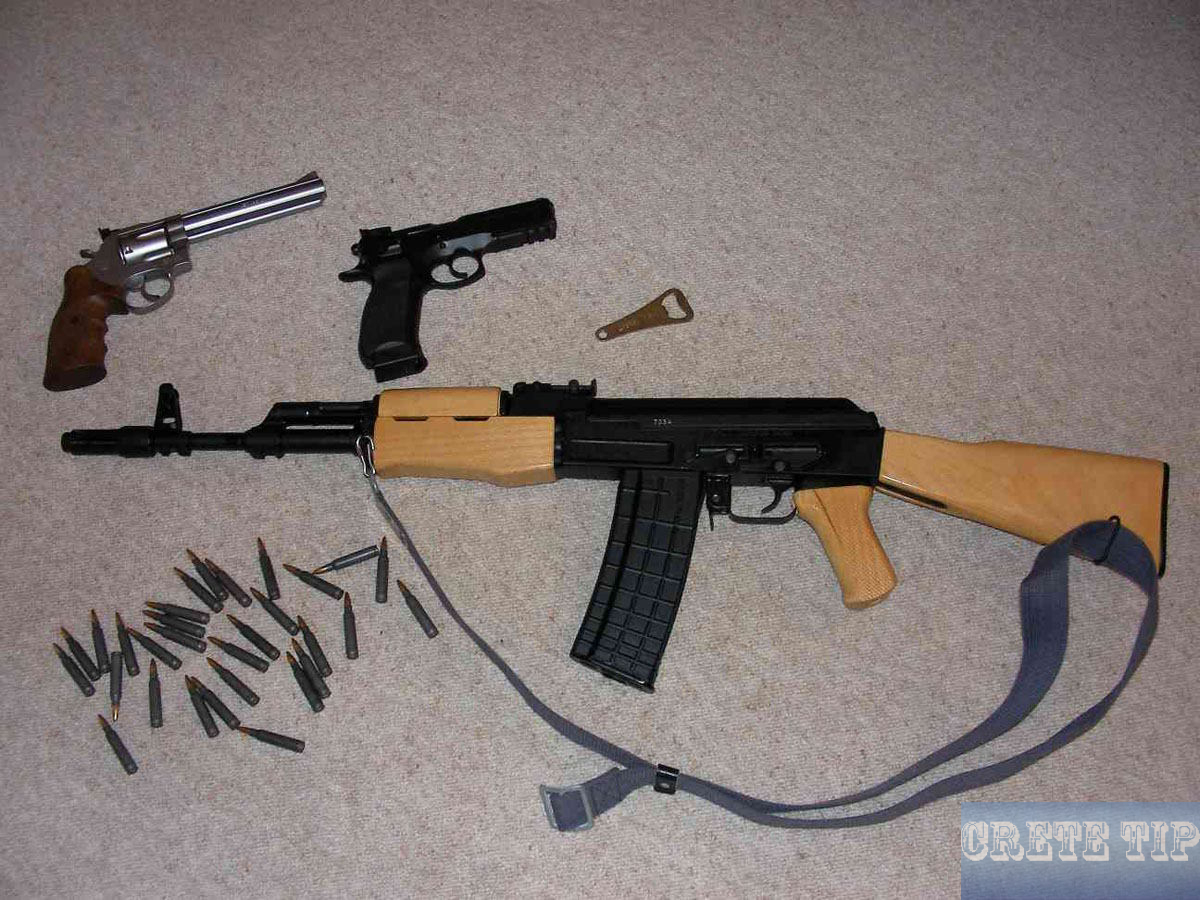
Georgios Margaritis says that crime is not something people are simply born with. Social and historical circumstances play a major role when it comes to illegal activities.
In Crete in particular, relationships have developed between the state and politicians that favour illegal business. That may sound like a cliché, but the reality is often more complicated.
Key issues | Description |
|---|---|
The importance of money | Money is at the heart of many problems; you have to understand the flow of money to combat crime. |
No traditional mafia | Crete does not have a traditional mafia, but there are networks in which money and violence are closely linked. |
Use of weapons | Violence and weapons secure power, especially when large amounts of illicit money are involved. |
Illegal activities | Many people live off black money, illegal trade or money laundering. |
Political influence | Illegal money brings votes and strengthens political networks. |
Margaritis believes that several thousand people in Crete live directly or indirectly from the shadow economy. Black markets arise from things such as illegal trade, drugs or subsidy fraud.
The state is usually unaware of this or hardly ever intervenes. Weapons, especially AK-47s (Kalashnikovs), serve as intimidation.
They create fear and protect the interests of the powerful. At social events – weddings, christenings, whatever – some people openly display their weapons. This shows how deeply rooted this culture is in some parts of society.
Another problem is that many people drive illegal off-road vehicles without actually owning land or taking responsibility. Vehicles with tinted windows are difficult to control, which does not exactly make things easier for the police.
Margaritis describes a society in which money and power are closely linked. Networks are created that not only secure illegal profits but also exert political influence.
- Cash flows are at the heart of crime.
- Violence secures the power of the shadow economy.
- Political structures are influenced by illegal money.
- Society is a mixture of traditions and modern, mafia-like methods.
Despite all this, Margaritis says that compared to other Mediterranean regions such as Sicily or Corsica, crime in Crete is relatively low. Nevertheless, the system of shadow economy and violence remains in place.The phrase ‘When hundreds of euros spill out of pockets, Kalashnikovs come into play’ sums up the problem – a lot of black money attracts violence. This may sound like a metaphor, but it describes a real phenomenon that exists in certain circles.
Exemplary list of typical characteristics
- Entanglement of politics and crime
- Violence and weapons as means of power
- Black money from various sources (drugs, subsidies, tourism)
- Social acceptance of illegal behaviour (e.g. drivers with 4×4 vehicles)
- Networks that offer votes and protection
The situation in Crete shows how closely money, power and violence are sometimes intertwined. Margaritis believes that one should not simply rely on origin or culture as an explanation. Instead, it is worth understanding the complex social and economic mechanisms that create and perpetuate such conditions.
Weapons exist and they are also shown!

In Crete, weapons are simply part of everyday life for many people. It’s not just about owning them, but also about displaying them openly.
This is particularly common at weddings. Weapons are presented as a matter of course, almost as if they were part of the celebration.
These weapons represent prosperity and the image of the ‘good life’. Those who display them want to make a statement.
Many use weapons to signal strength and status. This has a particular influence on younger people.
They copy this behaviour and think it’s cool to pose with weapons. The problem is that it doesn’t always stop at showing them off.
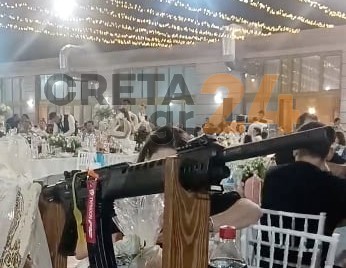
An example? There is this photo of a wedding table with a decorated, silenced weapon of war lying directly in front of the bride and groom.
The guests around them look proud, almost exuberant. The picture was taken at a wedding in the summer and ended up on the internet.
After the authorities intervened, it disappeared again. But by then, of course, it had already been shared widely.
Displaying weapons so openly sends a clear message: someone here has money and can afford such things.
This creates a sense of community among the guests. At the same time, it commands respect – or perhaps more of a kind of silent recognition.
Reasons for openly displaying weapons | Consequences for society |
|---|---|
Pride in possession and power | Promotion of violence and conflict |
Imitation of role models | Threat to public safety |
Symbol of prosperity | Glorification of a risky lifestyle |
Sometimes people even decorate their weapons like jewellery. They turn them into status symbols, not just tools.
In Crete, the boundaries between legal ownership, public display and possible misuse are quite blurred. Many people do not see their weapons as a danger, but as part of their identity and tradition.
This makes it difficult for the authorities to gain control or prevent violence.
Important to know:
- The weapons are often real and ready to fire.
- They are displayed at celebrations without much fear of consequences.
- The police can hardly do anything about it, as it often happens so openly.
This open display of weapons has an impact far beyond individual celebrations. It shapes the image of how power and violence are perceived in parts of society.
The culture of gun ownership here is strongly linked to prestige and social status. As long as this remains the case, little will change in terms of the danger of gun violence.
In short: In some parts of Crete, guns are much more than just tools. They are status symbols, part of celebrations and a means of demanding respect.
Tourism associations emphasise that Crete will continue to offer what it does best: authentic hospitality
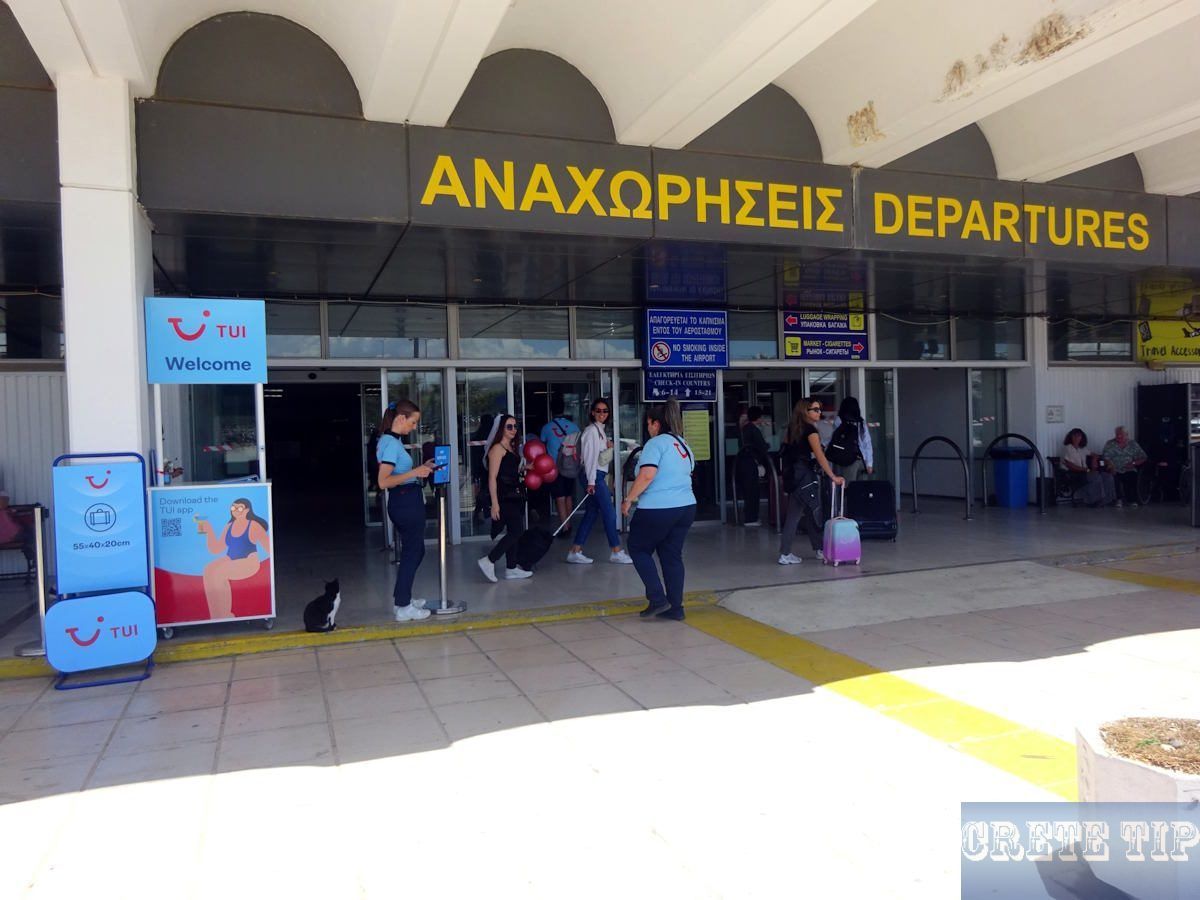
Crete remains a reliable travel destination. Visitors experience genuine hospitality, high-quality services and a safe environment here.
Although isolated incidents do occur, the island’s tourism associations emphasise that such events do not reflect the character of Crete or its people.
Every year, millions of guests from all over the world flock to Crete – many arrive by plane, others by ship.
Most feel safe, as incidents that compromise their sense of security are rare.
The tourism industry and the police work closely together to ensure that everything runs smoothly on the island.
The tourist authorities express their gratitude to the Cretan police and government agencies. Without their commitment, things would certainly be different.
Crete continues to focus on:
- Personal and warm hospitality
- Professional and high-quality services
- Stable security measures for visitors
This combination makes Crete one of the most popular and safest destinations in the Mediterranean. Anyone who has been here once understands this quite quickly.
| Facts about tourist safety in Crete |
|---|
| Approximately 6 million international tourists arrive by plane each year |
| Hundreds of thousands of visitors arrive by ship |
| Ongoing cooperation between the police and the tourism industry |
| No significant safety-related incidents |
The open and warm character of the Cretans continues to shape the island’s culture and tourist image to this day.
Anyone who travels to Crete feels welcome – and usually quite safe. Authentic hospitality really does live on here.



