

Newsflash from Friday, 8 May 2026:
Tracking the Sands: Greece Launches New Real-Time Desert Dust Observatory
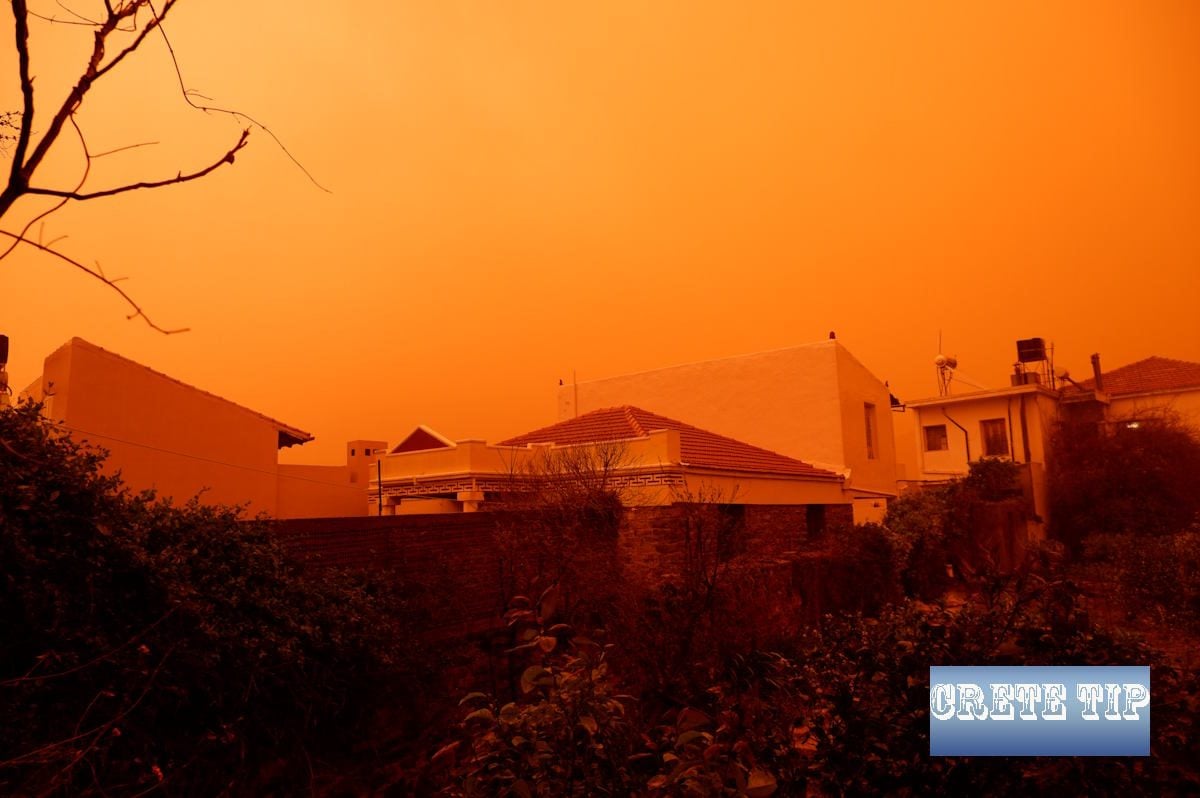
Greece is no stranger to the eerie orange skies and hazy horizons caused by Saharan dust. With these episodes becoming more frequent and intense—even occurring in the dead of winter—the National Observatory of Athens has stepped up to provide citizens with a powerful new tool.
The Meteo unit has officially launched the Desert Dust Transfer Observatory, a comprehensive digital platform designed to monitor and forecast the movement of African dust across the country.
Why a Dust Observatory?
The decision to launch this service follows a series of significant dust events, including a major episode on February 15, 2026. Because these particles can impact respiratory health, aviation, and agriculture, having real-time data is more than just a meteorological curiosity—it’s a matter of public safety.
How It Works: Three Pillars of Data
The new observatory (available at meteo.gr/dust) provides a three-layered approach to tracking dust:
1. Satellite Monitoring: Using data from the European Copernicus Sentinel-5P satellite, the platform tracks the “Aerosol Index” (AER). This allows scientists and the public to see the exact density and movement of dust clouds as they travel from Africa toward Greece.
2. Real-Time Ground Stations: Crete is often the first stop for Saharan dust. The observatory features live PM10 concentration charts from two stations in Rethymno (Rethymno city and Adele). These charts are updated every 30 minutes, providing a hyper-local look at air quality.
3. Advanced Forecasting: Using the DUST/METEO model—which has been operational since 2015—the site offers highly reliable 4-day forecasts. This allows residents to plan ahead for incoming episodes.

Current Outlook
The observatory’s recent data highlighted a significant dust transfer on Tuesday, May 5, 2026. Looking ahead, current models indicate another episode expected to peak around Friday, May 8, 2026, particularly affecting southern regions.
Stay Informed
As climate patterns shift and dust episodes become a regular part of the Greek weather calendar, tools like the Desert Dust Transfer Observatory are essential. Whether you are sensitive to air quality or simply want to know when to wash your car, you can now track the sands of the Sahara in real-time.
Orange Skies & Muddy Rain: New Wave of Saharan Dust Hits Greece This Weekend

If you noticed a hazy horizon this morning, you aren’t alone. A fresh wave of African dust has begun its journey across Greece today, Friday, May 8, with meteorologists warning of deteriorating air quality and the return of the infamous “muddy rain” through the weekend.
What to Expect: Friday and Saturday Peak
According to the latest forecasts, the concentration of atmospheric dust will gradually increase today, reaching its peak on Friday and Saturday. While this is a common springtime phenomenon in the Eastern Mediterranean, this particular wave is expected to be significant enough to impact visibility and air quality, especially in southern regions.
The most notable feature of this weather event is the “muddy rain” (laspobroches). As the dust clouds meet localized rain showers, the particles will be washed out of the sky, leaving a layer of fine orange silt on cars, balconies, and windows across many parts of the country.
Expert Insight: Don’t Just Look Up
Meteorologist Theodoros Kolydas has highlighted an important distinction for those tracking the event. While the Dust Aerosol Optical Depth (AOD) index—a global standard for measuring atmospheric particles—might show high values, it doesn’t always mean the air at ground level is unbreathable.
“The AOD measures the entire column of the atmosphere,” Kolydas explained. “High values can occur when dust is trapped at high altitudes, while ground-level air quality remains relatively clear. Conversely, even low AOD values can be problematic if the dust is concentrated near the surface.”
To get the most accurate picture, experts suggest monitoring a combination of satellite data and ground-level PM10 measurements.
Το Dust Aerosol Optical Depth at 550 nm είναι η συνεισφορά της ορυκτής σκόνης στο οπτικό βάθος της ατμόσφαιρας, στο μήκος κύματος των 550 nm, δηλαδή κοντά στο πράσινο τμήμα του ορατού φωτός. Το AOD χρησιμοποιείται διεθνώς για την παρακολούθηση των αερολυμάτων, ενώ τα 550 nm… pic.twitter.com/SJqLZyurCw
— Theodoros Kolydas (@KolydasT) May 6, 2026
Crete in the Crosshairs
As is often the case with Saharan transfers, Crete is expected to bear the brunt of the episode. The island is already seeing increased concentrations, and local stations in Rethymno and Adele are providing real-time updates to help residents manage the impact.
Quick Tips for the Weekend:
* Hold off on the car wash: With muddy rain expected through Saturday, it’s best to wait until Sunday or Monday to clean your vehicle.
* Monitor Air Quality: If you have respiratory sensitivities, keep an eye on real-time PM10 levels via meteo.gr.
* Normal Spring Weather: Meteorologist Giannis Kallianos reminds the public that while the skies look dramatic, these episodes are a natural and recurring part of the Greek spring.
The dust is expected to begin clearing by late Sunday as wind patterns shift, bringing fresher air back to the region.



