

Construction work has begun on the new BOAK section from Heraklion to Chania.

Chania: Work begins on the new northern road axis.
Here we go: the practical phase for the new coastal highway is starting in Crete. The concession for the section between Heraklion, Chania and Kissamos is officially active – this has triggered the first construction and planning work.
Work is already underway at several locations. Construction companies are busy with preliminary investigations, surveys and initial studies.
Around Chania and Rethymno, visible changes are already apparent – construction sites, barriers, the first machines. The project comprises around 157 kilometres of new or upgraded road along the north coast.
This includes side roads, bridges, tunnels and junctions. Some sections will be widened, others completely rebuilt – especially where tunnels are needed.
The concession runs for 35 years. Five years are set aside for planning and construction.
This will be followed by 30 years of operation, maintenance and administration by the concessionaire. Construction work will start in stages.
First comes preparatory work, then expansion and new construction, followed by tunnels and bridges. Construction sites will appear along the main route and on new sections of the line in several phases.
The aim is to keep traffic disruptions as local as possible. Efficiency is a top priority – at least in theory.
Traffic regulations will come into force gradually. There will be temporary diversions, fewer lanes and sometimes closures on the affected sections.
The goal? To keep traffic flowing smoothly and not lose sight of safety for workers and drivers.
The approximately 30-kilometre section between Kissamos and Chania is also part of the project. An intersection-free junction will connect the new road directly to Chania Airport.
The state has included this section in the concession as an option. Financially? The whole thing is quite a chunk.
The investment runs into the billions. The option for the route to Kissamos makes the total volume even greater.
Here are the most important key points at a glance:
- Total length: approx. 157 km
- Included: side roads, bridges, tunnels, intersection-free junctions
- Additional section: Kissamos – Chania (~30 km)
- Contract duration: 35 years (5 years of construction, 30 years of operation)
- Construction method: mixture of expansion and new construction (including tunnels)
How is the whole thing organised?
- Early phase: geological surveys, environmental and traffic analyses, surveying
- Set-up: Setting up construction sites, delivering materials, putting protective measures in place
- Main construction: Earthworks, bridges and tunnels, road construction
- Completion: Finishing traffic facilities, markings, tests, handover
You’ll notice it in your everyday life:
- Local diversions and longer journey times are possible.
- Construction sites are given safety zones and signage.
- Residents and commuters should pay attention to official information so that they don’t miss any changes.
Toll regulations and user contributions:
- Toll stations are planned for the new route.
- Where exactly and how much? This will be determined before the sections are put into operation.
- The toll system is to be electronic and stationary so that traffic does not slow down too much.
- Operators and the government are still working out the details of discounts, season tickets and tariffs.
Construction phases in brief:
- Planning and approvals
- Preliminary investigations, short-term diversions
- Setting up and expanding the first construction sites
- Tunnel and bridge construction
- Asphalting, marking, traffic management
- Operational tests, approval
What are the risks? And what can be done about them?
- Geology: Tunnels require intensive testing.
- Environment: Coastal sections require protection for nature and water.
- Traffic: Gradual control is intended to prevent congestion and accidents.
- Schedule: Construction phases should be carried out one after the other to avoid delays.
Who actually does what?
- Government agencies are responsible for permits, monitoring and safety.
- The concessionaire plans, builds, finances and operates the project.
- Local authorities regulate traffic and keep residents informed.
- Construction companies are active out on the route.
Visual documentation is also available:
- Photo reports and videos show how things are progressing.
- Pictures show new diversions, construction sites and surveys.
- Videos document construction progress – keeping residents and users up to date.
Tips for motorists:
- Check local traffic reports before setting off.
- In the event of closures, it is best to consider alternative routes.
- Pay attention to speed limits and construction site signs.
- Be considerate of construction workers and changed lanes – this sounds obvious, but it is not always the case.
How do authorities and operators provide information?
- They publish regular updates.
- Information points and websites provide information about construction phases, road closures and tolls.
- Questions can be asked at public meetings – whether this always helps is another matter.
This is what it looks like on site:
- Work sites are secured with fences, lighting and warning signs.
- Temporary traffic management measures are designed to relieve traffic through towns.
- Environmental controls are designed to keep dust and noise under control.
Technical focus – a few details:
- Tunnel construction requires modern drilling and blasting technology, as well as drainage solutions.
- Bridges are built in accordance with current earthquake standards.
- Road surfaces are covered with durable asphalt or concrete, designed to reduce noise as much as possible.
Financing and contract:
- The whole project is run as a long-term concession.
- The contract between the state and the concessionaire regulates who pays what.
- The operator invests and collects tolls and operating rights over the term of the contract.
Safety and environmental requirements:
- Regular inspections are carried out during the construction period.
- Watercourses, nature and agricultural land are protected.
- Measures against dust, waste water and noise are included.
Where can I find the latest information?
- Local media, websites and social media provide ongoing coverage.
- Photos and videos document milestones.
- This allows citizens to keep track of the construction phases and traffic changes.
Construction work on the BOAK bypass around Rethymno
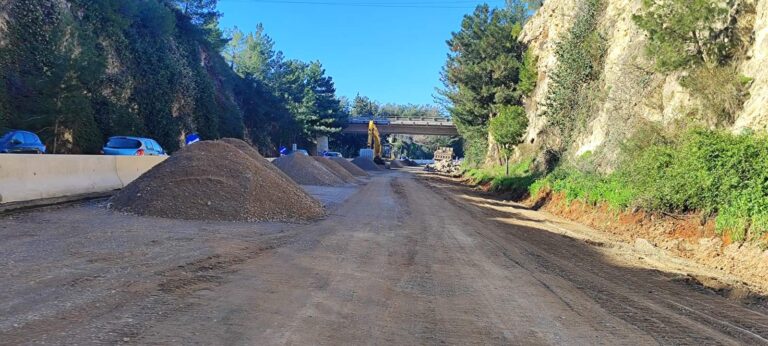
Construction work on the Rethymno bypass on the northern road corridor (BOAK) is in full swing. The project received a real boost after the concession agreement for the Chania–Heraklion section was finally signed.
Teams are working daily on the section between the Atsipopoulos junction and the Amari junction. The authorities expect this section to be completed by June.
Local traffic regulations are in place due to the construction work. Local residents are accepting the restrictions because they want a modern and safe expressway.
Maria Lioni, Vice-President of the Rethymno Region, emphasises how important the BOAK is for local development. Rethymno does not have its own airport or port.
That is why many see the road as a key project that can create economic opportunities and improve accessibility. Without this connection, the region will simply be left behind.
At the same time, the new airport project in Kasteli is underway. Lioni believes that this project will shift the transport axes on Crete.
In future, many people from Rethymno will probably travel to the airports in the west rather than to Heraklion. This will, of course, also change the travel and logistics routes for everyone who lives here or visits.
Against this backdrop, Lioni is calling for improvements to the route between Souda and Chania Airport. She says this connection is becoming increasingly important because travellers from Rethymno may be more likely to head west in future.
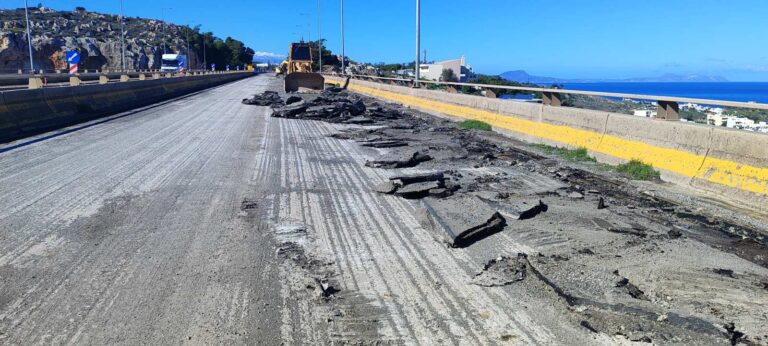
Her proposal: a new route and an upgrade so that the road can finally serve as a modern and safe motorway section.
Key points of their demand:
- New construction or re-routing of the Souda–Chania Airport section.
- Upgrading to a safe, fast road standard.
- Better connections for residents and tourists from Rethymno.
For the region, this road is the key to Chania Airport. A better transport route could significantly reduce travel time and increase safety.
Lioni also emphasises the economic aspect: faster access to the airport brings benefits for trade, tourism and commuter traffic. Sounds logical, doesn’t it?
From a technical point of view, planners cite several advantages:
- Shorter travel time between Rethymno and Chania.
- Relief for the old, often winding roads.
- More capacity for growing traffic, especially during the holiday season.
Residents and local authorities are keeping a close eye on how the construction work is progressing. Many are responding positively because they see the long-term benefits.
At the same time, there are concerns about the current construction sites and the associated traffic changes. Who likes diversions?
Political decision-makers are relying on cooperation between ministries, regional authorities and construction companies. They want to complete the routes safely and as punctually as possible.
National funds and money from European funds are being used to finance the project. Without this support, it would be almost impossible to carry out.
Practical implications for traffic:
- In the short term: diversions, fewer lanes, changed traffic light phasing.
- In the medium term: improved road layout, new safety features.
- Long term: More regional connectivity, changes in commuter and tourist behaviour.
The Rethymno bypass combines local priorities with the major infrastructure plans for Crete. Lioni emphasises that smaller communities also benefit from better roads.
The planned extension to connect to Chania Airport remains her main concern. Who knows, maybe in the end it will really bring the hoped-for boost.



