

Newsflash from Wednesday, 10 June 2026:
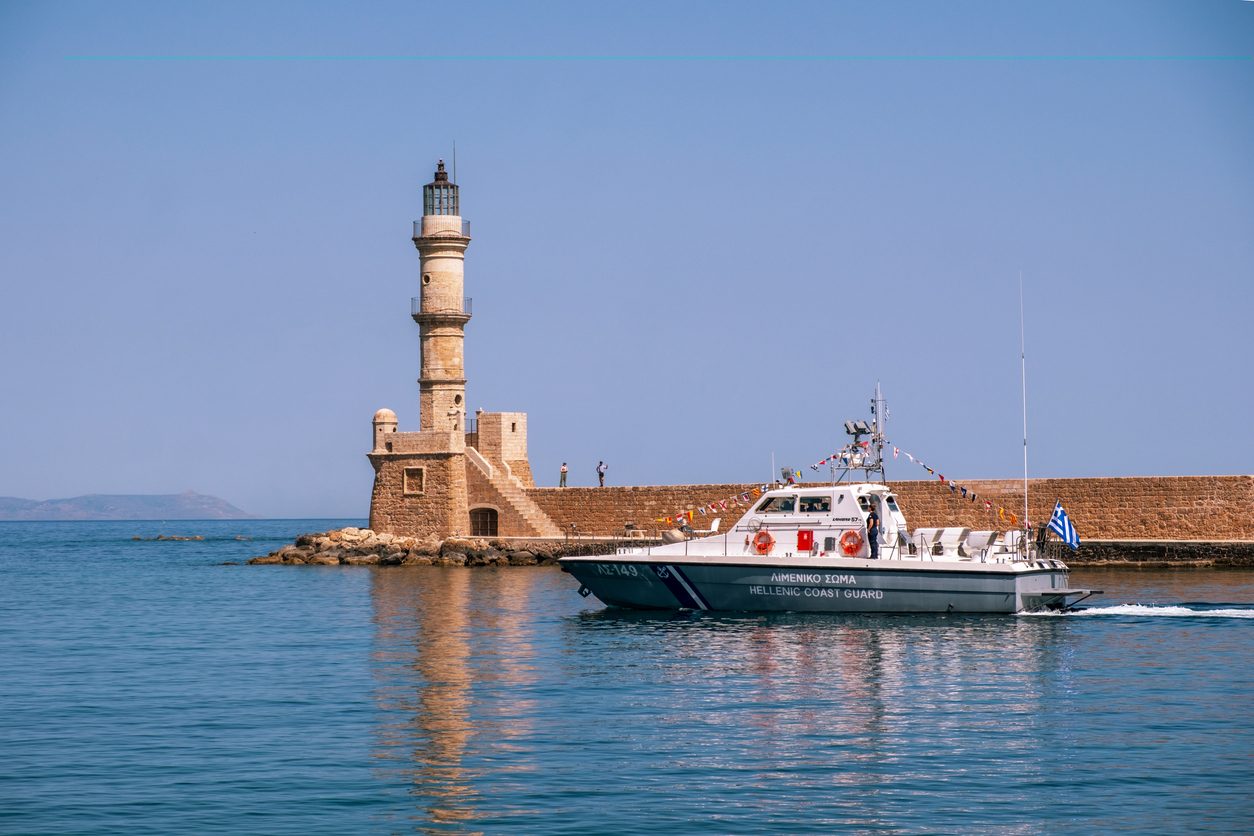
Surge at Sea: Multiple Migrant Boats Reach Southern Crete in Rapid Succession
Authorities in Crete are on high alert after a wave of migrant arrivals has unfolded since Monday afternoon, with multiple boats reaching the island’s southern coastline in quick succession. The Hellenic Coast Guard has been engaged in continuous rescue and transfer operations as the situation develops.
According to reports, at least four separate incidents were recorded within a short time frame south of Heraklion. The most recent involved a vessel carrying approximately 192 people, including women and young children, detected around 20 nautical miles south of Kali Limenes following a signal from a Frontex drone.
Three Coast Guard vessels, supported by nearby ships, rushed to the area to assist in the ongoing rescue operation. The migrants are expected to be transported to the port of Kali Limenes for initial reception and processing.
Back-to-Back Operations Stretch Resources
Earlier the same day, authorities had already dealt with multiple arrivals. Two separate boats carrying a total of 132 migrants were located southeast of Kali Limenes in the early morning hours. These individuals were safely brought ashore, with some transferred to Ierapetra for identification procedures.
In a separate overnight incident, another group of 48 migrants was rescued off the coast of Heraklion and transported to safety.
Meanwhile, additional arrivals were recorded near Gavdos, where 42 people were found and are set to be transferred to Agia Galini for further handling.
Dozens More Arrivals Since Monday
The influx began intensifying from Monday afternoon, when multiple boats carrying around 170 people in total were spotted south of Crete. In those cases, intervention by a Frontex vessel was required, highlighting the scale and urgency of the situation.
Within a matter of hours, the number of arrivals rose sharply, with dozens of migrants reaching the island’s shores across successive operations.
Things have already moved on today
At a time when the ‘ping-pong’ between the Ministry of Migration and the local authorities for the area in Heraklion where temporary accommodation for migrants is being set up continues, arrivals are still taking place on the island’s south coast.
A coastguard patrol boat set out early this morning to pick up 41 foreign nationals, including one woman, who were on a boat in the sea area 22 nautical miles south-east of Kali Limenes on the south coast of Heraklion.
Authorities on Continuous Alert
The recent surge underscores increasing migratory pressure in the region, with maritime routes south of Crete seeing heightened activity. Coast Guard teams remain in a state of readiness, coordinating closely with European agencies and commercial vessels to respond to distress signals and ensure safe rescues.
Local authorities are also working to manage reception logistics as new arrivals continue to be brought ashore, placing additional strain on infrastructure and services.
The situation remains fluid, with further developments expected as monitoring efforts continue across the wider maritime area.
NeaKriti | ekriti | CretaLive | CretaLive
Breaking Point in Heraklion: Hundreds of Migrants Left Outside Overcrowded Port Facility

The situation at the port of Heraklion has reached critical levels, with hundreds of migrants forced to remain outside overcrowded accommodation facilities as arrivals continue to surge.
The temporary reception area, widely known as the “Fridge,” is currently operating far beyond its capacity. Around 240 people are already being housed inside, while an additional 192 migrants—rescued in recent operations south of Crete—are expected to arrive, further straining an already overwhelmed system.
Scenes of Severe Overcrowding
With available indoor space exhausted, many individuals are being left in outdoor areas adjacent to the facility. Reports describe people lying on the ground, waiting for basic assistance, shelter, or transfer to other locations.
The conditions have been described as suffocating, with limited resources struggling to meet the growing demand. As new arrivals continue, the pressure on both infrastructure and personnel intensifies.
Rising Arrivals, Limited Infrastructure
The latest developments come amid a steady increase in migrant flows to southern Crete, which has increasingly become a key entry point for people crossing from North Africa. Rescue operations in recent days have brought hundreds to the island, exposing the lack of adequate reception capacity.
Despite long-standing awareness of the trend, infrastructure planning has lagged behind. For years, discussions around creating organized accommodation facilities have stalled, often due to disagreements between local authorities and central government.
Political Tensions and Local Reactions
The issue has sparked renewed political tension in the region. In Hersonissos, local authorities and residents have voiced strong opposition to plans for a new closed reception facility, with protests and demonstrations already scheduled.
This resistance reflects a broader pattern that has delayed decision-making: general agreement on the need for solutions, but reluctance to host facilities at the local level.
As a result, the absence of coordinated action has left existing sites—like the Heraklion port facility—under extreme pressure.
An Urgent Need for Coordination
Officials and observers increasingly warn that the current situation is unsustainable. The combination of rising arrivals and insufficient infrastructure is creating a humanitarian and logistical challenge that demands immediate attention.
Without coordinated planning and investment in proper reception facilities, conditions at key entry points such as Heraklion risk deteriorating further.
For now, authorities remain in crisis-management mode, attempting to balance ongoing rescue operations with limited capacity on the ground—while hundreds wait in difficult conditions for relief.
Rising Tensions in Crete: Protests Erupt Over Planned Migrant Reception Centre

Strong opposition is mounting in Heraklion as residents, local officials, and tourism stakeholders rally against plans to establish a migrant reception centre at the site of the former KTEO facility near the northern coastal road (VOAK).
Demonstrations have taken place both at the proposed location and outside the Regional Authority of Crete, with participants voicing clear and unified resistance to the project. Protesters include residents from nearby areas such as Karteros and Hersonissos, as well as representatives of cultural associations and local organizations.
Local Community Pushes Back
Protesters argue that the selected site is unsuitable for such a facility, citing concerns over safety, infrastructure limitations, and proximity to one of the region’s busiest tourist zones. The area is located near a highly frequented beach and lacks adequate road access, raising logistical and operational questions.
Officials from the Region of Crete have also pointed out that the space remains in use by transport authorities, further complicating any potential conversion into a reception centre.
Tourism Sector Raises Alarm
The reaction has been particularly strong from the tourism sector, a cornerstone of the local and national economy. The Heraklion Hotel Association has formally expressed its opposition, warning that such a development could damage the international image of the area.
Industry representatives highlight the risk of reduced bookings, negative perceptions among tour operators, and broader economic consequences for a region that hosts hundreds of thousands of visitors each year.
Calls for Dialogue and Alternative Solutions
Local leaders have criticized what they describe as a lack of consultation from central government authorities. According to regional officials, there has been minimal dialogue despite the scale of the decision and its potential impact on the community.
At the same time, calls are growing for a more structured approach to site selection, with demands that all viable locations be evaluated based on clear criteria and in cooperation with local stakeholders.
Some officials have also rejected the possibility of enforced measures such as requisitioning land, emphasizing that consensus and planning are essential in a democratic framework.
Ongoing Mobilization
Mobilizations are expected to continue, with further meetings and demonstrations planned in the coming days. Local authorities are coordinating efforts to present formal objections and push for alternative solutions.
The issue has quickly evolved into a focal point of tension in Crete, highlighting the broader challenges of managing migration flows while balancing local concerns, infrastructure capacity, and economic priorities.
As discussions continue, the situation remains fluid, with both community pressure and government decisions likely to shape the next steps.
CretaLive | NeaKriti | CretaLive
New EU Migration Pact Reshapes Greece’s Strategy: Stricter Returns, Faster Asylum, and “Return Hubs” Ahead

The legislation, introduced by the Ministry of Migration and Asylum, aligns Greece with a broader European strategy aimed at tightening procedures while improving coordination among member states.
“Return Hubs” at the Center of the Plan
A key feature of the new pact is the creation of so-called “return hubs”—facilities that will operate in third countries outside the EU. These centers are designed to host migrants whose asylum claims have been definitively rejected and whose countries of origin are unwilling or slow to accept their return.
Greek authorities emphasize that these hubs will function under agreements between the EU and third countries, with safeguards based on European and international law.
Greece is actively supporting this initiative alongside countries such as Germany, Denmark, Austria, and the Netherlands. Discussions are already underway with nations in Africa and Asia, with the first agreements expected within 2026 and initial operations projected to begin in 2027.
Tougher Return and Detention Policies
The new framework also introduces stricter measures for migrants who do not qualify for international protection or lack legal residency status. These include:
- Expanded use of administrative detention
- Closer monitoring of individuals in return procedures
- Faster activation of deportation processes
- Enhanced cooperation with Frontex and EU member states
Authorities view these measures as essential tools for creating a more effective and credible migration system, particularly in countries like Greece that serve as key entry points into Europe.
Early Signs of Impact
According to government data, the new approach is already showing results. Voluntary returns—facilitated through the International Organization for Migration—have increased by 25%, while more individuals in irregular situations are reportedly opting to return to their countries of origin.
At the same time, asylum processing has accelerated significantly. Pending applications have dropped from approximately 142,000 in 2019 to around 28,000 today, while the recognition rate for international protection has decreased from 71.5% to 40.7%.
Declining Arrivals and Changing Trends
The government links these policy changes to a broader decline in irregular migration flows. Between 2015 and 2019, Greece recorded over 1.2 million irregular arrivals. Since 2019, that number has fallen to under 200,000.
More recent data shows a continued downward trend, with a 31% decrease in arrivals during the first five months of 2026 and a sharp 65% drop in crossings in the Aegean Sea.
A New Migration Landscape
The implementation of the EU migration pact marks a significant shift in how Greece—and Europe as a whole—approaches migration management. By combining faster asylum procedures, stricter return policies, and new international partnerships, the framework aims to create a more controlled and predictable system.
However, the changes also raise important questions about implementation, cooperation with third countries, and the balance between efficiency and humanitarian obligations.
As Greece moves forward with these reforms, the coming months will be critical in determining how effectively the new system operates in practice.



