

Newsflash from Monday, 31 August 2026:

Crete was rocked by two very different water safety incidents this weekend — one ending in heartbreak, the other in relief.
In Chania (Χανιά, a coastal region in western Crete), an 11-year-old Polish girl died after being pulled unconscious from a hotel swimming pool. Meanwhile, on the other side of the island near Heraklion (Ηράκλειο), a quick-thinking coastguard officer rescued a 61-year-old woman struggling in the sea.
Drowning Tragedy at a Hotel Pool in Platanias
The young girl was on holiday with her parents in Platanias (Πλατανιάς), a popular tourist village just west of Chania town, when she was found unresponsive in the swimming pool of the hotel where the family was staying.
The exact circumstances that led to her being in the water are not yet known.
Emergency responders rushed her to the Emergency Department of Chania General Hospital. To speed up the journey, a police patrol car led the ambulance along the BOAK (Βόρειος Οδικός Άξονας Κρήτης – the Northern Road Axis of Crete, the island’s main coastal highway), clearing traffic ahead.
Despite what officials described as an intense resuscitation effort by doctors at the hospital, the girl could not be saved. Her parents, who were with her in Crete on vacation, are reported to be in a state of shock.
Coastguard Rescues Swimmer Struggling Off Karteros
In a separate incident on Saturday afternoon, a 61-year-old woman got into difficulty while swimming in the sea near Karteros (Καρτερός), a coastal area east of Heraklion, Crete’s largest city.
She was unable to make her way back to shore on her own.
The Hellenic Coast Guard (Λιμενικό Σώμα) was alerted and dispatched a patrol vehicle to the scene. An officer swam out, reached the woman, and helped her safely back to the beach.
Following the rescue, the woman said she felt fine and declined any further medical assistance.
What does this mean for visitors?
- Supervise children near pools at all times — even brief moments of inattention can turn tragic, as this incident tragically shows.
- Check hotel pool safety measures — look for depth markings, lifeguards or supervision policies, and safety barriers before letting children swim unsupervised.
- Respect open-water conditions — currents and fatigue can catch even experienced swimmers off guard, as happened near Karteros.
- Know emergency numbers — in Greece, call 112 for general emergencies or 108 for the Coast Guard in coastal areas.
- Swim within your limits, and consider swimming at beaches with lifeguard presence, especially if unfamiliar with local sea conditions.
Both incidents are a sobering reminder that water — whether in a hotel pool or the open sea — demands constant vigilance, for locals and tourists alike.
Source: Neakriti.gr and Cretalive.gr
Kids and Pools: 6 Non-Negotiable Rules That Could Save a Life This Summer
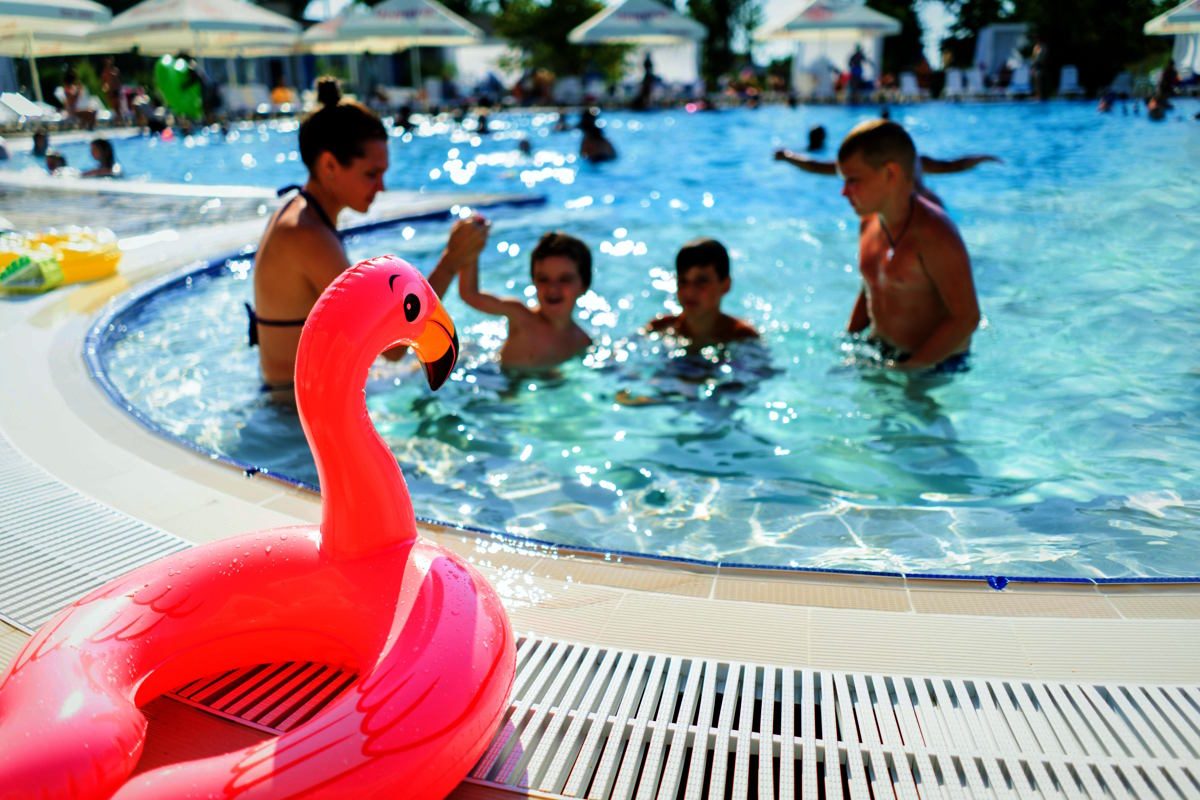
Swimming pools mean fun, exercise, and unforgettable summer memories for children. But they also demand constant vigilance.
Drowning can happen in minutes — often silently, without splashing or screaming to alert nearby adults.
Pediatrician Richard So of the Cleveland Clinic explains that pool safety doesn’t start when kids jump in the water. It starts with adult preparation, and continues even when the pool isn’t being used.
Here are six essential rules every parent and caregiver in Crete should know.
1. Start Swimming Lessons Early — But Don’t Rely on Them Alone
Swimming is a fundamental life skill. It builds a child’s confidence and improves their ability to react if they unexpectedly end up in water.
According to the latest recommendations from the American Academy of Pediatrics, many children can begin lessons after their first birthday. The right timing depends on the child’s physical and emotional development, how often they’re around water, and the family’s specific circumstances.
However, lessons don’t make a child “drown-proof.” Even strong swimmers still need supervision — overconfidence in their own abilities can lead to risky decisions.
2. Assign One Dedicated Adult Supervisor
Whenever children are in or near water, one specific adult should be responsible for watching them — and only that.
Having a lifeguard present does not remove this responsibility from parents or guardians.
The supervising adult should not: use a phone, book, or other screen; engage in distracting conversation; drink alcohol; or leave without handing off supervision to another adult.
3. Stay Within Arm’s Reach for Young or Weak Swimmers
Young children and those without strong swimming skills need an adult in the water with them, close enough to touch them instantly if needed.
Close, uninterrupted supervision remains one of the single most effective drowning-prevention measures.
4. Don’t Confuse Pool Toys with Safety Equipment
Inflatable armbands, floating mats, ring floats, and pool “noodles” are great for play — but they are not safety devices.
They can deflate, slip off, or drift away from a child. When flotation support is genuinely needed, use a certified life jacket appropriate for the child’s weight and size.
Even with a life jacket, active supervision is still essential.
5. Have Someone Trained in CPR Nearby
Every water activity should include at least one adult trained in cardiopulmonary resuscitation (CPR), known in Greek as ΚΑΡΠΑ.
Immediate action after pulling someone from the water can make a decisive difference in the outcome.
In an emergency in Greece, call EKAB (Εθνικό Κέντρο Άμεσης Βοήθειας — the National Center for Emergency Care) at 166, or the European emergency number 112.
6. Take Regular Breaks and Secure the Pool Area
Hours of play tire children out. As energy and concentration drop, the risk of accidents rises.
Regular breaks allow time to rest, hydrate, use the bathroom, and reapply sunscreen — especially after swimming or towel-drying. Even in the pool, children lose fluids through sweating.
For private pools, the surrounding area matters too. Pools should be fenced on all four sides, with fencing at least 1.20 meters high and a self-closing, self-latching gate.
Chairs, tables, toys, or other objects that could be used to climb the fence should be kept away from it. Drain covers should be secure to prevent hair or swimwear from getting trapped. Small inflatable pools should be emptied and stored away immediately after use.
What does this mean for visitors?
- Never leave children unattended near hotel or villa pools, even for a moment — appoint one adult as the designated watcher.
- Don’t rely on armbands or noodles as safety devices — use a certified life jacket if flotation support is needed.
- Check that villa or rental pools are fenced, with a self-locking gate, especially if traveling with young children.
- Keep the Greek emergency numbers handy: 166 for EKAB (ambulance) and 112 for general emergencies.
- Schedule regular breaks for hydration, sunscreen, and rest during pool days — fatigue increases accident risk.
- If possible, consider basic CPR training before your trip — it could make a critical difference in an emergency.
No single precaution guarantees safety. The best protection comes from combining swimming skills, active supervision, proper safety equipment, and a secure pool environment.
Source: Cretalive.gr



