

Newsflash from Friday, 20 March 2026:
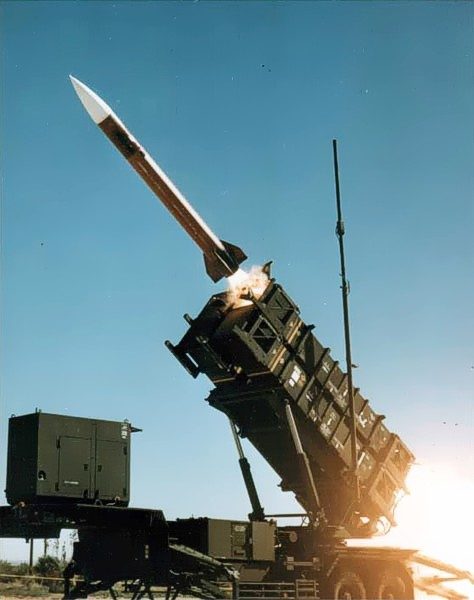
In a dramatic demonstration of NATO’s defensive capabilities, Greece has thrust itself into the center of Middle Eastern geopolitics. On March 19, 2026, the Greek Ministry of Defense confirmed that a Greek-operated Patriot air defense battery stationed in Saudi Arabia successfully intercepted two Iranian ballistic missiles targeting critical oil infrastructure—marking a significant moment for Greek military operations and NATO’s broader strategic posture in the region.
The Interception: A First for Greece
Defense Minister Nikos Dendias announced the successful interception with considerable fanfare, stating: “This morning, the Greek Patriot battery intercepted two missiles launched from Iran targeting refineries within the Kingdom.” The two 4000 km/hr fast flying Iranian ballistic missiles were aimed at the Saudi Aramco refinery in Yanbu on the Red Sea coast, one of the world’s most critical energy facilities.
The Greek Patriot battery, which has been stationed in Saudi Arabia since 2021, demonstrated both its combat-readiness and the expertise of Greek Armed Forces personnel. According to official statements, two Patriot missiles were fired in response, successfully neutralizing both Iranian threats in what marks the first confirmed combat engagement by a NATO member’s forces in defense of Saudi territory since the Iran conflict escalated.
Strategic Significance and the Energy Argument
What made this interception particularly noteworthy was the Greek government’s explicit framing of the operation. Rather than simply celebrating a military victory, Athens emphasized the broader strategic implications for European energy security.
Prime Minister Kyriakos Mitsotakis characterized the operation as purely defensive, noting that had the Saudi Aramco refinery been struck, “today the price of oil would be much higher.” This energy-focused messaging became the cornerstone of the government’s justification, with officials arguing that the Greek battery was indirectly protecting European citizens from energy inflation.
Minister Dendias elaborated on this logic, stating: “The continuous increase in oil prices poses a tremendous threat to the standard of living of Greeks, Europeans, and inhabitants of the entire planet.” By protecting critical Saudi energy infrastructure, Greece positioned itself not merely as a military ally, but as a defender of European economic stability.
Political Controversy at Home
The announcement of Greek military involvement sparked immediate controversy. The Greek opposition swiftly condemned what they viewed as direct Greek participation in the US-Israel conflict with Iran, despite government insistence that this was a purely defensive measure with no offensive implications.
Two recent Greek opinion polls (Metron Analysis and MRB) revealed that a majority of the Greek public opposes involvement in the broader US-Iran conflict, adding domestic political pressure to an already sensitive situation. The government’s decision to publicly announce the interception—rather than keeping it classified—suggested a deliberate attempt to frame Greece’s actions favorably to both NATO allies and the international community.
The USS Gerald R. Ford Returns to Souda Bay
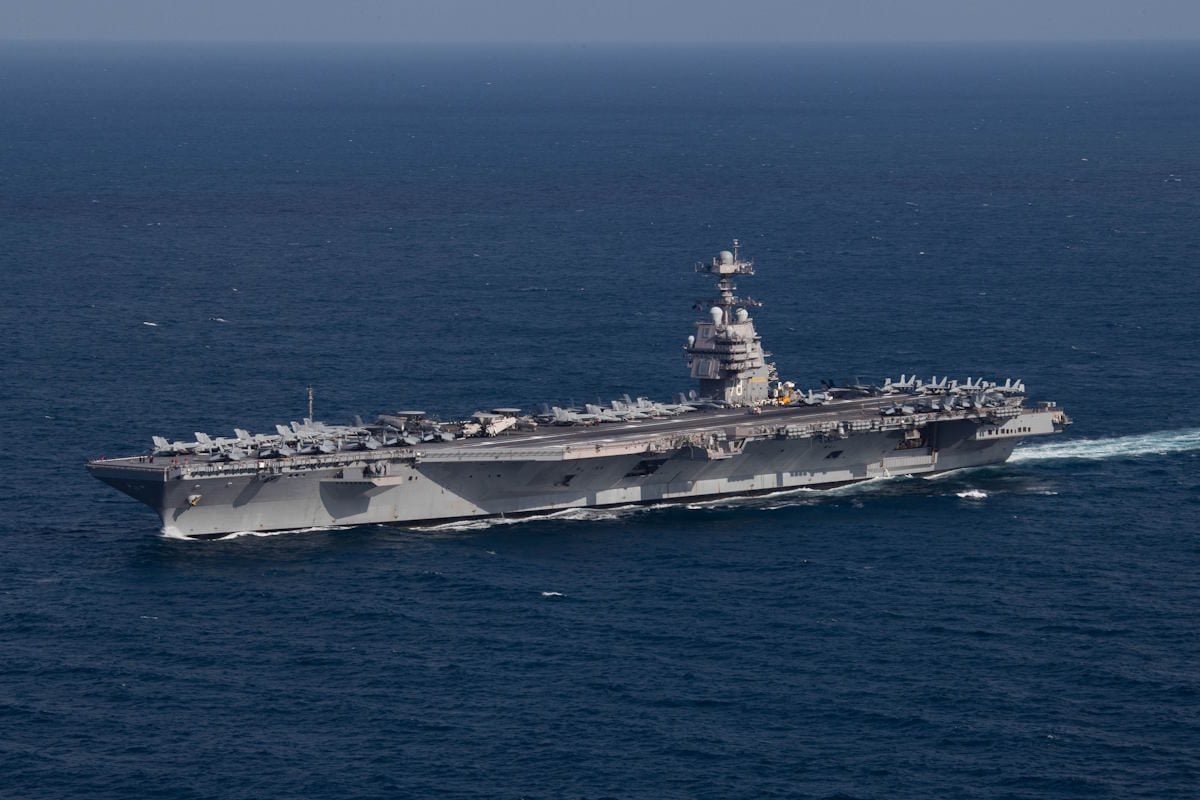
Complementing Greece’s Patriot success, the USS Gerald R. Ford, one of the world’s most advanced nuclear-powered aircraft carriers, has returned to Souda Bay in Crete following its deployment in the Middle East. The carrier’s return symbolizes the deep integration of American and Greek military cooperation in the Eastern Mediterranean region.
US Ambassador to NATO, M.G. Whitaker, who visited both the USS Ford and Alexandroupoli during his tour of Greece, lavished praise on Athens. He described Greece as a “model ally,” emphasizing that the US wishes it had “other allies with such steadfast political leadership.” Whitaker highlighted the strategic importance of both Souda Bay and Alexandroupoli for American operations, underscoring Greece’s pivotal role in NATO’s Middle East strategy.
Walking a Diplomatic Tightrope
For Greece, this moment represents a delicate balancing act. While the country has rejected European proposals for direct military intervention in the Strait of Hormuz, it has simultaneously deepened its security relationship with the United States and Israel. The public disclosure of the Patriot interception appears designed to accomplish multiple goals:
* Strengthen NATO bonds by demonstrating Greek reliability and combat capability
* Justify ongoing military deployments to a skeptical domestic audience through energy security arguments
* Signal to the US that Greece remains a steadfast ally in an uncertain geopolitical environment
* Maintain European solidarity by framing actions as defensive rather than offensive
What Comes Next?
The successful interception and the return of the USS Ford suggest that the Eastern Mediterranean and Middle East will remain focal points of Greek foreign policy. As tensions between Iran and the West persist, Greece’s military presence in Saudi Arabia and its hosting of American naval assets will likely grow in strategic importance.
However, the domestic political backlash indicates that Athens must carefully manage how it communicates its role in these conflicts. The energy security argument may resonate with some voters, but for others, any Greek involvement in Middle Eastern military operations represents an unwanted entanglement.
What’s your take? Should NATO allies like Greece be more involved in defending Middle Eastern energy infrastructure, or should such operations remain primarily American-led? Share your thoughts in the comments below!
Sources:
Erklärung des griechischen Verteidigungsministeriums
Kommentare des US-Botschafters zu den griechisch-amerikanischen Beziehungen
ekriti



