

The impression that Rethymno or Heraklion makes on many tourists is not exactly positive.

The impression Rethymno makes on many tourists
Rethymno sits on Crete, soaked in Venetian and Ottoman history. The old town keeps its original architecture, with the Fortezza fortress still looming as a landmark.
This place mixes centuries-old culture with the buzz of modern tourism. People visit all year, drawn by the blend.
But lately, some things have started to tarnish how outsiders see the city. Stray animals—especially sick ones—pop up in public spaces and highlight some persistent local problems.
It’s tough to ignore these issues when they show up right in the historic district. Preservation feels crucial here, yet these problems keep cropping up.
Urban Challenges and Community Efforts
Stray animals have caught the eye of both locals and tourists. The municipality and animal welfare groups have tried to help, but honestly, the problem just keeps hanging around.
It really feels like everyone needs to pitch in if we want to get a handle on it. No single group can fix it alone.
Then there’s the state of some old town buildings, which is… not great. Neglected or abandoned places sometimes fall apart and turn into hazards.
That’s not just a health issue—it chips away at Rethymno’s reputation for taking care of its heritage. Private owners have to step up, too, if we want a city that feels cared for.
Visual Impact on Visitors
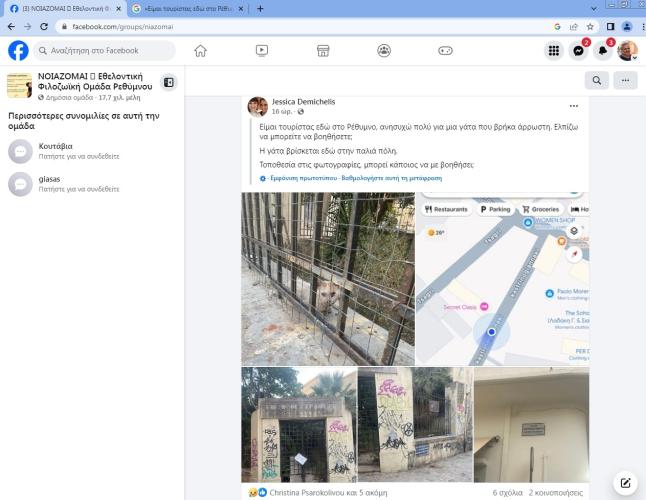
Tourists have started posting images that make these problems hard to ignore. One visitor snapped photos of a sick cat near a crumbling building in the old town.
The contrast between the city’s charm and these rough patches is pretty stark. You look at those photos and can’t help but wonder: who’s looking after this place?
If we let this slide, tourism might take a hit. It’s not a stretch to say people get second thoughts when they see stuff like that.
Role of the Municipality
The municipality’s tried to protect historic sites like the Fortezza. Keeping these places in good shape takes constant attention and resources.
On top of that, they have to juggle things like urban decay and stray animals. They work with local charities and citizen groups to tackle these headaches.
Social Responsibility and Future Steps
It’s clear Rethymno needs a stronger sense of social responsibility. Locals, visitors, officials—everyone’s got a part to play if we want things to get better.
Otherwise, we risk losing what makes the city special. That’s not something anyone wants, right?
So, what could actually help?
- Keep up with maintenance and secure abandoned buildings
- Support animal welfare groups a bit more
- Run campaigns to get people caring about the city’s environment
- Actually enforce the rules that protect historic spots
Summary Table of Key Points
Aspect | Description | Responsibility |
|---|---|---|
Historic Preservation | Protect old buildings and landmarks like Fortezza | Municipality, property owners |
Stray Animal Care | Manage and aid stray animals | Community groups, municipality |
Public Health Concerns | Prevent hazards from neglected buildings | Property owners, municipality |
Tourism Image | Maintain visual appeal and positive reputation | Residents, visitors, officials |
Community Participation | Collective effort to sustain city’s quality | All stakeholders |
For a closer look at what visitors have noticed about stray animals and rundown buildings in Rethymno’s old town, check out this local observation.
Eight emaciated dogs forgotten in Heraklion
Just a few metres from the centre of Heraklion, something deeply unsettling is happening. Eight dogs—four big adults and four puppies—have been left behind for weeks, wasting away in plain sight.
They’re gaunt, dehydrated, and most can barely shuffle along the pavement. Heavy parasite infestations make things worse, especially for the little ones.
The puppies wander the streets, always hunting for scraps. Ticks dangle from their ears and eyes, which is honestly hard to look at.
One puppy stands out, but not in a good way. It’s clearly sick, struggling with severe anaemia and can’t see properly.
Despite their size, the dogs stick together, calm and close-knit. Sometimes you hear them cry out, and it just gets to you.
People walking by have started to notice, a few even thought some of the dogs were dead when they spotted them lying motionless on the sidewalk.
Volunteers went out at night to check on them. They found the dogs alive, but barely hanging in there.
Photos and videos show the smallest pup just covered in ticks. The rest aren’t much better, honestly.
Volunteers gave them food, water, and whatever antiparasitic meds they had on hand. They scrambled to get the dogs to a shelter for real medical care.
Condition | Description |
|---|---|
Emaciation | Severe weight loss and muscle wasting |
Dehydration | Extreme loss of body fluids causing weakness |
Parasite Infestation | Ticks feeding on live skin, especially on puppies |
Illness Signs | Anaemia and impaired vision in at least one puppy |
Behaviour | Calm, bonded group; vocal distress at intervals |
This is all happening shockingly close to the city center, which just makes it feel even worse. It really highlights the growing problem of animal neglect and abandonment right here, not somewhere far away.
Locals and volunteers have stepped in, showing how much community action matters when official help is slow or missing. Getting these dogs basic care and fast medical attention is the only way to stop things from getting even more tragic.
It’s hard to overstate how heavy it feels seeing animals like this. Their situation is a raw reminder of what abandoned pets go through and the real fallout of neglect.
If you want to know more about what happened, you can find more details in reports covering the abandonment of these dogs in Nea Alikarnassos.



