

Crete’s Geotechnical Chamber warns of pufferfish and the launch of the pufferfish pilot programme.

Concerns about the presence of pufferfish (known locally as lagokefalos) in the waters around Crete have sparked widespread alarm in recent weeks. However, marine experts are urging the public to remain calm, stressing that there is no real danger for bathers.
Speaking on the issue, marine biologist and Secretary General of the Hellenic Ichthyologists Association, Lina Anezaki, described the situation as a case of “mass hysteria,” noting that the species has been present in large numbers around Crete for many years.
“The pufferfish has been abundant in the seas of Crete for at least the past decade. What we had last year is the same as this year—nothing has changed,” she explained, emphasizing that the perceived increase is largely due to heightened public attention rather than an actual surge in population.
While the species is known to be problematic for fishermen—damaging nets and catches—experts underline that it poses no threat to swimmers. Pufferfish rarely approach shallow coastal waters where people bathe, and there have been no recorded incidents involving bathers.
Anezaki also pointed out that smaller species, sometimes mistaken for pufferfish, may nibble lightly at swimmers, a common occurrence in the summer months. “People may feel small fish nibbling and assume it’s a pufferfish, but that’s not the case,” she said.
Despite the reassurance for beachgoers, authorities and scientists warn that the real danger lies in consumption. Pufferfish contain a powerful toxin and should never be eaten. Visitors, particularly tourists who may engage in recreational fishing, are advised to avoid handling or consuming unfamiliar fish species.
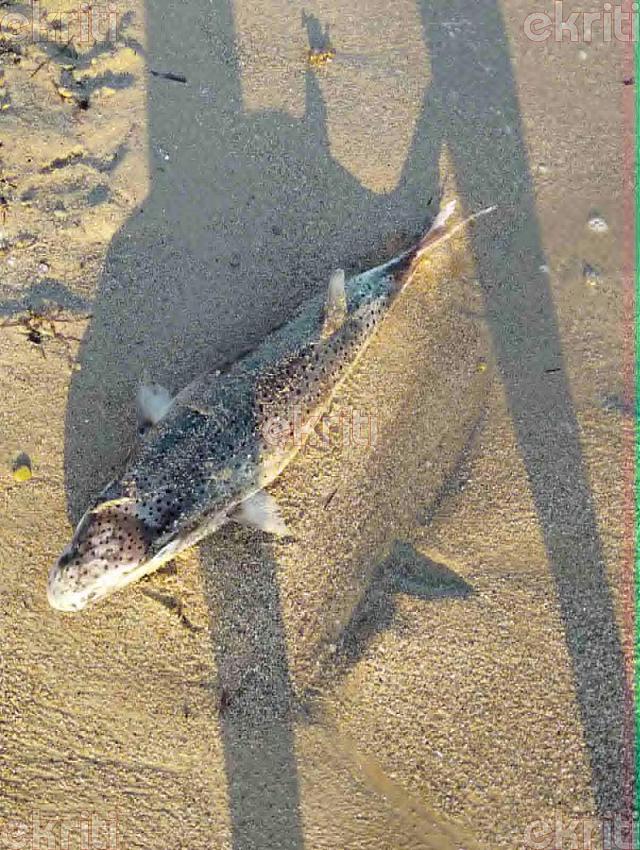
Recent sightings, including a specimen found washed ashore near Heraklion, have contributed to public concern. Experts reiterate that while such discoveries can be alarming, they are not unusual and do not indicate increased risk to the public.
Instead of panic, specialists encourage a more balanced response, including supporting efforts to manage invasive marine species. Promoting the consumption of other invasive fish, such as lionfish and rabbitfish, is one suggested way to help restore ecological balance.
Ultimately, the message from scientists is clear: enjoy the sea, stay informed, and avoid unnecessary fear.
Crete Geotechnical Chamber Issues Warning on Pufferfish: “No DIY Fishing Contests, Scientific Action Needed”

The Geotechnical Chamber of Greece (GEOTEE), Regional Branch of Crete, has issued a strong statement regarding the growing problem of pufferfish (Lagocephalus sceleratus) in Greek waters, calling for organized, science-based action and warning against illegal and improvised fishing practices.
In its announcement, GEOTEE stresses that so-called “self-organized” pufferfish fishing contests are strictly prohibited, as is the consumption of the species—not only by humans but also by animals. The fish contains a highly dangerous toxin (tetrodotoxin), which can be fatal.
The pufferfish, a non-native and highly invasive species, has spread extensively across the Eastern Mediterranean, with particularly strong populations in southern Greek waters and the Cretan Sea. Rising sea temperatures and the lack of natural predators have contributed to its rapid expansion.
Serious Ecological and Economic Impact
According to GEOTEE, the consequences are significant. The species feeds on marine organisms such as mollusks, leading to reduced biodiversity, while also causing serious damage to fishing gear and catches. Professional fishermen across Crete continue to face major losses as a result.
Despite being first recorded in the Cretan Sea around 2005, the situation has yet to stabilize. The Chamber notes that the ongoing spread of the species remains a major environmental and economic concern.
Call for Coordinated Response
GEOTEE welcomes recent steps toward managing pufferfish populations through targeted fishing programs that include financial incentives for professional fishermen. However, it emphasizes that success will depend on proper planning and oversight.
Key recommendations include:
- The involvement of qualified ichthyologists to supervise and guide the process
- The development of appropriate infrastructure to handle collected specimens
- The implementation of scientifically sound practices
The Chamber suggests that Crete could serve as a pilot region for such initiatives, potentially creating a model that could be applied to other affected areas.
Public Guidance: Stay Informed, Not Alarmed
Addressing the general public, GEOTEE urges calm and responsible behavior. There is no need for panic, it notes, as long as information is based on scientific evidence rather than speculation.
At the same time, citizens and visitors are advised not to touch or handle pufferfish if encountered, and under no circumstances should they attempt to consume them.
The Chamber concludes that a coordinated effort—combining scientific expertise, proper infrastructure, and informed public awareness—is essential to protect marine ecosystems, biodiversity, and the sustainability of Greece’s fishing industry.
Greece Launches Historic Pufferfish Removal Program: Paying Fishermen €5.33 Per Kilo

The pilot program is now entering its preparation phase for practical implementation, with the regions of Crete and the South Aegean selected as the initial focus areas—chosen because they have experienced the most severe concentrations of pufferfish in Greek waters.
Understanding the Pufferfish Crisis
The pufferfish (Lagocephalus sceleratus) is a highly invasive, non-native species that has become a serious threat to Greek marine ecosystems. The fish damages fishing equipment, depletes local fish populations, and poses a significant economic burden on professional fishermen.
More critically, the pufferfish is extremely toxic and cannot be treated like a conventional catch. Its toxins require special handling, secure storage, controlled transportation, and professional disposal—making traditional fishing approaches impossible.
According to Spyros Protopsaltis, General Secretary of Rural Development and Food, “With this pilot program, we are moving from identifying the problem to organized management. The pufferfish is an invasive foreign species that threatens marine biodiversity, damages fishing activities, and due to its toxicity, requires absolutely safe handling.”
How the Program Works
The initiative offers professional fishermen a financial incentive to actively hunt and remove pufferfish from Greek seas. Fishermen will receive a payment of €5.33 per kilogram of pufferfish they successfully catch and deliver to designated collection points.
Importantly, this payment covers only the fish themselves. All additional costs—including coordination, transportation, temporary storage, maintenance, management, and final disposal—are the responsibility of the regional authorities, not the fishermen.
Program Structure and Responsibilities
The Regions of Crete and South Aegean will serve as the primary beneficiaries and coordinators of the program. Their responsibilities include:
- Specifying procedures for fishermen participation
- Designating drop-off points for collected fish
- Establishing verification and certification processes
- Processing payments to participants
- Overseeing safe storage, transportation, and disposal
Regional authorities are currently in the process of finalizing these operational details to ensure smooth implementation.
Scientific Monitoring and Long-Term Goals
Beyond immediate fish removal, the program includes provisions for scientific monitoring to evaluate its effectiveness. Researchers will track whether the initiative successfully reduces pufferfish populations and helps restore marine biodiversity.
Protopsaltis emphasized the broader vision: “Our goal is to provide real support to fishermen, protect marine ecosystems, and develop a scientifically documented management model that can be evaluated and utilized for future steps.”
The pilot initiative was designed beginning in autumn of the previous year and is expected to provide valuable data and insights that could eventually be expanded to other affected regions of Greece.
A Model for Future Action
The program is partially modeled on successful initiatives from Cyprus, demonstrating Greece’s commitment to learning from regional experiences in combating invasive marine species.
For professional fishermen struggling with the economic impact of pufferfish damage, the program offers both financial relief and an opportunity to contribute directly to marine conservation efforts.
As implementation begins, stakeholders hope this coordinated approach will serve as a blueprint for addressing other invasive species challenges in Mediterranean waters.
Sources:
zarpanews.gr
ekriti.gr
patris.gr
neakriti.gr



