

Newsflash from Saturday, 11 July 2026:

In a development that has gone largely unnoticed by the public, officials from the Civil Aviation Authority (DAIK) and archaeologists have been conducting quiet, discreet inspections of several hilltops around Crete’s Kastelli region in recent weeks. The mysterious surveys have sparked speculation about potential changes to Greece’s plans for radar installations near the island’s new airport.
The Papoura Controversy
At the center of the controversy is Papoura Hill, where authorities had originally planned to install radar equipment for the new Kastelli Airport. However, the location has drawn fierce opposition from local residents, who filed appeals with Greece’s Council of State (ΣτΕ).
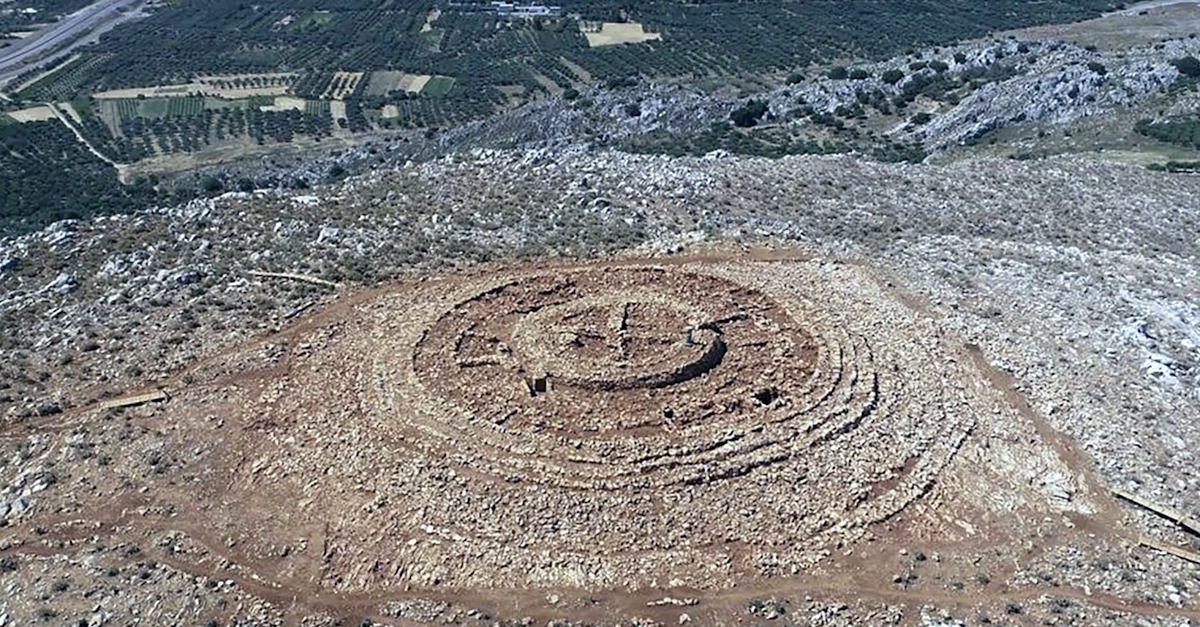
The residents’ case centers on archaeological concerns: a circular Minoan structure was discovered at the summit of Papoura, and a decision was made to place the radar installation just 20 meters away from this ancient monument.
The Council of State is expected to rule on whether this placement violates Greece’s archaeological protection laws. That decision could fundamentally alter the trajectory of the entire project.
Preparation for a Potential Court Reversal?
The recent inspections of alternative hilltops—particularly the Kefala site near Smari—suggest that Greek authorities may be preparing contingency plans in case the Council of State rejects the Papoura location.
According to local sources, officials have been observed conducting detailed surveys at Kefala, where four proposed radar sites have been mapped and 550 acres of land have already been expropriated. The activity has notably increased as the court’s decision deadline approaches.
A technical study by the National Technical University of Athens (ΕΜΠ), led by researcher Ouzounoglou, had previously identified 10 potential locations for radar installations. Of these, three were immediately rejected, three were deemed equivalent to Papoura, and four were considered superior alternatives.
Kefala is among the sites ranked as better than Papoura according to the ΕΜΠ study.
Why Kefala Might Be Preferred
The Kefala location offers several technical and strategic advantages:
- Archaeological sensitivity: The site avoids direct impact on the ridgeline above the historic settlement, reducing visual intrusion on the landscape and minimizing the perception of burden for residents
- Archaeological compatibility: The position was specifically chosen to avoid close proximity to known archaeological sites, unlike Papoura
- Operational requirements: Kefala provides the necessary “Line of Sight” (LOS) to the airport’s runway, meeting strict Civil Aviation Authority specifications without requiring the extreme exposure that Papoura demands
- 100% coverage: According to the ΕΜΠ study, both Kefala and nearby Afratis can theoretically meet 100% of the new airport’s operational needs
The Question of “Leveling” Work
Adding to the mystery, local observers have noted references to “terrain leveling” work at Kefala. However, authorities have not publicly explained why such work would be necessary, especially given that the runway extension to 3,800 meters—which would typically require expanded infrastructure—is not currently planned.
This ambiguity has led many to conclude that the preparatory work is directly related to establishing an alternative radar site, should the court rule against Papoura.
Timeline and Uncertainty
The Council of State has up to eight months from the date of the appeal to issue its ruling. While July 2026 was initially considered a likely month for the decision, legal observers now suggest the ruling could come at any time within the statutory deadline.
In the meantime, the clandestine nature of the current inspections reflects the delicate political situation: authorities cannot publicly abandon Papoura without acknowledging the validity of residents’ archaeological concerns, yet they appear to be quietly preparing alternatives.
For residents who have invested time and resources in their legal challenge, the recent activity provides some encouragement. However, the ultimate outcome remains uncertain—and will ultimately depend on how the Council of State interprets Greece’s obligations to protect both national security infrastructure and archaeological heritage.
Source: patris.gr



