

Newsflash from Sunday, 2 August 2026:
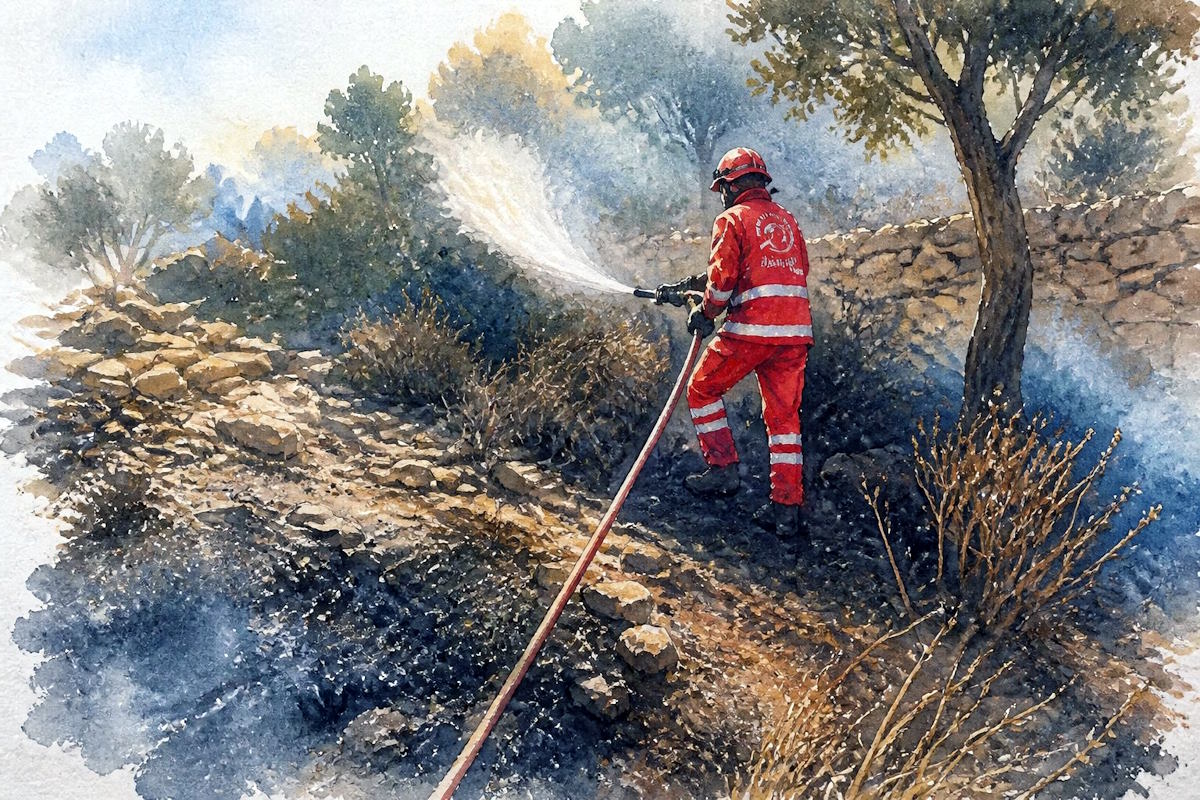
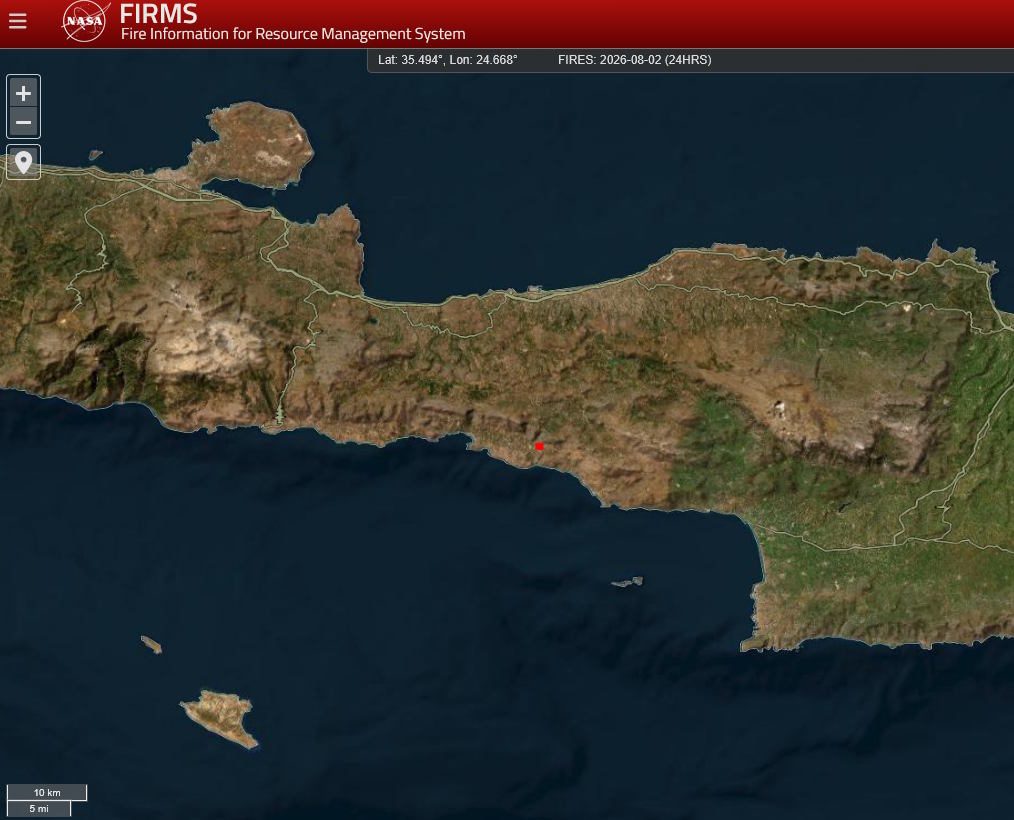
The major wildfire that swept through southern Rethymno, Crete, is now in retreat, but the scale of the destruction is becoming clear. Authorities are preparing to begin a formal assessment of the damage after an estimated 55,000 acres of land were burned.
No Active Fire Fronts Reported
The situation had improved significantly by Sunday, August 2, with no active fire fronts reported. However, strong firefighting forces remained deployed around Krya Vrysi and Preveli to monitor smoldering areas and prevent possible flare-ups.
Approximately 110 vehicles and 200 firefighters were operating in the area, supported by volunteers, security forces and local residents. Strong winds continued to make the operation difficult and increased the risk of renewed outbreaks.
Damage Assessment to Begin Tuesday
Specialist teams are expected to begin the official damage assessment on Tuesday. Their work will focus on losses involving:
- Homes and private property
- Businesses and tourism facilities
- Agricultural land and livestock operations
- Public infrastructure
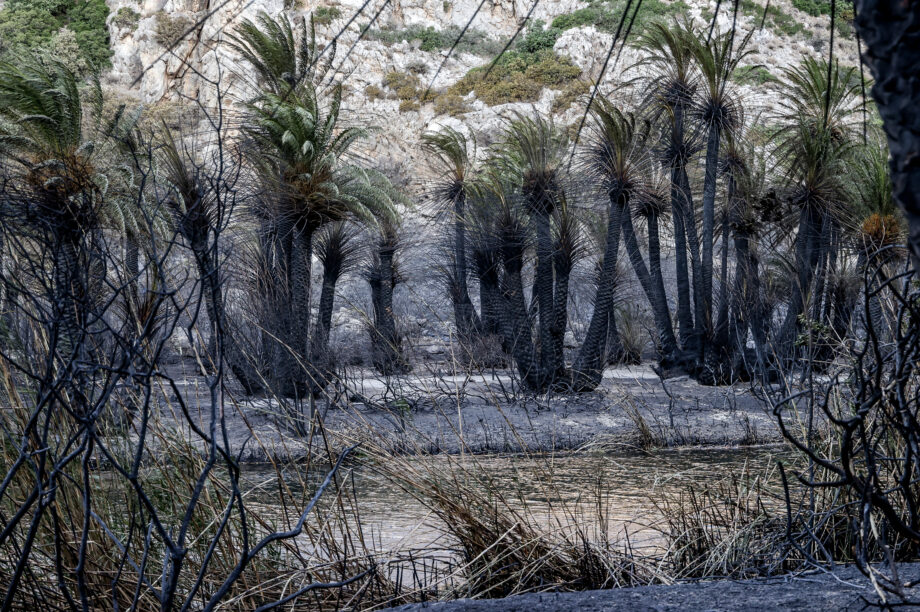
The hardest-hit areas reportedly include Krya Vrysi, Melampes, Sachtouria, Agios Pavlos, Agios Georgios, Limni, the Preveli Bridge, Orne, Lefko and Gianniou. Extensive damage has been reported to crops, livestock facilities and properties.

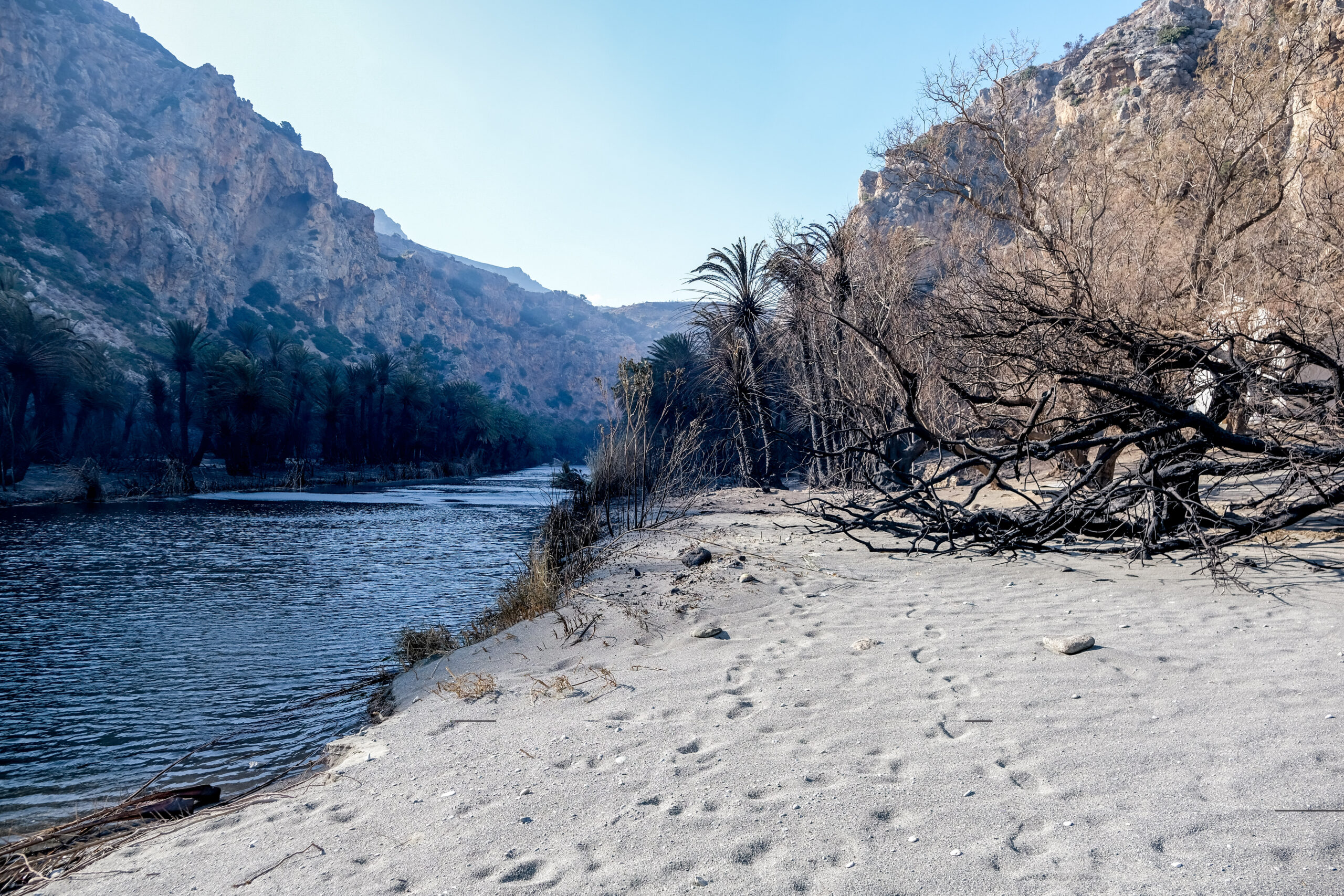
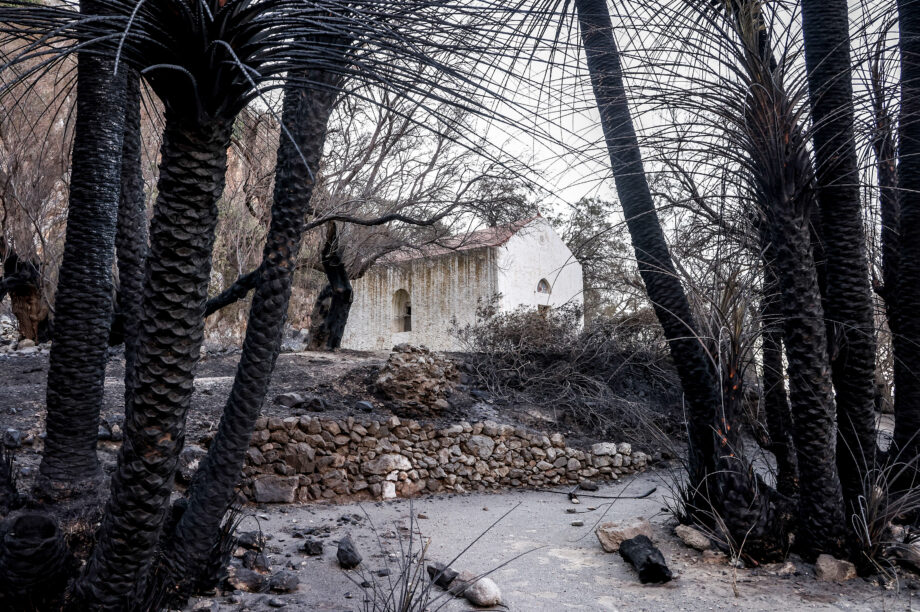
New photos of the Preveli Palm Forest:
Long-Term Impact on the Local Community
Residents and business owners have described the wildfire as one of the region’s most serious natural disasters in recent years. Many fear that the recovery of local agriculture and tourism could take years.
Local communities are calling for immediate financial assistance and comprehensive restoration measures from the government. The fire has destroyed land, livelihoods and personal property, leaving residents facing a difficult period of recovery.
Investigations Continue
Authorities are continuing to investigate the cause of the fire. Residents’ complaints about the initial response in the Agia Paraskevi area are also expected to remain part of the public discussion.
The disaster has also resulted in the deaths of two firefighters, adding to the tragedy as the region begins the difficult process of assessing losses and rebuilding.
With the fire now largely under control, attention is turning to emergency support, the restoration of damaged infrastructure and assistance for residents whose homes and livelihoods have been affected.
After the Flames: Volunteers Fight to Save Rethymno’s Injured Animals

As southern Rethymno begins to recover from the devastating wildfire, a quieter emergency is unfolding across the burned landscape. Dozens of animals are reportedly wandering through the scorched areas, suffering from burns, dehydration, exhaustion and a lack of food, water and safe shelter.
Injured Animals Left Without Shelter
Firefighters, volunteers and veterinary professionals are working to locate and assist animals that survived the blaze. In one reported case, a seriously injured sheep found in the mountainous area of Preveli received emergency veterinary care after being transported by a four-wheel-drive vehicle to the Preveli Bridge.
Although the animal received first aid, volunteers say there is no organized facility where it can continue its treatment and recover safely.
Volunteers Fill a Critical Gap
According to animal welfare volunteers, the sheep’s situation is not an isolated incident. Despite repeated appeals, no dedicated collection and care station for fire-affected animals has reportedly been established by the responsible municipalities.
As a result, many animals remain in the wild after receiving initial treatment. Volunteers must continue moving between burned areas to find new cases, provide basic care and monitor animals in need.
Citizens and volunteer groups are also using their own resources to leave water and food at different locations across the affected land. These efforts are helping animals that survived the fire, but they also highlight the urgent need for coordinated support.

A Call for Organized Animal Rescue
The ongoing response demonstrates the strength of community solidarity, but volunteers warn that individual efforts cannot replace a structured emergency plan. A dedicated facility would provide injured animals with veterinary treatment, food, water and protection while the wider recovery effort continues.
As the region confronts the enormous human, environmental and economic impact of the wildfire, the fate of the animals left behind remains an urgent and often overlooked part of the disaster.
In emergency situations, such as a fire, tethering deprives the animal of any chance of escape and rescue, constituting a crime that leads to a horrific death.
The information brought to the attention of the Special Secretariat regarding incidents involving animals that are reported to have lost their lives whilst permanently chained during the fire on Paros, serve as a tragic reminder that permanent chaining can prove fatal.
📋In light of the above, the Special Secretariat today sent an official letter to the Cyclades Police Directorate, with copies to the Naxos Public Prosecutor’s Office and the Paros Police Station, requesting:
▪️ an investigation into the alleged incidents
▪️ the identification of those responsible, should the allegations be confirmed
▪️ the application of the relevant criminal and administrative procedures
▪️ the intensification of checks to ensure compliance with animal welfare regulations.
It should be noted that, in accordance with Article 9 of Law 4830/2021, a dog must not be kept permanently tethered and, in any event, must not be tethered for more than two hours a day.
Let’s ‘break the chain together’.
Watch the full video via the link in the first comment
⚠️Content warning: the video does not contain footage of Paros, but includes sounds that may be disturbing or unpleasant for some viewers.
This is the public information advert for the Special Secretariat’s campaign against permanent chaining. It was published prior to recent events and highlights the dangers animals face when they are unable to escape in the event of an emergency.
Source:



