

Newsflash from Friday, 2 October 2026:

Booking.com’s New VAT Charge: What Private Hosts in Crete Need to Know Before December 1st
A significant change is coming for short-term rental hosts using Booking.com, and it could affect how much money ends up in your pocket after each booking. Starting December 1st, the platform will begin adding 24% VAT (ΦΠΑ) to its commission charges for hosts registered as private individuals without a valid intra-community VAT number.
Here’s exactly what’s changing, why it’s happening, and what it means for your bottom line.
It’s Not VAT on Your Rental — It’s VAT on the Commission
The crucial detail to understand is that this 24% VAT is not applied to the value of the booking itself. Instead, it’s charged on the commission that Booking.com collects from the host.
Still, this distinction doesn’t make the financial impact any smaller in practice — it noticeably increases the real cost of using the platform.
A Real-World Example
According to an experienced property manager who spoke to BnBNews, here’s how the math works out for a host operating as a private individual without a valid EU VAT number:
For a booking worth €1,000 with a standard commission rate of 16.6%:
- Current system: Commission = €166 → Host keeps €834
- After December 1st: Commission (€166) + 24% VAT on commission (€39.84) = €205.84 total deducted → Host keeps €794.16
In practical terms, a nominal 16.6% commission effectively becomes a 20.58% total cost on that specific booking.
Importantly, Booking.com is not raising its commission rate — it remains contractually at 16.6%. The change is the addition of VAT on top of that existing commission.
How Much Should You Raise Your Prices?
Naturally, hosts will want to know how much they’d need to increase their nightly rates to offset this new cost entirely.
Using the same €1,000 booking example: to continue netting €834 after the new VAT charge, the booking value would need to rise to approximately €1,050.17 — an increase of roughly 5%.
At that adjusted price, the 16.6% commission comes to about €174.33, and the 24% VAT on that commission adds approximately €41.84 — a total deduction of about €216.17, leaving the host with the same €834 as before.
So the practical takeaway: hosts don’t need to raise prices by 4% or by the full 24% VAT rate — roughly 5% is enough to offset the new charge, based on these specific commission assumptions. The exact percentage will vary depending on each property’s individually negotiated commission rate with Booking.com.
The VIES Registration Factor
Booking.com determines whether to apply the new VAT charge based on one specific criterion: whether the host’s VAT number can be verified through VIES (VAT Information Exchange System), the EU’s official database for verifying VAT numbers used in intra-community transactions.
This is where things get tricky. Simply having a Greek AFM (tax registration number) does not automatically mean it’s activated for intra-community transactions.
According to Greece’s tax authority, AADE (Independent Authority for Public Revenue), anyone planning to carry out intra-community transactions — including receiving services from another EU member state, which is how Booking.com’s commission is classified — must register in the VIES registry beforehand.
AADE also clarifies an important nuance: the obligation to register in VIES for receiving intra-community services can apply even to taxpayers whose transactions are otherwise exempt from VAT.
This means private hosts should be cautious on two fronts: don’t assume you can simply activate VIES registration on your existing AFM to avoid the new charge, and don’t assume that activating VIES automatically requires converting your activity into a formal business. The right approach depends on your specific tax status, and should be reviewed directly with your accountant.
This Does NOT Mean VAT on Accommodation Itself
A second critical clarification: this change applies only to the service Booking.com provides to hosts — specifically, its commission. It does not mean that 24% VAT is now being applied to short-term rental accommodation itself.
AADE confirms that short-term rentals operated by an individual who owns up to two properties remain VAT-exempt. However, an individual who manages three or more properties in short-term rental is subject to VAT on all properties under their management.
Booking.com itself has clarified in its communications that this change affects only commission invoices and does not impact any VAT already charged to guests based on the accommodation price.
Extra Caution for Hosts Using Booking.com Payments
Hosts who use Booking.com’s Payments service and receive net payouts via bank transfer need to pay particularly close attention.
If no valid EU VAT number has been provided, starting December 1st, Booking.com states it will deduct from the transferred amount: the commission, the Payment Service Fee (PSF), and 24% VAT calculated on both the commission and the payment service fee.
This means the real additional cost for hosts using this payment method could end up being higher than the standalone €1,000 example outlined above.
What does this mean for hosts?
- Check your current registration status with Booking.com — confirm whether you’re listed as a private individual or a business, and whether a valid VAT number is on file.
- Verify your VIES registration status before December 1st if you want to avoid the new VAT charge, but don’t assume this is automatically the right move for your situation.
- Consult your accountant to determine whether registering in VIES is appropriate given your specific tax circumstances, since this decision has broader implications beyond just avoiding Booking.com’s new fee.
- Review your pricing strategy — if you want to fully offset the new cost, budget for roughly a 5% price increase, though your exact figure will depend on your specific commission rate with Booking.com.
- Pay special attention if you use Booking.com Payments for bank transfers, as the additional VAT will apply to both your commission and the Payment Service Fee, potentially increasing your total cost beyond the basic commission example.
- Remember this doesn’t change VAT on the accommodation price itself — if you own one or two properties, your rental income remains VAT-exempt regardless of this commission change.
Source: Hania.news
Plaka Tragedy Raises Hard Questions: Are Short-Term Rentals Really Safe?
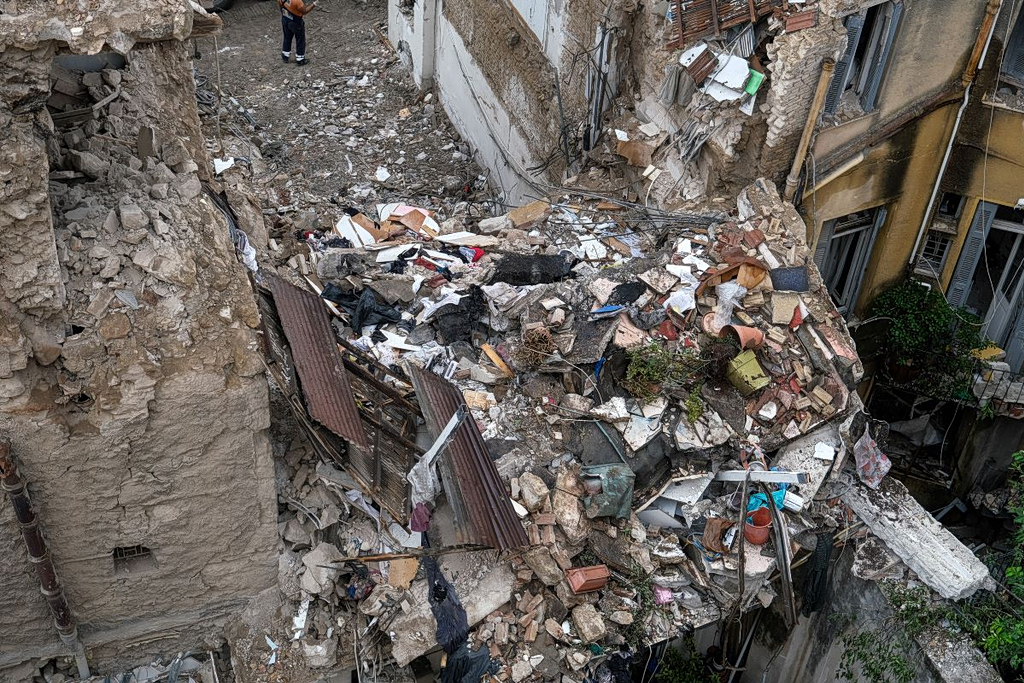
A devastating explosion and building collapse in Plaka — Athens’ historic old town district, known for its narrow streets beneath the Acropolis — has claimed six lives and forced a painful reckoning over the safety standards governing short-term rental accommodation across Greece.
The tragedy occurred on Lysikratous Street, named after an ancient Athenian monument in the area, when a powerful explosion caused a building to collapse. Four of the six victims were American tourists who had been staying in a short-term rental apartment on the building’s first floor.
While the exact cause of the explosion remains under official investigation, the incident has reignited a long-running debate: does current regulation genuinely protect human lives in short-term rental properties, or does it fall dangerously short?
A Question Asked for Years
According to commentary from money-tourism.gr, this isn’t a new concern — it’s one that has been raised repeatedly for years, well before this tragedy occurred.
The core question is simple but unsettling: what happens if, in an apartment building in central Athens where most or even all units operate as Airbnb-style short-term rentals, a guest accidentally leaves a stove on? What if a fire breaks out at dawn, a serious electrical fault occurs, or there’s a gas leak?
The point isn’t to prematurely link these hypotheticals to the specific causes of the Plaka explosion — those will be determined by the official investigation. Rather, it highlights the essence of genuine prevention: examining what could go wrong before disaster strikes, not analyzing it only after the fact.
Who’s Actually Responsible When Something Goes Wrong?
The article draws a sharp contrast between organized hotels and short-term rental apartments when it comes to safety oversight.
In a hotel, there’s staff. Someone is at reception, there’s a duty manager, established procedures exist, fire safety systems are in place, evacuation plans exist, and specific legal obligations govern how a tourism business operates.
In a short-term rental apartment, by contrast, these questions become far murkier: Who is actually present on-site? Who knows how many people are sleeping in the building at any given time? Who would be the first to notice a fire? Who would warn guests in neighboring apartments? And critically — does a visitor who just arrived from the other side of the world even know where the emergency exit is, or what to do in a crisis?
The concern becomes even more serious when it’s not just a single apartment at stake, but entire buildings or apartment blocks functioning, in practice, as tourist accommodation — without operating under the requirements and infrastructure of an actual hotel.

New Safety Rules: A Step Forward, But Still “The Bare Minimum”
Greece did recently introduce new safety requirements for short-term rental properties. As of October 1, 2025, short-term rental properties must meet several specific conditions, including:
- Being classified as spaces of main residential use
- Carrying civil liability insurance
- Providing a signed declaration from a licensed electrician
- Installing a residual-current device (RCD) or anti-electrocution safety switch
- Having fire extinguishers on-site
- Installing smoke detectors
- Providing emergency safety lighting
- Displaying clear evacuation/exit signage
Additional requirements include a pest control and disinfestation certificate, a first-aid kit, and a list of emergency contact numbers.
The article acknowledges this is a genuine step forward — but argues it shouldn’t be mistaken for a complete solution. These measures, it states plainly, represent the absolute minimum standard, not a comprehensive safety framework.
A fire extinguisher, a smoke detector, a safety switch, and an exit sign are certainly better than nothing. But they don’t add up to a fully integrated safety system for a property that continuously hosts strangers — people who are unfamiliar with the building, the neighborhood, and sometimes even the local language.
Even the relevant ministerial decision reflects just how basic these provisions are: fire protection requirements call for one portable fire extinguisher per 100 square meters, along with standalone smoke detectors and lighting/signage at exits. According to the article, these don’t constitute “high operational standards” — they’re a rudimentary baseline, and they don’t address the core question of what happens when an entire building effectively becomes a tourist facility.
One Apartment vs. An Entire Building
The article draws an important distinction: a single apartment rented out occasionally cannot reasonably be treated the same way as an entire apartment building where dozens of guests rotate every few days.
When ten, twenty, or thirty short-term rental units operate within a single building, that building is no longer functioning as an ordinary residential block — it has effectively become something else entirely, without the safety infrastructure to match.
What does this mean for visitors?
- Short-term rentals now carry baseline safety requirements — as of October 1, 2025, Greek properties should legally have fire extinguishers, smoke detectors, safety switches, emergency lighting, and exit signage. It’s reasonable to check for these when booking or checking in.
- Familiarize yourself with exits immediately upon arrival — given the article’s concern that visitors often don’t know evacuation routes, take a moment when you arrive at any short-term rental to locate emergency exits and understand the building layout.
- Be aware that oversight differs from hotels — unlike hotels with on-site staff and reception, short-term rentals typically have no one monitoring the building, so don’t assume help or supervision is readily available in an emergency.
- Buildings operating as multiple short-term rental units may carry added risk — if you notice a building hosts numerous separate short-term rental apartments, understand that safety infrastructure may not match what’s typically required for intensive tourist accommodation use.
- The investigation into the Plaka explosion is ongoing — no official cause has yet been confirmed, so travelers should treat this as a prompt for general safety awareness rather than drawing direct conclusions about this specific case.
Source: Money-Tourism.gr



