

Newsflash from Saturday, 4 July 2026:

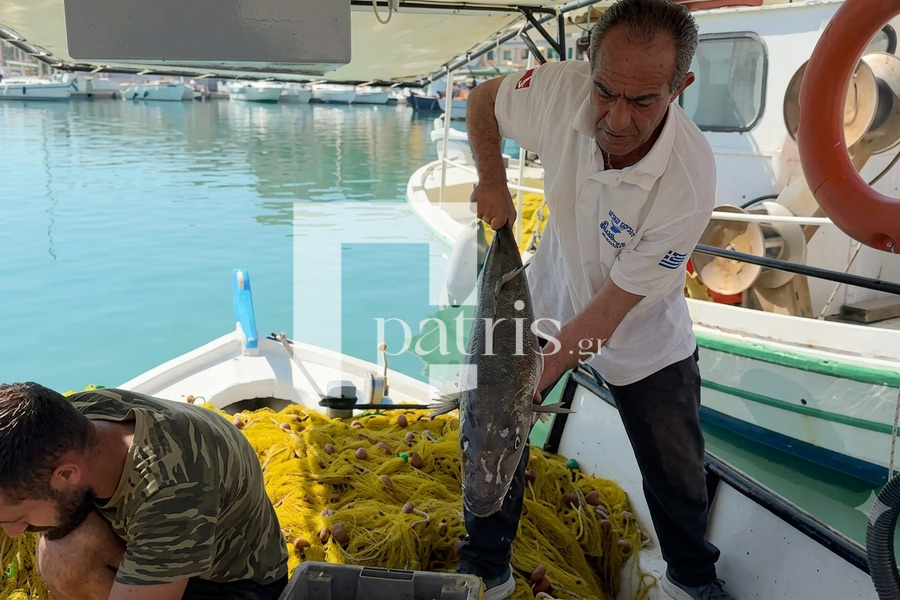
Heraklion, Crete – A growing environmental and economic crisis is unfolding in the waters around Crete, as invasive pufferfish—known locally as lagokefaloi—continue to spread at an alarming rate. Local fishermen warn that without immediate action, the situation could spiral further out of control.
“They’re going to eat us alive before we’re ready,” said Giannis Androulakis, president of the Heraklion Fishermen’s Association, highlighting the urgency of the issue.
An Invasion with Serious Consequences
The silver-cheeked pufferfish, a highly toxic and invasive species, has rapidly expanded across the Mediterranean, including the waters of Crete. With no natural predators in the region, its population has surged, creating significant disruption to marine ecosystems and local fisheries.
Fishermen report daily encounters with large numbers of these fish, which are known for their powerful teeth that can destroy nets and fishing gear. In addition to damaging equipment, they consume commercially valuable fish, cutting directly into fishermen’s income.
“We catch them year-round, and they tear through our nets,” Androulakis explained. “Just days ago, I caught one weighing 18 kilograms—and we end up throwing them away.”
Government Subsidy Plan Faces Delays
In response, the Greek government has announced a pilot program aimed at controlling the population through subsidized fishing. The initiative offers €5.33 per kilogram of pufferfish caught, with a total budget of €1.5 million for Crete and the South Aegean.
However, local fishermen remain skeptical. According to Androulakis, the region is completely unprepared to implement the program effectively this year.
“We don’t have the necessary infrastructure—no freezers, no transport systems, no equipment. Everything still needs to be set up,” he said, suggesting the rollout may be delayed.
Economic and Environmental Pressure
The crisis is not only ecological but also financial. The damage caused by pufferfish to nets, longlines, and catches has led to mounting costs for fishermen already operating under tight margins.
Despite welcoming the subsidy as a “step in the right direction,” industry representatives argue that the compensation is insufficient to offset the scale of destruction.
At the same time, scientists warn that the species poses risks beyond fishing. Pufferfish contain tetrodotoxin, a potent poison that can be lethal if consumed, raising concerns for both public health and tourism (source).
Growing Concern Across the Mediterranean
The spread of invasive pufferfish is not limited to Crete. Reports indicate that the species is expanding across much of Greece and the wider Mediterranean, threatening marine biodiversity and coastal economies (source).
Experts are exploring potential uses for the species, such as converting them into fish feed or fertilizers, but practical solutions remain in early stages (source).
A Race Against Time
With peak fishing and tourism seasons underway, the pressure is mounting for authorities to act quickly. Fishermen stress that without immediate, coordinated measures, the invasion could have long-term consequences for Crete’s marine environment and economy.
For now, “Operation Pufferfish” remains more of a plan than a solution—while the fish continue to multiply beneath the surface.
Fear on a Crowded Beach: Pufferfish Sightings Spark Concern as Tourism Industry Downplay Risks
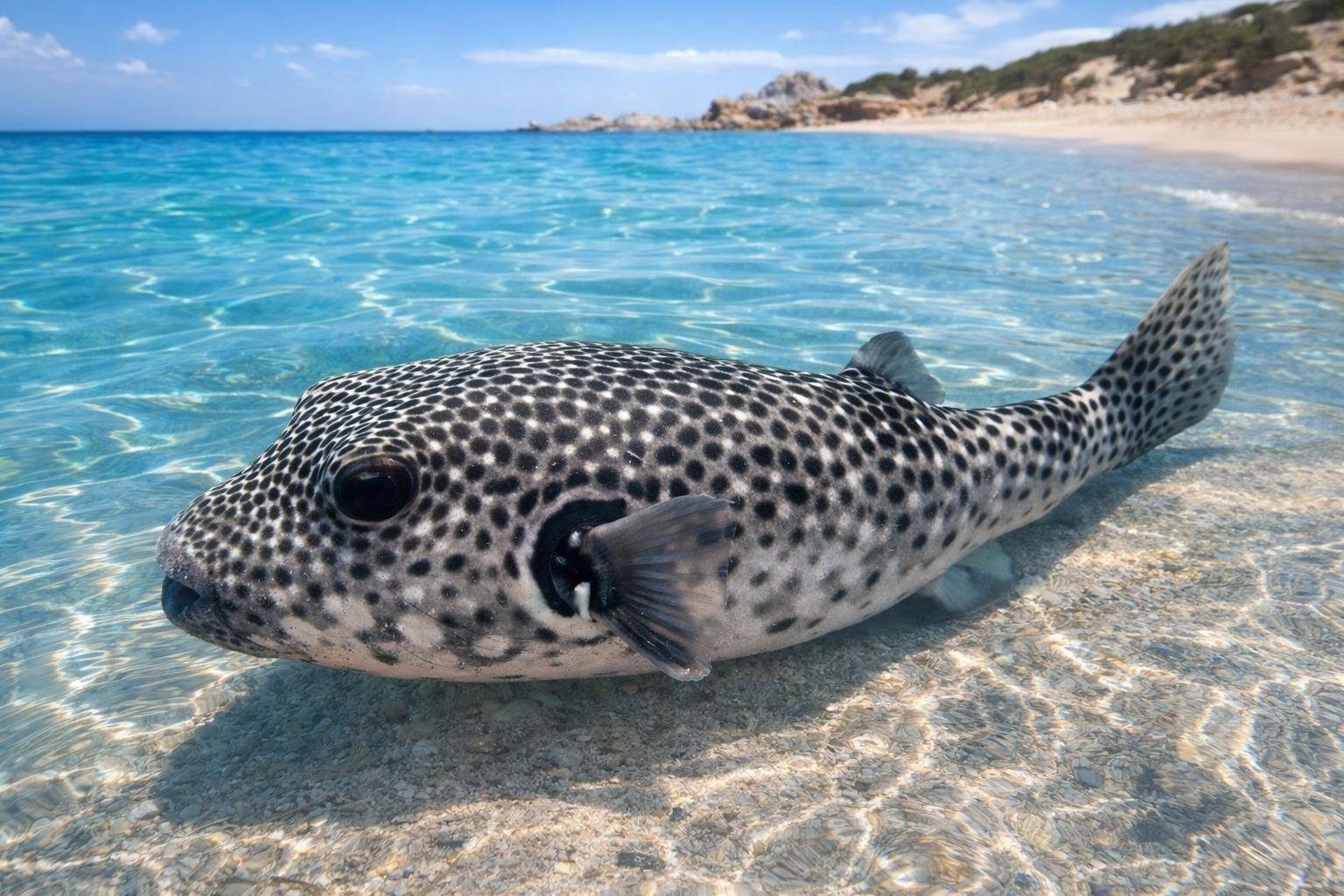
Crete, Greece – Alarm is growing among beachgoers after a close encounter with a dangerous pufferfish on a busy beach in southern Crete, raising fresh concerns about swimmer safety—despite ongoing efforts by parts of the tourism industry to minimize the perceived threat.
Close Call in Shallow Waters
The latest incident occurred at Kokkini Pyrgos beach in the Mesara region, a popular destination that attracts thousands of visitors daily. An 8-year-old child came face-to-face with a lagokefalos (silver-cheeked pufferfish) while swimming in shallow water.
According to the child’s father, the two were just meters from shore when the encounter happened. After briefly swimming away to fetch water, the father heard his son calling for help. Returning quickly, he discovered the fish alarmingly close to the boy.
“It was right next to him,” he said. “Thankfully, I managed to push it away in time.”
Although no injury occurred, the child was left in shock. The incident has heightened anxiety among locals and tourists alike, particularly given the beach’s heavy footfall (source).
A Growing Presence in Greek Waters
The silver-cheeked pufferfish (Lagocephalus sceleratus) is an invasive species that has spread rapidly across the Mediterranean. Known for its strong, beak-like teeth and potent toxin tetrodotoxin, the fish poses both physical and toxicological risks.
Experts warn that while attacks are not common, the species is capable of biting and can cause serious injury if provoked or approached.
Conflicting Narratives
Despite rising reports and public concern, tourism stakeholders in Crete have sought to reassure visitors by emphasizing that the seas remain safe. A joint statement from tourism and medical associations claims that no bite incidents have been officially recorded on the island.
However, this position has been challenged by documented cases, including previous bite incidents in Cretan waters and elsewhere in Greece. Critics argue that downplaying the issue risks leaving swimmers uninformed about a real, if manageable, hazard.
The debate highlights a tension between protecting Crete’s tourism image and ensuring public awareness of evolving environmental risks.
What Swimmers Should Know
While experts agree that there is no need for panic, they stress the importance of awareness and basic precautions:
- Avoid touching or approaching unfamiliar fish
- Stay clear of fishing areas where bait may attract pufferfish
- Remove shiny objects that could draw their attention
- Remain calm and slowly move away if a pufferfish is spotted
Authorities are also being urged to improve beach signage and provide clearer guidance so that visitors can recognize and respond to potential encounters.
A Changing Marine Environment
The presence of pufferfish reflects broader ecological changes in the Mediterranean, driven by warming waters and shifting species patterns. For Crete, this means adapting both safety measures and public communication strategies to a new reality.
As summer reaches its peak, the message is clear: the sea remains a place to enjoy—but not without awareness.
Frenzy Beneath the Surface: Pufferfish Turn on Each Other Off Crete’s Coast

An extraordinary and unsettling scene from the waters of Crete is making waves online, as a viral video captures pufferfish—commonly known in Greece as lagokefaloi—engaging in aggressive, even cannibalistic behavior.
The footage, shared widely on social media, shows multiple pufferfish attacking one another in a chaotic struggle over food, offering a rare glimpse into the darker side of marine life in the Mediterranean.
A Feeding Frenzy Caught on Camera
In the video, a fisherman is seen lowering bait—a small fish—into the sea. Within seconds, two pufferfish rush toward it simultaneously. What begins as a competition for food quickly escalates into violence, with the fish biting and injuring each other in an attempt to claim the prize.
Moments later, more pufferfish appear, intensifying the frenzy. The water becomes a battleground, as the fish continue to attack not only the bait but each other in a striking display of aggression.
A Species Known for Its Aggression
Pufferfish in the Mediterranean, particularly the invasive silver-cheeked toadfish (Lagocephalus sceleratus), are known for their highly aggressive behavior. Marine experts have long warned about their impact on local ecosystems, as well as their tendency to damage fishing gear and reduce native fish populations.
The video appears to confirm reports that these fish can exhibit cannibalistic tendencies, especially in competitive feeding situations.
An Invasive Threat in Greek Waters
Originally from the Indo-Pacific, pufferfish entered the Mediterranean through the Suez Canal and have rapidly spread across Greek seas, including around Crete. With few natural predators and a highly adaptable nature, their population has grown significantly over the past decade.
Beyond their aggressive behavior, pufferfish pose additional risks:
- Highly toxic: Their flesh contains tetrodotoxin, a potent neurotoxin dangerous to humans if consumed
- Economic damage: They destroy fishing nets and lines
- Ecological impact: They compete with and prey on native species
Why This Behavior Matters
While the footage may appear shocking, experts note that such behavior is often driven by competition for limited food resources. In ecosystems under pressure—whether from overfishing, climate change, or invasive species—these aggressive interactions can become more pronounced.
The presence of large numbers of pufferfish in coastal waters may also be a sign of broader environmental imbalances.
A Reminder of a Changing Sea
The viral video has sparked both fascination and concern, highlighting how rapidly marine ecosystems in the Mediterranean are evolving. For fishermen and coastal communities in Crete, encounters with pufferfish are becoming increasingly common.
As the pufferfish, having no natural predators, reproduces at a staggering rate – much like rabbits – and has presumably now reached a tipping point, there is a fear that, in its search for increasingly scarce food, it will behave ever more aggressively; indeed, it cannot be ruled out that it may also spread into shallow coastal waters.
As the species continues to spread, understanding its behavior—and mitigating its impact—will be crucial for protecting local biodiversity and livelihoods.
Sources
- Patris – “They’re going to eat us alive”: Fishermen warn over pufferfish invasion
- MSN – Invasive pufferfish spreads across Greece
- Discover Wildlife – Why pufferfish are highly toxic
- The Telegraph – Pufferfish impact in the Mediterranean
- Creta24 – Father and child encounter pufferfish on busy beach
- Zarpa News – Viral Video of Pufferfish Attacking Each Other in Crete (Greek)



