

Newsflash from Wednesday, 30 September 2026:
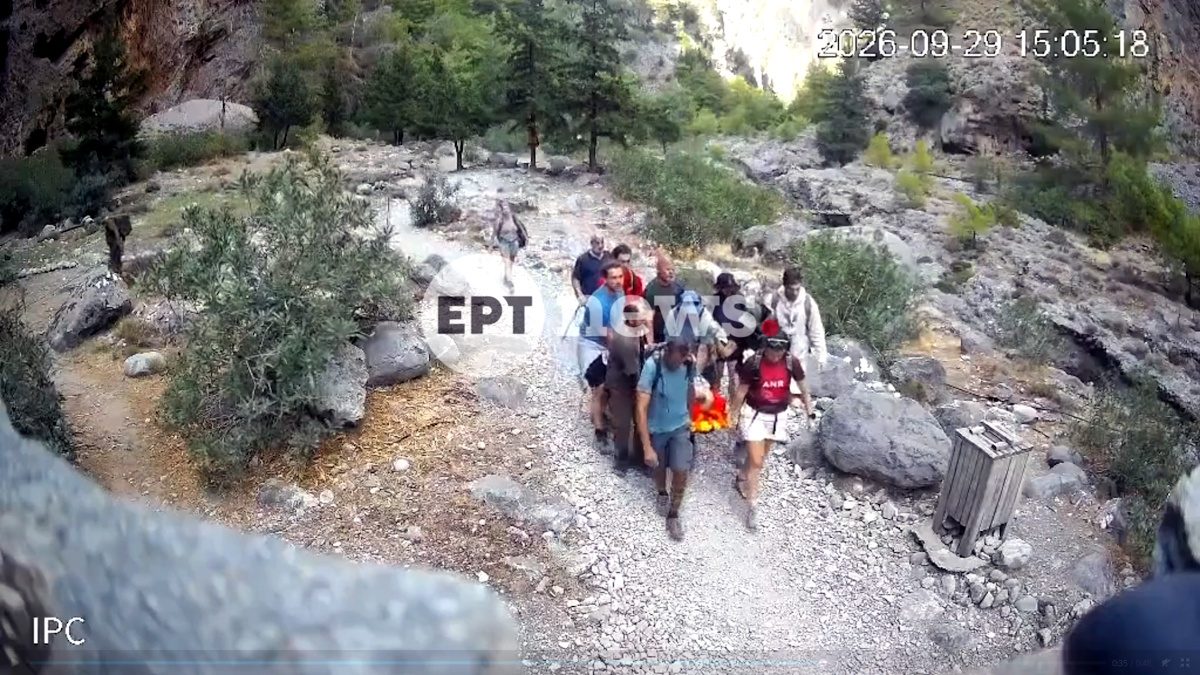
Monk Loses Consciousness in Samaria Gorge
Yesterday, an alarm was raised at midday inside the Samaria Gorge (Φαράγγι της Σαμαριάς), one of Europe’s longest gorges, located in the Chania region of western Crete.
A monk, believed to be between 45 and 50 years old, was hiking alone through the gorge when he suddenly felt unwell and lost consciousness.
The incident occurred near a location known as “Portes” (Πόρτες, meaning “Gates”), roughly 1.7 kilometers from Agia Roumeli (Αγία Ρουμέλη), the coastal village that marks the southern exit of the gorge.
Gorge workers who were on site immediately responded, and a military doctor stationed in Agia Roumeli rushed to the scene to administer first aid.
Using a stretcher, the workers carried the unconscious man the full 1.7 kilometers to the gorge’s exit, accompanied by the doctor throughout the journey.
At Agia Roumeli, the Greek Coast Guard (Λιμενικό) had already been alerted and had a vessel standing by. The monk, still unconscious, was transported by boat to the Health Center of Sfakia (Κέντρο Υγείας Σφακίων), with the military doctor remaining by his side.
At the health center, he was to be met by an EKAB ambulance (Greece’s national emergency medical service) for further evaluation before being transferred to Chania Hospital for additional testing.
Injured Hiker Rescued from Agia Irini Gorge
In a separate incident on Saturday, a 40-year-old woman of Greek descent was injured while hiking through the Agia Irini Gorge (Φαράγγι Αγίας Ειρήνης), another well-known trail also located in the Chania area of western Crete.
The woman suffered a leg injury during her hike and was unable to continue walking on her own.
The Greek Fire Service (Πυροσβεστική) was called in to assist, reaching the injured hiker, moving her to a safe location, and providing the necessary medical support.
What does this mean for visitors?
- Gorges are remote: Both Samaria and Agia Irini are long, isolated trails with limited access points — help can take time to arrive, so caution is essential.
- Avoid hiking alone: The monk’s solo hike likely delayed the discovery of his medical emergency. Hiking with a companion increases safety.
- Wear proper footwear: Uneven, rocky terrain (as in Agia Irini) is a common cause of leg and ankle injuries — sturdy hiking boots are strongly recommended.
- Check your health beforehand: Long gorge hikes involve extended physical exertion in heat; anyone with underlying health conditions should consult a doctor before attempting them.
- Know the exit points: In Samaria, Agia Roumeli marks the southern exit and is the nearest point of assistance if trouble arises deep in the gorge.
- Carry a phone with signal awareness: Coverage can be patchy in gorges; knowing the nearest checkpoint or ranger station can speed up emergency response.
Both incidents were handled swiftly thanks to coordinated efforts between gorge staff, medical personnel, the Coast Guard, and the Fire Service — a reminder of how well-organized emergency response is on the island, even in remote natural settings.
Source: CretaLive and Nea Kriti
With flip-flops into the canyon, without water on unknown paths or alone on the mountains

Into the canyon with flip-flops? Traveling without water? Alone in the mountains? On unknown paths? The risks for tourists who venture into the Cretan terrain without equipment and without knowledge.
In the rugged terrains of Crete, many tourists set off on hikes with a sense of adventure, often overlooking potential risks. The allure of climbing mountains and discovering unmarked trails motivates them.
Each summer, a considerable effort is made to respond to these adventurous souls who may lack the necessary preparation for such challenging paths. Local authorities, including the fire brigade and hiking associations, rally together to search for unprepared hikers.
These individuals may have left their homes seeking excitement, only to find themselves in difficult situations amid the island’s demanding landscapes.
Stavros Badogiannis, the president of the Chania Mountaineering Club, highlights the importance of safety in these pursuits. He argues for the introduction of an aerial emergency response system similar to those in other countries, like Poland, where a well-functioning model has been in place for 25 years.
This proposed system would include six stations, with one located in Crete, which would significantly improve the efficiency and effectiveness of rescue operations.
Badogiannis notes that current rescue missions can be time-consuming and resource-intensive. For instance, during a recent search for a 21-year-old hiker, emergency crews from Heraklion had to drive to Chania, then take a boat, and finally trek for about five hours to reach the last known location of the young German tourist.
Such incidents emphasise the need for better systems to ensure hikers’ safety while enjoying the natural beauty of Crete.
To make hiking in Crete safer and more enjoyable, several key points must be considered:
- Preparation: Hikers should thoroughly prepare for their trips, including understanding the terrain and carrying adequate supplies.
- Awareness of Risks: It is important to recognise the potential dangers of hiking in unfamiliar areas.
- Emergency Plans: Hikers should have plans in place in case of emergencies.
Engaging in adventurous activities should always go hand in hand with a strong emphasis on safety to ensure that everyone can enjoy the beauty of Crete’s natural environment.
Deadly Heat on Crete Trail: Fire Service Warns Walkers After French Tourist’s Death

Fire service officials are urging visitors to exercise extreme caution on Crete’s demanding hiking routes after a 41-year-old French tourist died while walking between Balos and Falassarna.
The woman reportedly became seriously unwell during the return journey and collapsed approximately one kilometre from the group’s parked vehicle. Despite rescue efforts and medical treatment during her transfer to hospital, she did not survive; heatstroke and dehydration were cited as the likely causes.
The route is among the most challenging sections of the E4 trail. It can take more than five hours to complete, crosses exposed and rocky terrain, and has long stretches without trees or shade.
Conditions were particularly dangerous on the day of the incident, with temperatures in the Chania area reaching about 40°C. Reports also indicated that the group did not have enough water for such a lengthy walk in extreme heat. The woman’s core body temperature reportedly reached a fatal 45.5°C before she collapsed just one kilometer from her car.
Apollon Frangiadakis, president of the Union of Fire Service Employees of Crete, said hikers must understand the route, its difficulty and its accessibility before setting out. He also warned that some visitors attempt difficult paths in unsuitable footwear, including flip-flops.
Walkers are advised to avoid exposed trails during heatwaves and to check the forecast before leaving. Anyone who proceeds should carry plenty of water, wear suitable hiking shoes, use sun protection and choose clothing appropriate for high temperatures.
Rescue teams face a race against time when incidents occur in remote gorges, mountains and coastal paths. Reaching an injured or exhausted walker may require hours of difficult travel before the person can be transferred to an accessible point for an ambulance.
The fire service is also calling for stronger safety information from tourism organisations so visitors can make informed decisions before beginning strenuous hikes. Crete’s landscapes are spectacular, but the island’s summer heat and rugged terrain can become life-threatening without careful preparation.
Sources: Cretalive and Nea Kriti.
See also: Hiking on Crete.
Frequently Asked Questions

What are the main dangers for hikers in the Cretan wilderness?
Hikers in the Cretan wilderness face several risks. These include unexpected weather changes, rugged terrain, and the chance of getting lost. Additionally, encounters with wild animals can also pose threats.
How should travellers get ready before hiking in unfamiliar areas?
Before setting out on a trek, it is important for tourists to do thorough research. They should know the trail details and conditions, as well as local regulations. Carrying maps and informing someone about their plans is also vital.
What gear is necessary for safe mountain hiking?
Essential equipment for hiking includes sturdy footwear, weather-appropriate clothing, a first aid kit, and adequate food and water supplies. A map, compass, or GPS device enhances navigation. A mobile phone can be a useful tool for emergencies, but it should not be relied upon solely.
What safety tips has the Mountaineering Club of Chania offered?
The Mountaineering Club of Chania recommends that hikers always stay on marked trails. They also suggest hiking in groups and being aware of one’s surroundings. It is advised to carry sufficient supplies and to avoid risky areas during bad weather.
Can you describe the rescue procedures when a hiker is lost in tough terrain?
When a hiker goes missing, rescue teams quickly organise searches using trained personnel and resources. They often coordinate with local authorities and might utilise technology like drones. Informing local authorities right away can significantly aid in the search.
What educational materials are suggested for beginners before hiking?
Beginners are encouraged to read guides and books on hiking safety.
Online resources, such as instructional videos and articles, can also prove helpful.
Attending workshops or joining local hiking groups can provide hands-on experience and valuable knowledge.



