

The water reserves on Crete are already in the red before the tourist season: no water from the Aposelemis dam to perhaps somehow make ends meet in the summer. Why do the large quantities of water from the Almyros River near Heraklion disappear unused into the sea?
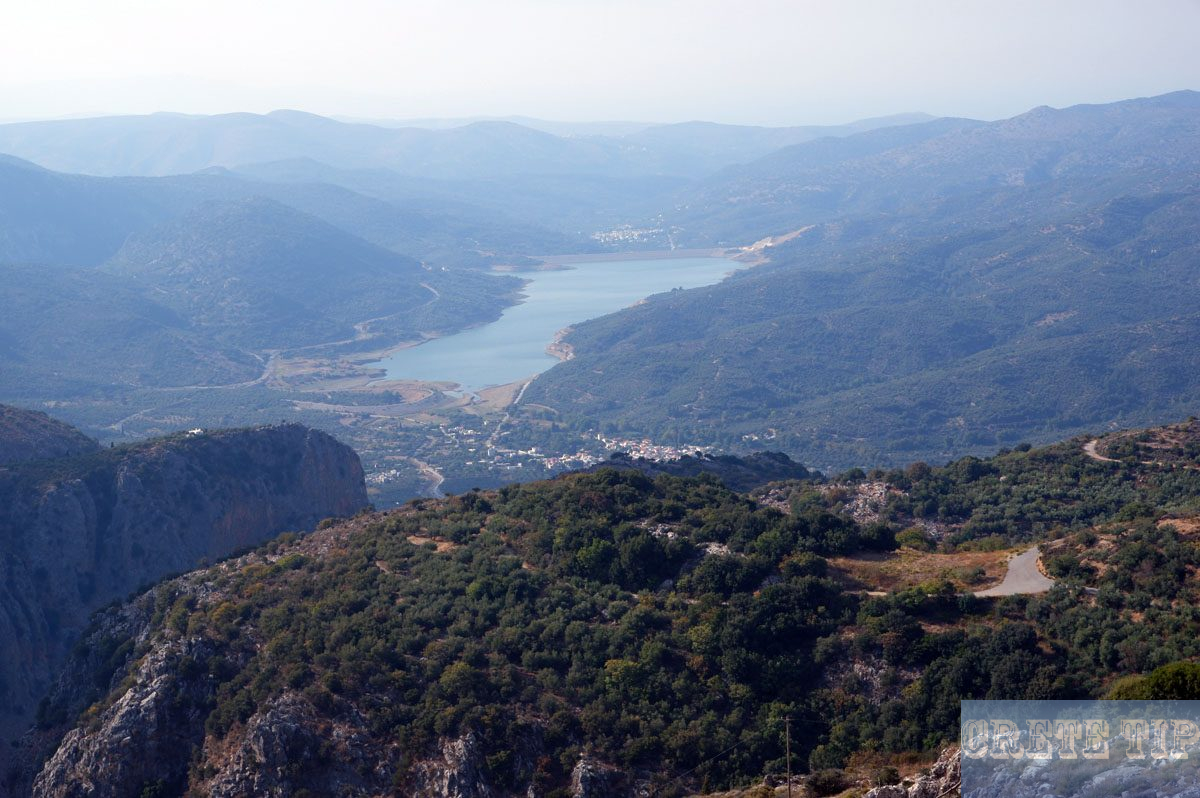
From 1,200 to 250 Cubic Metres Per Hour – The Numbers Behind the Water Shortage
In 2022, the water supply from the Aposelemis dam to the municipal water utility in Heraklion was approximately 1,200 cubic metres per hour.
This figure is expected to drop sharply to around 250 cubic metres per hour at the start of the tourist season this year – currently it’s NIL!
The situation may improve slightly from July onwards when the output might rise to between 350 and 400 cubic metres per hour. Even with these increases, the volumes will still be significantly lower compared to the 700 cubic metres per hour that supplied Heraklion in 2024.
The President of the municipal water utility, Giorgos Bourexaakis, shared these details during an interview on a local radio station.
Despite the challenges presented by this situation, he expressed cautious optimism about managing water resources effectively with the cooperation of local residents.
He noted that for about ten days prior to the interview, the city had been unable to draw water from the Aposelemis dam due to technical issues. Nevertheless, the situation was handled relatively well.
Bourexaakis explained that the utility would continue to monitor the condition of the dam and would start supplying water at the reduced rate of 250 cubic metres per hour from May 1st, depending on the water levels at that time.
The city requires approximately 22 million cubic metres of water annually. Of this amount, about 18 million cubic metres are sourced from wells.
This year, it is projected that there will be a shortfall of around 15% of the total water needed. The utility believes that with the support of the public, they can successfully navigate these shortages, as long as severe conditions do not persist.
Recent Improvements in Water Management
A significant factor in managing the current water supply is the ongoing improvements to the water distribution network.
The approach has altered notably, helping to mitigate some of the issues faced in the past when leaks and damages to the network caused major disruptions.
Today, with about 30 kilometres of the network still to be upgraded, the project has hit some financial delays. These issues are not the responsibility of the municipal water utility, but represent challenges that are being worked on to ensure completion.
The project aimed at modernising the water supply infrastructure had initially been incorporated into the “Philodimos” programme and later into the YMEPERAA plan under the previous administration.
Bourexaakis remains hopeful that funding issues will be resolved soon so that the project can be completed.
The improvements made thus far have already contributed to better handling of previous supply problems, and further enhancements will continue to support management efforts.
Efforts to Manage Water Shortages
In anticipation of the increasing demand during peak tourist seasons, the water utility in Heraklion is actively engaging with the community to promote water conservation.
By raising awareness about the importance of saving water, the aim is to mitigate the impact of any potential shortages.
Strategies include educational campaigns on practical water-saving tips and incentives for residents to reduce their water usage.
As water scarcity becomes an ongoing concern for many regions, the municipal utility is committed to sustainable management practices.
The goal is not only to address the immediate challenges but also to lay the groundwork for a more resilient water supply system in the years to come.
The municipality understands that collaborative efforts among residents, businesses, and government bodies will be crucial in adapting to changing conditions and ensuring adequate water supply.
Expected Outcomes and Projections
As the 2025 summer approaches, there is a collective interest in observing how the projected water supply levels will play out.
The current figures indicating a drop from previous years serve as a reminder of the importance of sustainable resource management.
Increased public awareness and engagement can play a pivotal role in overcoming the challenges posed by lower water levels.
According to the utility’s estimates, the gradual increase in supply from 250 cubic metres per hour to between 350 and 400 cubic metres in July will still fall short compared to previous figures.
Residents are encouraged to monitor their consumption levels carefully.
The stability of the water supply will largely depend on both local weather patterns and community cooperation.
Should the city experience another year like the current one, the additional shortfall in water could pose significant challenges.
Water conservation practices introduced now will help cushion any adverse effects that may arise later in the season.
The partnership between the citizens of Heraklion and the municipal water authority is vital in facing the challenges of water scarcity proactively.
Strategies beyond simple supply adjustments will likely be key in preserving these essential resources.
The proactive mindset fosters resilience against future challenges and encourages a more sustainable approach to water management as the city navigates these trials.
Strategic Planning and Future Directions
Long-term planning must include not just immediate responses but also measures to address systemic issues that contribute to water scarcity.
Urban planning that considers future water needs, along with investment in technology for better water management, will help in creating a sustainable urban water system.
Collaboration with environmental bodies and water management experts will further enrich strategic planning efforts.
Developing better rainwater harvesting systems will be an essential part of this future strategy, enabling the city to utilise all available resources effectively.
Incorporating adaptive practices that allow Heraklion to adjust to variations in water supply and demand will be a priority.
These include exploring potential alternative water sources and enhancing infrastructure that reduces water loss through leaks.
As the framework for water management evolves, it is essential that all stakeholders remain engaged in discussions surrounding resource allocation and conservation measures.
This ensures that all available tools and strategies are used to safeguard water resources for future generations.
By emphasising flexibility and cooperation, Heraklion can establish a more sustainable water supply system.
The city’s focus on adapting to current realities is crucial for long-term water security while addressing the needs of the population, especially during peak tourist seasons when demand typically surges.
Promoting a community-centric approach will be vital moving forward.
The commitment to involving local citizens not only reinforces a sense of ownership but also drives collective efforts toward conserving water.
As the utility works towards enhancing the distribution network and improving operational efficiencies, community collaboration will be instrumental in realising these objectives.
With these strategies firmly in place, there is hope that the city can navigate this pressing issue effectively.
The drive towards a more sustainable future is not just about meeting current demands but ensuring that Heraklion is well-prepared for the challenges of tomorrow regarding water resources and management.
Everyone in the community has a role to play in achieving these goals, and through shared responsibility and awareness, a meaningful impact can be made in preserving water for future generations.
To this end, ongoing dialogue and engagement between the utility, government, and residents remain essential as Heraklion advances into uncertain future scenarios related to water supply.
The source of the Almyros River: Crete’s untapped water resource lost to the sea
The Almyros River source is a mysterious hydrological phenomenon located in Crete. It releases a vast amount of water that ultimately flows into the sea, remaining unutilised. This raises intriguing questions: what is the origin of this abundant water, and why does it remain underused?
Recent insights, particularly from Evaggelos Bikakis, have shed light on this enigmatic source.
The source of the Almyros River continues to discharge considerable volumes of water, posing a significant challenge for researchers and planners alike.
The Source and its Characteristics
The Almyros River source is one of the largest karstic water reserves on the island.
Water flows from this source with an impressive consistency, but a large portion ends up in the sea, effectively wasted.
The phenomenon is not just impressive in volume; it also presents ongoing challenges regarding management and exploitation.
Key Questions Addressed in Recent Studies:
- What is the source of the water from the Almyros River?
- How does the sea’s intrusion affect the flow of the source?
- What do the scientific studies from the past 60 years reveal about the potential for its exploitation?
These queries are essential, as they might answer why the source remains a largely untapped resource.
The phenomenon includes complex interactions between fresh groundwater and seawater, leading to issues of salinisation which complicate potential solutions.
Potential Solutions and Evaluations
In recent analyses, various solutions for better managing the Almyros water supply have been proposed.
The end of the video by Bikakis summarises the evaluations of these proposed solutions, examining factors such as hydrogeology, energy efficiency, and cost.
The ongoing evaluation has highlighted:
- The practicality of capturing and redirecting water before it reaches the sea.
- The potential for using advanced techniques for monitoring the water quality.
- The necessity for sustainable strategies that consider both environmental impact and economic feasibility.
Importance of the Almyros Water Resource
Crete faces significant challenges regarding water scarcity, making the Almyros source a crucial aspect of potential solutions.
Utilising this untapped water resource could significantly alleviate the island’s urgent water shortages.
The pressing requirement for sustainable water management has never been clearer, and harnessing the Almyros River could play a pivotal role.
Recent studies have pointed out the immediate need for concrete strategies to address water scarcity on the island.
Each year, as the population grows and climate conditions evolve, the value of these water resources increases.
By focusing on innovative solutions and a multidisciplinary approach, there might be hope for better management of the Almyros River source.
The ongoing research and analysis aim to ensure that this critical resource can contribute to a more sustainable future for Crete, providing not just water but a solution to a pressing problem.
The ongoing quest to unlock the potential of the Almyros River source is one filled with challenges, yet it offers a glimpse of hope in an otherwise concerning scenario regarding water resources.



