

Newsflash from Friday, 3 July 2026:

As temperatures rise and summer reaches its peak, Crete is officially entering the most critical phase of its fire season. Authorities across the island are ramping up prevention, surveillance, and rapid-response measures in an effort to stop wildfires before they start—and contain them quickly if they do.
Full Operational Readiness
Regional officials have confirmed that emergency services are on high alert, with coordinated efforts between the Fire Service, Civil Protection, and local authorities. The focus this year, as in previous seasons, is firmly on prevention.
Ground patrols and aerial monitoring are being carried out at regular intervals, especially in high-risk areas. On days when fire danger levels reach the “red zone,” patrols are doubled and surveillance intensifies.
Drones Form a “Digital Shield”
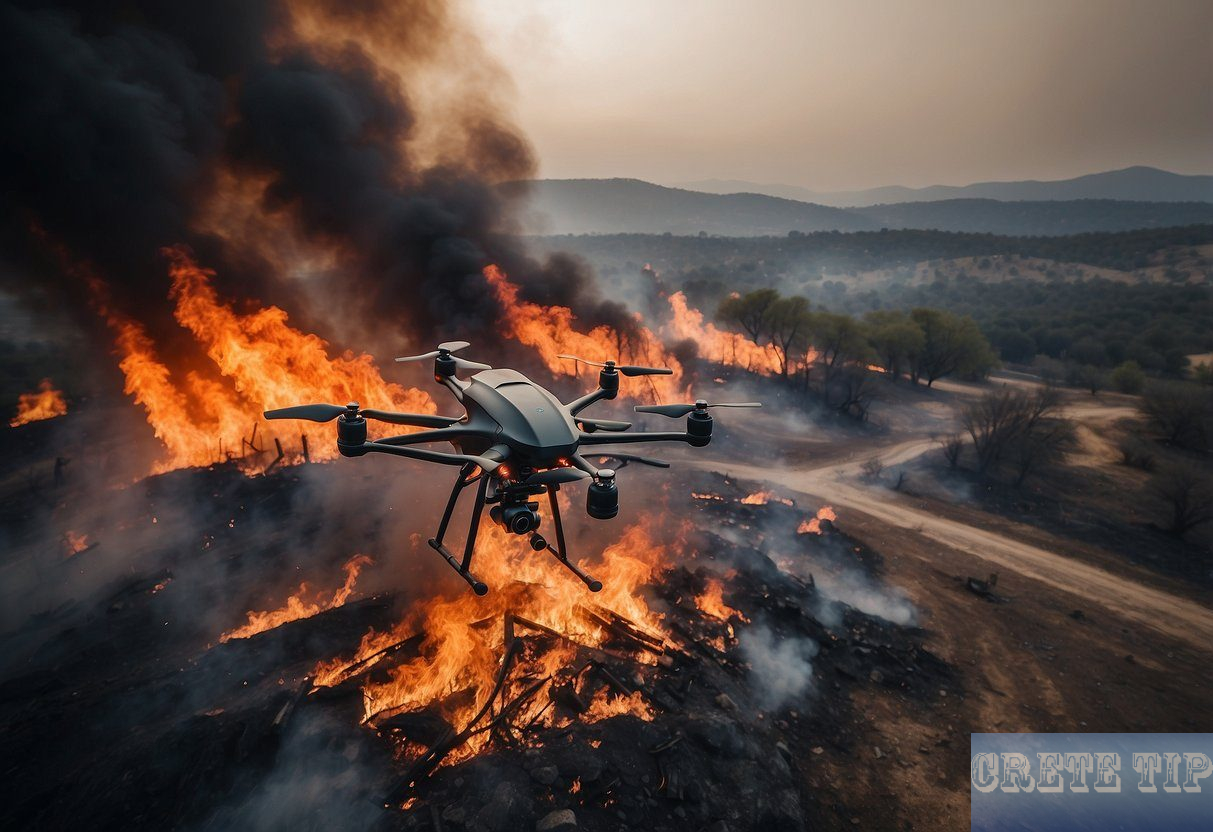
A key addition to this year’s strategy is the expanded use of drones, described by officials as a kind of “iron dome” for early fire detection. These unmanned aerial systems provide real-time monitoring, allowing authorities to identify smoke or fire outbreaks almost instantly.
This early-warning capability is critical in a landscape like Crete’s, where strong winds and dry vegetation can cause fires to spread rapidly.
Aerial and Ground Forces on Standby
Firefighting resources have also been reinforced. Four helicopters are available to intervene when needed, providing rapid aerial response once a fire is detected. On the ground, new vehicles and additional personnel have been deployed to strengthen firefighting capacity.
Further reinforcements are expected through national programs, adding to the island’s growing fleet of emergency equipment.
Prevention Starts with Citizens
Authorities are once again stressing the importance of public responsibility. Property owners are required to clear dry vegetation from their land and maintain it throughout the fire season. Inspections of private plots and fields are set to increase, with fines imposed for non-compliance.
“We must ensure that no fire is given the chance to grow,” officials emphasize, urging residents to remain vigilant.
Protecting Urban and Natural Areas
Municipalities are also taking action in public spaces. In cities like Heraklion, crews are actively maintaining parks, green areas, and open spaces to reduce fire risk. Special attention is being given to protected natural zones, where even small fires could have devastating consequences.
Volunteer groups, trained in recent months, are playing a vital role in both prevention and on-the-ground response, supporting official efforts during critical periods.
An Early Test and a Long Summer Ahead
The season has already seen its first major challenge, with a significant wildfire near Agios Ioannis in Heraklion. While the blaze caused material damage, it was successfully contained before spreading further—a sign that preparedness measures are making a difference.
Still, officials warn that the most difficult weeks lie ahead. With high temperatures, dry conditions, and strong winds, the risk remains elevated across the island.
No Room for Complacency
The message from authorities is clear: vigilance, preparation, and rapid response are essential to getting through the summer safely. With enhanced technology, increased manpower, and community cooperation, Crete is aiming to stay one step ahead of wildfire threats.
But as the island enters the heart of the fire season, there is little margin for error.
Firepower Boost: Greece Reinforces Fire Service with Hundreds of New Recruits and European Support

As wildfire risks intensify across Greece, authorities are significantly strengthening the country’s firefighting capabilities—both by hiring new personnel domestically and by welcoming reinforcements from across Europe.
This dual approach aims to enhance preparedness during what is to be another demanding fire season, driven by extreme weather and climate pressures.
600 New Firefighters Deployed Nationwide
The Ministry of Climate Crisis and Civil Protection has announced the recruitment and nationwide distribution of 600 new firefighters under fixed-term service contracts. These recruits are being strategically assigned based on operational needs, reinforcing both mainland and island regions.
The goal is clear: ensure that even the most remote and high-risk areas are adequately staffed and ready to respond quickly to emergencies.
Regional allocations include:
- Attica: 8 positions
- Central Macedonia: 65 positions
- Eastern Macedonia & Thrace: 55 positions
- Western Macedonia: 28 positions
- Epirus: 35 positions
- Thessaly: 55 positions
- Western Greece: 34 positions
- Peloponnese: 37 positions
- Central Greece: 53 positions
- South Aegean: 92 positions
- North Aegean: 38 positions
- Crete: 55 positions
- Ionian Islands: 45 positions
Officials emphasize that this reinforcement strengthens operational readiness across the country, from major urban centers to remote island communities.
European Firefighters Join the Effort
In parallel, Greece is once again hosting international firefighting teams as part of the European Union’s Civil Protection Mechanism. This summer, 245 firefighters from France, Moldova, Romania, and the Czech Republic will be deployed to Greece.
These teams will operate in key locations including:
- Attica (Nea Makri)
- Thessaloniki
- Patras
The deployment will take place from mid-July through mid-September 2026, aligning with the peak wildfire risk period.
Shared Expertise and Real-Time Training
The international program is not just about manpower—it also focuses on collaboration and knowledge exchange. Foreign teams will work alongside Greek firefighters in real-life conditions, gaining valuable experience while contributing to active operations.
In preparation, specialized training seminars were held in Athens for team leaders and liaison officers, ensuring seamless coordination during deployments.
Greek Teams Abroad
Solidarity works both ways. Greek firefighting units are also being deployed abroad to assist other countries:
- A 21-member unit will support operations in southern France in July
- Another team will be sent to Cyprus in September
This exchange highlights Greece’s active role in the broader European firefighting network.
A Record-Breaking European Effort
Overall, 777 firefighters from 14 countries will participate in this year’s pre-positioning program across Europe—the largest deployment since the initiative began. Greece is set to host the highest number of international personnel, underlining its frontline position in the fight against wildfires.
Preparing for a Challenging Season
With climate change driving more frequent and intense wildfires, strengthening firefighting capacity has become a national priority. The combination of new domestic recruits and international cooperation is designed to provide faster response times, improved coordination, and greater resilience under pressure.
As the peak fire season unfolds, Greece is entering the battle with reinforced ranks—both from within and beyond its borders.
€1,687 Fine for a BBQ: Fire Season Rules Hit Hard in Crete

A costly reminder of Greece’s strict fire prevention laws has emerged from Heraklion, Crete, where a man was fined over €1,500 for using a barbecue during the high-risk fire season.
The incident highlights the zero-tolerance approach authorities are taking as the island enters the most dangerous period for wildfires.
A Simple BBQ, a Heavy Price
According to officials, the man was found using a grill in violation of fire safety regulations currently in force due to elevated wildfire risk. He was issued an administrative fine of €1,687.50 by investigative officers of the Heraklion Fire Service.
The penalty was confirmed on July 1, underscoring how quickly authorities are acting against even seemingly minor infractions.
Why Barbecues Are Restricted
During the fire season, which typically runs from May through October, activities that could spark a fire are strictly regulated or outright banned in many areas. This includes:
- Outdoor barbecuing or grilling
- Burning dry vegetation or waste
- Using open flames near forests or rural land
With high temperatures, dry conditions, and strong winds, even a small spark can escalate into a fast-moving wildfire.
Authorities Urge Vigilance
The Fire Service continues to stress that prevention is the most effective tool in combating wildfires. Officials warn that negligence—or failure to follow guidelines—can have serious financial and environmental consequences.
This latest fine serves as a clear warning: compliance with fire safety measures is not optional, and violations will be penalized immediately.
A Season of High Risk
Crete, like much of Greece, is currently on high alert as peak fire season begins. Emergency services are increasing patrols and inspections, particularly in rural and high-risk areas.
Authorities are calling on both residents and visitors to exercise extreme caution and stay informed about current restrictions.
The Cost of Carelessness
While a barbecue may seem harmless, the potential consequences during fire season are anything but. Beyond the financial penalty, a single act of negligence could lead to devastating wildfires, threatening lives, property, and natural landscapes.
As this case demonstrates, the message is simple: when it comes to fire safety in summer, there is no room for mistakes.
Sources
- Cretalive.gr – Fire Season in Crete: Prevention, Surveillance and “Iron Dome” Strategy (Greek)
- Cretalive.gr – Distribution of 600 New Firefighters Across Greece (Greek)
- Naftemporiki.gr – 245 European Firefighters Deployed to Greece (Greek)
- Neakriti.gr – Hefty Fine for Barbecue Use During Fire Season in Heraklion (Greek)



