

Nocturnal rumbling on Santorini. Today we also look at the question of whether Crete is at risk from a tsunami and when you can cancel your planned vacation.

The mocturnal rumbling on Santorini
Santorini, a captivating island in the Cyclades, has recently become the focus of seismologists. There are concerns about the persistent seismic activity, with a notable hum being heard at night.
The Euro-Mediterranean Seismological Centre highlighted a change in the seismic pattern, suggesting potential volcanic stirrings beneath the island’s picturesque landscape.
It is confirmed. There is a more or less continuous tremor in the area of #Santorini. It seems that nothing can be seen (but it is night time) but that some noise can be heard. We do not know for sure what is going on https://t.co/ucIfgqPTU4
— EMSC (@LastQuake) February 14, 2025
Experts remain cautious, with geophysicists monitoring significant shifts in seismic amplitude in the region.
Stations in Santorini and Apeiranthos have reported a continuous increase in tremors. As investigations continue, the underlying causes of the noise and activity are being explored to understand the implications for Santorini and the broader Cyclades area.
No Need for Worry
https://www.youtube.com/watch?v=jn6_mhcqGxQ
During the recent series of earthquakes, Dr Vasilis Karastathis, the director of the Geodynamic Institute, played a pivotal role in clarifying the situation. He explained the events as they unfolded, providing much-needed insight into the nature of the tremors.
While many people were worried, Dr Karastathis highlighted the actual phenomena taking place.
As the seismic activity occurred, Dr Karastathis and his team of seismologists closely monitored the developments. They gathered to observe the seismic waveforms in real-time, allowing them to analyse the situation thoroughly.
What seemed alarming to those unfamiliar with seismic patterns was, in fact, a series of small earthquakes.
Dr Karastathis explained that despite the perception of volcanic tremors, the signals were simply a dense series of minor quakes, not indicative of volcanic activity.
Many residents experienced fear during this period, which Dr Karastathis acknowledged but sought to correct. The initial concern was exacerbated by the misunderstanding that the earth’s movements were linked directly to volcanic tremors, a type of low-frequency seismic signal often associated with volcanic activity. Yet, this was not the case in Santorini. It was crucial for the seismologists to convey that the activity did not pose an imminent volcanic threat.
Dr Karastathis also mentioned the importance of maintaining a calm perspective as the seismic risk seemed to be reducing.
Although there was a dense cluster of small quakes, the situation was stabilising. The focus was on observing a sustained decline in seismic activity to reassure the public fully.
Key Observations by Dr Karastathis
Real-Time Monitoring: The ability to watch seismic waveforms in real-time helped seismologists understand the nature of the quakes.
Misinterpretation of Events: Initial reactions combined with unfamiliarity with seismic signals led to unnecessary concern among the public.
Nature of Tremors: The observed tremors were a dense sequence of low-magnitude tremors rather than being signals of volcanic unrest.
Calming Public Fears: Dr Karastathis emphasised the importance of distinguishing between seismic noise and volcanic tremors to reduce panic.
Dr Karastathis’s analysis was instrumental in clarifying the situation for Santorini residents. Avoiding misunderstandings about the nature of these tremors eased tensions. The distinction between numerous minor quakes and volcanic tremors was crucial.
In addition to Dr Karastathis’s explanations, the situation prompted a meeting involving various government departments and agencies.
The inter-ministerial committee met to ensure a coordinated response, with specialists such as Professor of Geology Efthymios Lekkas playing important roles in assessing the events and advising on safety measures.
Their collective goal was to provide accurate information to the public and ensure their safety. The involvement of the Organisation of Antiseismic Planning and Protection (OASP) was also significant, demonstrating a comprehensive approach to dealing with the ongoing situation.
In discussing the events, Dr Karastathis highlighted that while the seismic activity in Santorini was notable, it was not beyond the realm of expected behaviour for a seismically active region. Understanding this helps in managing expectations and alleviating undue alarm.
The commitment to transparency and clear communication was crucial in managing public anxiety. As Dr Karastathis and his colleagues communicated their findings, they aimed not just to inform but to educate the public and local authorities.
Addressing the misinterpretations surrounding the seismic signals was a step towards restoring calm and ensuring that the residents of Santorini could return to their regular routines without the cloud of fear.
Managing Public Concerns
Education and Information: Providing clear explanations helped reduce misunderstanding and fear.
Government Collaboration: Joint efforts by seismologists, government bodies, and community leaders ensured a comprehensive communication strategy.
Focus on Safety: Continuous monitoring and assessment aimed at safeguarding the community by predicting any potential risks.
What Lekkas Said About the Noise
The mysterious noise that has been heard frequently in recent times is not a novel occurrence. According to Professor Efthimios Lekkas, who specialises in geology, this sound is not caused by the earthquake itself. Instead, it results from surface processes and the spread of sound waves.
He explained that it is an inductive process, distinct from the earthquake. Lekkas noted that a quake must occur within 1 to 2 kilometres for the noise to be related to the earthquake itself; otherwise, such sounds are not audible at greater distances.
In the early hours, another earthquake measuring 4 on the Richter scale was recorded. This event took place in the sea region between Amorgos and Santorini.
According to the National Observatory of Athens’s Geodynamic Institute, at 05:37, their seismic network recorded a light tremor with a magnitude of 4. The epicentre was identified as being 16 kilometres southwest of Arkesini, Amorgos.
Further seismic activity was documented at 22:18, when a 4.1 magnitude tremor was detected. This event took place in the sea, with the epicentre located approximately 16 kilometres to the south-southwest of Arkesini.
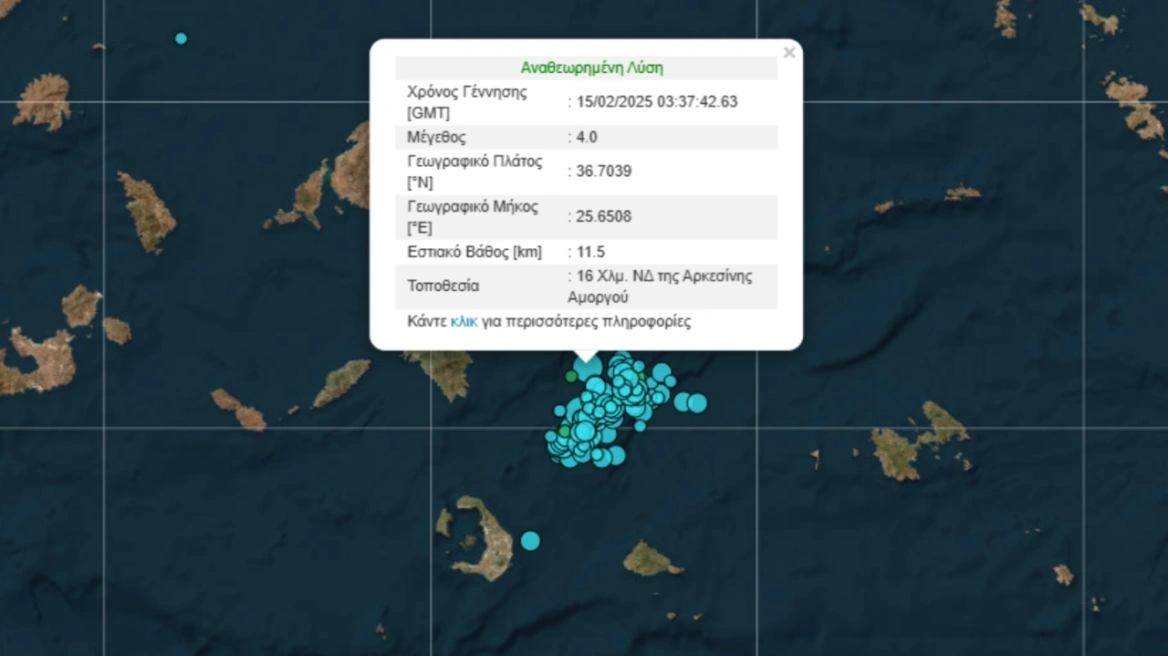
Table of Recent Seismic Activity
Date & Time | Magnitude (Richter) | Location | Epicentre Distance |
|---|---|---|---|
15 February, 05:37 | 4.0 | Sea between Amorgos and Santorini | 16 km southwest of Arkesini |
14 February, 22:18 | 4.1 | Sea region south-southwest of Arkesini | 16 km south-southwest |
Understanding Earthquake Characteristics
When earthquakes occur, they can produce what’s known as an earthquake swarm, a series of tremors that happen in a short period in a localised area. These swarms often lead to an increase in seismic activity, illustrating the dynamic interactions of faults below the Earth’s surface.
The sounds reported, however, are usually associated with shallow earthquakes or those very near the surface.
Residents living near such seismic zones, such as those in the islands of Santorini and Amorgos, are understandably concerned about the vulnerability of their homes and infrastructure.
The potential for larger tectonic movements can often be anticipated through these smaller tremors, shaking the ground and providing essential information to seismologists studying the region.
List of Key Terms
- Seismós: Greek for earthquake, highlighting the frequent activity in this region.
- Βουητό: Refers to the rumbling noise experienced with some earthquakes.
- Richter Scale: A logarithmic scale for measuring the magnitude of earthquakes.
- Vulnerability: Concerns about how structures might cope with seismic phenomena.
- Fault: Fractures in the Earth’s crust where earthquakes are likely to occur.
- Seismic Sequence: The order in which tremors happen following initial activity.
- Surge: A sudden increase in seismic activity, often leading to larger tremors.
- Tremors: Smaller shakes that can occur before, during, or after significant quakes.
- Earthquake Swarm: A cluster of earthquakes in a short time in one area.
Impact on Populations
While the scientific explanation of these events is clear, the daily experiences of residents in these regions can be stressful. Experiencing regular tremors and the associated noise can lead to increased anxiety.
Efforts to study and understand these phenomena continue to help improve structural resilience and inform safety protocols for those living in these vulnerable areas.
Furthermore, the education of residents about these natural occurrences and the implementation of robust disaster management strategies are vital. Such measures ensure that people stay informed and prepared for potential seismic activities, reducing the threat to life and property significantly.
Stay Calm, Urge Greek Experts

The oceanographic research vessel “Aegean” has arrived at Santorini
Greek scientists emphasise that panic will not help in regaining stability in the Cyclades islands.
When there is fear, the situation cannot be considered as normal.
The length of the seismic activity is still unknown; it might be brief or potentially last for weeks.
To fully understand the scenario, more data needs to be gathered.
During times of frequent seismic events, normal activities like schooling are disrupted.
This is not due to the structural safety of school buildings but due to the heightened tension and unpredictability.
There could be several noticeable earthquakes in just a few hours, which impacts the daily routines and creates an environment of unease.
Cutting-edge technology has been employed to gather data about the ongoing seismic activity.
New seismographs, ground GPS systems, and satellite image analyses are being utilised, alongside the “Aegean,” an oceanographic vessel.
This collection of data helps in deciphering the intense seismic activities that have been present for over 20 days.
According to Dimitris Sakellariou, leader of the mission and marine geologist, significant information has been obtained from areas like the Anidro Fault and the Kolumbo submarine volcano.
The data collection process is progressing well, providing valuable insights for official committees to understand the situation.
The initial findings suggest no immediate cause for alarm.
As data becomes more comprehensive, the understanding of the phenomenon improves.
Vougioukalakis confidently states that they do not face a significant threat.
The optimism is based on evidence suggesting that the situation might not escalate.
Data helps paint an encouraging picture, indicating that there is currently no significant danger.
The focus remains on gathering as much information as possible to provide a clearer analysis of the ongoing seismic activities.
Despite the anxiety caused by frequent tremors and the unpredictable nature of the phenomena, Greek scientists aim to reassure the public.
The collection and analysis of data are crucial in forming a comprehensive understanding of the events and deciding on future safety measures.
Akis Tselentis Warns It’s Not Over
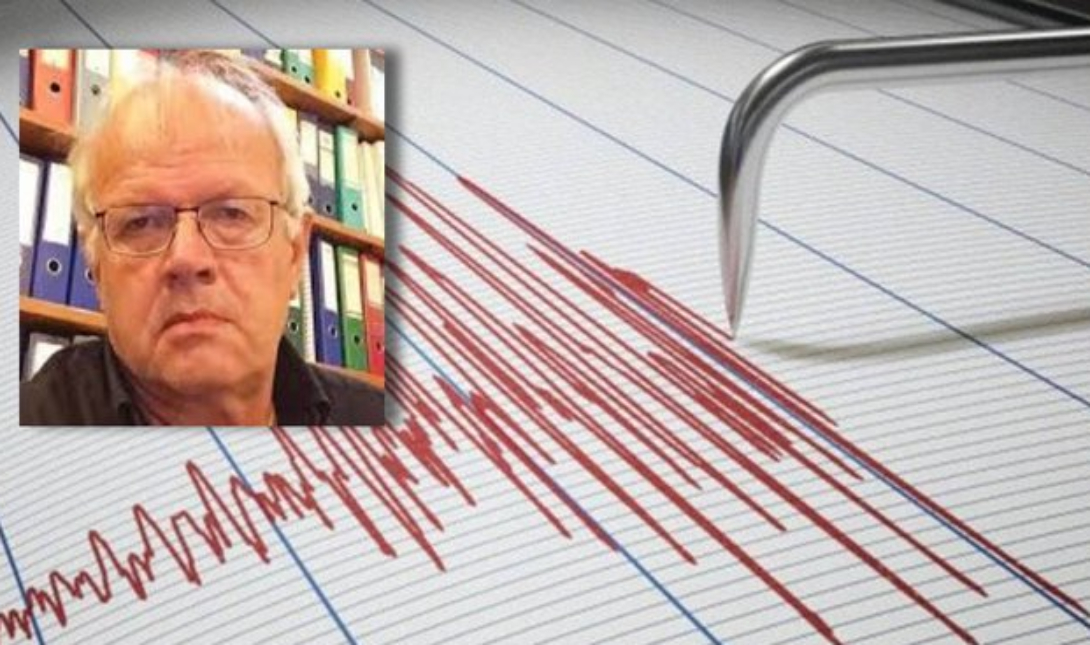
The seismic tension in the Cyclades may have eased temporarily, but Akis Tselentis, a seasoned seismologist and former director of the Geodynamic Institute, stresses that there is no room for complacency.
Residents should remain vigilant and continue to adhere to safety guidelines due to the ongoing risk of significant tremors.
In a recent statement, Mr. Tselentis expressed concern over the relaxed attitude that appears to be developing among the inhabitants.
He mentioned that while there has been a decrease in seismic activity over the past 24 hours, it is crucial not to be misled by premature declarations of safety.
Tselentis highlighted that even after several days of inactivity, a quake above 5 on the Richter scale could occur.
Though most small tremors go unnoticed, the potential for larger quakes remains a reality.
Seismic Activity Patterns
Seismic activity in the region exhibits a distinct pattern of frequent minor tremors.
While these smaller quakes are often under 3 on the Richter scale and usually pass unnoticed, they serve as a constant reminder of the area’s instability.
Mr. Tselentis underscores the importance of understanding these patterns to anticipate future risks.
Residents have been shown diagrams illustrating recent seismic activity, displaying a noticeable decline in the number of quakes.
This visual data is a stark reminder that the absence of significant tremors does not equate to safety.
It most profoundly reveals the need for ongoing preparedness and vigilance.
Preparedness and Safety
Continued adherence to safety measures is crucial for residents of the Cyclades.
Seismological committees have issued guidelines that are essential for ensuring safety.
Mr. Tselentis has also provided residents with personal recommendations, which align with official advice.
One notable development is the push for improved urban planning.
Authorities have highlighted the role of proper urban development in enhancing safety.
Recently constructed buildings on the island, some of which are luxurious accommodations overlooking the Caldera, boast advanced design features aimed at earthquake resistance.
Safety Guidelines | Recommendations |
|---|---|
Evacuation Plans | Follow designated evacuation routes. |
Safe Structures | Seek shelter in earthquake-resistant buildings. |
Emergency Kits | Keep an emergency kit with essentials prepared. |
Communication | Stay informed through reliable news outlets. |
Public Awareness
Efforts are being made to raise public awareness regarding the ongoing seismic risk.
Mr. Tselentis regularly updates the public through posts detailing the current situation and the need for preparedness.
Authorities continue to disseminate information to the public through various channels, emphasising that the danger has not dissipated despite recent calming.
The public is encouraged to stay informed through ongoing updates provided by experts like Tselentis.
In these updates, the seismologist continues to warn against being lulled into a false sense of security by the reduction in immediate seismic events.
Economic Considerations
The economic impact of seismic events on Santorini is noteworthy.
The region, renowned for its tourism, faces challenges as visitors may be deterred by the threat of earthquakes.
Local businesses and authorities are keen to maintain a balance between ensuring public safety and sustaining tourism.
Efforts to boost tourism through improved infrastructures, like the luxurious, earthquake-resistant accommodations, are part of a broader strategy to reassure visitors.
These initiatives aim to demonstrate that Santorini is taking concrete steps to enhance safety and remain an appealing destination.
Is Crete at Risk from a Tsunami?

Crete, being a significant part of the Greek archipelago, has experienced seismic activity in the past.
Earthquakes are common in this region due to its location along major fault lines.
Despite concerns, recent assessments suggest there is no immediate threat of a tsunami to Crete from recent seismic disturbances.
The seismic phenomenon currently observed around the Cycladic islands does not indicate a phase of de-escalation.
Monitoring requires weeks of data to establish new patterns.
A significant earthquake, slightly stronger than 5 on the Richter scale, is possible but unlikely to exceed 5.5 based on current observations.
This is due to the limited stored energy available in that region.
Seismic Activity and Tsunami Potential
The probability of a tsunami is generally linked to the magnitude and depth of an earthquake.
For Crete to face tsunami threats, experts indicate that an earthquake would need to measure well over 6.5 on the Richter scale, with conditions allowing for a rupture that disturbs the seafloor significantly.
Conditions for Tsunami Rising:
- Earthquake Magnitude: A reading above 6.5 Richter
- Fault Movement: Significant rupture affecting the seafloor
- Water Column Disturbance: Movement causing major water displacement.
Expert Opinions and Current Data
Dr Gerasimos Papadopoulos, a prominent Greek seismologist, has provided insights into this matter.
He emphasises that much smaller quakes are occurring, with little risk of escalating into a tsunami-triggering event under current conditions.
Crete’s unique geological setting further reduces its tsunami risk.
The island’s stability comes from different geological structures compared to the Cycladic islands.
As Professor Vallianatos indicated, there is insufficient accumulated seismic energy to expect a major event that could trigger a tsunami.
Preparation and Monitoring
Scientific institutions continue to keep a close watch on the area.
Improved monitoring systems, including new seismographs, have strengthened Crete’s capabilities to track potential threats.
Ongoing data collection makes it easier to predict and respond to seismic activities.
Such efforts are crucial to swiftly identify any major shifts that could change current assessments. More details on seismic contributions shed light on these safety measures.
See also our article from a week ago on the tsunami risks: Earthquakes near Santorini continue
Note: If it is a volcanic quake, the maximum magnitude is around 5 Richter (as well as the maximum in the last few days) and a maximum magnitude of 6 Richter is predicted for a tectonic quake, as there is not enough energy mass in the faults. The probability of a tsunami is therefore very low.
The 1956 tsunami with its 20-metre-high waves was preceded by an earthquake with a magnitude of 7.7 to 7.8 Richter. A tsunami wave from the area near Santorini would reach Crete in about 12 minutes.
Can You Cancel a Booked Holiday?

The stunning island of Santorini, a top summer holiday destination, faces a unique challenge.
Since the end of January, frequent earthquakes have rattled the area, escalating concerns for both residents and tourists.
Though damage so far has been minimal, experts signal a possible larger quake, potentially reaching a magnitude of 6. This could severely impact Santorini and nearby islands, including risks of a tsunami.
With the threat, many locals have left, turning to the Greek mainland for safety.
Understanding Holiday Cancellations
When it comes to cancelling a trip, holidaymakers must carefully consider the circumstances.
Travellers can cancel a package holiday without a fee if the trip is significantly impacted by unavoidable and extraordinary events.
These events must ease directly where the trip occurs or near, and align with the trip’s timing.
A travel advisory from the Foreign Office suggests such conditions, but it’s not strictly necessary. What matters is the likelihood and extent of disruption.
Fear alone is not enough for a free cancellation.
Travellers who book flights, hotels, or holiday rentals individually face more difficulty.
If flights remain operational or lodgings are available, they depend on the provider’s goodwill for cancellation options or refunds.
Current Situation on Santorini
Presently, most tourists travel to the island independently rather than in groups, given the season.
Despite the ongoing tremors, Santorini’s stunning features still appeal.
However, the Greek authorities have issued travel warnings.
They stress caution and urge visitors to join the government’s emergency list for updates and alerts.
Such measures could include notifications on mobile phones about emergencies, offering crucial information.
To mitigate risks, authorities recommend leaving coastal areas, especially since seismically-triggered floods can be dangerous.
Ports like Ammoudi, Armeni, Korfou, and the old Thera port are best avoided.
Visitors should also steer clear of large gatherings indoors and structurally weak buildings.
Safety Measures and Advice
Santorini’s emergency management has declared a state of emergency until early March. This declaration facilitates rapid deployment of evacuation and aid efforts, such as special flights and additional ferries.
Despite the current winter lull in mass tourism packages, individuals on the island should be mindful of these directives. They should also stay informed through local media, hotels, or travel agents.
People booked on Aegean cruises should anticipate delays or itinerary changes. Ships may bypass the island until further notice. Thus, checking with cruise lines or organisers provides the most current information.
The Volcanic Threat
Santorini lies by an active underwater volcano, Kolumbo, situated about 40 kilometres northeast. Recent geological shifts near this volcano hint at magmatic activity, prompting concerns about a possible eruption.
Although the last major eruption occurred centuries ago, vigilance is warranted. If Kolumbo erupts, the effects could extend beyond Santorini, impacting other islands.
Local authorities continue to monitor this threat closely. Monitoring stations around the island provide valuable data on seismic activity. Should any notable developments occur, emergency protocols are ready to protect residents and tourists alike.
Planning Future Visits
Despite current challenges, Santorini remains a cherished destination with its unique geography and enchanting architecture. Each year, its iconic white-washed buildings and azure domes captivate millions of visitors.
Those considering future visits should evaluate travel advisories and consider times when seismic activities are forecasted to decline. Planning around seasonal patterns and expert guidance may lead to an enjoyable and safe holiday.
Holidaymakers drawn to Santorini’s scenic beauty can find reassurance in knowing that safety protocols are well established and authorities are proactive in addressing potential risks. Remaining informed and adaptable ensures an unforgettable experience on this picturesque island, despite the current turbulence in the region.
Frequently Asked Questions
What Causes the Night-Time Rumbling Noises in Santorini?
Residents and visitors often report hearing rumbling noises during the night in Santorini. These sounds are usually linked to seismic activity in the region, which is an area known for frequent earthquakes and tremors.
Are the Noises at Night in Santorini Due to Volcanic Activity?
The island is located near an active volcanic area, so the rumbling noises could also be attributed to volcanic activity. The nearby Kolumbo underwater volcano can contribute to sounds heard after dark when it releases gases or experiences minor eruptions.
How Does Seismic Activity Show Itself on Santorini?
Seismic activity in Santorini often manifests as small earthquakes or tremors. The intensity and frequency can vary, with recent tremors ranging up to 5.2 magnitude. Sometimes, these are strong enough to be felt by people on the island.
What Indications Are There for Predicting Volcanic Activity in Santorini?
Signs to look out for include increased seismic activity, changes in gas emissions, and deformation of the ground. These signals can help predict possible volcanic eruptions and are closely monitored by scientists.
Is Tectonic Movement Causing Night-Time Noises in Santorini?
The island’s location on a tectonic fault line makes it prone to tectonic movements, which could explain the night-time noises. The fault line runs close to Santorini, occasionally leading to geological shifts and sounds.
What Techniques Are Used to Monitor Seismic and Volcanic Activity in Santorini?
Scientists employ various methods to keep an eye on activity. For example, they use seismographs to measure earthquakes, GPS stations to track ground deformation, and gas emission sensors. These tools provide data to help understand and predict geological events in the region.



