

How fire investigators secured crucial evidence, why a firefighter’s job is still considered ‘safe’, and why animals in distress need help!

A pattern that cannot be ignored
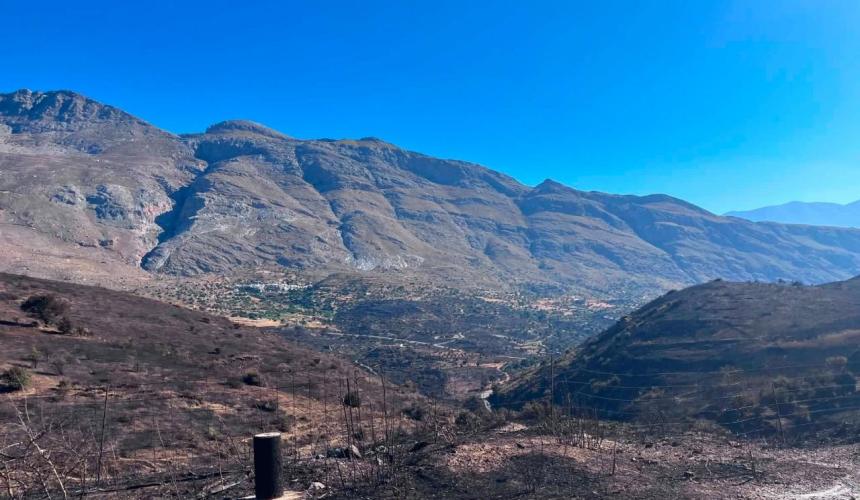
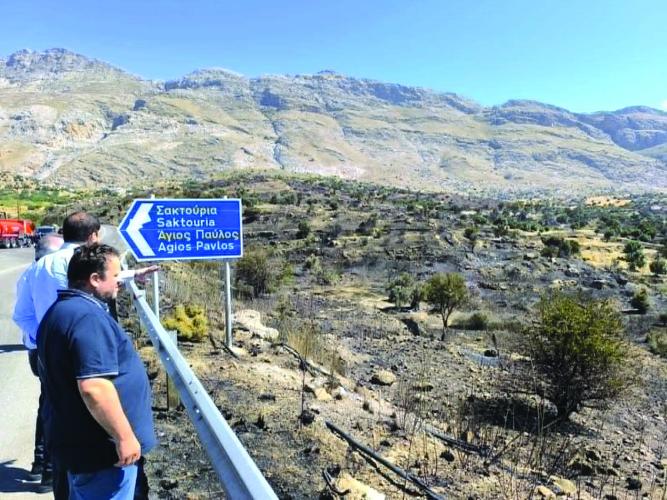
From Preveli to Agia Galini, the southern coast of Rethymno has witnessed repeated cycles of destruction over recent years. Precious forests, pastures, farmland and homes have been reduced to ash time and again. Each summer, residents live with the anxiety that their turn to lose everything may come next.
The tragedy is undeniable. The loss of life is irreplaceable. But beneath the immediate shock lies a more uncomfortable reality: this is not random bad luck. This is a pattern.
Climate change alone cannot explain it
Yes, the climate crisis has created dangerous conditions. Higher temperatures, prolonged drought and powerful winds certainly make wildfires spread faster and burn hotter. These are real factors that cannot be dismissed.
But climate change does not explain why southern Rethymno burns more frequently than other parts of Crete or Greece. Climate change does not explain why the same vulnerable areas are targeted repeatedly, year after year, while other regions with similar weather patterns escape the same fate.
If the answer were climate alone, the entire island—indeed, the entire Mediterranean—would burn with equal frequency. They do not.
The arson question
The mayor of Agios Vasilis has publicly stated that arson is suspected. This is an extraordinarily serious claim and must be investigated thoroughly by the competent authorities without jumping to conclusions.
However, the reality is that arson in this region appears to follow an almost yearly pattern. Whether it involves deliberate criminal acts, negligence, or a combination of factors, the fact remains: this vulnerability is being exploited or neglected, and it must stop.
Prevention must become the priority
Effective fire protection depends far more on prevention than on firefighting. The authorities know what works:
- Constant surveillance of high-risk areas using modern technology—cameras, thermal sensors, unmanned drones.
- Regular patrols during extreme fire-danger days.
- Rapid intervention in the first minutes of any outbreak.
- Swift investigation and prosecution of arson cases to deter future offenders.
- Integrated risk management planning involving all relevant agencies working in coordination.
Southern Rethymno needs more than sympathy. It needs an actionable, comprehensive prevention strategy with clear accountability and adequate resources.
Justice must be pursued relentlessly
If arson is confirmed, the perpetrators must be found and prosecuted. Not only is this a matter of justice—it is also a matter of public safety and deterrence. When people believe they can burn down a community without consequence, the cycle perpetuates itself.
The repeated nature of fires in this region suggests that either:
- Criminals are operating with impunity, or
- Prevention measures are inadequate, or
- Both conditions exist simultaneously.
None of these scenarios is acceptable.
Development cannot become an excuse for neglect
After a disaster, there is always a temptation to use rebuilding as an opportunity for other agendas. The community must have confidence that burned land will not become a blank canvas for unwanted development projects, land-use changes or private interests.
Strict environmental protections, transparent decision-making and genuine community consultation must be the rule, not the exception.
The next day must be a day of action
Mourning the dead and documenting the losses is necessary. But it is not sufficient. The next day must bring concrete plans: dedicated funding, modern infrastructure, trained personnel, technological resources and genuine inter-agency cooperation.
Southern Rethymno cannot afford another year of hoping the fire will not come. It needs a guarantee that it will not.
The people of this region deserve to live without the shadow of preventable catastrophe hanging over them every summer.
How Fire Investigators Preserved Crucial Evidence: Inside the Rethymno Fire Probe

Within hours of the devastating Rethymno wildfire, forensic investigators from Greece’s Fire Service arrived to examine the origin point. Their meticulous work to protect evidence reveals how critical the first 24 hours are in determining whether a fire was accidental—or deliberately set.
Rapid response and overnight vigil
On July 29, just hours after the massive fire erupted near Kria Vrisi in Rethymno, a helicopter transported investigative officers from the Fire Service’s Arson Crimes Division (DAEE) to Crete. Their mission was clear: locate the initial point of ignition and identify the cause.
When the investigators reached the suspected origin site, their suspicions focused on two wooden electrical poles approximately five metres from the provincial road connecting Rethymno to Agia Galini.
Rather than leave the area unguarded, the investigators remained on site throughout the night. This decision proved crucial. They were protecting potential evidence from contamination, disturbance or removal—a standard practice when arson is suspected.
Why overnight protection matters
The decision to maintain a vigilant watch over the poles was not unusual, though it highlights the seriousness with which authorities treated the possibility of criminal conduct.
Repair crews from the power company typically rush to damaged electrical infrastructure to restore service. In doing so, they might inadvertently disturb, remove or alter evidence that could prove crucial to an investigation. By guarding the site, investigators ensured that critical details remained intact until a forensic engineer could conduct a proper examination.
This tactic has been employed successfully in previous cases:
- In August 2024, investigators stood watch over a wooden electrical pole on Amaltheia Street in Varnavas following a fire that burned over 100,000 hectares and tragically killed a woman at her workplace.
- In August 2025, they maintained an overnight vigil at a concrete electrical pole on Amphitropies Street in Keratea after another major fire that claimed the life of a 76-year-old man.
In both cases, the protection of evidence was deemed essential to determining whether electrical faults or malfunctions had played a role in igniting the fires.
The initial findings
On Thursday, a specialised electrical engineer appointed by the DAEE arrived for a forensic examination of the site. According to Fire Service sources, the investigation revealed troubling details:
- One of the wooden poles appeared to have lost its vertical structural support, leaning at an angle.
- Medium-voltage cables connecting the two poles had become loose and slack.
- The strong winds that were sweeping the area caused the cables to vibrate intensely.
- Investigators believe the cable vibrations generated electrical arcs, producing sparks.
- These sparks fell onto dry vegetation below, igniting the fire.
This sequence of events—structural failure, cable slack, wind-induced oscillation and electrical arcing—represents a plausible mechanism for accidental ignition. However, the investigation did not stop there.
Witness testimony and anomalies
Fire Service investigators also gathered statements from local residents who reported a brief power outage in the area around the time the fire began. Such testimony can support the theory of electrical malfunction but also warrants further scrutiny.
The investigation is ongoing, and within days the appointed electrical engineer was expected to submit a detailed forensic report documenting his findings, measurements, observations and conclusions.
Questions for the power company
The involvement of structural and electrical failure raises serious questions about maintenance and safety standards. Late Thursday evening, the DAEE arrested the network operations manager for DEDDIE (the Greek power distribution company) in Rethymno in connection with the fire. He was subsequently released on restrictive conditions.
Investigators also sought to locate the local network maintenance supervisor, though he had not been found at the time of the initial reports.
DEDDIE subsequently issued a statement denying any connection between its network and the fire, describing media reports as “unfounded allegations without evidence.” However, the fact that officials were detained for questioning suggests investigators have identified concerns warranting further examination.
The importance of thorough investigation
Whether this fire was caused by electrical malfunction, negligent maintenance, criminal arson or some combination of factors, the investigative process itself is crucial. The overnight vigil, the forensic examination, the witness interviews and the technical analysis all serve a single purpose: establishing the truth.
Two firefighters—Emmanuel Stratiakis, 58, and Pantelis Diamantakis, 25—lost their lives in this fire. Their families and the broader community deserve answers. The meticulous work of investigators is the only way to provide them.
What happens next
The forensic engineer’s report will be pivotal. It will either confirm the electrical malfunction theory, point toward other causes, or raise new questions requiring further investigation. Depending on the findings, authorities may pursue additional lines of inquiry, request further expert analysis, or move toward prosecution if criminal conduct is established.
The preservation of evidence in those critical first hours may ultimately determine whether justice is served and whether accountability is assigned.
Firefighters Face Flames, Injuries and Death—Yet Their Job Is Still Not Officially “Hazardous”

A profession pushed beyond human limits
Greece’s increasingly intense wildfire seasons are placing extraordinary demands on the Fire Service. During a matter of days, five firefighters reportedly lost their lives, while colleagues faced injuries, burns, fractures, respiratory problems, fainting episodes and severe dehydration.
Firefighters are often transferred directly from one emergency to another, working for long periods with too little time to recover. When one person is injured or hospitalised, others are called upon to fill the gap and continue operating under extreme conditions.
Concerns over staffing and operational safety
Firefighters and their representatives have also raised concerns about staffing levels, repeated transfers between fire fronts and long operations without adequate rest.
One issue highlighted in public complaints is the alleged failure to follow the operational protocol requiring at least one permanent firefighter in each vehicle crew. According to the complaints, personnel shortages have resulted in some crews being formed without meeting this condition.
If confirmed, such practices could affect both operational effectiveness and the safety of the personnel sent into dangerous environments.
More than applause is needed
Firefighters are frequently praised as heroes during national emergencies. But public recognition after a disaster cannot replace meaningful workplace protections.
They need:
- Adequate staffing and reasonable working hours.
- Modern, properly maintained protective equipment.
- Mandatory rest and recovery periods during prolonged operations.
- Regular medical and psychological support.
- Strict adherence to operational safety protocols.
- Full recognition of firefighting as hazardous and unhealthy work.
A question of responsibility
The risks of firefighting are not theoretical. They are visible in every burned landscape, every hospital admission and every family mourning a firefighter lost in the line of duty.
Recognising the profession as hazardous and unhealthy would not solve every operational problem. It would, however, acknowledge the reality of the work and strengthen the case for better protection, compensation and long-term care.
Firefighters should not have to prove the danger of their profession after every tragedy. Their working conditions already provide the evidence.
Animals in Crisis: How to Help Wildlife and Pets Affected by Crete’s Fires

The scale of animal suffering
The fires burning across Rethymno have scorched vast expanses of forest, farmland and residential areas. In their wake lies a landscape of destruction where countless animals have perished or been left injured and homeless.
Volunteers searching the burned-out areas are finding dead animals, traumatised survivors and pets separated from their owners. The work is gruelling, heartbreaking and ongoing.
Rescue organisations mobilise
Animal rescue groups across Crete have mobilised emergency response teams to search for survivors in the affected zones. These organisations are working around the clock to:
- Search burned areas for injured and displaced animals.
- Provide emergency veterinary care for wounded creatures.
- Offer temporary shelter and food for rescued animals.
- Reunite lost pets with their owners.
- Coordinate with local authorities and other relief organisations.
However, the scale of the crisis far exceeds the resources currently available to these groups.
How you can help
If you are in the affected areas:
- Contact local animal rescue organisations immediately if you find injured or lost animals.
- Do not attempt to handle injured wildlife without guidance—it can be dangerous for both you and the animal.
- Provide shelter, water and food for domestic animals you encounter if safe to do so.
- Report sightings to rescue teams so they can prioritise rescue efforts.
If you want to support from a distance:
- Donate to established animal rescue organisations working in Crete. Financial contributions help pay for veterinary care, food, shelter supplies and transport.
- Share information about missing or found pets on social media to help reunite animals with their owners.
- Volunteer your time if you have relevant skills—rescue organisations need veterinary professionals, drivers, shelter workers and administrative support.
- Donate supplies such as pet food, blankets, crates, medical supplies and cleaning materials to local rescue groups.
Major animal rescue organisations in Crete
Several established organisations are leading rescue and relief efforts:
- Takis Shelter – rescues and cares for abandoned dogs and cats on Crete and facilitates adoptions.
- Souda Shelter – located near Chania, provides care for abandoned and stray animals and welcomes visitors by appointment.
- Sitia Animal Rescue – focused on helping animals in eastern Crete.
- Animals of Crete – works to support homeless animals across the island.
These organisations can provide guidance on where to direct donations, how to volunteer and how to report animal sightings.
The long-term recovery will take months
Once the immediate crisis subsides, the work does not end. Injured animals will need ongoing veterinary treatment. Displaced pets may take weeks or months to reunite with owners. Rehabilitation of traumatised animals requires patience and specialised care.
Rescue organisations will need sustained support throughout the recovery phase, not just in the immediate aftermath of the fires.
Every contribution matters
Whether you donate €5 or €500, whether you volunteer for an hour or a week, whether you share a single post about lost pets or dedicate yourself to rescue work—every action helps. The animals displaced and injured by these fires cannot advocate for themselves. They depend on human compassion and action.
In times of crisis, communities show their true character through how they treat the most vulnerable members—including animals. Crete’s animal rescue organisations are proving their commitment. Now is the time to support them.
Sources
Rethemnos News: Unanswered questions demand answers for the tragedy in the south
Hania News: Major fire in Rethymno—”scope” for the initial fire site: what the Fire Service and DEDDIE are saying
Cretalive: Firefighters at the limit—deaths, injuries and fainting, yet the profession is still not officially recognised as hazardous
Zoo SOS: Volunteers search endlessly in burned-out areas—many animals dead and injured



