

Newsflash from Friday, 5 June 2026:

Authorities in southern Crete are grappling with a sharp and ongoing rise in migrant arrivals, as multiple boats carrying hundreds of people have reached the island within a short timeframe. The latest incidents highlight mounting pressure on local services and underline the persistence of migration routes across the Mediterranean.
In a series of coordinated rescue operations involving the Hellenic Coast Guard and Frontex, more than 140 migrants were intercepted in separate incidents off the coasts of Gavdos, Paleochora, Agia Galini, and Kali Limenes. These operations unfolded within just 24 hours, signaling a notable surge in activity along Crete’s southern maritime borders.
Among the arrivals were men, women, and minors, many of whom reportedly departed from Tobruk, Libya, paying between $1,500 and $3,000 each for passage to Greece. Authorities confirmed the arrest of two individuals accused of acting as smugglers, including one minor identified by fellow passengers as the operator of a vessel.
In Paleochora alone, 42 migrants were found on a local beach, leading to the arrest of a 28-year-old suspect linked to human trafficking. Meanwhile, additional groups of 31 and 38 individuals were rescued at sea near Gavdos and safely transported to ports in Agia Galini and Chania for processing and temporary accommodation.
The situation escalated further with new arrivals reported across the island. Off the coast of Ierapetra, a vessel carrying 75 migrants was detected by Frontex approximately 21 nautical miles southwest of the city. All passengers were safely transferred to shore and moved to temporary housing facilities pending identification procedures.

In a separate incident on Friday morning, 56 migrants were located in the Louta area near Lentas in Heraklion. Among them were two women. Authorities swiftly initiated standard registration and screening processes while investigating the circumstances of their journey.
These consecutive arrivals underscore the sustained pressure on Crete as a key entry point into Europe. Local authorities remain on high alert, coordinating closely with national and European agencies to manage the increasing flow while ensuring the safety and humane treatment of those arriving.
Investigations into trafficking networks operating out of North Africa are ongoing, as officials attempt to disrupt the organized routes facilitating these crossings. With no immediate signs of the trend slowing, Crete continues to face a complex humanitarian and logistical challenge at its southern shores.
NeaKriti | NeaKriti | NeaKriti
Out of Control: Gavdos Overwhelmed as Smuggling Networks Intensify Migrant Crossings

The small island of Gavdos, located south of Crete, is facing mounting pressure as migrant arrivals surge dramatically in recent months. Authorities warn that the situation is rapidly escalating, with smuggling networks increasing both the frequency and risk level of crossings from Libya.
In just a matter of hours, multiple overcrowded boats carrying dozens of migrants have been detected in waters south of the island. In one recent case, 39 people were found aboard a drifting vessel approximately 30 nautical miles from Gavdos. Coast Guard officers intervened to rescue those on board and safely transport them ashore.

Even more alarming was a separate incident involving a boat carrying 38 migrants, where a 17-year-old was reportedly identified as the smuggler operating the vessel. According to authorities, the journey began in Tobruk, Libya, and lasted nearly two days—raising serious concerns about the increasingly dangerous tactics used by trafficking networks.
Officials note that smugglers are now exploiting inexperienced individuals, including minors, to pilot vessels across long and perilous routes. These journeys, often undertaken in overcrowded and poorly equipped boats, put lives at significant risk in open sea conditions.
The financial incentives behind these operations remain substantial. Each migrant is believed to pay between $1,500 and $3,000 for passage, with criminal networks reportedly earning up to €150,000 per trip. Despite ongoing efforts, authorities acknowledge that diplomatic measures have so far failed to stem the flow.
Data from recent months paints a stark picture. Migrant arrivals to Gavdos and Crete have increased by 57% compared to the same period last year. Since the beginning of 2026, total arrivals have risen from approximately 4,500 to 5,600—highlighting a sustained upward trend.
The island of Gavdos has increasingly become a primary target for smugglers over the past two and a half years. Boats are often abandoned in remote and difficult-to-access coastal areas, leaving migrants stranded and vulnerable. Local infrastructure, already limited, is struggling to cope with the growing numbers.
Greek authorities are now stepping up surveillance efforts, deploying additional Coast Guard vessels and planning to send liaison officers to regions where smuggling networks are based. However, officials warn that thousands of migrants currently in Libya are expected to attempt the crossing in the near future.
As the situation continues to deteriorate, Gavdos stands at the forefront of a complex and evolving migration challenge—one that combines humanitarian urgency with serious security concerns.
“No Room for New Camps”: Crete Mayors Push Back Against Migrant Reception Centres
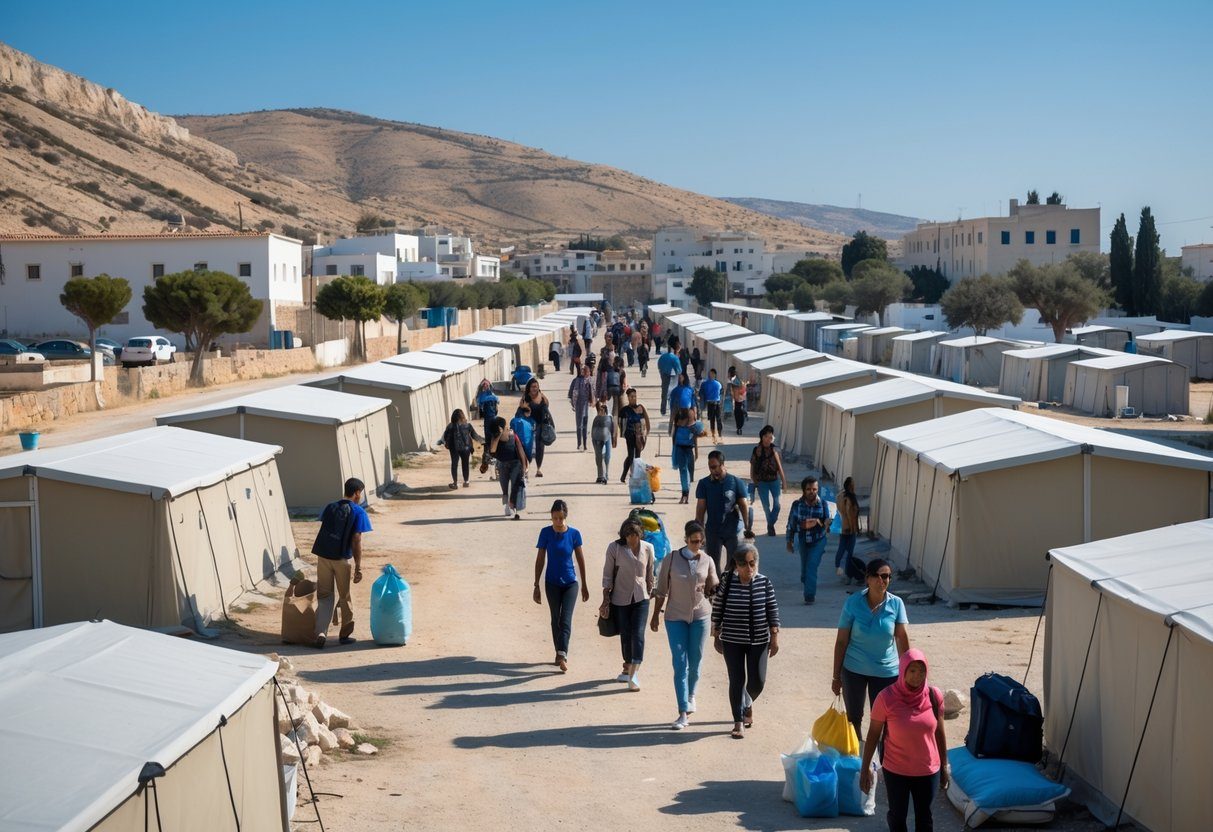
Tensions are rising across Crete as local leaders openly oppose plans for the creation of migrant reception centres on the island. Amid a sharp increase in arrivals, mayors are calling for clarity from the central government while firmly rejecting the prospect of new structures being imposed without consultation.
The issue is set to dominate a high-level teleconference of the Regional Union of Municipalities of Crete (PED), where all mayors of the island are expected to discuss the growing migration pressure and formulate a common response. According to PED President and Rethymno Mayor Giorgis Marinakis, the numbers recorded in the first five months of 2026 have already surpassed those of the first half of 2025, signaling a rapidly intensifying situation—particularly in eastern Crete.
At the center of the debate is a new legislative framework being prepared by the Ministry of Migration and Asylum. The proposed plan reportedly introduces fast-track procedures to determine asylum eligibility within seven days, separating those entitled to protection from those facing return. At the same time, it appears to move away from earlier discussions about establishing a large, centralized “hotspot” facility on the island.
Despite this, local authorities remain deeply skeptical. Several mayors have expressed frustration over what they describe as a complete lack of official information or consultation from the state.
“There has been absolutely no formal briefing—neither from the Ministry, nor from the Region, nor from the Decentralized Administration,” said Hersonissos Mayor Zacharias Doxastakis, emphasizing that the upcoming teleconference is the only scheduled discussion on the matter.
Mayors from inland municipalities were particularly firm in their opposition. Gortyna Mayor Lefteris Kokkolakis dismissed the idea of hosting reception facilities in the hinterland, citing the absence of essential infrastructure such as policing and healthcare services. “The inland areas of Crete are not suitable for such structures,” he stressed.
Similar views were echoed by Faistos Mayor Grigoris Nikolidakis, who stated that the issue is “neither under consideration nor open for discussion” at the local level, adding that while municipalities are on the front line, responsibility for managing such facilities lies with the central government.
Viannos Mayor Pavlos Baritakis also confirmed that no official approach or planning has been communicated to his municipality, reinforcing the sense of uncertainty and concern among local authorities.
The upcoming meeting is expected to provide a clearer picture of the government’s intentions, with expert briefings on current migration flows and projected developments. However, one message from Crete’s mayors is already clear: any decisions regarding reception centres must involve local communities—and for now, resistance remains strong.
NeaKriti | NeaKriti | NeaKriti | Zarpa News | CretaLive



