

High levels of toxic particulate matter pollution on Crete due to the fires near Athens.
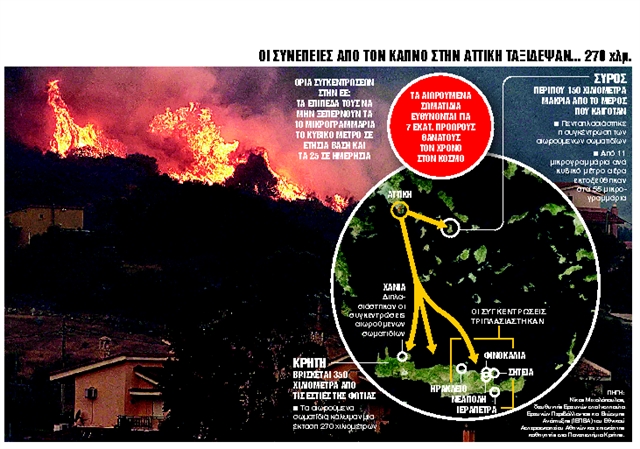
Overview of air pollution as a result of fires in Attica
The recent wildfires in Eastern Attica sparked a sharp rise in airborne fine particles—known as αιωρούμενα σωματίδια (PM2.5). These tiny particles, produced by burning wood and biomass, traveled far, drifting over 270 kilometers and pushing up pollution levels across Crete and even Syros.
Levels of these particles more than tripled in places like Sitia and Heraklion. PM2.5 values, usually pretty low, shot up from around 11 to 55 micrograms per cubic metre in Syros and reached 45 micrograms in Neapoli Lasithiou.
Even remote areas, where you’d expect clean air, saw these spikes. The jump in suspended particles after wildfires really drives up atmospheric pollution.
This kind of pollution can seriously mess with your lungs. Fine particles slip deep into lung tissue and can worsen asthma or other breathing issues.
People with heart problems aren’t off the hook either, since these pollutants can aggravate cardiovascular risks. It’s honestly a bit alarming how quickly the effects can show up.
Air pollution here doesn’t just come from fires. Forest fires, traffic jams (the infamous μποτιλιάρισμα), and burning biomass for home heating all add to the mix.
Fireplaces and pellet stoves release fine particles and gases that drag down air quality, especially in the colder months. Wildfires just pile more suspended particles onto an already heavy load for our lungs and hearts.
Heavy traffic in cities and towns means vehicle emissions are always part of the problem. When wildfires hit at the same time, the air can get especially bad, putting a real strain on public health and doctors who handle lung diseases.
The monitoring network for atmospheric observations caught these spikes in real time. Pollution can spread shockingly fast from distant fires to crowded cities—or even quiet villages with barely any local pollution.
Measuring PM2.5 and similar pollutants all the time really matters for understanding health impacts. It helps experts warn people who are most at risk so they can take some precautions.
Both natural events like fires and daily human activities—traffic, burning wood—shape the air we breathe. Keeping tabs on these pollution sources and finding ways to manage them feels more important than ever if we want to cut down the long-term health risks from all these suspended particles.
Wildfires can send fine particles soaring across huge regions, not just nearby. That makes environmental management and public health responses a real challenge. If you want more details, check out the reports on airborne particles from the eastern Attica fire.



