

Water level in Lake Kournas rises above three metres again, but shocking data for the east of the island and the “Dutch” water plan for Crete.
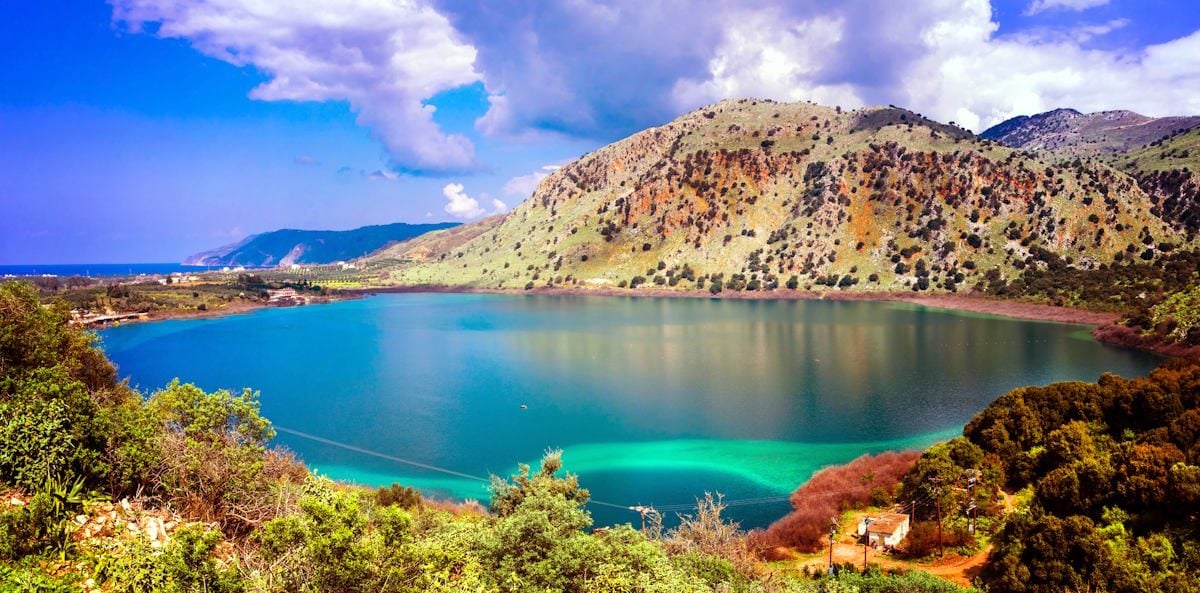
Lake Kournas Bounces Back: Water Levels Surpass 3 Meters in a Major Boost for Western Crete
After months of concern over historically low water levels and a looming drought, Lake Kournas is finally showing signs of a strong recovery. Recent measurements reveal that the water level has surpassed the 3-meter mark, providing a much-needed “breath of fresh air” for the water reserves of Western Crete.
A Dramatic Turnaround for Chania’s Natural Gem
Just a few months ago, Lake Kournas—Crete’s only natural freshwater lake—presented a worrying image of dryness. At the beginning of January, the water level was recorded at a low of 1.80 meters. However, following recent rainfall, the latest measurements show a significant rise to 3.35 meters.
Aris Papadogiannis, CEO of the Organization for the Development of Crete (OAK), expressed cautious optimism. While the island is technically facing its fourth consecutive year of low rainfall, the surge at Lake Kournas, combined with the strengthening of the Meskla springs, offers hope for water sufficiency in the Chania region this coming summer.
Western vs. Eastern Crete: A Tale of Two Regions
While the news is positive for the West, the hydrological map of Crete remains divided.
* In the West (Chania & Rethymno): The situation is relatively stable. Beyond Lake Kournas, the Potamon Amari Dam in Rethymno is nearing full capacity with 20 million cubic meters of water.
* In the East (Heraklion & Lasithi): The concern remains high. The Aposelemis Dam is currently at a critical low of just 1.4 million cubic meters. Experts hope that upcoming spring rains will push this toward 8 million cubic meters to meet the high summer demand.
Smart Management: The Key to a Sustainable Summer
Despite the rising levels in Lake Kournas, officials are urging residents and businesses not to become complacent. Mr. Papadogiannis emphasized that “proper management is a collective effort.”
To ensure there is enough water for everyone during the peak tourist season, OAK is recommending several key measures:
* Tourism Industry: Hotel owners are encouraged to inform guests about responsible water usage to prevent waste.
* Agriculture: Farmers are advised to water crops during late afternoon or night hours to minimize evaporation.
* Infrastructure Upgrades: OAK is actively working on replacing pumping stations and networks in areas like Dramia and Vlitte to eliminate leaks.
Looking Ahead
The rise of Lake Kournas to 3.35 meters is a vital milestone, but it serves as a reminder of how precious water resources are on the island. As Crete prepares for another busy summer, the focus remains on balancing the needs of the primary sector, the tourism industry, and local households.
For now, the sight of a fuller Lake Kournas is a welcome relief for locals and visitors alike, signaling that Western Crete is better prepared to face the heat of the Mediterranean summer.
Are you visiting Chania this year? Lake Kournas is not just a vital reservoir but a stunning destination for paddleboarding and nature walks. Let’s all do our part to protect this natural treasure by using water wisely!
Four Years of Drought: Shocking Data Reveals Crete’s Critical Water Crisis

Crete is facing an unprecedented water emergency. New data from the island’s Water Management Authority paints a grim picture: the fourth consecutive year of drought is pushing the Mediterranean’s largest Greek island toward a critical water shortage. The numbers are alarming, and experts warn that immediate action is essential.
The Drought That Won’t End
According to rainfall data compiled from 50 meteorological stations across Crete, precipitation levels have remained dangerously low throughout the 2025-2026 hydrological year. This marks the fourth straight year of below-average rainfall, comparable to the devastating drought of 2017-2018 that left the island’s water reserves severely depleted.
The impact is staggering:
* Underground water reserves are dropping at an alarming rate
* Dam levels have plummeted to historic lows
* Spring discharge rates have decreased significantly
* Agricultural water supplies are severely compromised
Regional Breakdown: Not All of Crete Is Equally Affected
The Water Management Authority’s analysis reveals stark regional disparities across the island:
Western Crete (Chania & Rethymno)
The western regions are experiencing slightly better conditions, though still worrying. Data from 17 and 12 meteorological stations respectively show that current rainfall levels are among the lowest recorded in recent history.
Eastern Crete (Heraklion & Lasithi)
The situation is far more critical in the east. In Heraklion, data from 14 stations indicates marginally better conditions than other regions—though this is relative and still well below normal. Lasithi, with only 7 available stations, shows rainfall levels consistent with a severe drought year, with no improvement expected in the short term.

The Dams: A Catastrophic Story
The island’s three major dams tell a story of increasing desperation:
Bramiana Dam (Ierapetra)
This dam’s condition is particularly shocking:
* Total capacity: 14.5 million cubic meters
* January 2026 levels: 1.75 million cubic meters (just 12% full)
* January 2025 levels: 3.72 million cubic meters
* Year-on-year decline: 53% drop in a single year

Phanerromeni Dam (Messara)
The situation here is equally dire:
* Total capacity: 18 million cubic meters
* January 2026 levels: Below 3 million cubic meters
* Critical threshold: The dam now operates below safe operational limits
Potamon Dam (Rethymno)
The sole bright spot in Crete’s dam network:
* Total capacity: 17.5 million cubic meters
* Current status: Nearly full
* Important caveat: This is NOT due to rainfall, but because limited water is being drawn for irrigation and drinking water
Lake Kournas: Another Victim of the Drought
Crete’s only natural freshwater lake, Lake Kournas, is also suffering historic lows. The reduction in groundwater recharge and spring discharge has left this vital natural reservoir severely depleted.
What’s Causing This Perfect Storm?
The fourth consecutive dry year has created a compounding crisis:
1. Reduced precipitation means less water entering the system
2. Lower groundwater recharge depletes underground aquifers
3. Diminished spring flows reduce natural water sources
4. Dam reserves cannot recover because they’re being actively used while refilling is minimal
5. Previous drought years left reserves already depleted before the current cycle began
The Impact on Daily Life
This water crisis directly threatens:
* Agricultural productivity – Farmers face severe irrigation restrictions
* Drinking water supply – Residential water availability is increasingly uncertain
* Tourism industry – Summer water demand could exceed available supplies
* Rural communities – Some areas may face temporary water supply cuts
Urgent Measures: What Authorities Are Proposing
The Water Management Authority has issued a comprehensive set of recommendations to mitigate the crisis:
Infrastructure Improvements
* Fix leaking pipes – Systematic leak detection and repair programs must become permanent, not seasonal
* Upgrade networks – Replace aging water distribution systems that lose millions of liters annually
* Install monitoring systems – Expand the snow measurement network (currently non-existent) to better predict spring water availability
Demand Management
* Public awareness campaigns – Continuous education about the severity of the crisis and rational water use
* Tourism sector guidelines – Hotels and resorts should inform guests about water conservation
* Agricultural practices – Promote nighttime irrigation to reduce evaporation losses
* Seawater alternatives – Use saltwater for swimming pools to preserve fresh drinking water
Behavioral Changes
* Reduce unnecessary consumption
* Report leaks immediately
* Implement water-saving appliances
* Support sustainable water management policies
A Wake-Up Call for Climate Change
This drought is no longer a temporary crisis—it’s a warning sign. With four consecutive years of below-average rainfall, Crete’s water authorities are openly acknowledging that the island may be entering a new climatic pattern characterized by chronic water scarcity.
Climate scientists point to broader Mediterranean trends: rising temperatures, shifting precipitation patterns, and increasingly severe drought cycles are becoming the norm rather than the exception.
What Can You Do?
Whether you’re a resident or visitor to Crete, you can make a difference:
* Be water-conscious – Every liter saved counts during a crisis
* Report leaks – Contact local authorities if you see water waste
* Support sustainable tourism – Choose hotels and businesses with strong water conservation practices
* Stay informed – Follow updates from the Water Management Authority
* Advocate for solutions – Support policies that address long-term water sustainability
The Bottom Line
The data doesn’t lie: Crete is in a critical water situation. The fourth consecutive dry year has pushed the island’s water reserves to dangerous levels, with some dams operating below safe thresholds and underground aquifers showing alarming depletion.
This is not a problem that will resolve itself. It requires immediate action, sustained commitment, and a fundamental shift in how Crete manages and values its most precious resource: water.
The shocking data is a wake-up call. The time to act is now—before the next dry year arrives.
Have you noticed water shortages in your area of Crete? Share your experiences in the comments below. Together, we can raise awareness and push for the urgent solutions this crisis demands.
The “Dutch Plan” for Crete: Why Small, Smart Projects and Unified Management are the Future of Water

Crete is at a crossroads. After years of increasing pressure on its water resources, the traditional approach of building massive, expensive “showcase” projects is being challenged. A comprehensive new strategic plan, designed by the Dutch firm HVA, suggests that the secret to saving Crete’s water isn’t just about bigger dams—it’s about smarter management and unified governance.
The study, recently delivered to the Ministry of Rural Development, offers a “Northern European” perspective on how to drought-proof the island. Here are the key takeaways from the proposal that could redefine Crete’s landscape.
The Problem: Too Many “Conductors,” No “Maestro”
The HVA study identifies a major hurdle that has nothing to do with rainfall: fragmented management. Currently, water in Crete is managed by a patchwork of different agencies, municipalities, and ministries with overlapping responsibilities.
The Dutch experts are clear: fragmented projects and bureaucratic “clashes” lead to a mathematical certainty of lost water, lost money, and lost time.
The Solution: The study proposes expanding the Crete Development Organization (OAK) to serve as a single, island-wide Water Management Authority. By utilizing an existing organization with proven expertise, the island can avoid the political friction of creating a brand-new entity while finally having a “maestro” to lead the water orchestra.
Moving Beyond “One Size Fits All”
Crete is a hydrological mosaic. What works in the lush west doesn’t necessarily work in the arid east. The HVA plan rejects “blanket” solutions, instead proposing tailored interventions for high-pressure areas:
* Heraklion & Messara
* Ierapetra
* The Lasithi Plateau
Efficiency Over “Showcase” Projects
In a shift away from Greek tradition, the study de-emphasizes massive new technical works. Instead, it prioritizes low-cost, high-efficiency interventions that offer immediate results:
1. Leak Detection & Repair: Identifying and fixing the massive amounts of water currently lost in aging, “leaky” pipes.
2. Smart Meters: Installing digital monitoring to track real-time usage.
3. Network Sectorization: Dividing networks into zones to better manage pressure and isolate problems.
4. Restoring Old Infrastructure: Prioritizing the health of existing pipes over building new ones.
A New Vision for Agriculture
The analysis of Crete’s farming sector is particularly sharp. The study highlights structural weaknesses, such as the heavy reliance on open irrigation canals (which lose water to evaporation) and the dangerous over-pumping of underground aquifers.
Rather than enforcing island-wide changes overnight, HVA proposes pilot programs in Messara and Ierapetra. These areas will test new irrigation practices and crop-water matching. Only once these methods prove to be environmentally and economically viable will they be expanded to the rest of the island.
Working With Nature, Not Against It
In line with European Union guidelines, the strategic plan emphasizes Nature-Based Solutions (NBS) for flood control and water retention. Instead of just pouring concrete, the plan suggests:
* Reforestation to help the soil absorb water.
* Anti-erosion interventions.
* Small-scale check dams to slow down runoff.
* Early Warning Systems: A technical design for a flood alert system focused on “readiness” rather than just emergency management.
The Bottom Line
The HVA study suggests that Crete doesn’t necessarily have a “water shortage” as much as it has a “management shortage.” By shifting the focus from grand technical projects to institutional reform and smart, localized maintenance, Crete can secure its water future.
However, the experts warn that no plan can succeed without “social convergence.” The Region, the municipalities, and the farmers must all agree on the “big picture” before the first smart meter is even installed.
What do you think? Should Crete focus on one single authority to manage its water, or should local municipalities keep control? Share your thoughts in the comments below!



