

Areas in Crete where access is prohibited when there is a high risk of forest fires, four specialist units to tackle fire safety offences, and police drones.

As the 2026 fire season intensifies, the Regional Administration of Crete has implemented a series of preventive access restrictions in forest ecosystems and sensitive areas across the island. These measures aim to minimize the risk of fire outbreaks and protect critical natural habitats, NATURA zones, and infrastructure.
What Are the Restricted Areas?
The ban applies to high-protection forest ecosystems and vulnerable zones designated as high-risk areas for forest fires. The restrictions are enforced on days when the “Fire Danger Forecast Chart” issued by Greece’s General Secretariat of Civil Protection reaches Category 4 (Orange/Very High) or Category 5 (Red/Alert Status).
These areas include:
- Protected forest ecosystems
- NATURA 2000 protected sites
- Forest parks and groves
- High-altitude mountain zones
- Gorges and natural reserves
- European hiking trails (E4 routes)
Specific Restricted Zones by Region
Central Crete (Heraklion & Rethymno Areas)
The following areas are subject to access restrictions:
- Symi (Municipality of Viannos)
- Roupa-Zarós (Municipalities of Gortyna and Phaistos)
- Koudouma (Municipality of Gortyna)
- Keris (Municipality of Malevizi)
- Fourni (Municipality of Archanes-Asterousia)
- Giouchta Mountain (Municipality of Archanes-Asterousia)
- Epanoseifi (Municipality of Archanes-Asterousia)
Eastern Crete (Agios Nikolaos & Ierapetra Areas)
High-risk zones include:
- Azilakodasos (Municipality of Agios Nikolaos)
- Vathy (Municipality of Agios Nikolaos)
- Tryptis (Municipality of Ierapetra)
- Kalo Horio (Municipality of Agios Nikolaos)
- Meseleroi (Municipality of Ierapetra)
- Selakano (Municipality of Ierapetra)
- Cypress Forest of Kritsas (Municipality of Agios Nikolaos)
- Krousta Forest (Municipality of Agios Nikolaos)
- Vai Beach Forest (Municipality of Sitia) — restricted daily from 22:00 to 06:00
Western Crete (Rethymno & Chania Areas)
Sensitive areas in the western region include:
- Suburban forests of Evelygia – Prophet Ilias – Agios Ioannis
- Reforestation area south of the Holy Monastery of Arkadi
- Forest grove of Paradeisos Armenon
- Mill Gorge (Farangi Mylo)
- Suburban forests of Kissós, Angousellianó, and Agios Ioannis
- The Kourtaliotis River area (managed by OSFYPEKA and Municipality of Agios Vasilis)
- Margariti Gorge (Municipality of Mylopotamos)
- Agia Irini Gorge (Municipality of Kandiáno-Selinía)
- Road to Kalergi Refuge – Poria (Municipality of Plataniá)
Major European Hiking Trails (E4 Routes)
Several sections of the famous E4 European hiking trail are restricted:
- Balos-Falassarna (Municipality of Kissamos)
- Krios-Elafonissi (Municipality of Kandiáno-Selinía)
- Sougia-Gianiskári (Municipality of Kandiáno-Selinía)
- Sougia-Agia Roumeli (Municipalities of Kandiáno-Selinía and Sfakia)
- Samaria Gorge (Municipalities of Sfakia, Plataniá, and Kandiáno-Selinía)
- Imbros Gorge (Municipality of Sfakia)
- Aradaina Gorge (Municipality of Sfakia)
- Topolian Gorge (Municipality of Kissamos)
- Diktamo Gorge (Municipality of Chania)
- Cedar Forest (Kedrodasos) (Municipality of Kandiáno-Selinía)
- Anydro Gorge (Municipality of Kandiáno-Selinía)
Who Can Enter Restricted Areas?
The ban includes passage, residence, and circulation of persons and vehicles in these zones during high-risk fire days. However, residents and workers who can prove they live or work in these areas are exempted from the restrictions.
Maps and Detailed Information
The boundaries of all restricted areas are depicted on detailed maps compiled in collaboration with forest management authorities. These maps are available at: https://www.crete.gov.gr/chartes-politikis-prostasias/
Checking the Fire Danger Forecast
To know if restrictions are in effect on any given day, check the official “Fire Danger Forecast Chart” at: https://civilprotection.gov.gr/xartis
This interactive map updates daily and indicates which areas fall under Category 4 or 5 fire danger status.
Penalties for Violations
Violators of the access ban face administrative fines as outlined in the Fire Protection Regulations (Law 19/2020, as amended). Enforcement is the responsibility of:
- Greek Police
- Fire Brigade
- Forest Service
- Municipal Police
Special Mobilization Days
On days when the “Special Civil Protection Mobilization Status” is declared, measures corresponding to a Category 4 (Orange) fire danger level are automatically implemented across sensitive areas.
Why These Restrictions Matter
Forest fires are among Greece’s most serious natural disasters. By restricting access during peak-risk periods, authorities aim to:
- Prevent accidental fire ignitions caused by human activity
- Protect critical ecosystems and biodiversity
- Safeguard infrastructure and communities
- Preserve natural and cultural heritage
Everyone has a role to play in fire prevention. Compliance with these restrictions can mean the difference between a safe summer season and a catastrophic fire event.
Resources and Support
For more information on fire safety measures, visit: https://civilprotection.gov.gr/odigies-prostasias
In case of emergency, call:
- Fire Brigade: 199
- General Emergency: 112
Crete Steps Up Fire Protection: Four New Specialized Units to Investigate Arson and Safety Violations
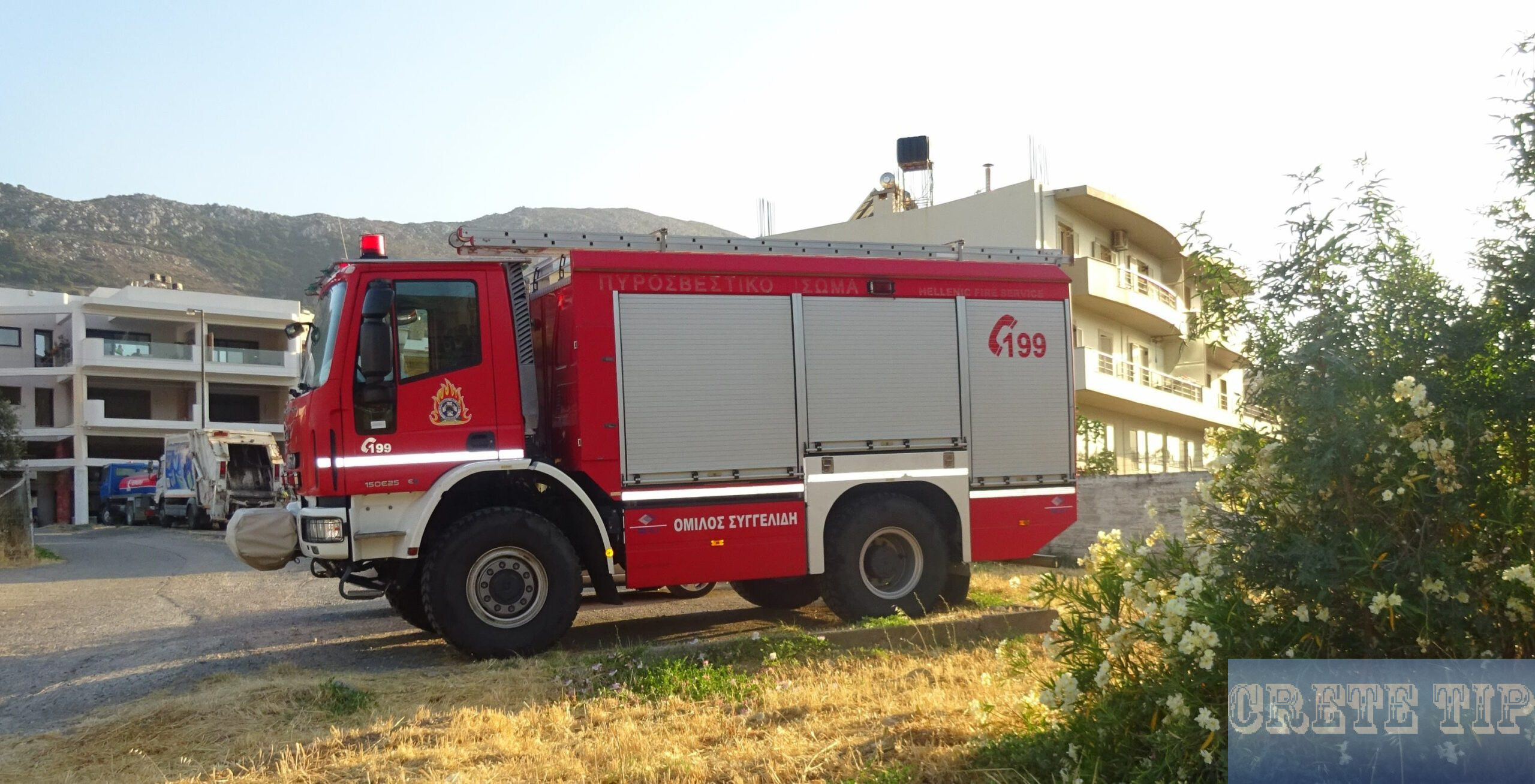
In a major move to strengthen fire prevention and enforcement, Crete is being reinforced with four new specialized investigation units dedicated to tackling arson and fire safety breaches. The initiative, officially confirmed through a government gazette (FEK), marks a significant upgrade in how fire-related crimes are handled across the island.
A New Era in Fire Safety Enforcement
The newly established units—known as Arson Crime Investigation Units (A.K.A.E.E.)—are part of a nationwide restructuring of the Hellenic Fire Service’s investigative mechanism. Their creation reflects growing concern over wildfires, arson incidents, and safety violations, especially as climate conditions increase fire risks.
Until now, Crete relied on a single investigative office based in Heraklion to cover the entire island. With the new structure in place, enforcement capacity is expected to improve dramatically.
Where the New Units Will Be Based
The four new investigation units will be strategically located to ensure full regional coverage:
- Heraklion Unit – based in Heraklion, covering the wider Heraklion region
- Chania Unit – based in Chania, responsible for western Crete
- Rethymno Unit – based in Rethymno, covering central areas
- Lasithi Unit – based in Agios Nikolaos, overseeing eastern Crete
Each unit will operate within its respective jurisdiction, allowing for faster response times and more localized investigations.
How the New System Will Work
The units will fall under the Directorate for Combating Arson Crimes (D.A.E.E.), reporting directly to the Chief of the Fire Service. This centralized structure is designed to enhance:
- Coordination between regions
- Speed of investigations
- Effectiveness in solving fire-related cases
Each unit will be staffed by at least five trained investigative officers, although in some cases—such as Lasithi—operations may begin with a minimum of three personnel due to local conditions.
Focus on Dedicated Investigations
A key innovation of the new system is that staff will be exclusively assigned to investigative duties. Unlike previous structures, they will not be diverted to other operational tasks, allowing them to focus entirely on:
- Determining the causes of fires
- Collecting and analyzing evidence
- Identifying and prosecuting those responsible
This change is expected to significantly improve the quality and speed of fire investigations.
Nationwide Expansion
The reform is part of a broader national plan that increases the number of such investigative units from just nine offices to 37 specialized units across Greece. Crete’s four new teams are a key part of this expansion, reflecting the island’s high exposure to wildfire risks.
Why It Matters
With forest fires posing one of the most serious threats to the environment, economy, and public safety, authorities emphasize that prevention and accountability are critical. Strengthening investigative capabilities not only helps identify perpetrators but also acts as a deterrent against negligent or intentional fire-setting.
Officials also stress that the success of the initiative will depend on adequate staffing and continued support, ensuring the new units can fully carry out their mission.
Eyes in the Sky: Ierapetra Deploys Drones to Fight Fire Risks and Protect Animals

High-Tech Support for Fire Prevention
As part of strengthened fire prevention efforts, drones are being deployed to identify uncleaned plots of land—a major contributor to wildfire outbreaks. Overgrown vegetation and accumulated debris can quickly become fuel for fires, especially during periods of extreme heat and strong winds.
By using aerial surveillance, authorities can now:
- Quickly locate hazardous, uncleared properties
- Monitor large or hard-to-reach areas more efficiently
- Support enforcement of fire safety regulations
This approach significantly enhances the municipality’s ability to act proactively rather than reactively.
Protecting Animals in Risk Zones
Beyond fire prevention, the drones are also being used to detect animals that are chained, confined, or abandoned in areas at risk of fire or other natural disasters.
Officials emphasize that these inspections are crucial for ensuring that animals are not left helpless in dangerous conditions, particularly during emergencies when evacuation may be required.
Specialized Training for Officers
To support the rollout, members of the Municipal Police have undergone certified training in drone operation. This ensures that the technology is used safely, effectively, and in compliance with regulations.
The drones will also assist broader Civil Protection operations, including surveillance of high-risk zones and support during emergency response situations.
Positive Response from Residents
The initiative comes alongside increased public awareness and cooperation. This year, approximately 1,600 plots were declared and cleared, representing a 30% increase compared to last year.
Authorities see this as a strong sign that prevention campaigns and stricter monitoring are having a tangible impact.
Prevention Is Key
Local officials stress that prevention remains the most effective defense against wildfires. Early action—combined with modern technology like drones—can protect lives, property, the natural environment, and animal welfare.
With fire risks expected to remain high throughout the summer, Ierapetra’s initiative could serve as a model for other municipalities across Greece.
Sources
Cretaone – Civil Protection of Crete Region: Preventive ban on passage, residence, and circulation in vulnerable areas during fire season
NeaKriti – Crete strengthens defenses against arson with four new specialized Fire Service units
eKriti – Drones used in Crete to detect uncleared plots and support fire prevention efforts



