

Where does Heraklion actually get its water from? The Agia Lake near Chania is drying up very quickly, and the village has been without water for 10 days.
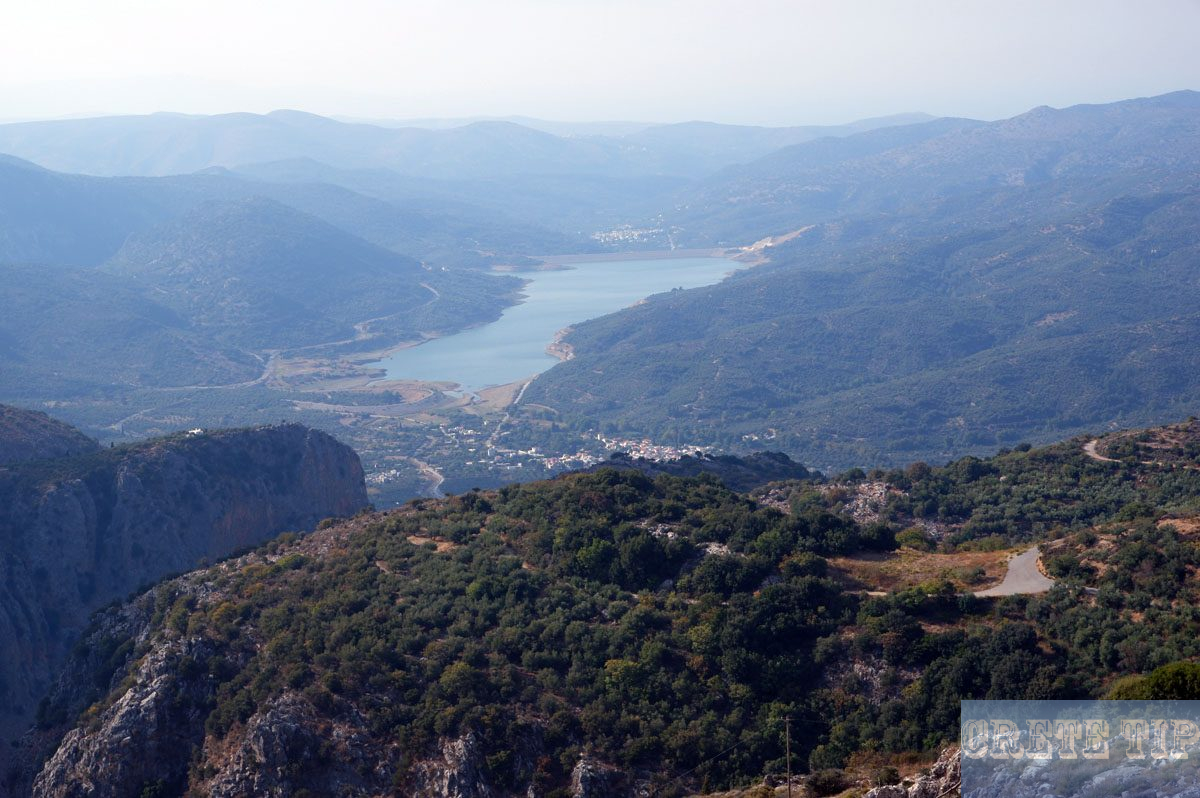
Aposelemis Dam Water Reserves Could Last Well Into 2028
Crete’s most critical water reservoir has come through a demanding summer with an impressive safety cushion. According to the Crete Development Organisation (Organismos Anaptyxis Kritis), the Aposelemis Dam now holds over 10 million cubic metres of water — enough, officials say, to cover the needs of all of 2027, even in a worst-case scenario of zero rainfall and no new inflow.
The Aposelemis Dam (pronounced ah-poh-SEH-leh-mees) is located in the Heraklion region of northern Crete. It is the island’s largest water management project, supplying drinking water to Heraklion, Chersonissos, and Agios Nikolaos, along with numerous coastal towns and villages along the touristically popular north coast — serving roughly 300,000 residents in total.
A Season of Careful Water Management
Getting to this point wasn’t accidental. The Development Organisation worked closely with the local water utilities — DEYA Heraklion, DEYA Chersonissou, and DEYA Agiou Nikolaou (the municipal water and sewerage companies for those areas) — to implement a plan of measured, controlled water use throughout the summer.
The goal was straightforward: avoid a supply crisis in 2027 by not draining the reservoir too aggressively during the peak tourist season.
As demand naturally eases with the end of summer, water supply drawn from the dam will also be gradually scaled back. This reduction is expected to continue through the end of September, with officials aiming to preserve as much of the current reserve as possible heading into autumn and winter.
Looking Ahead to 2027 — and Maybe 2028
The real challenge now shifts to managing water resources across the coming year. Officials describe themselves as “cautiously optimistic,” pointing out that current reserves are sufficient to meet 2027 demand even without a single drop of new inflow.
There’s an even more encouraging possibility: if consumption stays controlled and the region sees at least modest rainfall and inflow into the reservoir, a small reserve could potentially be carried over into 2028 as well.
What does this mean for visitors?
- No immediate water restrictions are expected for the north coast areas served by Aposelemis, including popular tourist destinations like Chersonissos and Agios Nikolaos.
- If you’re staying in accommodation along the north coast this autumn, ongoing conservation measures (like reduced flow at certain times) may still apply as authorities carefully manage the drawdown through September.
- Simple habits — shorter showers, reporting leaks promptly, and being mindful of water use at your accommodation — help support the region’s long-term water security, even though the immediate crisis appears to have eased.
- The situation remains weather-dependent. Keep an eye on local news if you’re planning a longer stay or return visit in 2027, as rainfall levels over the coming winter will determine how comfortable the margin stays.
For now, the outlook for Crete’s north coast water supply is more stable than it has been in recent years — a welcome development for residents, businesses, and the millions of visitors who rely on the region each summer.
Source: Creta24
Behind the Tap: Where Heraklion’s Water Actually Comes From
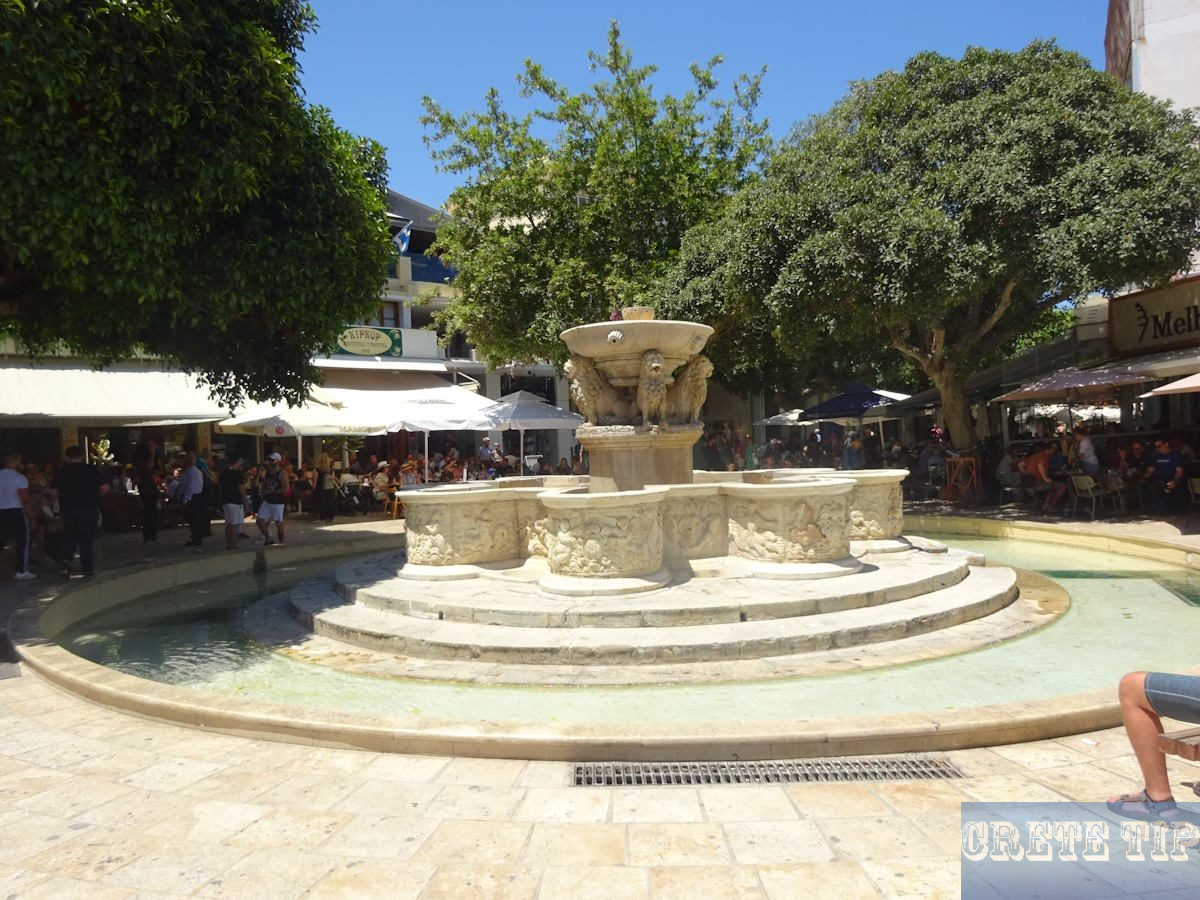
If you’ve ever wondered why the water sometimes stops flowing in parts of Heraklion during peak summer, the answer lies in a surprisingly complex network of underground sources scattered across Crete.
Heraklion, the island’s capital and largest city, relies on a patchwork system of roughly 60 boreholes plus one major dam to keep its taps running. It’s an impressive setup — but one that’s stretched to its limits every summer.
The Main Sources: Boreholes and a Dam
The city’s water supply comes primarily from underground aquifers and the Aposelemis Dam (pronounced ah-poh-SEH-leh-mees), located east of Heraklion. Around 60 boreholes across different parts of Crete feed into the system.
These boreholes are located in numerous villages and areas, including:
Each of these is a village or rural area in the wider Heraklion region of central Crete, and together they form the backbone of the water supply network.
Who Gets Water From Where
Different neighborhoods and municipal districts draw from different sources. For example, boreholes near Agios Myronas supply the Gorgolaini municipal district.
Meanwhile, Nea Alikarnassos, Kallithea, Prassas, and Karteros — all areas within greater Heraklion — are supplied directly by DEYA Heraklion, the municipal water utility.
Nea Alikarnassos specifically receives between 700 and 1,000 cubic metres of water daily, drawn from borehole fields in Thrapsano and Malia.
Further afield, the aquifer systems of Mount Dikti (a mountain range in the Lasithi region) also play an important role. They supply water to Kastelli, Geraki, Nipiditos, Panagia, Embaros, Viannos, Malia, Gouves, and Chersonissos — and partly feed into Heraklion itself.

Why the System Still Struggles
Despite recent upgrades — including the addition of the Loutraki-Krousonas field, the Dafnes source, and the Aposelemis Dam — Heraklion’s water supply is still considered marginal, especially in summer.
Several factors are behind this:
- Limited overall water availability in the region
- A growing population placing more demand on the system
- Aging sections of the pipe network, which lead to water losses
- Vulnerability to power outages at borehole sites or damage to the external aqueduct, which can cause serious disruptions
These recurring issues are also why many homes and buildings in the city rely on private water tanks — a practical workaround for the uneven and sometimes interrupted supply.
A Network Over 1,000 Kilometres Long
The sheer scale of the system highlights just how difficult it is to manage. Heraklion’s internal water network spans 875 kilometres, plus another 140 kilometres of external pipelines — a combined total of roughly 1,015 kilometres of pipes.
To cut down on losses and better track consumption, the city has been replacing old water meters with modern digital versions. The project involves installing 48,000 new high-precision meters, aimed at detecting leaks more effectively and reducing non-billed water loss.
Ongoing Problem Areas
Some neighborhoods experience recurring seasonal shortages more than others. According to DEYA Heraklion’s president, Giorgos Vourexakis, these issues tend to appear during the peak consumption months of June, July, and August, particularly in areas such as Ano Fortetsa, Lofoupoli, and Lofos Semeli.
Residents in Syllamos have reportedly had to pay for water delivery trucks during the summer months to cover basic household needs. Meanwhile, Agia Triada faced supply issues on a Sunday, and temporary supply damage from the Aposelemis Dam combined with repeated power cuts caused significant disruption at one point — though normal service reportedly returned within three to four days.
What’s Being Done About It?
DEYA Heraklion has identified new borehole drilling in Vasilies as a top priority, aimed at easing pressure on the wider area during summer. The proposed site sits on the western side, near the foothills of Mount Giouchtas, within Heraklion’s municipal boundaries.
Talks are also underway with the neighboring municipality of Archanes-Asterousia to resolve any concerns about the project.
In addition, plans are in place to build a new water network in Profitis Ilias, replacing outdated and inefficient infrastructure that currently contributes to water losses.
Longer term, authorities are also looking at new borehole drilling generally, along with the potential use of water from the Almyros River — a project considered significant enough to have regional importance beyond Heraklion alone.
Source: Cretalive
Lake Agia Is Running Dangerously Low: Why Chania’s Wetland Is Raising Alarm

The water level at Lake Agia (Limni Agias), an important wetland in the Chania region of western Crete, has fallen dramatically. Recent images show a large section of the lakebed exposed, prompting growing concern about the future of the site and its wildlife.
The latest situation is significantly worse than it was just 11 days earlier. Images published on 28 August had already shown a decline in the water level, while photographs taken on 8 September revealed a much more serious drop.

A Protected Wetland Under Pressure
Lake Agia is included in the Natura 2000 network, the European network of protected areas. It is also an important habitat for approximately 200 bird species, making its water levels especially significant for the local ecosystem.
The lake is also a popular destination for visitors. Its environmental importance and appeal as a place to observe nature have made it one of the notable attractions in the wider Chania area.
However, the exposed lakebed and reduced water reserve have raised concerns about the impact on the wetland. Local businesspeople in the surrounding area have called for measures to protect the lake.
What Is Causing the Decline?
The report states that the Organisation for the Development of Crete, known in Greek as the OAK, clarified that it is not currently pumping water from the lake.
At the same time, OAK said that water could be made available to replenish the lake’s reserves if necessary. A similar measure was taken last year when comparable conditions were observed.
The information does not provide a definitive explanation for the dramatic fall in the water level. It does make clear, however, that the situation has become a matter of concern because of the possible consequences for the lake’s ecosystem.
Why Lake Agia Matters to Chania
Lake Agia is more than a scenic stop. As a Natura 2000 site supporting around 200 bird species, it is an important part of the natural environment around Chania.
The falling level also affects the experience of people who visit the area. Seeing parts of the lakebed exposed offers a visible reminder of the pressure that low water reserves can place on a protected wetland.
What does this mean for visitors?
- Check local conditions before visiting. The appearance of the lake may change as water levels continue to fluctuate.
- Respect the protected environment. Avoid disturbing birds and wildlife, and follow any signs or instructions at the site.
- Do not enter exposed areas of the lakebed unless local authorities or site managers specifically permit it.
- Keep expectations realistic. Lake Agia remains an important natural site, but the current images show that its landscape is under pressure.
The situation at Lake Agia highlights the importance of careful water management in Crete, particularly at wetlands that support both wildlife and tourism. Local attention is now focused on whether the lake can be protected and, if needed, replenished.
Source: Zarpanews.gr
No Water for 10 Days: Village of Sasalos Left High and Dry During Summer Heatwave

Imagine going without running water for over a week — not for a day or two, but ten full days — while temperatures soar. That’s the reality residents of a small Cretan village have been living through.
Sasalos (pronounced SAH-sah-los) is a small village in the Municipality of Kissamos, located in the Chania region of western Crete. Since Thursday, August 20th, its taps have run completely dry due to a broken motor in the local water system.
A Village Left Without Basic Necessities
With around 25 permanent residents — most of them elderly — the village has been without water for even the most basic hygiene needs, all while enduring high summer temperatures.
The situation was brought to public attention by Idomeneas Georgedakis, a local businessman and board member of the Chania Chamber of Commerce. Georgedakis, who lives in the area and has previously served on the local council, issued a strongly worded public complaint accusing the Municipality of Kissamos of abandoning the village.
In his statement, he asked pointedly whether it would take a life-threatening emergency for the municipality to remember that Sasalos exists.
An Aging Network and a Growing Fire Risk
According to Georgedakis, the water outage stems from a combination of factors: an outdated water network and a broken motor that failed to be repaired promptly.
He also raised a separate but related concern — for roughly two years, essential clearing of vegetation and maintenance of rural roads has reportedly not taken place. Overgrown branches and dense vegetation are said to be blocking access for firefighting vehicles in an area already considered to be at serious wildfire risk.
Adding to the frustration, Georgedakis noted that approximately 80% of the village’s water pipe network is made up of old materials that are no longer used in modern water infrastructure.
The Irony: Sasalos Actually Has Water Nearby
Perhaps the most striking detail in the complaint is this: Sasalos isn’t short on natural water resources. The village has natural springs across its four neighborhoods.
However, according to Georgedakis, these springs have not been properly protected, maintained, or developed for years — meaning a valuable natural resource that could secure the village’s water supply is effectively being wasted.
Residents Demand Answers
Georgedakis’s complaint included a direct list of questions for the Municipality of Kissamos and its local administration:
- When will Sasalos have water again?
- When will the access roads be cleared?
- When will the outdated water network be replaced?
- What is the village’s wildfire prevention plan?
- And most pressingly — who will take responsibility if something goes wrong?
He emphasized that residents of Sasalos aren’t asking for luxury projects or unnecessary extras. Their requests are basic: reliable water, safe roads, proper fire protection, and a modern water network — nothing more than what any community should expect.
As of now, it remains unclear when the water supply to Sasalos will be restored or when the municipality will respond to the concerns raised.
Source: CretaOne (via Flashnews.gr)



