

Newsflash from Saturday, 8 August 2026:
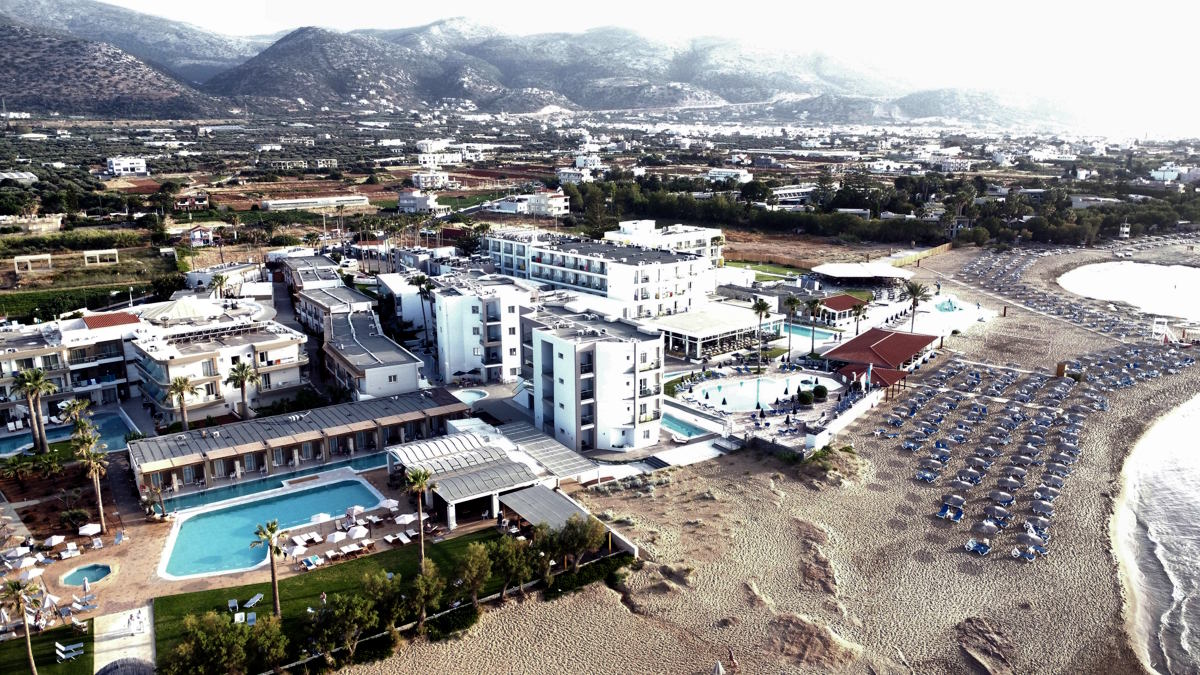
The Greek government has officially approved a groundbreaking Special Spatial Framework for Tourism (ΕΧΠ-Τ), introducing the nation’s first comprehensive national planning rules designed to balance tourism growth with environmental protection and community welfare.
What’s Changing?
For decades, Greek tourism development proceeded without unified spatial planning guidelines. The newly approved framework changes this entirely by establishing clear, transparent rules that will govern all future tourism investments across the country.
The framework categorizes Greece into five distinct zones based on tourism intensity, environmental sensitivity, and geographic characteristics:
- Category A (Controlled Development): Most tourism-saturated destinations
- Category B (Developed Areas): Established tourism regions
- Category C (Developing Areas): Emerging tourism destinations
- Category D (Early Development): Less-developed tourism regions
- Category E (Special Development Enhancement): Areas needing tourism promotion

Stricter Requirements for Hotel Construction
One of the most significant changes involves minimum land requirements for new hotel construction outside urban areas:
- 16 hectares in Category A zones (highly developed areas)
- 12 hectares in Category B zones (developed areas)
- 8 hectares in Categories C and D zones (developing areas)
These increases represent a major shift toward preventing overdevelopment in already-stressed tourism destinations. New accommodations in saturated areas are now restricted to 3, 4, or 5-star hotels, eliminating budget chain development in overtourism hotspots.
Island Protection Takes Priority
Greek islands receive special attention under the new framework, with classifications based on size:
- Group I (>250 km²): Larger islands like Rhodes, Corfu, and Naxos
- Group II (20-250 km²): Mid-sized islands including Mykonos, Santorini, and Paros
- Group III (<20 km²): Smaller, more vulnerable islands
Smaller islands face the strictest regulations, with new accommodations limited to 3, 4, and 5-star hotels with maximum capacity of 100 beds. Tourist facilities on islands under 1,000 hectares are restricted to low-impact activities like diving, swimming, information kiosks, and small glamping operations (up to 50 people).
Coastal Zone Protection
Perhaps most dramatically, the framework implements a complete ban on new construction within 25 meters of the shoreline. This sweeping coastal protection measure aims to preserve Greece’s natural landscape and marine ecosystems from further development pressure.
Why This Matters
Environment and Energy Minister Stavros Papastavrou described the framework as “a choice of responsibility for the country’s future,” emphasizing that it establishes long-term planning where fragmented approaches previously dominated.
Tourism Minister Olga Kephalogiannis highlighted the goal of “qualitative tourism development, with measure and balance”—protecting already-stressed destinations while creating opportunities for less-developed tourism regions.
The framework addresses several critical issues:
- Environmental sustainability and reduced carbon footprint
- Protection of local communities and cultural heritage
- Prevention of overtourism in saturated destinations
- Economic opportunity for underutilized regions
- Climate change adaptation for tourism infrastructure
What About Existing Projects?
The framework includes extensive transitional provisions. Projects that have already received environmental approvals, building permits, complete licensing files, or funding commitments will not be automatically subject to the new rules, providing certainty for investors with projects in the pipeline.
Crete as a Case Study
Crete demonstrates how the framework operates at the regional level. The island’s 73 municipal units are distributed across all five categories: just 3 in Category A (including the highly-developed Néa Kydonía in Chania), 12 in Category B, 15 in Category C, 30 in Category D, and 13 in Category E. This granular approach allows different areas within the same municipality to follow different development rules based on their specific conditions.
Crete is divided into 73 Municipal Units
The classification is at the level of the Municipal Unity and not in total per current Municipality. In fact, in many cases, the names of the old Kapodistrian Municipalities are used. Thus, different Municipal Units of the same current Municipality may be included in different categories and are governed by different rules.
The ranking of Crete is as follows:
Category | Characterization | Number of Municipal Units |
|---|---|---|
A | Controlled growth | 3 |
B | Developed | 12 |
C | Developing | 15 |
D | Early development | 30 |
E | Reinforcement of specific development | 13 |
Total | 73 |
The Regional Unit of Chania includes 25 Municipal Units, the Regional Unit of Rethymno 12, the Regional Unit of Heraklion 26 and the Regional Unit of Lassithi 10.
The categorization is mainly based on the number of beds of tourist accommodation in relation to the area and the permanent population of each Municipal Unit. Specific geographical characteristics and protection regimes are also included.
The Joint Ministerial Decision itself clarifies that the ranking reflects the existing pressures on the organization of the site, the landscape and the environment and is not an overall evaluation of the tourist development potential of each region.
The ranking of the 25 Municipal Units of Chania
The Regional Unit of Chania has the greatest differentiation, as its 25 Municipal Units are allocated to all five categories:
Category | Municipal Units of Chania |
|---|---|
A – Controlled growth | Nea Kydonia |
B – Developed | Chania, Armenos, Vamos, Georgioupolis, Platanias |
C – Developing | |
D – Early development | Therissos, Kryoneridas, Fre, Gavdos, Eastern Selino, Kandanos, Inachori, Voukolies, Mousouron, Sfakion |
E – Supporting specific development | Eleftheriou Venizelos, Keramies, St. John’s |
Nea Kydonia, in the highly developed tourist coastal zone west of the city of Chania, is the only Municipal Unit of Chania that is classified in category A.
Until the definition of land uses, conditions and building restrictions from a first-level urban plan, for the construction of a new hotel in an off-plan area of Nea Kydonia, a stadium of at least 16 acres will be required.
In the Municipal Units of Chania, Armenoi, Vamos, Georgioupolis and Platanias, which are classified in category B, the corresponding limit is set at 12 acres.
In Akrotiri, Souda, Pelekanos, Kissamos, Mythimna and Kolymbari, as areas of category C, at least 8 acres are required.
The same limit of 8 acres applies to a new hotel out of the plan in the areas of category D, which include Sfakia, Gavdos, Eastern Celery, Kandanos, Inachori, Voukolies and Mousouroi.
The ranking of the 12 Municipal Units of Rethymno
In the Regional Unit of Rethymno, the ranking is as follows:
In the Municipal Units of Rethymno, Arkadi and Geropotamos, as areas of category B, at least 12 acres are required for a new hotel outside the plan.
In the Municipal Section of Phoenix, which is classified in category C, as in the seven areas of category D, the minimum required stadium is set at 8 acres.
No Municipal Section of the Regional Unit of Rethymnon is included in the strictest category A.
The ranking of the 26 Municipal Units of Heraklion
In the Regional Unit of Heraklion, 26 Municipal Units are recorded, including two of the three Areas of Controlled Development of the whole of Crete:
Category | Municipal Units of Heraklion |
|---|---|
A – Controlled growth | Malia, Peninsula |
B – Developed | Gaziou, Gouves |
C – Developing | Heraklion, Nea Alikarnassos, Tympaki |
D – Early development | Gorgolaini, Nikos Kazantzakis, Archanes, Viannou, Gortyna, Krousonas, Arkalochori, Moires, Zaros, Episkopi |
E – Supporting specific development | Paliani, Mosque, Asterousion, Agia Varvara, Kofina, Rouvas, Tylisou, Kastelli, Thrapsano |
In Malia and Hersonissos the minimum area of the stadium for a new hotel outside the plan is increased to 16 acres.
Gazi and Gouves, which are included in category B, at least 12 acres are required. In the Municipal Units of Heraklion, Nea Alikarnassos and Tympaki, the minimum limit is set at 8 acres.
At 8 acres is defined the minimum stadium in all ten Municipal Units of early development of category D.
The ranking of the 10 Municipal Units of Lassithi
The Regional Unit of Lassithi does not include any Municipal Section in categories A and E:
Category | Municipal Units of Lassithi |
|---|---|
B – Developed | Agios Nikolaos, Vrachasiou |
C – Developing | |
D – Early development | Plateau of Lassithi, Itanos, Lefkis |
In Agios Nikolaos and Vrahasi, at least 12 acres are required for a new hotel outside the plan.
In Neapolis, Ierapetra, Makrigialos, Sitia and Analipsi, as well as in the Lassithi Plateau, Itanos and Lefki, the minimum limit is set at 8 acres.
Looking Ahead
The Special Spatial Framework for Tourism becomes effective upon publication in the Government Gazette. It represents a watershed moment for Greek tourism policy—moving from reactive, project-by-project development to proactive, strategic spatial planning that balances economic growth with environmental and social sustainability.
This framework signals that Greece is ready to move beyond quantity-focused tourism growth toward a model emphasizing quality, resilience, and long-term viability.
Hotel Industry Pushes Back: Why Greece’s New Tourism Bed Limits Are Sparking Fierce Debate

The Core Complaint: One-Size-Fits-All Rules
Despite modifications made during the public consultation period, fundamental objections from Greece’s hotel sector remain unresolved. Industry representatives argue that the framework treats vastly different destinations with identical rules, ignoring crucial variations in infrastructure, economic base, and development potential.
The Pan-Hellenic Hotel Federation (ΠΟΞ) has emerged as the most vocal critic, with President Yannis Chatzis emphasizing that “the final form of the Special Spatial Framework for Tourism includes certain minor corrections, but these do not change the essence of the problems we identified during public consultation.”
The 100-Bed Problem on Mid-Sized Islands
A particularly contentious provision limits new hotel development on Group II islands (those between 20-250 km²) to a maximum of 100 beds. This category encompasses island destinations with dramatically different characteristics:
- Samothrace (underdeveloped tourism)
- Paros (established destination)
- Mykonos (highly saturated)
- Kalymnos (emerging tourism region)
- Symi (small, boutique tourism)
“By treating these destinations as identical,” Chatzis notes, “we ignore essential factors like infrastructure, economic foundations, and each island’s development strategy without meaningful consideration.”
Limited Practical Value of Group I Exemptions
The framework does allow an exception for Group I islands (>250 km²): developers can add six beds per 1,000 m² for property sections exceeding 16,000 m². However, the hotel federation dismisses this concession as largely symbolic.
“Even where this exemption theoretically exists, its practical utility remains questionable,” Chatzis explains. “In practice, it has minimal application, affecting an extremely limited number of cases.” Crucially, no comparable option exists for Group II islands, creating an imbalance that disadvantages mid-sized destinations.
Carrying Capacity Reports: Excessive Bureaucracy?
Another friction point centers on mandatory Carrying Capacity Assessment Reports (ΕκΕΦΙ). The framework requires these reports for any accommodation exceeding 50 or 150 beds, depending on the zone.
The hotel industry argues these thresholds are “exceptionally low” and lack adequate scientific justification. The consequence, they contend, is that even medium-sized, locally-owned, or family investments face additional costs, bureaucratic burden, and uncertainty. Smaller operators—precisely those that might contribute to sustainable, community-oriented tourism—are being disproportionately burdened.
Local Communities Lose Decision-Making Power
Perhaps surprisingly, the hotel federation also advocates for greater local autonomy. Current provisions, they argue, leave “local communities without meaningful capacity to adapt the framework to their actual needs.”
Reclassifying a region requires changes to Regional Spatial Frameworks (PESPA)—a process that can take years. This centralized approach contradicts the principle of subsidiarity and prevents communities from responding quickly to their unique circumstances.
The Unintended Consequences Warning
Chatzis issues a stark warning: these bed capacity restrictions may produce exactly the opposite of their intended effects.
“These horizontal limits could lead to fragmentation of large properties, devaluation of land values, and development of more numerous small units with greater building dispersal and increased overall burden on landscapes and infrastructure,” he cautions.
In other words, by capping bed counts, the framework might encourage developers to build multiple smaller facilities across larger land areas rather than consolidating development—potentially causing greater environmental impact.
Impact on Island Communities
The federation raises an additional concern: the regulations may harm the very communities they’re meant to protect.
“For many regions, the new framework isn’t merely restrictive for hotel businesses,” Chatzis states. “It works against island residents themselves—reducing property values, limiting employment opportunities, restricting local entrepreneurship, and denying people the chance to decide, based on real data, what development model they want.”
This critique highlights a fundamental tension: does restricting tourism development protect communities or limit their economic potential?
Industry Support for Spatial Planning Framework
Not all industry voices are uniformly critical. Alexandros Vassilikos, President of the Hotel Chamber of Greece (ΞΕE), acknowledges that “the process of establishing the spatial framework is moving in the right direction.” He emphasizes the importance of having unified rules governing tourism development.
However, even supporters suggest the current framework could be refined to better balance sustainability with development opportunity.
What Happens Next?
The hotel federation hasn’t ruled out escalating action. During earlier consultation phases, industry representatives left open the possibility of appealing specific provisions to the Council of State (Greece’s highest administrative court).
Whether such legal challenges materialize will likely depend on how implementation proceeds and whether the framework’s restrictions prove as economically harmful as critics predict.
The Bigger Picture
This debate reflects a fundamental tension in tourism policy: how to protect destinations and communities from overtourism while respecting property rights and enabling economic development.
Greece’s new framework represents an ambitious attempt to impose order on tourism development through spatial planning. Whether it achieves the right balance—or whether modifications will be necessary—will become clearer as the rules take effect and their real-world impact becomes apparent.
Sources:
- Creta Live – Changes from the Tourism Spatial Framework
- Creta24 – New Rules for Island and Pressure Destination Investments
- Hania News – Crete’s New Tourism Spatial Framework with 8, 12, and 16 Hectare Limits
- Hania News – Reactions to Bed Capacity Limits and Carrying Capacity in New Tourism Spatial Framework



