Building a house in Crete, additional costs and new building inspection in Greece.
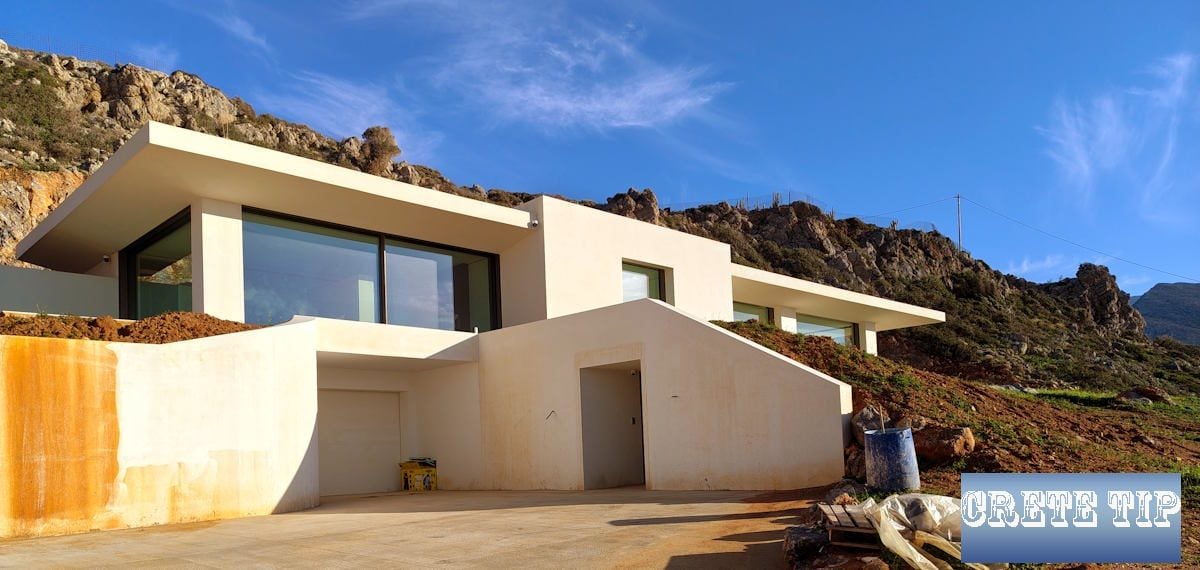
Building a house in Crete sounds tempting at first. However, many people underestimate how complex new construction really is and how quickly costs can rise.
The additional costs of purchasing property in Greece are usually around 10-12.5% of the purchase price. When building a new home, there are also inspections of the subsoil, water supply and legal requirements to consider.
If you plan for these costs and inspection steps in good time, you can avoid unpleasant surprises.
The construction process in Crete differs significantly from that in the United Kingdom or other European countries in a number of respects. Land transfer tax, geotechnical surveys and administrative costs for communal facilities all influence the total expenditure.
If you are not only aware of the obvious costs, but also know what to look out for in the technical and legal checks, the start of your construction project will be much more relaxed.
This guide shows you how house building works in Crete. It explains the most important additional costs when buying property in Greece and provides tips on which checks really matter before starting a new build.
You will find out what documents you need from the developer, how to realistically estimate construction costs and which everyday factors will determine the use of the property later on.
Building a house in Crete: Procedure and requirements
Building a house in Crete requires a clear structure – from choosing a plot of land to obtaining a building permit. If you understand the regional differences and take the planning seriously, you will save yourself expensive corrections later on.
Choosing a plot of land and regional characteristics
The choice of plot determines what you will be allowed to build later on. Each zone has its own building regulations.
Building zones in Crete:
- Within towns: Higher utilisation possible, often 1.4 to 2.4 depending on the area.
- Outside towns: Typically 0.2 to 0.4 utilisation, larger minimum areas required.
- Coastal areas: Building is often severely restricted or completely prohibited.
Before purchasing, an engineer will check the buildability. The zone is not always immediately apparent in the land registry.
Slopes look spectacular, but are often tricky. Issues such as filling, drainage, slope water and retaining walls can quickly become expensive without a geotechnical report.
You should clarify access, electricity and water connections before starting construction. There are plots with road access but without a secure water supply.
Important planning steps for building a house
Planning starts with an architect or property developer who is familiar with local requirements. Have all documents explained to you in German or English – this will save you a lot of stress.
Standard procedure in the planning phase:
- Plot analysis: The engineer checks whether the plot is suitable for building and gives an initial assessment.
- Preliminary design: The architect develops a concept that fits your wishes and the building zone.
- Budget analysis: A cost estimate that includes all items and ancillary costs.
- Specifications (specs): This is where the materials and finishes you will receive are specified in writing.
Specs are not a side issue, but the heart of the matter. What ‘turnkey’ means in Greece is often very different from what it means in the UK.
You need a Greek tax number (AFM) before you can sign the purchase or construction contract. With the right documents, the application only takes a few days at the tax office.

Building permit: application and process
The responsible engineer submits the building permit to the building authority. No one is allowed to build without a permit.
The application includes structural calculations, building plans, proof of ownership of the land and evidence that the building regulations are being complied with. Processing usually takes between 2 and 6 months, depending on the region and complexity.
Once the permit has been granted, you, as the builder, have a deadline to start – often 1 to 2 years.
During construction, the engineer carries out regular checks, and sometimes the authorities also visit the site. Once construction is complete, you apply for a usage permit, which confirms that everything has been implemented as approved.
Without a usage permit, you will encounter problems later on when selling or renting out the property. Clarify in the contract who is responsible for obtaining the permit and when it must be available.
Building in your home country vs. Crete

Anyone building in Crete will quickly realise that different things matter here than at home. Summer heat, different humidity, different infrastructure and often seasonal use – all of these factors play a role.
The differences between simple and high-quality projects are greater than many people expect.
Important terms
A few terms will help you to compare offers more effectively.
Thermal performance refers to measures taken to prevent heat loss in winter and overheating in summer. These include insulation, glazing, shading and how components are connected.
Moisture management describes how humidity and water ingress are controlled. This includes waterproof layers, details in the design and ventilation concepts.
Thermal bridges are places in the building envelope where heat escapes more easily. Condensation can form there and mould can grow.
Air tightness means that there are no uncontrolled air leaks. This affects comfort, energy consumption and moisture balance.
Summer comfort is achieved through shading, thermal mass and night ventilation – often supplemented by dehumidification or cooling.
Wastewater system refers to the on-site solution when there is no sewerage network. Size and maintenance are crucial.
Building in Crete: Why climate and type of use change everything
Building in Crete brings different requirements than in Northern Europe or North America.
The summer heat is significantly stronger. Sun exposure and the risk of overheating play a greater role than in cooler climates.
Humidity behaves differently. Coastal air, salt and the alternation between vacancy and intensive use create their own conditions.
The infrastructure works differently. Water tanks, fluctuating pipe pressure and wastewater solutions outside the sewer network are normal.
Often, the house is only used seasonally. Holiday rentals, prolonged vacancy and rapid re-occupancy place special demands on technology and materials.
What is ‘mandatory throughout the EU’ for new buildings—and what is not
Many people hear ‘EU standard’ and expect the same quality everywhere. In fact, EU rules mainly apply to energy efficiency and product conformity.
Energy efficiency framework: New buildings in the EU must meet requirements for nearly zero-energy buildings. Everything is moving towards zero-emission buildings as the new standard.
It is better to ask specifically: ‘What energy values are specified in the contract?’ instead of simply asking about ‘EU standards’.
Construction products: Many products require a declaration of performance and CE marking in accordance with the EU Construction Products Regulation.
Product conformity helps, but it is no substitute for good detailed planning and clean installation of windows, waterproofing or insulation.
Statics: Eurocodes provide common standards for structures in Europe.
‘Dimensioned according to Eurocodes’ sounds good. Nevertheless, you need project-related structural documentation and clear handover documentation.
Building in Crete: What was often ‘standard’ 5–10 years ago
The following points are not a blanket assessment, but typical patterns in older projects.
Insulation and thermal bridges: Insulation was often only partial, for example on the roof, but less so on the walls. Component connections such as balcony slabs were not always planned through. Summer comfort usually meant retrofitting roller shutters later.
Sound insulation: Glazing rarely had documented sound insulation values. Roller shutter boxes and guide rails were weak points. Installation noises were treated functionally, but not acoustically optimised.
Windows and glazing: Aluminium systems had simple or no thermal separation. Double glazing was common, but not always optimised for sun protection. Air tightness was rarely documented.
Building services (heating/cooling/hot water): Split air conditioning units were standard. These work, but comfort, humidity, noise and maintenance vary. Hot water came from electric boilers or solar systems.
Additional costs when buying property in Greece
When buying property in Greece, you should expect additional costs of around 10 to 12 per cent of the purchase price. These costs include various fees and taxes that are payable in addition to the agreed purchase price.
Purchase price and estate agent fees
The estate agent’s commission in Greece is usually 2 to 3 per cent of the purchase price plus VAT. Normally, the buyer and seller share this fee.
If you buy for €100,000, you will pay around €2,240 in estate agent’s fees. International estate agents often charge more than local providers.
The fee is payable as soon as you sign the purchase agreement. However, some properties are also marketed without an estate agent, in which case you save this expense.
Notary fees and solicitor’s fees
The notary charges a fixed fee which are based on the purchase price. For €100,000, this amounts to around €1,200 plus around €300 for copies of the contract.
A solicitor should accompany you during the purchase. Solicitor’s fees are usually between 1 and 3 per cent of the purchase price plus VAT.
Your solicitor will apply for your Greek tax number. They will check the legal status of the property and assist you throughout the purchase process.
In addition, there is often a fee of €400 for a notarised power of attorney. Translations and interpreters cost around €300.
Land transfer tax and municipal taxes
The land transfer tax is 3 per cent of the assessment basis. The tax office takes either the purchase price or the determined market value, whichever is higher.
If the property costs €100,000, you pay €3,000 in land transfer tax. In addition, there is the municipal tax, which amounts to 3 per cent of the land transfer tax, i.e. €90 on €3,000 tax.
You pay around 0.85 per cent of the purchase price for the transfer of ownership at the land registry office and land register. For €100,000, that’s €850.
A tax advisor will report your property purchase to the tax office. They usually charge around €250 for this.
Additional purchase costs for new builds in Crete
If you buy a new build directly from the developer, VAT replaces the land transfer tax. It currently stands at a hefty 24 per cent of the purchase price.
For €100,000, that’s €24,000 in VAT. This is, of course, significantly higher than for second-hand properties.
The seller must provide you with a certificate of structural legality from a civil engineer. It is best to have your own structural inspection carried out – this costs between €400 and €1,000.
Construction costs and budget for building a house in Crete
When building a house in Crete, you can expect costs of between €900 and €1,200 per square metre. Planning, permits and VAT are added on top of this.
Typical construction costs per square metre
The pure construction costs for a medium standard range between €900 and €1,200 per square metre. The exact amount depends on several factors.
If you choose high-quality materials, the costs will quickly rise. The location of the plot also makes a difference.
In rural areas, building is often cheaper than on the coast. Development costs – i.e. water, electricity and access – are added on top.
Outdoor facilities such as terraces or pools are not included in these prices. You will need to budget for the interior design separately.
For a 100-square-metre house, you should expect total costs of between €90,000 and €120,000 before additional costs are added.
Costs for architecture and technical planning
You should not underestimate the planning costs. Architects draw up building plans and take care of technical details – this costs extra.
A budget analysis helps to avoid unpleasant surprises. The planning should be completed before you apply for a building permit.
Many builders seek professional construction supervision. Although these services cost extra, they often save you money by preventing mistakes.
An experienced architect knows the local building regulations. This protects you from expensive mistakes and delays.
Value added tax and building permit-related expenses
Value added tax of 24 per cent is added to the construction costs. Don’t forget to include this in your budget – it can add up to a considerable amount.
The B building permitB costs between €1,700 and €1,800 per square metre when you include all fees. This amount also includes the IKA, the social security for workers.
It takes between two weeks and four months to obtain a building permit. The more complex the project, the longer it often takes.
You need to be patient with the authorities. Good preparation and professional help can speed up the process.
The essential checklist for smart buyers of new-build properties

The property market has changed dramatically in recent years. As prices for new-build flats continue to rise – often between €4,000 and €4,500 per square metre – the question has shifted from ‘Can I afford this?’ to ‘Am I getting value for money?’
The problem is that property descriptions are full of vague marketing phrases that say little about what you are actually buying. Terms such as ‘high-quality construction’ and ‘luxurious fittings’ sound impressive until you realise that they have no standardised meaning.
This is where Agorázo Spíti (Buying a House) comes in, a practical new guide by Stratos Paradia, president of POMIDA (Panhellenic Association of Property Owners), and analyst and investor Ilias Papageorgiadis. The book cuts through the marketing noise and provides a practical framework for assessing whether a newly built property is worth its price.
Here are the key features you should expect – and what you should definitely not pay too much for.
Essential features: What is standard at €4,000–4,500/m²?
When investing in a property in this price range, certain features should be essential. These are the features that define a modern, high-quality standard of living.
1. Windows and doors (Κουφώματα)
Do not assume that good frames are a given. This is one of the most common mistakes.
What you should look out for:
– Triple-glazed, shatterproof, weatherproof frames from reputable manufacturers (no no-name products)
– Current date of manufacture (ideally less than 2–3 years old)
– Certified quality standards and warranty documents
Pro tip: The size of the frames has a direct impact on the cost. Larger windows mean higher prices. Therefore, negotiate for newer series if you are on a limited budget.
2. Underfloor heating (Ενδοδαπέδια Θέρμανση)
With prices above €4,000/m², underfloor heating is now standard and no longer an option.
Why this is important:
– Significantly improves quality of life and comfort
– Significantly reduces operating costs, especially in combination with a heat pump
– High-quality branded materials must be used (no cheap alternatives)
– Indispensable for modern energy efficiency standards
3. Heat pump system (Αντλία Θερμότητας)
The system itself – not just the infrastructure – must be installed.
Important requirements:
– At least medium quality (no cheap brands)
– Ideally in combination with solar water heating and photovoltaic modules
– Should heat and cool efficiently
4. Fan coil units for cooling (Fan Coil για Ψύξη)
In modern buildings, fan coil units are preferred over conventional air conditioning systems.
Why? Modern heat pumps heat and cool effectively, making conventional air conditioning systems redundant. Opt for medium-quality devices that work reliably.
5. Oak flooring (Δρύινα Μονοσάνιδα Πατώματα)
In this price range, oak parquet is preferred over three-layer alternatives.
Quality indicators:
– The difference is only noticeable when compared directly.
– Adhesives and installation methods are crucial for durability.
– Ensure proper certification and warranty.
6. Kitchen (Κουζίνα)
Kitchens in a property of this class should have a value of at least €6,000.
Focus on:
– Practical design and functionality
– Built-in automation and smart features
– Check the actual costs (no inflated estimates)
– Compare prices from several suppliers
7. Bathrooms, tiles and fittings (Μπάνια, Πλακάκια, Μπαταρίες)
Modern bathrooms follow current design trends:
– Granite tiles dominate (for both aesthetic and practical reasons)
– Floor tiles must be non-slip
– Taps are usually recessed and come from well-known manufacturers
– Showers are preferred over bathtubs in modern homes
– High-quality installation is essential for a long service life
8. Built-in wardrobes (Ντουλάπες)
Built-in wardrobes are mandatory in properties in this price range.
Standard features:
– Integrated indirect lighting
– Professional installation
– Note: Lacquered wardrobes are found in more expensive properties.
9. Plasterboard walls and integrated lighting (Γυψοσανίδες)
Modern drywall installations often include integrated lighting at no additional cost.
This is increasingly expected in high-end new builds and contributes to the overall aesthetics and functionality.
10. Smart home system (Smart Home)
A remote management system is considered standard in new builds in this price range.
Important distinction:
– Basic smart home functionality vs. advanced automation
– Check which systems are controlled (heating, lighting, security, etc.)
– Check the future upgrade potential
What you should NOT pay extra for
The authors emphasise: If you are paying €4,000 to €4,500 per square metre, certain items should be included in the base price.
Do not pay extra for:
✗ Garden landscaping
✗ Costs for water and electricity connections (responsibility of the developer, not the homeowner)
✗ Installation of a solar water heating system (should be included)
✗ Security system and alarm system (should be standard)
✗ Video doorbell/intercom system (standard equipment)
These extras are sometimes charged separately by developers in the hope that you won’t notice. Negotiate to have them included in the purchase price.
Warning signs to look out for
Before signing a contract:
1. Vague descriptions – If the developer cannot clearly explain what ‘high-quality fittings’ means, steer clear.
2. Cheap substitute materials – Cheap adhesives, frames from unknown manufacturers or inferior fittings are NOT acceptable at this price level.
3. Missing standard fittings – All 10 of the above features should already be included.
4. Pressure to upgrade – If the basic package seems incomplete, the developer is probably using weak base specifications to sell premium upgrades.
5. No documentation – Insist on written guarantees, certifications and material specifications.
Conclusion
Given the rapid price increases in the property market, it is essential to understand what you are paying for. At €4,000 to €4,500 per square metre, you are investing in a property that should meet modern European standards in terms of comfort, efficiency and design.
Use this checklist as a practical guide. Don’t let marketing phrases cloud your judgement. If a developer cannot justify the price with concrete, verifiable features, you are probably paying too much for mediocrity sold as luxury.
Agorázo Spíti (available from Kastaniotis Publishers) offers a much more comprehensive analysis of all aspects of buying property. But even with this summary, you now have the essential framework to assess whether a property represents real value or is just overpriced marketing.
The key to a successful purchase? Ask specific questions, demand detailed specifications, and never assume that something is ‘standard’ until you have checked it yourself.
Source for this section: CretaLive
Important checks before buying a new build in Crete
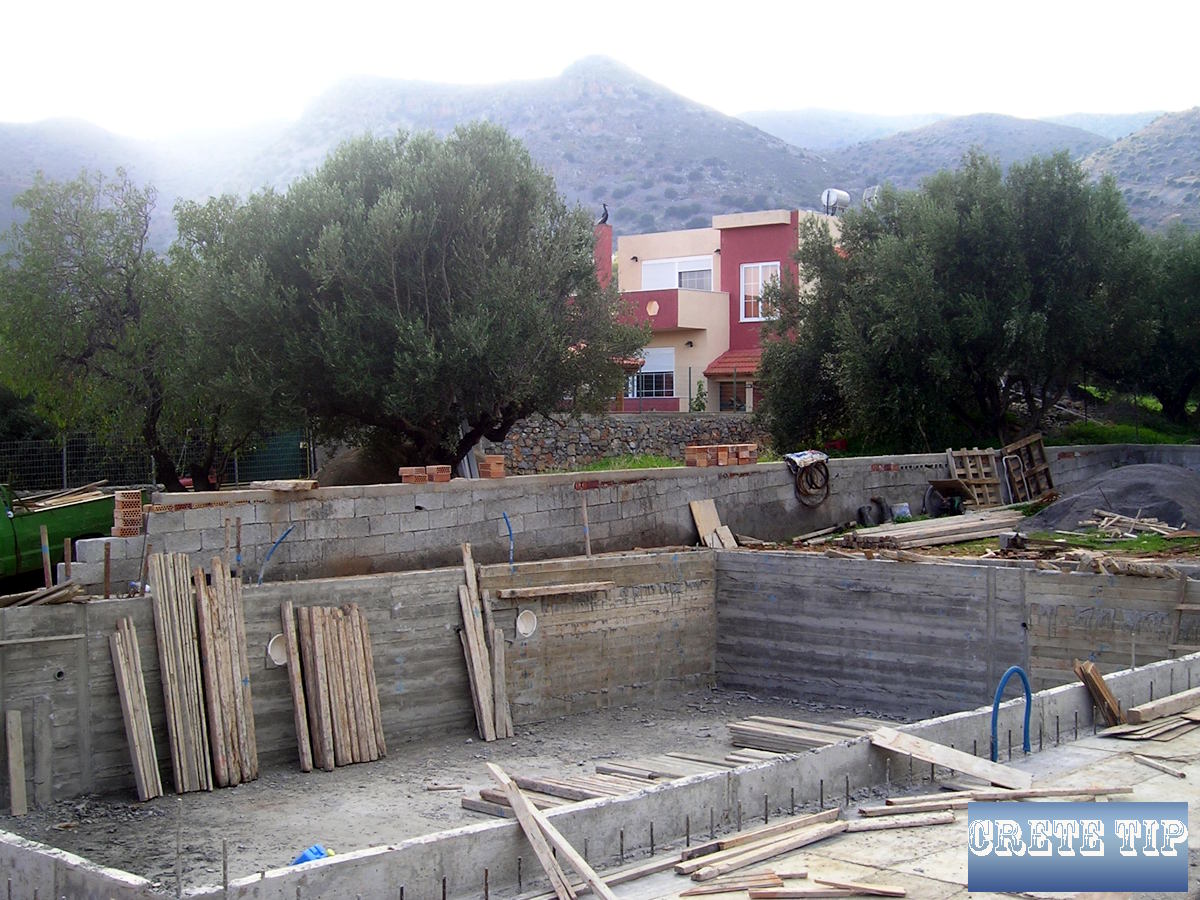
If you want to build in Crete, check three things thoroughly beforehand: the subsoil, the water supply and the community structure. These points often determine whether your house will bring you joy or trouble later on.
Check the subsoil and geotechnics
The subsoil is the foundation of your project. Ask the developer for a geotechnical survey – it should contain information about the foundations, drainage and slope water.
There are many slopes in Crete. Sometimes material is filled in to create building land. If this is done properly and documented, it is fine – without proof, it remains a risk.
Important questions:
- Is the building being constructed on natural ground or on filled material?
- Are there any indications of slope water or surface water?
- How are defects in the foundations regulated in the contract?
A building permit only says that you are allowed to build – it does not say anything about the quality of the subsoil.
If you save money here, you will often pay for it later. Subsoil problems are difficult to remedy.
Drainage, waterproofing and water flow
Heavy rain is a frequent occurrence in Crete. Poor planning can quickly become expensive. Understand where the water flows during storms.
Typical weak points:
- Terraces and flat roofs without a slope
- Window and door connections that are not windproof
- Lack of drainage around the building
- Underground car parks or storage rooms without protection from surface water
A written drainage plan should be available. It shows how rainwater is drained and what waterproofing measures are planned.
If you notice mould, a musty smell or efflorescence during the viewing, be cautious. These signs indicate moisture problems that cannot simply be painted over. Retrofitting waterproofing will cost you a lot of money.
Administration, rules and communal costs
In communal facilities, administration and rules determine how people live together. Find out who manages the property and how decisions are made.
Important points:
- How much will your service charges be in the first year?
- Are reserves set aside for repairs?
- What rules apply to renting, quiet hours and structural changes?
- How are special assessments decided?
Owner-occupiers usually want peace and quiet and to maintain value. Investors tend to focus more on low running costs. If there are no clear structures in place, disputes can quickly arise.
The more extras there are – swimming pool, lift, communal areas – the more important it is to have a solid budget. Low service charges sound good, but often mean that there are no reserves. This usually leads to unpleasant special levies later on.
Earthquake safety in Crete: A key point of the technical inspection

Crete is located in the middle of a seismically active zone. That is why earthquake safety is at the top of the list for every construction project.
New buildings must comply with the requirements of the Greek Anti-Seismic Code (EAK) and the European Eurocodes. This may sound technical, but it is really crucial.
Structural requirements:
- Reinforced concrete skeleton: Most houses are built with a reinforced concrete frame. This can withstand a lot of stress while remaining flexible enough to absorb vibrations.
- Foundations: The foundations must be precisely tailored to the soil conditions.This is the only way to prevent settlement during earthquakes.
- Regular inspections: During the construction phase, a structural engineer regularly checks that the reinforcing steel is laid correctly.
When buying a house, it is always best to ask for the structural calculations and reinforcement documentation. In the case of older properties, a specialist should inspect the building, especially for cracks or corrosion damage to load-bearing parts.
Legal requirements and documents
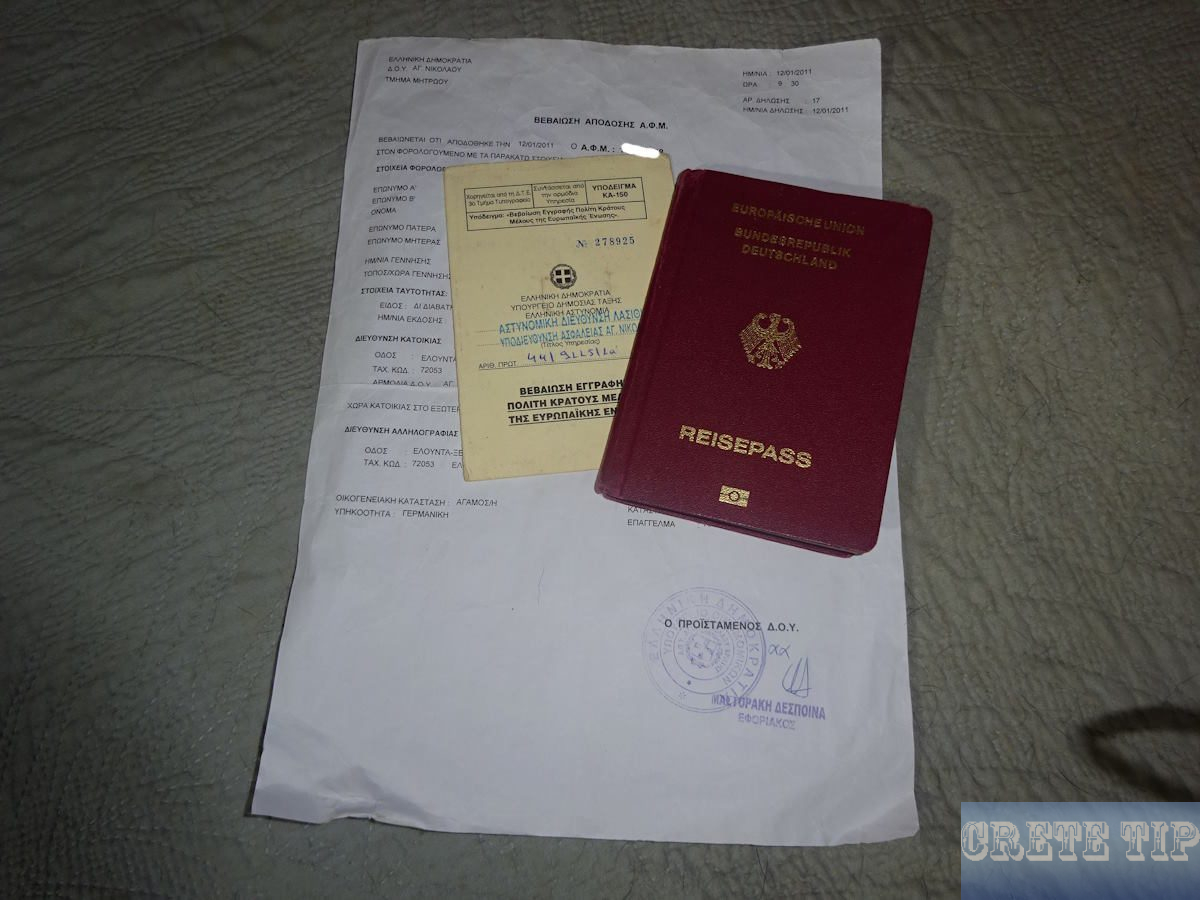
When buying a house in Crete, you need certain documents. There are a few specific steps you need to go through.
Your Greek tax number is just as important as the correct transfer of ownership in the land register. Various specialists take on clearly defined tasks in this process.
Obtaining a Greek tax number (AFM)
Without a Greek tax number (AFM), you cannot conclude a purchase contract. So you definitely need one.
You apply for it at the relevant tax office in Greece. Either go there yourself or send a solicitor with power of attorney.
You will need to bring your valid passport or identity card and the completed forms. It usually only takes one day to issue.
Many estate agents, such as Kaste-Immobilien, will help you with this and arrange the appointments. Your AFM remains valid indefinitely and you will also need it for future tax returns or a Greek bank account.
Transfer of ownership and land registry
The transfer of ownership is handled by a solicitor. They verify the identity of the parties and read the contract in its entirety before you sign.
The transfer must then be entered in the Greek land registry (Ktimatologio). Only then are you officially the owner.
Your solicitor will take care of the registration with the land registry. For new buildings, the declaration of division should clearly regulate which areas belong to your residential unit – this also includes parking spaces and storage rooms.
The land registry entry can take weeks or even months, depending on the region. In the meantime, you will receive a provisional confirmation.
Role of solicitor, notary and engineer
The solicitor checks the legal details and represents your interests. They look at the land registry, search for encumbrances such as mortgages and check that all permits are in place.
They also clarify whether the building was constructed legally and whether the division is correctly documented. The notary certifies the purchase agreement and ensures that both parties understand the contract.
He also takes care of the land transfer tax and orders the land registry entry. The engineer (civil engineer) prepares technical reports and checks whether the construction complies with the approved plans.
He checks the waterproofing, drainage and other details. In older houses, he looks at the condition of the building fabric.
All three work hand in hand, but each takes care of his own area. In Greece, it is customary to hire all three – this saves you trouble later on.
Everyday life and use of the house in Crete
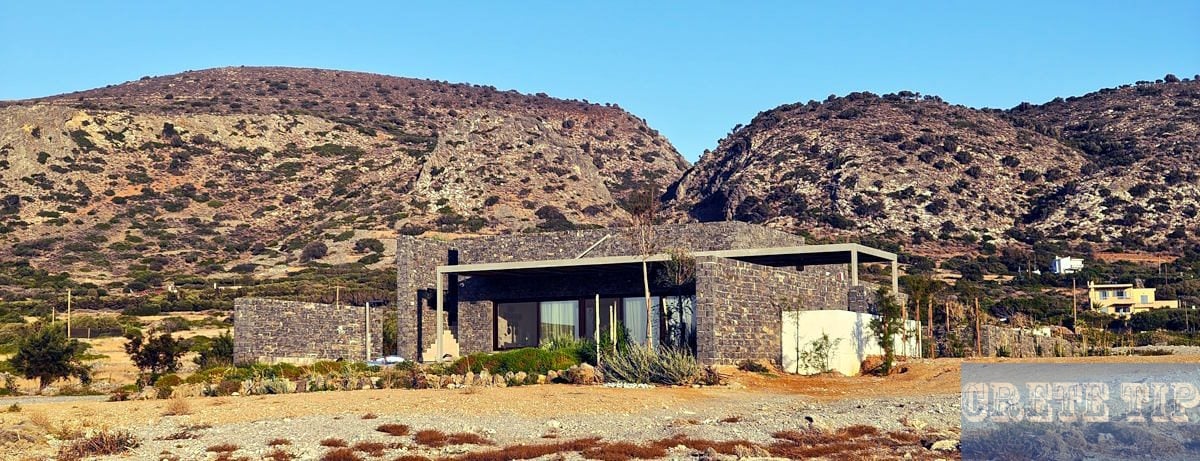
After building your house, you will incur regular costs. The location often determines how pleasant your everyday life will be.
You may also be considering renting out your property as an additional source of income. This can be well worth it.
Running costs and municipal taxes
As a homeowner in Crete, you pay the ENFIA property tax annually. The amount depends on the value, size and location of the property.
Rubbish collection costs around €45 to €135 per year. You usually pay this fee together with other municipal taxes.
Electricity costs are sometimes higher than in the UK, especially in summer with air conditioning. Many people install solar panels to reduce costs.
Water bills usually remain manageable. Home insurance costs between €200 and €500 per year and covers damage caused by fire, water and earthquakes.
You should budget around €400 to €850 per year for pool maintenance. Added to this are the costs of garden maintenance and regular upkeep.
Neighbourhood, infrastructure and location factors
Whether you prefer to live by the sea or in a mountain village will shape your everyday life. Houses by the sea offer direct access to the beach, but often cost more and attract many tourists during the season.
The inland areas are quieter and more unspoilt. There you will find traditional tavernas and authentic Greek neighbours.
Don’t underestimate the distance to supermarkets and doctors. This can make everyday life difficult if you are not mobile.
Important infrastructure in your area:
- Supermarket (maximum 10-15 minutes’ drive)
- Pharmacy and doctor
- Bank or cash machine
- Petrol station
Good road connections are important, especially in winter. Unpaved roads quickly become a problem when it rains.
Neighbours are usually helpful and friendly, especially in smaller towns. This makes many things easier.
Rental and future uses
Many owners rent out their houses in Crete during the summer months. The peak season from May to October often brings in good income.
A villa with a pool can earn between €800 and €2,500 per week. Renting out your property requires organisation – you need someone on site for check-in, cleaning and minor repairs.
Many owners work with local management companies, which take 15 to 25 per cent of the rental income as a fee. This saves you a lot of effort.
Rental options:
- Short-term holiday rentals (higher income, more effort)
- Long-term rentals to locals (stable income, less administration)
- Mixed model (own use in spring/autumn, rental in summer)
If you want to move to Crete permanently later on, plan the house accordingly. Accessibility and good medical care become more important over time.
Frequently asked questions
When building a house in Crete, many practical questions arise. Here you will find an overview of the most important answers.
What building permits are required for the construction of a new house in Crete?
For a new build, you need a valid building permit from the relevant building authority. The permit is based on building plans drawn up by a licensed engineer.
Your plot must be located in a buildable zone. The planning zone determines how large your house may be.
Before submitting the building application, the engineer checks whether the plot meets all legal requirements. These include access options, minimum distances and compliance with the maximum building density.
After construction, you will need a usage permit. Without this, you may not live in or sell the house.
What additional costs should you expect when buying property in Greece?
The additional costs when buying property range between 8 and 12 per cent of the purchase price. The land transfer tax is 3 per cent for existing properties.
For new buildings, there is a 24 per cent VAT instead. Sometimes this is already included in the purchase price – be sure to clarify this in the contract.
Notary fees are around 1 to 1.5 per cent of the purchase price. Land registry entry costs an additional 0.6 to 0.8 per cent.
Legal fees are usually 1 to 2 per cent of the purchase price. Your solicitor will check all legal aspects and represent you.
An engineer for the technical inspection costs extra. The amount depends on the scope of the inspection and the size of the house.
What are the most important steps when buying a property in Crete?
The first step: apply for your Greek tax number. Without this number, you cannot sign a purchase contract or buy a property at all.
It is best to find a Greek solicitor you trust. They will take care of the legal review, check the land registry and verify that all permits are in place and that there are no encumbrances on the property.
This is usually followed by a preliminary contract. Here, you usually pay a deposit, often 10 to 30 per cent of the purchase price.
The purchase contract is concluded at the notary’s office. Both parties must be present or authorise someone to represent them.
After notarisation, you enter the property in the land registry. Only then are you officially the owner – sounds final, doesn’t it?
How high are the average notary and land registry costs in Greece?
Notary fees depend on the purchase price. They are usually around 1 to 1.5 per cent of the price.
You pay approximately 0.6 to 0.8 per cent for the land registry. This officially registers your name.
If the property costs €200,000, you will pay around €2,000 to €3,000 for the notary. The land registry fees will then be between €1,200 and €1,600.
Normally, the buyer bears these costs. However, sometimes there are other agreements between the buyer and seller.
What do you need to consider when planning a new build in Crete in order to comply with local building regulations?
Building density is strictly regulated in Crete. Depending on the zone, you may only build on a certain percentage of the plot.
Minimum distances to neighbouring properties must be observed. These distances depend on the building area and the size of your building.
The maximum building height is also limited. In most residential areas, two or three storeys are the maximum.
The architectural style should blend in with the surroundings. In some regions, there are even specifications for façades and colours.
A geotechnical survey is particularly worthwhile on slopes. It will show you whether the subsoil is suitable for your building project.