22 February is National Action Day Against Poisoned Bait in Greece.

On February 22, 2012, a tragedy unfolded in the Nestos Gorge that would galvanize an entire nation’s environmental movement. A single poisoned bait claimed an entire colony of Griffon Vultures and decimated the local population of Golden Eagles. Fourteen years later, that dark day transformed into a beacon of hope—National Action Day Against Poisoned Baits—marking Greece’s unwavering commitment to combating one of the countryside’s most persistent environmental crimes.
But the struggle continues. Despite the progress made, poisoned baits remain a haunting reality across rural Greece, claiming hundreds of lives each year.

The Scope of the Crisis
The numbers are staggering. Between 2012 and 2024, a comprehensive national database revealed:
– 888 documented poisoning incidents
– At least 1,393 animals killed
– 6 White-tailed Eagles (Greece’s most endangered bird species)
– 19 Golden Eagles
– At least 9 Brown Bears
These aren’t abstract statistics—they represent years of conservation effort erased in moments, species pushed closer to extinction, and a countryside plagued by illegal, dangerous practices.
Why Poisoned Baits?
The motivations behind poisoning are varied, ranging from understandable agricultural concerns to petty vendettas:
Agricultural and Livestock Protection:
Farmers and herders use poisoned baits to eliminate wildlife they believe threatens their livelihoods—bears, wolves, jackals, wild boars, badgers, foxes, and raccoons.
Personal Vendettas:
Perhaps most troubling, poisoned baits are sometimes deployed during disputes between landowners and rural residents, with working dogs—shepherding dogs, hunting dogs, and truffle dogs—becoming innocent casualties.
The Cascading Tragedy
Here lies the cruelest irony: scavenger birds and carnivorous mammals don’t distinguish between the intended target and an easy meal.
A poisoned carcass becomes a death sentence for:
– Griffon Vultures
– White-tailed Eagles
– Golden Eagles
– Black Vultures
– And countless other protected species
One farmer’s “pest control” becomes an executioner’s order for species hovering on the brink of extinction.
A Illegal Practice That Persists
Despite being banned since 1993, poisoned baits—locally called “foles”—remain commonplace across rural Greece. The persistence of this crime reflects a broader challenge: enforcement gaps, cultural attitudes, and the difficulty of policing vast, remote areas.
Compounding the problem is the continued use of highly toxic pesticides that have been banned across Europe since 2008, including Carbofuran—deliberately deployed to poison wildlife.
The Turning Point: 2012 Onwards
The Nestos Gorge tragedy catalyzed action. In 2012, seven environmental organizations united to form the National Task Force Against Poisoned Baits, including:
– ANIMA
– ARCTUROS
– Hellenic Society for the Protection of Nature
– Hellenic Ornithological Society
– Callisto
– Crete Natural History Museum
– WWF Greece
– (Later joined by the Thrace Biodiversity Protection Society)
Building a Database
For the first time in Greek history, a comprehensive national database was created to track poisoning incidents across all of Greece. The data revealed the true extent of the crisis—shocking even hardened conservationists.
Game-Changing Innovation: Detection Units
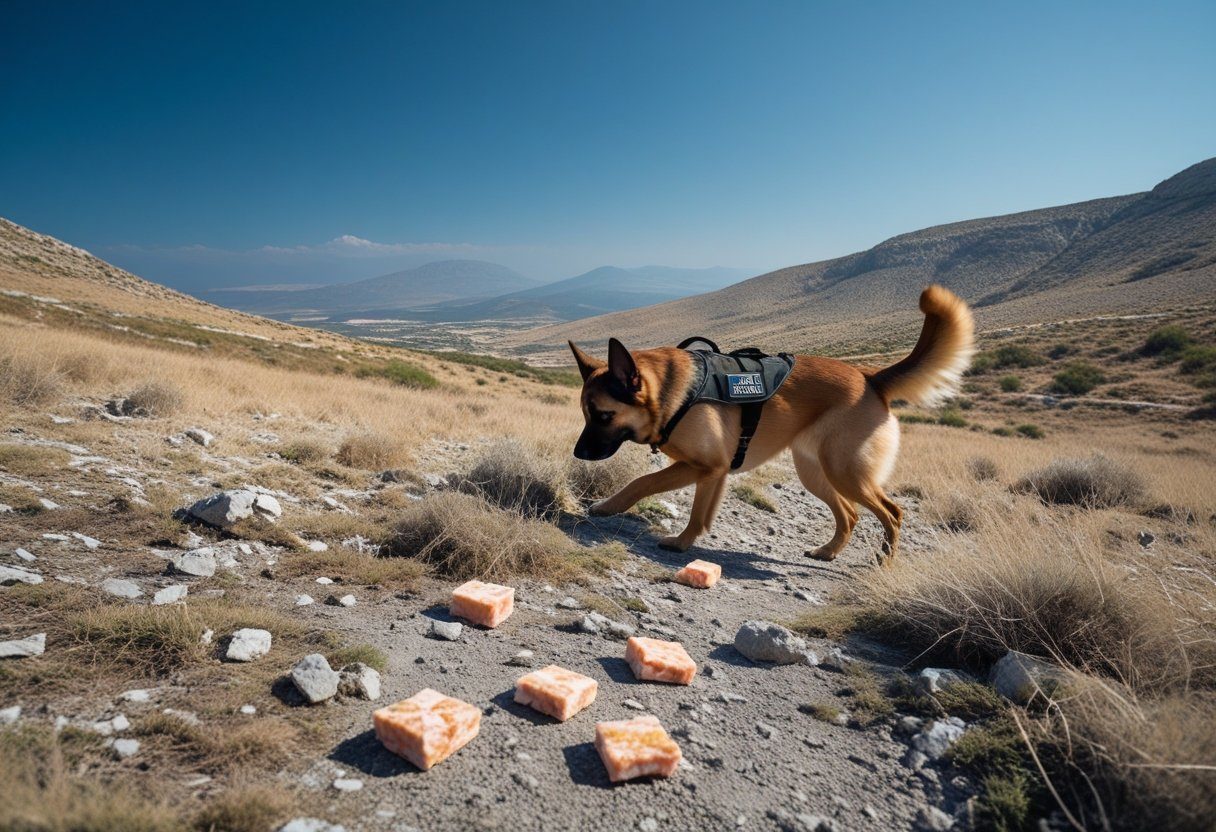
In 2014, a watershed moment arrived: the first Detection Units for Poisoned Baits were established using specially trained dogs in the Meteora region and Thrace.
The innovation worked brilliantly. Today, over 12 specialized detection units operate across Greece:
– 6 units managed by OSFYKA (the state wildlife management body)—a historic first, proving government commitment
– Additional units run by environmental organizations and hunting clubs
These teams have become the frontline soldiers in this war, systematically searching for poisoned baits before they claim more lives.
Legislative Progress
The Task Force didn’t rest on operational successes alone—they lobbied for legal reform.
September 2018: The Ministry of Environment and Energy issued a Ministerial Decision establishing Local Action Plans against wildlife poisoning nationwide. This marked the first legislation exclusively addressing the issue.
2022: A Joint Ministerial Decision (KUA) between the Ministries of Environment, Agricultural Development, Interior Affairs, and Citizen Protection closed previous enforcement gaps and strengthened coordination between authorities.
Yet even these victories proved incomplete. Implementation challenges and jurisdictional gaps remained.
Progress and Persistent Challenges
What We’ve Achieved:
✓ Raised public awareness dramatically
✓ Established detection units across the country
✓ Created the first national poisoning database
✓ Secured government commitment (OSFYKA units)
✓ Passed dedicated legislation
✓ Trained hundreds of detection dogs
What Still Needs Work:
✗ Effective enforcement remains inconsistent
✗ Rural attitudes toward predators haven’t fundamentally shifted
✗ Illegal pesticides continue to circulate
✗ Detection and prosecution of perpetrators remains challenging
✗ Funding for expanded programs is insufficient
Looking Forward: Cautious Optimism
Fourteen years after Nestos Gorge, there are genuine reasons for hope.
The infrastructure now exists. Detection units have proven their effectiveness both operationally and in raising public awareness. Government involvement through OSFYKA signals institutional commitment. Environmental organizations have demonstrated that coordinated action works.
But the fight is far from over.
What’s Needed Next:
1. Enhanced Enforcement: Stricter penalties and more active prosecution of perpetrators
2. Rural Dialogue: Programs to address legitimate agricultural concerns through non-lethal means
3. Expanded Detection Coverage: More units in vulnerable regions
4. International Cooperation: Addressing the cross-border nature of illegal pesticide trafficking
5. Sustainable Funding: Long-term commitment beyond annual allocations
A Reminder of Why It Matters
Every species saved is a victory. Every poisoned bait detected before it claims a life is a small triumph. When we protect the White-tailed Eagle, the Griffon Vulture, and the Brown Bear, we’re not just saving individual animals—we’re preserving the ecological balance that sustains all of us.
The countryside that nurtured these species for millennia deserves stewardship, not destruction. Farmers deserve support in protecting their livelihoods without resorting to methods that poison the ecosystem itself.
The Lesson of February 22
What began as tragedy has become a rallying cry. February 22 now stands as a day when Greece remembers what was lost and recommits to preventing future losses. It’s a day to celebrate the tireless work of detection units, conservationists, and dedicated public servants.
And perhaps most importantly, it’s a day to remember that **change is possible**—but only through sustained effort, cooperation, and an unwavering belief that our countryside can be both productive and wild, both human and free.
The battle against wildlife poisoning continues. Fourteen years in, we can see the future with hope—but only if we maintain our commitment to protecting Greece’s natural heritage.
Want to support this cause? Contact the Hellenic Ornithological Society or other member organizations of the National Task Force Against Poisoned Baits.
The Reality of Poisoned Baits: Separating Panic from Facts in Rural Greece
Fear grips a neighborhood. A dog becomes ill. Social media erupts with warnings about “poisoned baits.” Residents panic. Police are called. But when experts arrive to investigate, they find… nothing. This scenario has become disturbingly common across Greece, revealing a troubling gap between **public perception and on-the-ground reality** regarding poisoned baits.
Recent investigations in Agios Nikolaos shed light on this complex issue, offering valuable lessons about how communities can respond rationally—without denying the genuine threat that poisoned baits represent.
The Current Situation: More Anxiety Than Evidence
Georgos Chorafas, the Federal Game Warden overseeing wildlife protection in Crete and the Dodecanese, has conducted extensive field investigations through the LIFE Against Poison Crete program. His findings paint a nuanced picture.
The Statistics That Surprise
When citizens report poisoned baits, investigations reveal a startling pattern:
In approximately 90% of cases investigated, no baits were actually found.
This doesn’t mean the citizens were lying or malicious. It reflects something far more complex: collective anxiety, genuine concern, and the difficulty of distinguishing between various threats to our pets.
Chorafas explains the reasons behind this discrepancy:
– Dead animals are quickly removed: In urban areas, once a dead animal is discovered (usually by smell), neighbors rapidly dispose of it. Investigators arriving hours or days later find no evidence.
– Scavengers consume the evidence: Small animals, insects, and birds may consume poisoned baits before investigators arrive, leaving no physical evidence.
– Misidentification of illness: A sick dog can have many causes—disease, poor diet, contaminated water, accidents—but frightened owners immediately suspect poisoning.
The Detection Dog: Neshi’s Reality Check
Enter Neshi, a specially trained detection dog whose expertise has become invaluable. Accompanying Chorafas on investigations across forests and urban areas, Neshi can identify poisoned baits with remarkable accuracy.
Yet even Neshi’s findings align with Chorafas’s observations: most reported incidents do not involve actual poisoned baits.
How Investigations Work
The protocol is straightforward:
1. A citizen reports suspected poisoned baits or a poisoned pet
2. Investigators, often accompanied by Neshi and sometimes police, visit the location
3. The area is thoroughly searched
4. Findings are documented and reported back to the public
The presence of these investigation teams has an unexpected benefit: it serves as a visible deterrent. Citizens report that when word spreads that authorities are actively investigating, suspicious activity often ceases.
What Poisoned Baits Actually Look Like
Because misidentification is so common, Chorafas emphasizes the importance of education. How can ordinary citizens recognize a genuine poisoned bait?
Key Identifying Features:
Composition:
Poisoned baits typically consist of meat chunks mixed with toxic substances. They’re not random scattered powder—they’re deliberate constructions designed to be eaten.
The Most Reliable Indicator:
If you discover what appears to be a poisoned bait, look for dead insects around the area. Poisoned baits have immediate, direct effects on small organisms. Clusters of dead insects surrounding bait are a strong indicator of genuine toxicity.
Visual Appearance:
Poisoned baits may be coated in yellow or white powder (the toxic pesticide). However, powder alone doesn’t necessarily indicate poison—it could be any number of substances.
What It Isn’t:
– Random scattered powder without meat components
– A single dead animal (which could have died from numerous causes)
– Pet food or agricultural supplements
– Bird seed or grain
The Psychology of Panic
Chorafas points to a troubling pattern: communities become sensitized to the threat, and this heightened awareness sometimes morphs into collective anxiety.
How Panic Spreads:
1. Initial Report: One person reports a suspected poisoned bait
2. Social Media Amplification: The report spreads across neighborhood groups, Facebook, and WhatsApp
3. Confirmation Bias: Once alert, residents interpret every sick pet and dead animal as evidence of poisoning
4. Collective Fear: The community becomes convinced they’re under siege
5. Pressure on Authorities: Demands for investigation mount
The Consequence:
Resources are diverted to investigate false alarms while genuine threats may be overlooked. More importantly, unnecessary panic damages community trust and social cohesion.
A Recent Case Study: The Laiki Agora Incident
In early 2024, a concerning incident occurred in the Laiki Agora (public market) area. A citizen reported that their dog had been poisoned, raising alarm across the neighborhood.
What the Investigation Found:
When Chorafas conducted a thorough inspection the following Thursday:
– No poisoned baits were discovered
– No dead animals were found
– Stray cats in the area and their feeding stations showed no signs of toxic contamination
– The reported dog was confirmed to be in good health
The investigation essentially cleared the area—but only after creating considerable anxiety among residents.
When the Threat Is Real
It’s crucial to emphasize: poisoned baits are not imaginary. They remain a genuine problem in rural Greece, despite being illegal since 1993.
Chorafas confirms this reality while providing context:
Real Poisoning Events:
Direct Consequences:
Poisoned baits placed in rural areas frequently have immediate, devastating effects. Animals that consume them die rapidly.
Secondary Poisoning:
Scavenger birds and carnivorous mammals—including eagles, vultures, and bears—consume poisoned carcasses, resulting in secondary poisoning deaths. This cascading effect has caused significant ecological damage.
The Paradox:
While poisoned baits genuinely threaten wildlife and rural communities, the frequency of actual incidents in urban areas is far lower than public perception suggests.
How to Respond Responsibly
Chorafas urges a balanced approach—neither dismissing the threat nor succumbing to panic:
If You Suspect a Poisoned Bait:
1. Don’t Panic
Take a breath. Many situations that appear to involve poisoning have other explanations.
2. Report It
If you genuinely suspect poisoned baits, report it to authorities. This is important—even if your suspicion proves unfounded, the investigation helps establish accurate community data.
3. Provide Details
When reporting, be specific:
– Exact location
– What you observed (meat chunks? powder? dead insects?)
– When you discovered it
– Any animals affected
4. Let Experts Determine Reality
Don’t diagnose poisoning yourself. Veterinarians and wildlife experts should confirm whether an animal’s illness or death resulted from poisoning or other causes.
If You Witness Active Poisoning:
This is the scenario that demands immediate action.
If you actually observe someone placing poisoned baits, immediately contact police and file an official complaint. While perpetrators are often difficult to identify and prosecute, official reports create a documented record that helps authorities identify patterns and hold people accountable.
The Larger Context: Legitimate Concerns
It’s important to acknowledge why poisoned baits remain attractive to some rural residents:
Real Agricultural Pressures:
Farmers face genuine threats to livestock and crops from predators and wildlife. Without effective, legal alternatives, some resort to poisoning.
Predator Management Gaps:
Greece lacks comprehensive, accessible programs for non-lethal predator management. This creates a vacuum that illegal methods fill.
Rural Frustration:
When government support for agricultural protection is insufficient, rural communities take matters into their own hands.
Addressing poisoned baits requires not just enforcement but also addressing these underlying issues.
The Path Forward: Hope Without Naivety
Chorafas’s message, refined through years of fieldwork, is simultaneously cautionary and optimistic:
What We Must Acknowledge:
✓ Poisoned baits represent a real threat to wildlife and pets
✓ The practice remains illegal and should be prosecuted
✓ The problem demands serious attention and resources
What We Must Avoid:
✗ Collective panic based on unverified reports
✗ Misidentification of normal pet illnesses as poisoning
✗ Social media-driven hysteria that obscures facts
✗ Wasted resources chasing false alarms
What We Should Do:
→ Report suspected incidents responsibly
→ Trust expert investigations
→ Support detection dog programs and wildlife protection units
→ Advocate for comprehensive rural predator management solutions
→ Educate ourselves on what poisoned baits actually look like
The Positive Note: Lassithi’s Transformation
Perhaps most encouraging is this fact: From 2017 to 2019, Lassithi Prefecture ranked among Greece’s highest for poisoned bait incidents. Today, it ranks last—at least in Crete.
This transformation didn’t happen by accident. It resulted from:
– Public awareness campaigns
– Coordinated enforcement efforts
– Community engagement
– Detection dog programs
– Genuine commitment from both authorities and residents
If Lassithi could transform in just a few years, other communities can too.
Conclusion: Vigilance Without Hysteria
The reality of poisoned baits is neither the apocalyptic threat that social media panic suggests nor a non-issue to be ignored. It’s a genuine but manageable problem requiring measured response, expert investigation, and community cooperation.
The next time you hear alarming reports about poisoned baits in your neighborhood, take a moment to:
1. Pause before sharing
2. Gather actual facts
3. Report to authorities if warranted
4. Trust expert investigation
5. Support long-term solutions
In doing so, you become part of the solution—helping communities protect both their pets and their ecosystems without surrendering to fear-based decision-making.
The battle against wildlife poisoning is real. But it’s one we can win—together, rationally, and with clear eyes about what we’re actually facing.