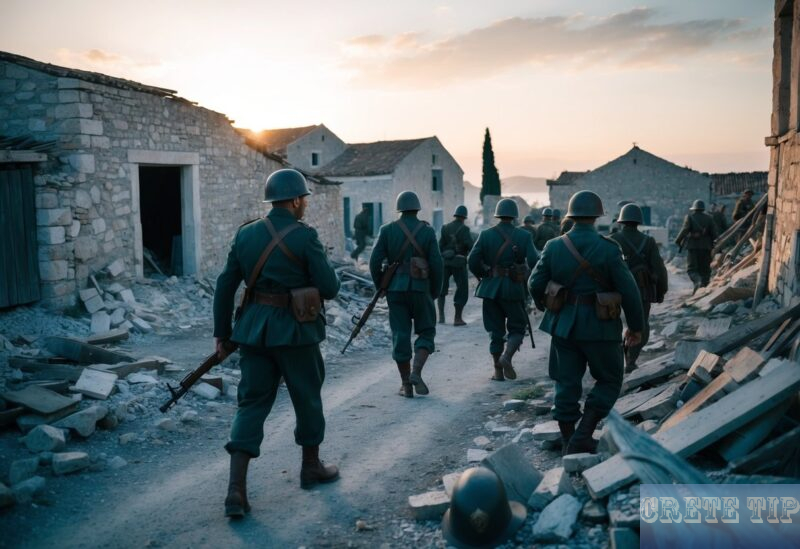
The city we now call Heraklion was once known as Candia across the Mediterranean. From 1648 to 1669, it endured the longest siege in history.

Historians often study this conflict alongside other legendary sieges to see just how far early modern logistics could stretch. The struggle played out during the Fifth Ottoman–Venetian War, a pivotal moment when the Ottoman Navy challenged Venice’s control of the seas.
People sometimes call it the War of Candia because the city’s fate was the heart of the campaign. For 21 years, Ottoman forces pressed hard against its walls.
This was a defining event for both the Ottomans and Venice. The defenders faced plague, famine, and a command structure that just couldn’t seem to get along.
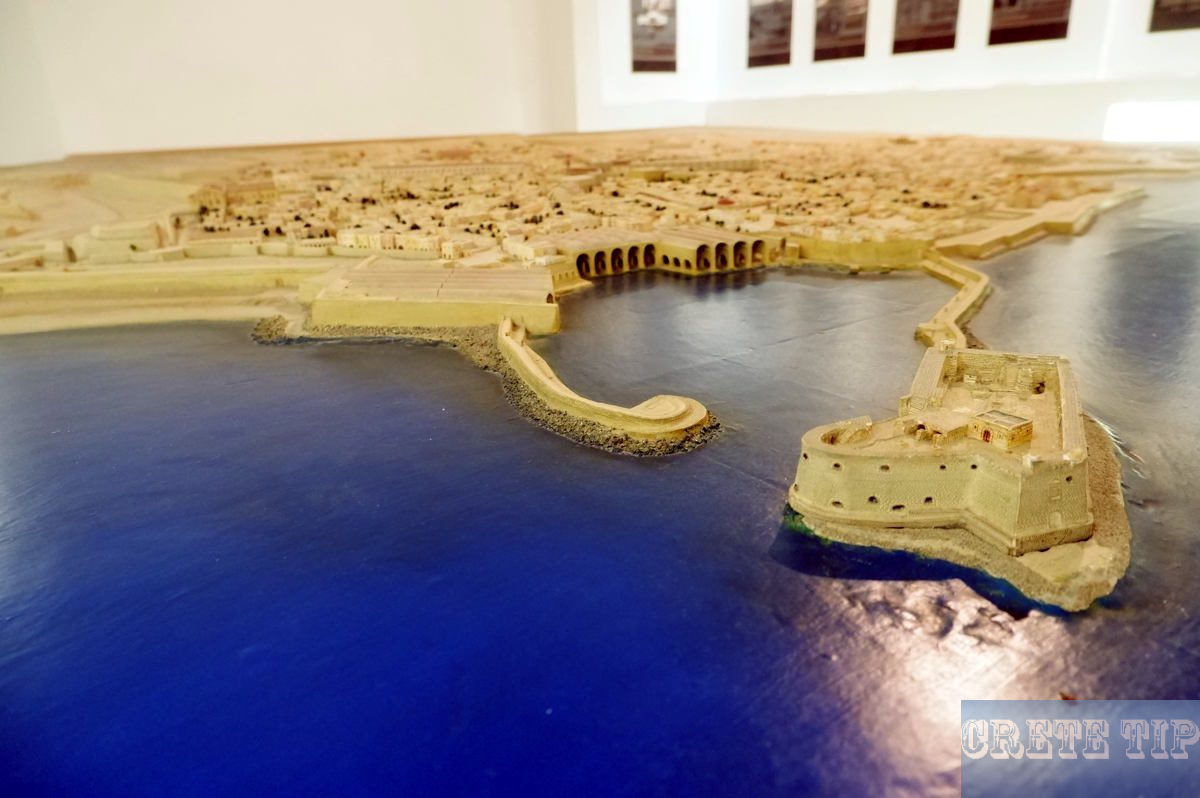
Walking around Heraklion today, you can almost read the outline of this story in the stone. The harbour fortress of Koules stands where it did in 1648.
The old Venetian walls still circle the city. Once you know what happened here, it’s hard not to see the place differently.
Candia And Crete Under Venetian Rule
Venice ruled the island for more than four centuries. During that era, they turned the capital into a fortified hub for trade and one of their most prized overseas possessions.
Why Candia Mattered In The Eastern Mediterranean
Crete sits almost exactly at the center of the eastern Mediterranean. Any ship traveling between western Europe and places like Egypt or Constantinople had to pass close by.
For Venice, that made Crete worth defending at nearly any cost. Candia was the administrative capital of the Kingdom of Candia, and its port handled a lot of commercial traffic.
It also worked as a resupply point for Venetian naval operations. The city’s position was more than just geography—it was political and symbolic, too.
Losing Crete would’ve meant Venice lost its biggest foothold east of the Adriatic. The Ottomans saw that as well.

The City Before The Ottoman Assault
By the early 1600s, Candia had been fortified to match Renaissance military standards. The Venetians poured resources into a full circuit of bastioned walls meant to withstand cannon fire and allow defenders to shoot along every stretch.
These defenses were a real feat of seventeenth-century engineering, with deep ditches and outworks that forced attackers into a grinding, costly fight. The harbour was protected separately by the sea fortress known as Rocca a Mare, later called Koules.
The walls were thick, the bastions well placed, and the city held a garrison ready to fight. Inside, the civilian population lived in a city shaped by centuries of Venetian rule.
Churches, public buildings, and daily life all continued within those walls. When the siege began, civilian life didn’t just stop; it carried on, though things got more desperate as the years dragged on.
How The Conflict Began
The events that set off the Cretan War didn’t actually start on Crete. The island’s fate was tied to a much bigger Ottoman-Venetian rivalry that had been brewing for generations.
The Wider Ottoman–Venetian War
In 1644, the Knights of Malta attacked an Ottoman convoy sailing from Constantinople to Alexandria. The knights landed briefly at Candia with their loot, and the Ottomans used this as a reason to go after Venetian Crete.
Venice had always worried the Ottomans would find an excuse to push further into the Aegean. The 1644 incident gave Sultan Ibrahim the pretext he needed.
The broader conflict that followed, called the War of Candia or the Fifth Ottoman-Venetian War, ran from 1645 to 1669. The war wasn’t just about Crete.
Another front opened in Dalmatia, where Venice tried to seize mountain passes and pull Ottoman attention away from Candia. Naval battles broke out across the Aegean as well.
Venice still had a strong navy. They tried to cut Ottoman supply lines and protect trade routes, with commanders like Giovanni Cappello leading early efforts to stop the invasion.
But the scale of the Ottoman mobilization made it tough to defend everything. The odds were stacked high.
The First Moves Against Crete
In 1645, Ottoman forces under Silahdar Yusuf Pasha landed on Crete and captured Chania. This victory set up the massive campaign against Candia.
Chania (or Canea) fell that same year. Rethimno (Rettimo) followed in 1646, and losing it was a serious blow to the defense of the island’s northern coast.
By the middle of 1646, the Ottomans controlled most of Crete. Only Candia and a few small coastal forts held out.
The Ottomans cleared the rest of the island, securing supply routes before closing in on the capital. The formal siege of Candia began on 1 May 1648, when Ottoman forces started their concentrated assault on the walls.
The Long Defence Of The City
The defense of Candia dragged on for 21 years. There was no single dramatic moment—just relentless engineering, naval action, and the sheer will to survive as conditions got worse inside the walls.
Major Phases Of The Blockade And Assaults
Gazi Hüseyin Pasha led the early years of the siege for the Ottomans. His engineers targeted the bastions at Gesu, Santa Maria, and Martinengo.
The Venetian garrison put up fierce resistance. Their engineers constantly dug counter-mines to keep the walls from collapsing.
The intensity of the siege shifted over two decades. After the Peace of Vasvár in 1664, the Ottomans could redirect more troops and resources to Crete.
That treaty let them send battle-hardened veterans to the Cretan front, setting up the final, brutal phase in 1667. Grand Vizier Köprülü Fazıl Ahmed took command himself.
Elite Janissaries led the last bloody assaults on Candia’s battered bastions. They ramped up mining operations dramatically, trying to break through the defenses.
By 1668, the outer defenses were badly damaged, with some bastions in ruins. The final two years saw the heaviest destruction and staggering casualties on both sides.
Life Inside The Besieged City
Inside Candia, people faced plague, famine, and constant friction among commanders. Plague hit the garrison as early as 1646.
By 1649, the Venetian cavalry was finished—there just wasn’t enough grain for the horses. The city’s supply of functional cannon dropped sharply.
The civilian population endured all this alongside the soldiers. The city stayed inhabited and partly functional, but shortages, disease, and the fear of mines under the streets made life nearly unbearable.
The Venetian command structure didn’t help. The Senate back in Venice refused to let any one leader hold too much power, so officers often bypassed their superiors and appealed directly to Venice.
This constant second-guessing paralyzed military initiative at crucial moments. It’s hard to imagine how frustrating that must have been.

Allies, Reinforcements And Naval Support
Venice didn’t fight alone. The Knights of Malta, the Kingdom of France, and parts of the Holy Roman Empire sent help.
French involvement peaked in 1669, when Francois de Beaufort arrived with a relief force. High-ranking nobles like Charles de Sévigné joined him, hoping for military glory in what they saw as a holy war.
Their arrival gave the exhausted defenders a brief lift. Venetian naval power was the city’s lifeline throughout the siege.
The fleet kept some sea lanes open, letting supplies and reinforcements reach Candia, though it was a constant struggle. The Ottoman Navy tried hard to keep a tight blockade.
Venetian sailors were skilled, but the Ottomans had numbers on their side. Their navy escorted convoys from the mainland, making sure the land army stayed supplied.
The maritime struggle was central to the whole siege. The Venetian navy provided the only real link between the city and the outside world.
The fortress at Souda on the north coast stayed in Venetian hands the entire war, giving the fleet a safe anchorage at Suda Bay. From there, they could threaten Ottoman supply routes from Canea.
The Venetians scored some important naval victories, like the Battle of Fokea in 1649. Admiral Lorenzo Marcello made his mark during the Dardanelles campaign, winning a major victory before dying in 1656.
Lorenzo Marcello and his fleet were vital to the defense. Lazzaro Mocenigo also played a key role, leading daring expeditions to the Dardanelles before he, too, was killed in action.
Mocenigo proved Venetian naval power could still hurt the Ottomans. These victories disrupted Ottoman logistics during the siege.
Sometimes, the Venetian fleet even occupied islands like Tenedos to blockade the Dardanelles. The whole idea was to slow down the Ottoman fleet and limit reinforcements heading to Crete.
Koules Fortress And The Harbour Defences

Koules was just one part of a layered harbor defense system. Its real importance only makes sense when you look at it as part of the larger fortifications.
The Strategic Role Of Koules
The fortress, called Rocca a Mare by the Venetians, was built in the early 1500s at the entrance to the old harbor. Its job was to control access to the port.
Any fleet trying to come or go had to pass right under its guns. During the siege, this mattered most for keeping the supply line from the sea open.
As long as Venetian ships could use the harbor, Candia could get reinforcements and food. Koules physically guarded that crucial entry point.
The structure was built to take a beating. Its outer walls are 8.7 to 9 meters thick—designed to shrug off naval artillery.
Three big relief carvings of the Venetian winged lion still decorate its seaward face today. If you stand there now, it’s hard not to imagine the centuries of tension and hope those walls have seen.

How The Harbour Fortifications Worked
Koules didn’t stand alone. It formed part of a connected harbour defence—walls, towers, and chain or boom systems that could stretch across the harbour entrance.
Together, these defences created overlapping fields of fire. By 1649, Ottoman artillery batteries on the southern and coastal approaches could shell Venetian naval movements inside the port, making the harbour a lot less safe as a resupply point.
The Ottomans never had the naval strength for a direct assault on Koules from the sea. Instead, their strategy focused on making the harbour so dangerous that it was barely usable.

What Koules Could And Could Not Prevent
Koules held out through the 21-year siege. Ottoman forces never took the fortress by assault.
The fortress anchored the harbour defence right up until the city surrendered. Still, it couldn’t prevent the eventual collapse of the city’s overall defence.
Koules was just one part of a much larger system. When the southern walls turned to rubble and the garrison dwindled to a few thousand fit men, the survival of Koules didn’t change the outcome.
It’s tempting to treat Koules as the symbol of all Candia’s defences, but the real defence was the entire circuit of bastioned walls, the fleet, and the garrison—each of which wore down over two decades.
The Fall Of Candia In 1669

Why The Defence Finally Collapsed
By summer 1669, things inside Candia were grim. The French relief force had arrived earlier that year as part of a broader Christian coalition, but after a failed assault on Ottoman positions in August, the French commanders withdrew.
When the French, led by the Duke of Beaufort, left in August, Captain General Francesco Morosini had only about 3,600 fit fighting men left. Morosini showed remarkable strategic skill, keeping the city’s defences together during the worst years of the war.
Despite everything, Morosini managed to negotiate a safe withdrawal. The supply situation had hit a breaking point.
The walls had been battered for over two years of heavy bombardment. The outer bastions were badly compromised.
There just weren’t enough healthy men to defend the full circuit anymore.
The Terms Of Surrender
Morosini started talks with Köprülü Fazıl Ahmed, the Grand Vizier. They formally agreed to surrender on 27 September 1669.
The terms were relatively orderly—at least by the standards of the time. Venetian troops and civilians could evacuate.
The Republic kept a handful of small island fortresses, like Souda, Spinalonga, and Gramvousa. Venice held Spinalonga for several decades, keeping a strategic foothold.
These island outposts became the last remnants of Venetian Crete. With the treaty signed, Crete passed to the Ottomans, and the region’s political landscape shifted for good.
The bitter end of the siege set the stage for the Great Turkish War. This transition marked a new era for the island’s people.

Immediate Consequences For Crete
For Cretans, the change of rule was immediate and jarring. Candia got a new name, and the island’s administration was reshaped under Ottoman control.
Churches were converted to mosques, and while the Venetian cityscape remained, it was repurposed. The long war had devastated Crete’s population.
Years of siege, disease, and military campaigns emptied villages and wrecked the agricultural economy. Recovery took generations—no easy fix.
Legacy In Today’s Heraklion

What Remains Visible In The Modern City
Heraklion’s Venetian walls are some of the best-preserved Renaissance military structures in the Mediterranean. The full circuit still stands around the old city.
Walking along the walls, you can spot individual bastions and see, in a pretty hands-on way, where the Ottomans focused their mining attacks. Koules Fortress still stands at the harbour entrance in solid shape and is open to visitors.
Inside, you can wander through the chambers, read about the siege, and check out items recovered from shipwrecks. Standing on the seaward parapet, looking back at the city, it’s easy to see why controlling the harbour mattered so much.
The old city’s layout still follows the Venetian street pattern in a lot of places. The Venetian loggia, the old fountain, and several church buildings survive—though most were changed during the Ottoman period.

How The Siege Shaped Cretan Memory
The siege of Candia holds a unique place in Cretan memory. It marks both the height and the end of Venetian rule.
For many Cretans, the Venetian era is remembered with mixed feelings—Venice was a colonial power, and its rule wasn’t always gentle. Still, the siege itself stands out as a time of extraordinary endurance.
The comparison with Troy, made by Lord Byron and others, shows how Europeans saw the long resistance. For visitors to Heraklion now, the city’s physical remains make the history feel tangible.
Sites like CreteTip, built on local knowledge, keep drawing attention to these connections between Crete’s landscape and its layered past.
Frequently Asked Questions

What caused the conflict that led to the siege?
In 1644, the Knights of Malta attacked an Ottoman convoy near Crete. They landed briefly at Candia with their loot after the fight.
The Ottomans used this as a pretext to launch their campaign against Venetian Crete, kicking off the Cretan War in 1645.
Why did the siege last for so many years?
The city’s Venetian-built bastioned walls were incredibly well engineered and tough to break through. Venice kept naval superiority for much of the conflict, so supplies and reinforcements could still reach the city by sea.
This kept the defence going for a lot longer than you’d expect.
Who ultimately won, and what were the terms of surrender?
The Ottoman Empire won. Captain General Francesco Morosini surrendered the city on 27 September 1669.
Under the terms agreed with Grand Vizier Köprülü Fazıl Ahmed, Venetian troops and civilians could evacuate. Venice kept a few island fortresses for several decades after.
Roughly how many casualties and civilian deaths were there?
Casualty figures from that era are inconsistent and sometimes wildly exaggerated. Both sides suffered extremely heavy losses over the 21 years.
Venetian sources from 1668 alone mention about 7,000 dead and 3,000 wounded on their side. Ottoman losses were likely much higher, but exact numbers are anyone’s guess.
How does it compare with other long sieges in modern history?
At 21 years, most military scholars call the Siege of Candia the longest siege in history. When looking at the longest sieges, historians often distinguish between continuous blockades and intermittent conflicts.
Other conflicts lasted longer in total, but the intensity of Candia’s struggle was pretty much unmatched for its time. The Siege of Ceuta sometimes gets a mention as longer, but Candia’s resistance stands out as a defining moment in the Fifth Ottoman–Venetian War and is generally ranked among the longest in early modern European and Mediterranean military history.
Where can I find reliable maps and accounts of the fortifications and battles?
The Royal Collection Trust has period maps of Candia. There’s even a detailed map from 1669 that shows Ottoman siege works during the last days of the conflict.
Koules Fortress has exhibits and information about the siege. If you’re looking for historical context grounded in Crete itself, resources built on long-term local knowledge usually offer a much better sense of place than generic tourism guides.