
Eating well on Crete? Honestly, it’s not that hard if you know what to look for. The island’s got this ingredient-obsessed food culture—village kitchens have been serving the same honest dishes for generations.
The difference between a mediocre, overpriced meal and a genuinely good one in Crete usually comes down to a handful of very readable signals before you even sit down. This guide is about those signals, not a list of recommended restaurants.
Most tourists who leave disappointed by Cretan food don’t just have bad luck. They fall into a familiar pattern: show up hungry after the beach, spot the nearest place with an English menu and outdoor tables, and sit down without a second thought.
Understanding why that routine leads to bland meals is more useful than any “top 10” list.
Why Visitors End Up In The Wrong Places

The busiest restaurants in tourist zones are built to pull in as many newcomers as possible. Location, big signs, and a flashy street presence are all part of the plan—they don’t say anything about food quality.
Harbourfront Hype And Main Square Convenience
Waterfront spots are the priciest real estate for Cretan restaurants. If you’re eating by the harbour in a busy tourist town, expect to pay a premium for the view, not the food.
Main squares in places like Chania, Rethymno, and Agios Nikolaos follow the same pattern. The Venetian Harbour in Chania looks inviting but is a minefield for quality. These high-traffic areas focus on catching passing tourists, not building regulars.
Menus Built For Passing Trade
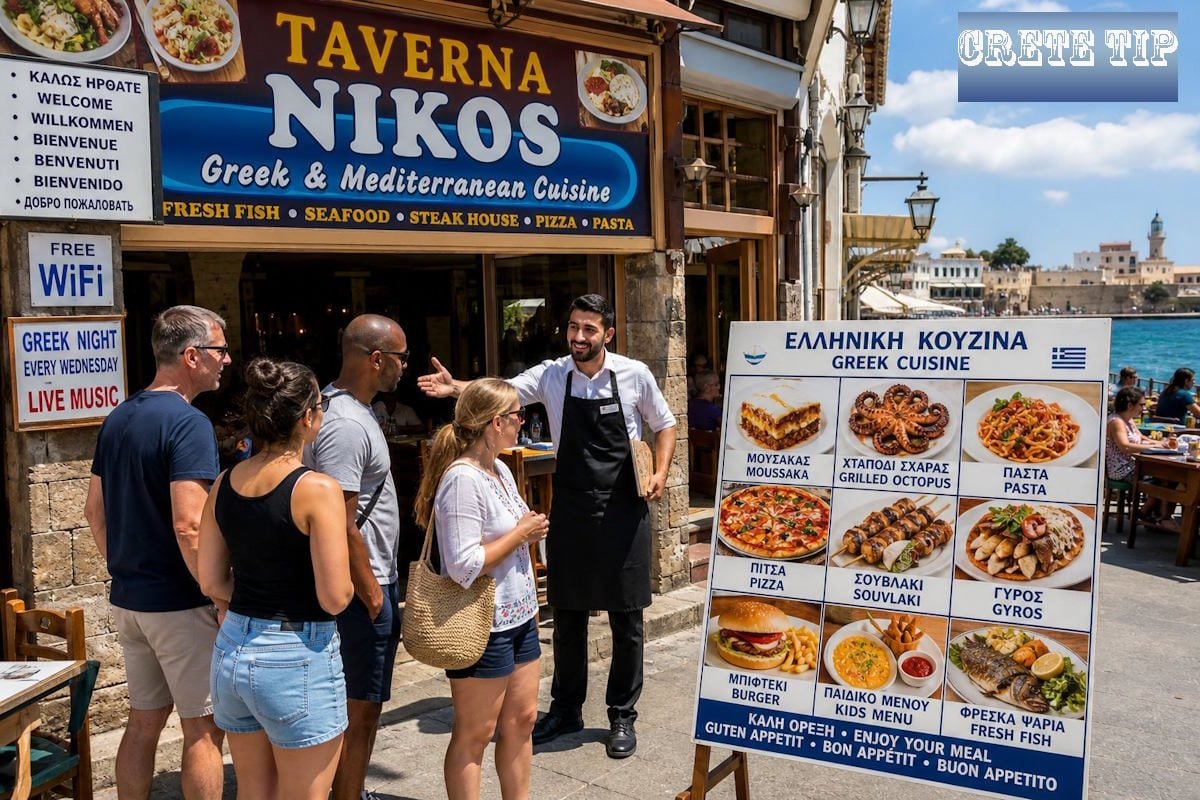
Restaurants that feed a constant stream of strangers can’t really specialize. They try to offer everything: moussaka, grilled octopus, pasta, pizza, burgers for the kids, you name it.
Long menus usually mean the kitchen relies on pre-made bases, frozen proteins, and standardized servings. The flexibility to feed fifty nationalities at once comes at the cost of cooking anything especially well.
How Seasonality Shapes Quality
Crete’s food scene shifts dramatically with the seasons. In July and August, the busiest waterfront spots run at full tilt, often with seasonal staff who might not know much about local produce or old-school recipes.
Village tavernas and family kitchens stay more consistent year-round because locals keep them busy even when tourists leave. Eating outside peak summer—or picking places with a loyal local crowd—usually gets you better food.
The Warning Signs To Notice Before You Sit Down
No single warning sign guarantees a bad meal. But if you spot two or three, you can probably guess what’s coming.
Overlong Menus And Generic Greek Dishes
A menu with forty options isn’t a sign of generosity—it’s a red flag. No small kitchen can cook that many things well.
If every page jumps from moussaka to spaghetti carbonara to club sandwiches, the kitchen’s working from pre-prepped components, not fresh cooking. Real Cretan tavernas usually keep menus short and focused.
Dishes like dakos, stamnagathi, gamopilafo, apaki, and slow-cooked lamb show up when a kitchen’s actually cooking Cretan food. If the menu looks like every other Greek island restaurant, it probably tastes like one too.
Aggressive Street Invitations
If someone’s stationed at the door calling out to everyone passing by, that spot depends on impulse diners, not reputation. Good places in Crete fill up naturally at lunchtime and don’t need to drag people in from the street.
Getting shown the menu first is fine. Getting ushered to a table before you even see a menu? Not so much.
Photos Of Food And Multilingual Pitch Boards
Laminated menus with color photos of every dish are aimed at folks with no local knowledge and no plans to come back. They’re about accessibility, not quality.
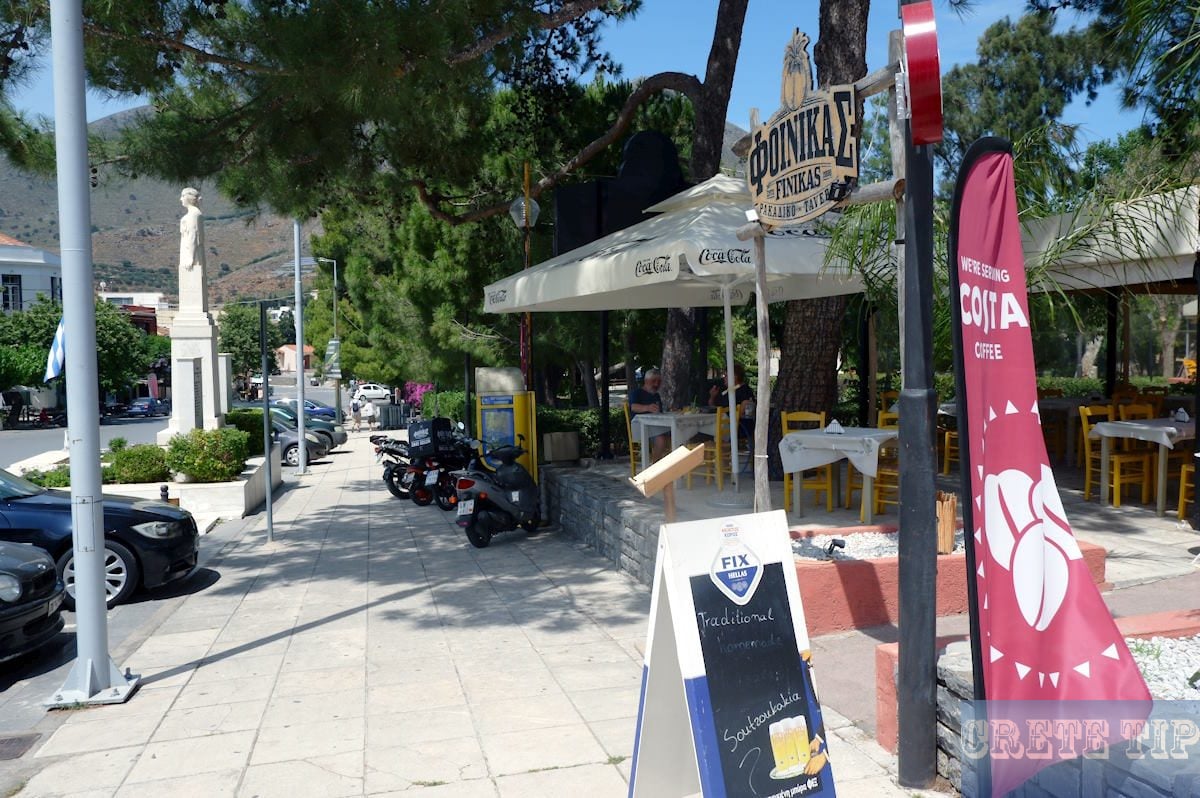
If you see the same dish advertised in four languages, the kitchen’s cooking for a revolving door of strangers. A chalkboard in Greek or a menu with handwritten seasonal specials tells a different story.

Frozen Seafood And Out-Of-Season Claims
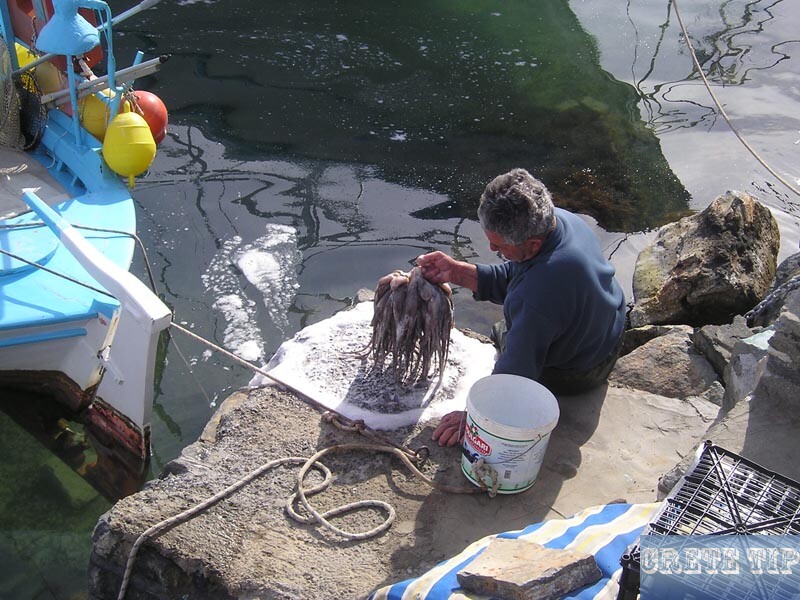
Fresh fish on Crete is fantastic, but it depends on weather and season. If a restaurant offers a huge seafood menu when no fishing boats have gone out, or lists fish that aren’t in season, something’s off.
Just ask: “Is this fresh today, or frozen?” A legit kitchen won’t hesitate to answer. If the reply’s vague, you’ve got your answer.
What Good Tavernas On Crete Usually Do Differently
The best meals on Crete share a few practical traits that help you spot tourist traps before you order. None of them are flashy, and most don’t bother trying to impress tourists.
Short Menus Based On The Day
Kitchens that decide what to cook based on what’s fresh that morning always have shorter menus. At a real taverna, the waiter knows what’s available without checking a list.
Ask what’s good today, and you’ll get a quick, specific answer. Short menus, chalked specials, and a waiter who admits something’s run out are all good signs.
Cretan Specialities Instead Of Tourist Standards
Cretan cooking has its own identity. Dakos (barley rusk with tomato and mizithra cheese) is everywhere and a solid test of quality.
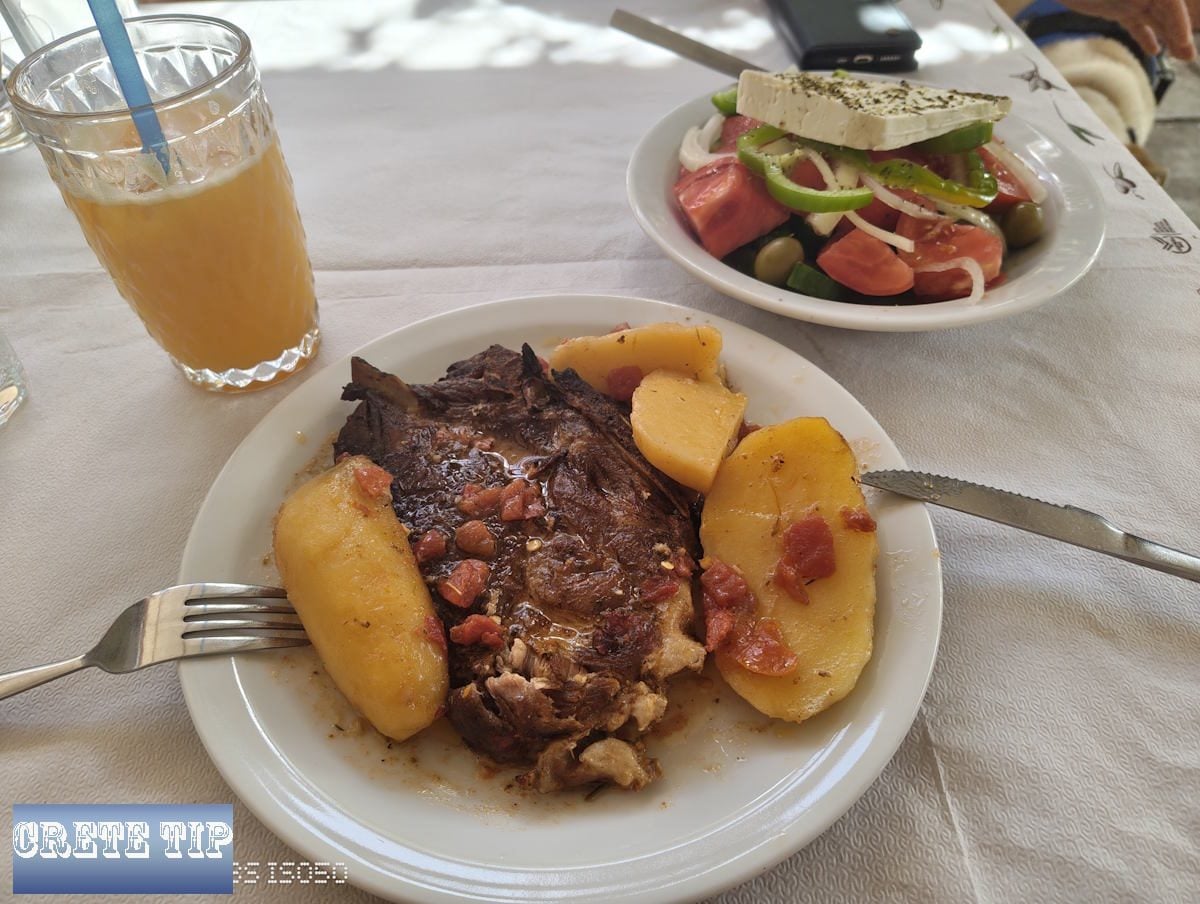
Apaki (herb-cured smoked pork) and stamnagathi (wild chicory with lemon and olive oil) are local favorites that touristy kitchens rarely bother with. If these dishes are just tacked onto a menu of moussaka and spaghetti, they’re probably for show. If they’re the heart of the menu, you’re in the right spot.
Family Cooking, House Wine, And Simple Service
The real sign of a good Cretan taverna? There’s a family in the kitchen. When the cook owns the place, they care in a way a hired chef just can’t.
House wine in a jug or carafe is a good trust signal. It means the place has a relationship with a local producer and stands by what they serve. A fancy printed wine list in a village taverna feels out of place, honestly.
What Tourists Often Get Wrong About Eating On Crete
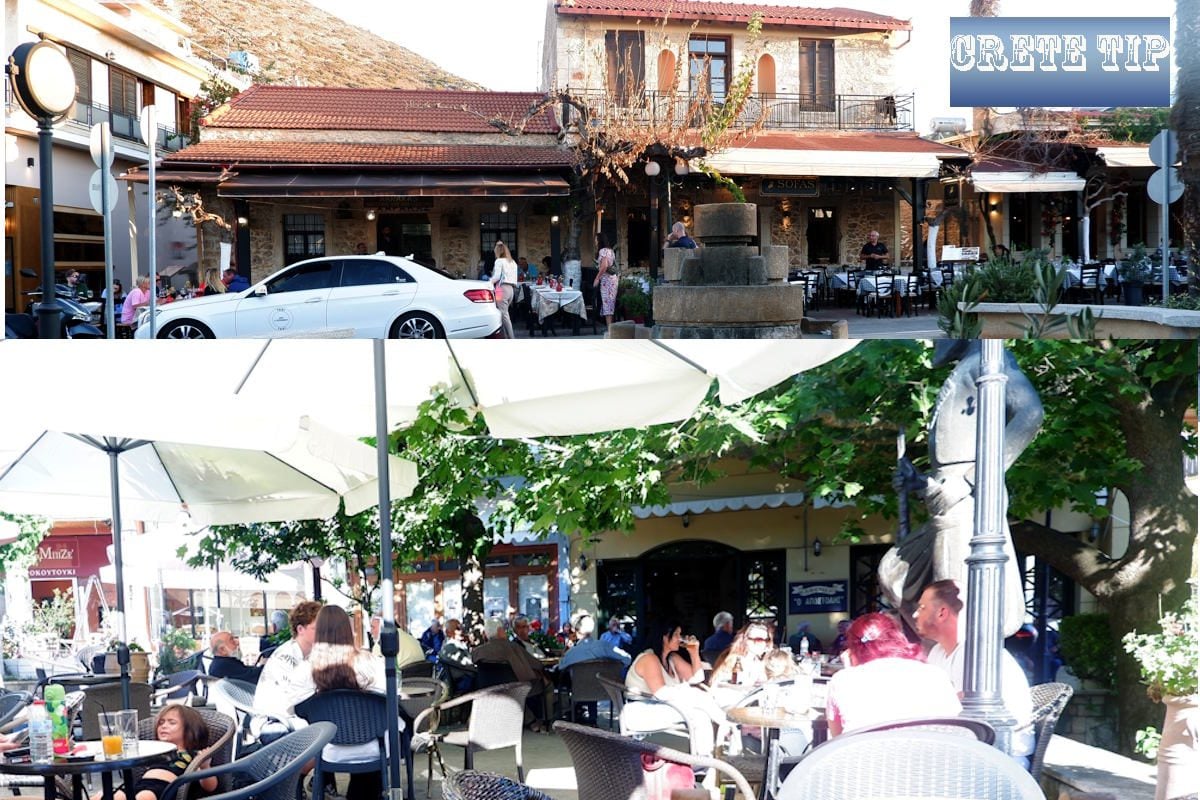
The most common mistakes tourists make in Crete aren’t about getting ripped off. They’re about showing up with the wrong expectations.
Expecting The Same Dishes In Every Region
Crete’s a big island with different food traditions in every corner. The cooking in Chania isn’t the same as what you’ll get in Lassithi villages or along the eastern coast.
Expecting the same menu everywhere means you’ll miss out on the fun regional stuff. Gamopilafo (wedding rice) belongs to certain areas and occasions. Mountain villages near the White Mountains serve slow-roasted lamb and aged cheeses you won’t find on the north coast resort strip. Menus change as you travel, and that’s a good thing.
Mistaking Big Portions For Better Food
Huge portions are more about pleasing tourists than about quality. A mountain of bland moussaka is still bland.
Some of the best meals in Crete are small: a plate of dakos, a bowl of stamnagathi, a chunk of grilled pork with olive oil and bread. Chasing quantity over quality just doesn’t work out here.
Expecting a giant main course also makes visitors skip the mezedes style locals actually prefer. Sharing several small, well-made dishes almost always beats one big, mediocre one.
Ignoring Village Kitchens In Favour Of Views
Restaurants with the best views charge for them. A clifftop terrace over the sea adds to your bill just like a harbourfront table does.
Often, the kitchen is identical to the one a few streets inland—except the inland spot charges less and depends on regulars. Villages like Kritsa, Psychros, and Tzermiados (in Lassithi) have small tavernas that cook for locals who come back again and again. The view might just be a courtyard or a mountain road, but honestly, the food makes the detour worth it.
Ordering International Comfort Food On A Cretan Menu
Pizza or burgers on a Cretan menu are there for tourists who don’t want to try something new. They’re rarely any good—certainly not better than what you’d get at a place that actually specializes in them.
This isn’t snobbery, just reality. A kitchen focused on Cretan food isn’t suddenly a great pizza joint. Ordering what the place actually does well, even if it’s unfamiliar, almost always pays off.
How Locals Tend To Choose Where To Eat
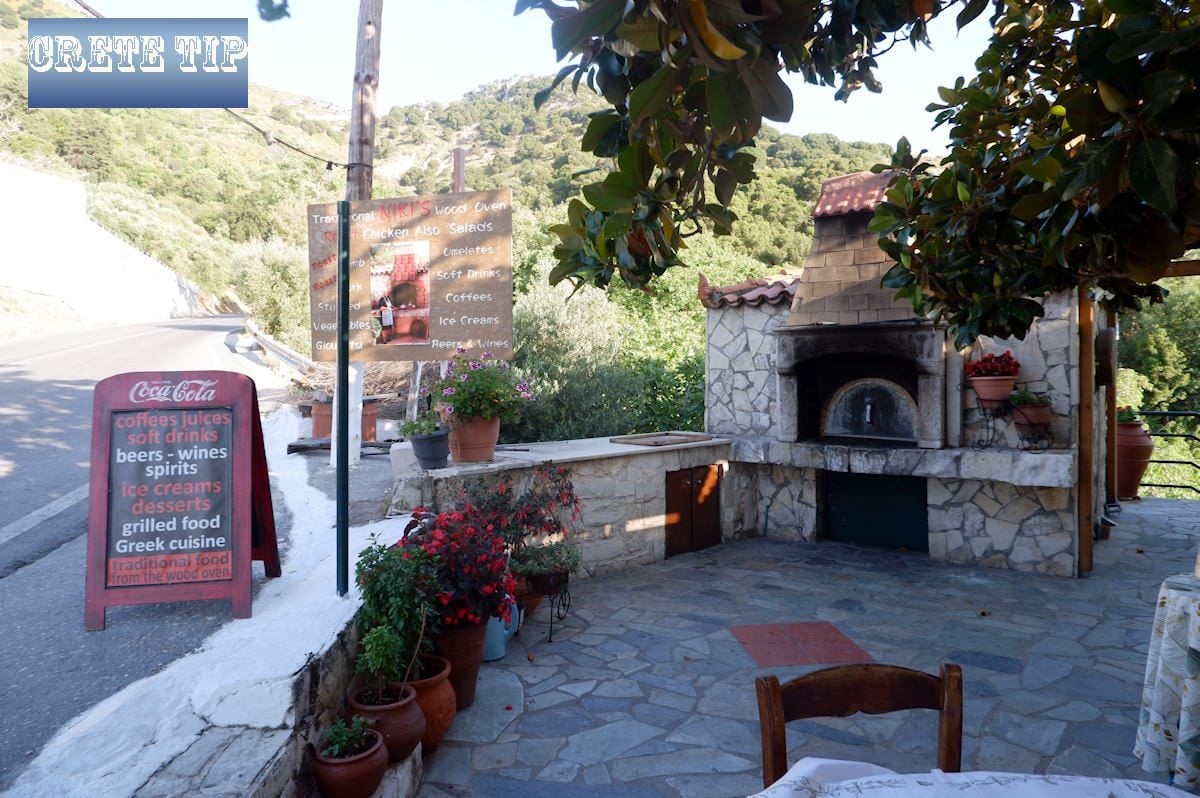
Watch how Cretans pick their restaurants. They take their time, stick to what they know, and trust habit more than hype.
Timing, Daily Specials, And Repeat Customers
Greeks eat lunch late, usually from 2pm onwards. Dinner starts even later, and you’ll rarely see locals eating before 9pm.
Busiest tourist restaurants in Crete fill up around 7pm. Visitors tend to stick to northern European schedules, so if you show up closer to local times, you’ll find yourself among locals instead.
Daily specials? That’s the real menu at any good Cretan taverna. The kitchen cooks whatever they bought fresh that morning, and you can feel their confidence in those dishes.
Honestly, asking, “What’s the special today?” before glancing at the printed menu is your best move at an unfamiliar taverna.
Roadside, Village, And Mountain Options
The Cretan road network winds through hundreds of small villages. Often, one kafeneion or taverna serves everyone nearby.
These places aren’t designed for tourists, but they cook for their neighbors and regulars. That keeps standards honest.
Mountain areas—especially inland from the north coast and around the Lassithi Plateau—offer some of the island’s most straightforwardly good food. The ingredients are close, kitchens are small, and menus just reflect what’s actually available locally.

Reading The Room Before Ordering
Before you order, take a look around. Do you see local families with kids eating lunch? People who look like they live nearby, not just folks fresh from a resort?
Most tables eating mezedes rather than separate main courses? These are all good signs.
If a kitchen attracts locals as well as tourists, that’s the strongest quality check you’ll get. If every table is full of sunburnt northern Europeans in matching beachwear, maybe keep walking.
A Smarter Approach To Finding A Worthwhile Meal

Finding a good meal on Crete isn’t about endless research. It’s more about asking the right questions at the right moment.
Questions To Ask Before You Commit
Before you sit down somewhere new, ask a couple of quick questions. What fish came in today? Is the wine local? What does the kitchen recommend?
The speed and detail of the answer tell you a lot. If the waiter answers right away and with specifics, you’re in a place that knows what it’s doing.
If the answer is vague or they consult a laminated sheet, well, you might want to reconsider.
When To Leave A Busy Strip Behind
It’s tempting to eat on the main strip because it looks lively. But honestly, busy tourist strips are packed because they’re easy to find, not because the food’s any good.
Foot traffic fills tables, but it doesn’t guarantee quality in the kitchen. Walk five minutes inland from any busy harbourfront in Crete and you’ll usually find a whole new set of options.
Take Chania, for example. Move away from the front row of the port and you’ll discover real family-run spots. The restaurants on quieter streets survive because locals choose them, not because they’re visible.
This is where you’ll find the most authentic Cretan food at fair prices.
Using CreteTip Restaurant Mentions Carefully
CreteTip covers Cretan travel, local life, and practical island knowledge from someone who’s lived on Crete since 2004. When restaurants come up in the editorial content at www.cretetip.com, it’s because they fit the context of a place or route—not because of paid promos or generic lists.
A passing mention from someone with real, long-term local experience is worth more than a TripAdvisor ranking in my book. Use it as a starting point for an area, then do your own checks once you’re there.
Frequently Asked Questions

How can I spot a tourist-trap restaurant while dining out in Crete?
Watch for an active host at the door, menus with lots of photos in several languages, and a waterfront or main-square location. One of these is a caution sign; all three together almost always mean you’re looking at a high-turnover tourist place, not a kitchen with real local standing.
Which areas in Crete are most worth avoiding for overpriced, low-quality meals?
The harbourfront strips in Chania, Rethymno, Agios Nikolaos, and any road leading to a famous beach have the highest concentration of tourist-facing restaurants.
What are the most common warning signs of a restaurant trying to rip off tourists in Greece?
If bread or water arrives unasked-for and then shows up on your bill, that’s a red flag. Prices shown only in tourist currencies, no Greek menu, or seafood listed as fresh when no local boats have been out are all warning signs too.
It’s always smart to check your bill carefully before paying.
How can I find authentic tavernas in Crete that locals actually eat at?
Walk a couple of streets back from any main tourist strip. Look for small, simply decorated rooms with handwritten or chalkboard menus.
If you see mostly local families eating at 2pm or after 9pm, you’ve probably found a genuine local spot.
Is it normal to seat yourself at restaurants in Crete, or should you wait to be shown a table?
At small village tavernas and kafeneions, just seat yourself—it’s normal. At more formal or busy places, wait a moment near the entrance until someone greets you.
If nobody comes, go ahead and sit. Service in Crete is relaxed, so don’t stress about it.
What should I check on the menu and bill to avoid surprise charges in Cretan restaurants?
Check if bread, water, and any spreads or mezedes that show up at your table actually cost extra. Some places add these to the bill without saying a word.
Ask about the price of fish by weight before you order. Usually, restaurants list fish prices per 100g or per kilo, not by portion, so it’s easy to get tripped up.
In traditional tavernas, you can also agree on a total price for the set menu – including all your special requests – in advance. Then you won’t have to worry about tipping!
When the bill comes, take a moment to make sure it matches what you actually ordered. Don’t just glance at it and pay—mistakes (or surprises) happen more often than you’d think.