

Renting a car in Crete is honestly one of the best choices you’ll make on the island. Finding a reliable Crete car rental really sets the tone for your whole holiday.

But let’s be real—if you know what car rental scams to look out for in Crete, you’ll keep your trip a lot more relaxed.
The freedom to leave the coast road, wind up into the Dikti Mountains, or follow a sign toward a village that never makes it into the brochures? That’s hard to beat.
Most rentals go without a hitch. Still, enough people run into issues that it’s worth taking a few precautions up front.
The issues that catch people out tend not to be random, they follow a pattern: a charge you did not expect at pickup, pressure over insurance you may not need, a scratch that somehow appeared after you returned the car.
Knowing where in the rental journey these moments usually show up is most of the battle.
This guide follows that journey step by step. We’ll look at what to check before you book, what to do at the pickup desk, how to handle problems on the road, and what to do if a charge pops up on your card after you’ve flown home.
How The Most Common Problems Usually Happen
The most common problems all have a similar thread: they depend on a gap between what you agreed in writing and what gets claimed at the desk.
If you know where those gaps appear, closing them gets much easier.
Unexpected Charges At Pickup
You booked online, got your confirmation, and show up at the desk expecting to collect your car. Suddenly, there’s a list of extras: airport surcharges, handling fees, young driver fees, GPS charges, and “mandatory” insurance top-ups—sometimes adding 40 to 60 percent to the online rate.
Some of these fees are legit—airports do charge agencies, and that cost gets passed on. But others, like a “processing fee” for a booking you’ve already paid, deserve a direct challenge.
Always ask for a full written breakdown before you sign anything. If the total at the desk is way higher than your booking confirmation, don’t let anyone rush you.
Insurance Upselling Under Pressure
Almost every standard rental in Crete comes with a Collision Damage Waiver (CDW), but there’s an excess—often between 800 and 2,500 euros. Basic CDW usually covers the bodywork but skips a lot of other parts. Agents love to upsell “Super CDW” or “Full Protection” to cut that excess, for 8 to 25 euros per day. It’s pitched as full damage waiver, no financial risk, total peace of mind. Tempting, right?
The pressure ramps up when the agent mentions mountain roads or remote villages. What they almost never say: many travel credit cards already include rental excess cover, and so do some annual travel insurance policies.
Check your card and travel insurance before you even walk up to the desk. If you’re covered, just say so and decline the upsell—no need for drama.
Damage Claims After Return
This is probably the most common complaint from Crete visitors. You return the car, hand over the keys, and days later, a charge lands for a scratch or dent that was already there.
The paper damage sheet is part of the issue. The tiny car diagram can’t possibly show every mark, and anything not marked becomes your responsibility. After a few seasons on Cretan roads, most cars have plenty of small dings the sheet doesn’t show.
Document everything at pickup—photos, video, whatever you need. It’s your best defense.
Fuel And Cleaning Fee Disputes
Full-to-empty fuel policies are everywhere on Crete. You get a full tank, return it however you want, and pay upfront for the whole thing—no refund for leftover fuel. Most people don’t burn through a full tank in two weeks, so the agency pockets the rest.
Finding a provider with a fair fuel policy can save you real money. Cleaning fees can also pop up for what most would call normal use. Ask at pickup what “clean” means and what triggers a fee—better to know up front.
What To Check Before You Book
The contract terms that cause the most grief are usually visible before you book—if you know where to look. When searching for a Crete car rental, check out local companies like Roadcrete with a reputation for transparency.
There are four areas you really want to read carefully before confirming anything.
Excess Amounts And Deposit Rules
The excess is what you pay before CDW kicks in. Find this number and write it down. See if they hold the excess as a deposit at pickup, and whether that’s taken from a credit or debit card.
Lots of agencies won’t take debit cards, or they’ll want a bigger deposit if you use one. Holds of 500 to 1,500 euros are standard, but some ask more for SUVs. If your card is close to its limit, this can really mess things up at the counter.
Mileage Limits And Extra Driver Costs
Unlimited mileage is common but not guaranteed. Some smaller agencies cap you at 150 to 200 kilometres per day, with a per-kilometre fee if you go over. On Crete, a round trip to the Lassithi Plateau from Heraklion can hit 150 kilometres before lunch.
Extra driver fees range from nothing to about 12 euros per day. If you’ll share the driving, ask about this cost before you book.
Fuel Policy Wording
Look for ” full to full” or ” full to empty” in the contract. Full to full: you get a full tank, return it full. Full to empty: you pay for the tank up front, return it however, and don’t get money back for leftover fuel.
Most people (including me) think full to full is the only fair way. If the agency only does full to empty, add the likely fuel surplus to your total cost before comparing.
Airport Delivery And Out Of Hours Fees
Picking up or dropping off outside standard hours often costs extra. Some agencies charge 20 to 40 euros for out-of-hours collection, and this barely shows up in the booking summary.
If your flight arrives late at night or early morning, check this fee before you confirm. Airport pickup can also mean a delivery or concession fee on top of the airport surcharge. Always ask for a full breakdown.
Red Flags In The Rental Agreement
Rental agreements that cause headaches usually show their true colors before you sign—if you read the right sections. Here are four areas where vague or unfair language pops up most.
Vague Damage Clauses
If a clause says you’re responsible for “any damage not noted at pickup” without explaining how damage is recorded, that’s a red flag. If the agency uses a tiny paper diagram that can’t possibly capture every scratch, that vagueness works against you.
Ask how they document pre-existing damage and whether you can add your own notes or photos. A good agency won’t have a problem with that.
Missing Breakdown Terms
Some contracts include road assistance language that sounds great but doesn’t actually help on Cretan roads. If the policy only covers “sealed national and regional roads,” you’re out of luck if you break down on a dirt track to a remote beach or a mountain village—which, let’s be honest, is where breakdowns often happen.
Look for clear details on what’s excluded. If it’s not spelled out, ask and get the answer in writing.
Territorial Restrictions Across Crete
Most Crete rental agreements limit driving to paved roads, and some restrict certain regions. Taking your car to specific areas or hopping on a ferry to another island can void your cover entirely.
If you’re planning to visit the far east around Ierapetra, remote southern villages, or any ferry crossing, check if the agreement allows it before you go.
Unclear Payment And Refund Language
If the contract doesn’t clearly state when a deposit hold will be released, or how to dispute a post-return charge, you should get that clarified before signing. “Within a reasonable time” doesn’t really mean much.
Ask for a specific timeframe for the hold release—usually 7 to 14 business days works—and get the dispute process confirmed in writing.
Protecting Yourself At Pickup

The five to ten minutes you spend at pickup really matter. What you document now is what you can prove later.
Photographing The Vehicle Properly
Walk around the entire car and photograph every panel: front, rear, both sides, and wheel arches. Get close enough to catch small chips or scuffs.
Take photos of each wheel, focusing on the rims. Then record a short video as you walk around, narrating as you go.
The video gives context and sequence that photos alone can’t always show. Email both the photos and video to yourself right away for a clear, independent timestamp.
Recording Existing Scratches And Tyre Condition
Every visible mark should go on the paper damage form. Don’t let the agent brush off a small chip—ask them to initial next to each mark, no matter how minor.
If they resist, make a note of it. Check the tyres too; worn tyres are a pre-existing issue, and you shouldn’t be held responsible for them.
Look at the tread on all four wheels before accepting the car.
Checking Glass Underside And Interior
Windscreen chips often lead to post-return charges. Walk around and check the entire windscreen for chips before you accept the car.
Check all windows, including the rear. The undercarriage and interior are usually left off standard damage sheets, so take your own photos of any stains, tears, or undercarriage scrapes—even if the form has no space for them.
Confirming Emergency Contacts
Before you leave the desk, confirm which number to call if you break down, have an accident, or need to report a problem. Get this info in writing or snap a photo of it from the contract.
Also check if there’s a local office number and a 24-hour line. If you’re heading out to remote roads or the southern coast, it’s good to know who to contact before you need help.
Handling Problems During The Hire

Problems on the road can feel more stressful than they really are. If you know what to do ahead of time, you can stay calm and protect yourself.
What To Do After A Minor Accident
Even a small bump or scrape needs to be documented right away. Photograph the damage on your vehicle and the other car if one’s involved.
Note the time, location, and any witnesses. Don’t agree to settle things informally—contact your rental agency first.
Call the agency as soon as it’s safe. Most contracts require you to report any accident within a set time, often 24 hours, and missing this can affect your coverage.
Get a reference number for your report.
Breakdowns On Remote Roads
Breakdowns on unmarked or gravel roads might not be covered by standard roadside assistance. Before you drive on anything unpaved, double-check the exclusions—this is where lots of roadside policies fall short.
If you break down somewhere remote, call the agency, note your GPS coordinates, and stay with the car. Mobile coverage in the Cretan interior can be patchy, so save the number offline before you head out.
Punctures Undercarriage And Gravel Track Issues
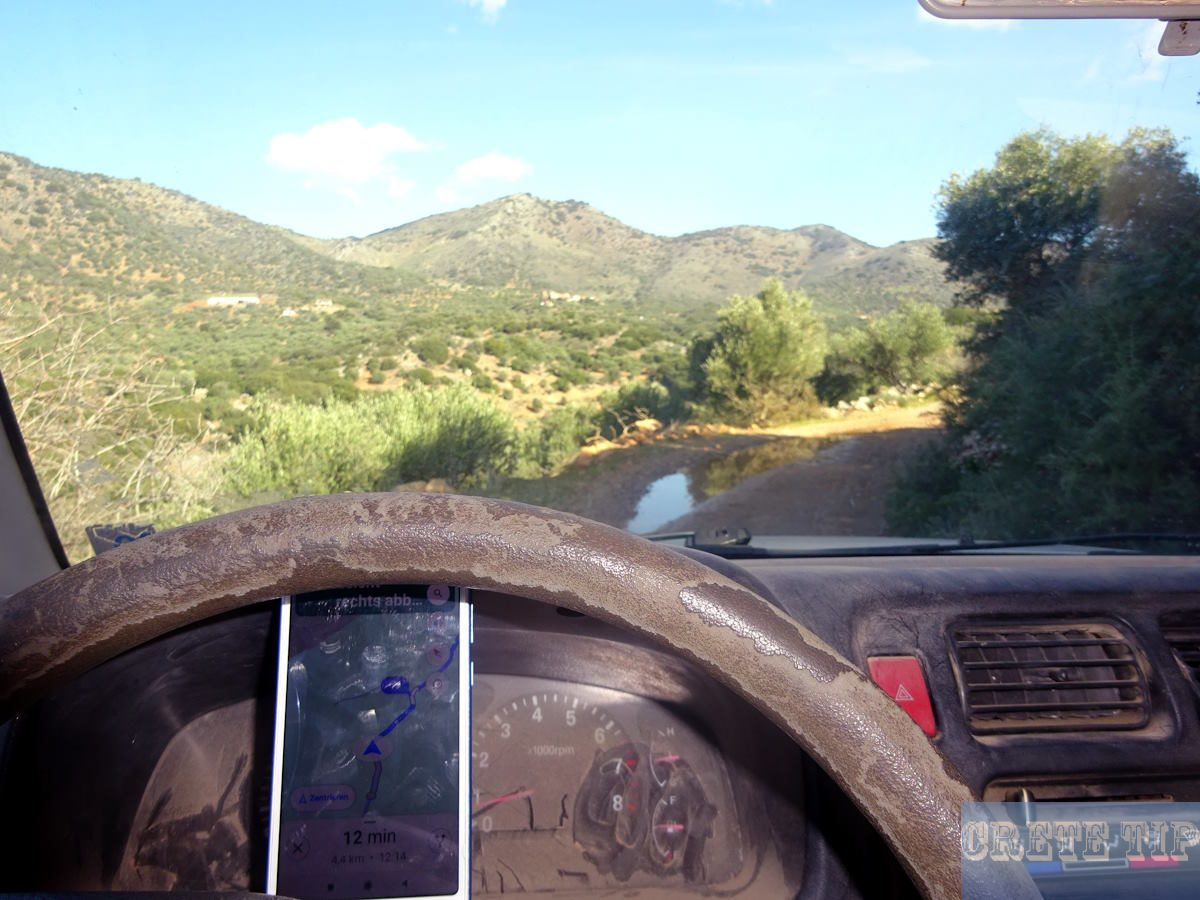
Crete’s remote roads are stunning, but many are unsurfaced. Gravel tracks to southern beaches, mountain villages, and archaeological sites are part of the adventure—but they’re also where tyre damage and undercarriage scrapes happen most.
Check if your contract covers tyres and undercarriage damage before you leave sealed roads. Many Super CDW policies exclude these, even when they’re sold as “full protection.”
If you plan to explore off-road, make sure you know what is and isn’t covered.
Keeping Evidence Of Conversations
If you need to call the agency during the hire, follow up each phone call with a short email or text summarising what was said. This gives you a written record that’s harder to dispute later.
Keep all paperwork: the agreement, receipts, your pickup photos, and any messages with the agency. If a dispute comes up after return, this paper trail is your best friend.
Returning The Car Without Trouble

Give the return as much care as the pickup. Rushing this step is where a lot of headaches start.
Timing Fuel And Final Inspection
If your contract is full to full, fill up at a petrol station near the return point and keep the receipt. Arriving with a full tank but no receipt leaves you open to claims you didn’t return it full.
Don’t just drop the car off and leave. Wait for a staff member to walk around the vehicle with you—a return without a joint inspection gives you no protection against later charges.
Getting Written Sign Off
Ask for written confirmation that the car’s been returned and accepted in good condition. This could be a stamped receipt, an email, or a note on your contract.
“We’ll check it later” isn’t enough. If the agent says everything’s fine but won’t put it in writing, take another round of photos at drop-off, with the agent and the return location in the frame.
Disputing New Charges Calmly
If you’re presented with a charge at return you don’t recognise or agree with, stay calm and ask for a written breakdown. Don’t sign anything you don’t understand, and don’t let a queue or a flight make you rush.
Ask exactly what the charge is for, how it was found, and where it’s in your contract. If you can’t resolve it at the desk, write everything down and continue the dispute through your card provider.
When A Card Charge Appears Later
Post-return charges aren’t rare in Crete. If a charge pops up on your card days or weeks after return, contact the agency first and get their explanation in writing if you can.
If the charge seems unfair or you can disprove it with your pickup photos or return sign-off, file a formal dispute with your card provider. Attach your timestamped photos, the original contract, and any written communication. Most UK credit card providers handle these cases under Section 75 of the Consumer Credit Act if you paid with a credit card.
Frequently Asked Questions
How can I spot hidden charges before I sign a rental agreement?
Ask the agency to list every charge in writing before you confirm—not just the daily rate. Look for things like airport surcharges, fuel policy, extra driver fees, and excess deposit amounts.
If the total on the contract is much higher than your booking summary, ask for a line-by-line breakdown before you sign. This is a common way to avoid last-minute car rental scams in Crete.
What should I check on the car to avoid being blamed for existing damage?
Photograph every exterior panel, all four wheels, the windscreen, and the interior before you take the car. Ask the agent to initial next to each mark on the damage sheet, and email your photos to yourself for a timestamped record.
Tyre condition and windscreen chips are the two things most often missed during a fast walkaround.
Which insurance options are genuinely worth taking, and which are often oversold?
Standard CDW insurance is mandatory, but you’ll probably be offered a full damage waiver at the desk. Check if it really covers everything for peace of mind.
Look at your travel credit card and annual travel insurance before you arrive—many already include rental excess cover. If not, a third-party excess policy bought before your trip is usually cheaper than the agency’s Super CDW add-on. Just be aware that even “full protection” from rental companies often excludes tyres, windscreens, and undercarriage damage.
Are there warning signs that a low price online might not be legitimate?
If you see a daily rate way below competitors, look closer. Check if the price includes CDW, see the fuel policy, and make sure the excess is stated.
Reviews mentioning surprise charges at pickup tell you more than star ratings ever will.
What can I do if I’m pressured to pay extra at the pickup desk?
Ask for the charge in writing and check if it’s in your original booking confirmation. You’re allowed to take your time reading what you’re asked to sign.
If the pressure keeps up and the charge doesn’t seem legit, note it, photograph the desk documents, and sort it out calmly with your card provider after the trip. Don’t let yourself be rushed at the desk.
How do I handle a disputed damage claim after I’ve returned the car?
Start by gathering your pickup photos and the return sign-off. Don’t forget to include any emails or messages you exchanged with the agency.
Reach out to the agency first. Share your evidence and ask for a response in writing.
If they’ve already charged your card and your timestamped photos prove the damage was already there, go ahead and file a formal dispute with your card provider. Make sure you include all the documentation you have.


