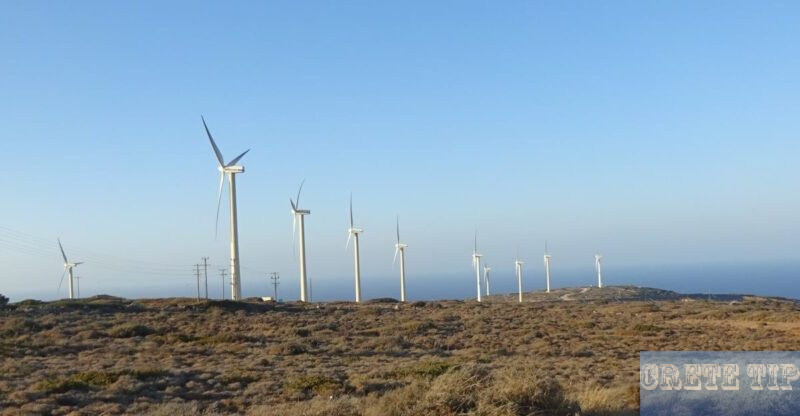
Wind turbines tend to divide opinion quite quickly. For some, they are the key to the energy transition and climate protection; others are concerned about health, the landscape and birds.
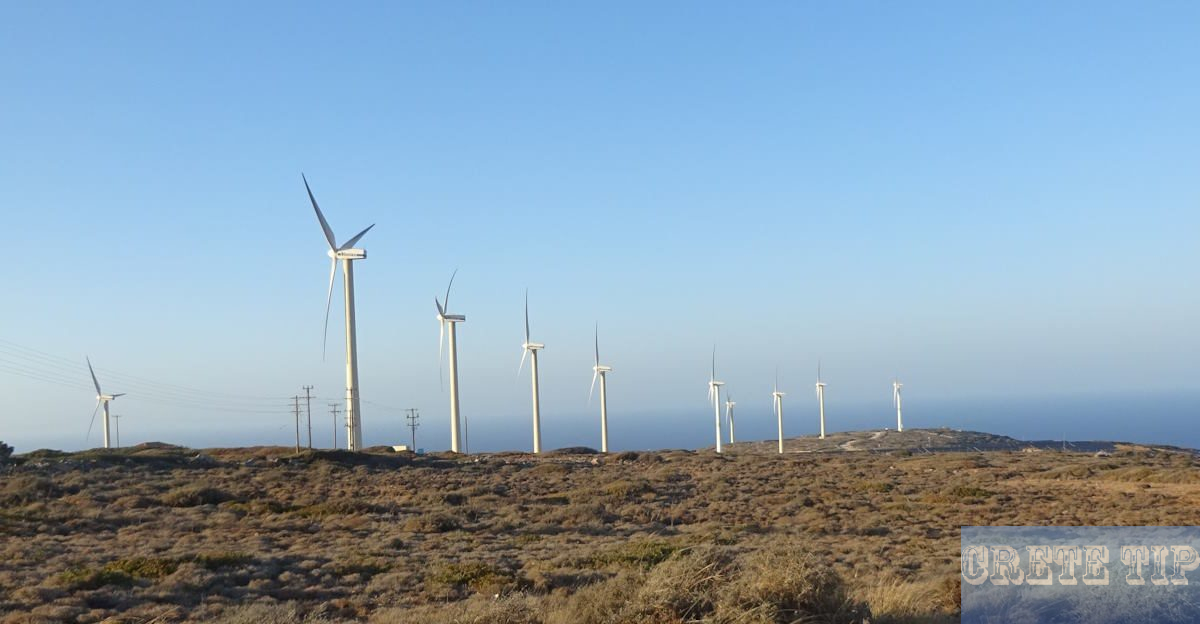
Those seeking guidance will find a more nuanced picture in the research than in the heated debates.
In Crete, there is an additional special aspect. The island is alive, full of migratory birds, delicate mountains, tourist-friendly coasts and people who are balancing energy needs against a sense of home.
Those who live there or know Crete well see this discussion through different eyes than someone who merely reads the figures.
Here is a wind energy fact check that examines the key claims. It focuses on how efficient wind power is – and what the research specifically says about Crete.
What the assessment is actually about

A fair assessment first requires clarity: what constitutes direct damage, and what are indirect consequences? Wind power lies somewhere between global benefits and local impact.
You also need to understand the limitations of scientific measurements.
Distinguishing between direct and indirect consequences
Direct consequences arise directly from the turbine: noise, collisions, land use. Indirect consequences are harder to pin down, such as changes in tourism, the local climate or the landscape.
These are often conflated in the debate. A wind farm that alters the landscape does not directly harm anyone, but it can have economic or emotional consequences.
Those who keep these things separate see more clearly.
What studies can really measure
Many studies measure what is actually measurable: noise levels, bird collisions, sleep quality at specific intervals. Long-term ecological shifts or the cumulative effects of multiple wind farms in a region are more difficult to capture.
This does not render studies useless, but you should assess their significance correctly. A study conducted in one location cannot simply be applied to Crete.
Why islands have different conditions
Islands such as Crete have smaller electricity grids, more confined geographical conditions and often more sensitive ecosystems than the mainland. Migratory birds fly directly across the sea; mountain ridges are both nature reserves and potential wind farm sites.
On an island, the visibility of wind turbines is almost impossible to avoid. What blends into the background on the mainland dominates entire mountain horizons in Crete.
This is not a deal-breaker, but an aspect that any good planning must take into account.
Nature and landscape in Crete

Crete has narrow gorges, high plateaus and dense coastlines, all within a small area. Interventions in nature and the landscape are particularly visible and have far-reaching consequences here.
Land use and impacts on habitats
The direct land use per wind turbine remains manageable. Around half a hectare is permanently sealed for construction and operation.
The environmental assessment also examines the potential impact of the foundations on groundwater.
In Crete, however, this intervention often affects sensitive terrain. Ecological construction supervision is particularly important for wind power projects in mountainous areas.
Mountain ridges in the west of the island provide a habitat for rare plants and animals. Interventions there carry greater weight than in fields or agricultural regions.
Access roads, grid connections and ancillary structures
In planning documents, access routes often take up little space, but in reality they are quite conspicuous. Every wind turbine requires a vehicle-accessible access road, often cutting across the terrain, as well as cable routes and substations.
In Crete, this regularly results in new tracks being cut through scrubland and mountains. These interventions usually remain longer than the actual footprint of the turbines and permanently alter remote areas.

Changes to the landscape in tourist regions
Crete thrives on tourism; many people come for the landscape. This is no minor issue.
Wind farms on mountain ridges, visible from beaches or hiking trails, alter the landscape permanently. Whether this is a nuisance is a matter of taste, but the economic dependence on the landscape is a real factor.
This should be addressed in environmental impact assessments. Wind power must somehow fit in here, even though Crete still needs energy – and most of that still comes from fossil fuels.
Risks to birds, bats and other animals

Crete lies directly on one of the most important migratory bird routes in the eastern Mediterranean. This makes bird strikes a very real issue here.
Risk of collision for migratory birds on Mediterranean routes
Every year, millions of birds migrate across the Mediterranean, many of them over Crete on their journey between Europe and Africa. Migratory birds often fly at night or in poor visibility and navigate differently to resident species.
Wind turbines on mountain ridges and passes, which are also gathering points for migratory birds, pose a real risk of collision. Studies show: The risk depends heavily on the location.
A wind turbine on a major migration route is significantly more problematic than one situated away from it.

Vulnerable species and breeding areas on the island
Crete is home to rare birds of prey such as bearded vultures and griffon vultures, which have large hunting ranges and often circle low over mountain peaks. It is precisely there that wind farms are often built, because that is where the wind blows strongest.
Bats are also affected. The risk can be significantly reduced if turbines are switched off at night during peak flight times – this is already mandatory in some countries.
Although this measure reduces output, it has been proven to work.
Which protective measures have been proven to be effective
The most important factor is site selection. Wind turbines located away from main migration routes, breeding grounds and resting places cause significantly less harm.
In addition, time-controlled shutdowns during certain weather conditions or camera systems that detect large birds and automatically stop the rotors are helpful. These technologies exist, but they are not mandatory everywhere.
Consistent use would be particularly sensible in Crete.
Health effects on humans
Many people wonder whether wind turbines make you ill – especially if they live or might live nearby. Research now provides much clearer answers to this question than is often thought.
Noise, infrasound and sleep disturbances
Wind turbines make noise; there’s no denying that. Modern turbines are quieter than the old ones, but at night, when it gets quieter, you can often still hear them near residential areas.
Infrasound – that is, sound waves below the hearing threshold – keeps cropping up as an alleged health hazard. However, measurements show that from a distance of around 700 metres, the infrasound from wind turbines is barely distinguishable from natural background noise.
Previous calculation errors by the BGR caused uncertainty at the time, but these have long since been corrected. Studies by the UBA and current analyses confirm that the physical effects are often overestimated; according to research, there is no evidence of health risks from infrasound.
What is well-documented and what is not
Noise above certain thresholds can disrupt sleep and cause stress. This applies not only to wind power, but also to road or aircraft noise.
Specific clinical symptoms directly attributable to wind turbines, however, are not really substantiated. The so-called wind turbine syndrome, which is sometimes described, can, as things stand, be explained more by the nocebo effect: those who expect to fall ill often actually feel worse – regardless of the actual exposure.
Distances, site selection and individual exposure
In Germany, a minimum distance of 1,000 metres from residential areas is often required. Whether this is sufficient depends on the landscape.
Mountains, such as those in Crete, can reflect sound differently to a flat plain. Individual sensitivity also plays a role.
People who live near a wind farm and do not feel informed or involved react noticeably more sensitively to noise. Public participation is therefore not just a matter of ethics, but also has a practical effect.
Special features of offshore wind farms in the Mediterranean

Offshore wind farms are currently few and far between in the Mediterranean, but they are in the planning stage. Such projects are conceivable for Crete, even though the water depths in the eastern Mediterranean make the technology significantly more complex than in the North Sea.
Differences from onshore wind farms
Offshore wind farms have several advantages over onshore wind farms. They are located further away from residential areas, the wind conditions at sea are more consistent and stronger, and the landscape usually remains untouched.
Technically, however, the Mediterranean poses a challenge. The sea is deep there, so floating foundations are required, and these are more expensive and complex than the pile foundations used in the North Sea.
This is why offshore projects in the Mediterranean have so far been barely competitive.
Potential consequences for marine ecosystems and fisheries
The impact of offshore wind farms on the sea is quite complex. On the one hand, foundations can act as artificial reefs and promote biodiversity.
On the other hand, pile-driving during construction disturbs marine mammals and fish with underwater noise. For the Cretan fishing industry, restricted zones around wind farms would represent a significant economic setback.
Small fishing businesses operating close to the coast are hit harder than large fleets.
Visibility, coastal landscape and acceptance
Offshore wind turbines are clearly visible from the coast. In Crete, where many people make a living from tourism, this is a real issue.
Experience from other regions shows that acceptance increases when local communities are given a financial stake. Information campaigns alone are rarely enough.
Those who have a say in planning and revenue often view the visibility differently from someone who simply has the installation imposed on them.
What a fair overall assessment might look like

An honest assessment of wind energy requires more than a simple yes or no. Precisely because the energy transition and climate protection are becoming increasingly urgent, the benefits and impacts must be weighed up in concrete terms.
Weighing up climate benefits against local impacts
Over its lifecycle, a modern wind turbine emits around 9 to 11 grams of CO2 per kilowatt-hour generated. By comparison: natural gas emits over 400 grams, and hard coal almost 900 grams.
The carbon footprint is therefore really good compared to fossil fuels. The climate benefits are measurable and real.
At the same time, there are local environmental impacts that vary depending on the location. In Crete, which is heavily dependent on oil imports, the benefits of renewable energy are particularly important.
Wind power can significantly reduce dependence on fossil fuels here. Nevertheless, nature, tourism and quality of life must not simply be neglected.
Nevertheless, tourism, with all its air conditioning, consumes a great deal of electricity on the island, and the trend is towards more rather than less. And the island offers an extremely high number of days with strong winds – as well as sunshine for solar energy – but when clouds roll over Crete in winter, the ‘supply’ also becomes uncertain.

When projects become disproportionately problematic
A wind farm project becomes particularly problematic when it is planned in sensitive ecosystems without seriously considering alternatives. This applies above all to Natura 2000 sites, migratory bird routes and breeding grounds of rare species.
A lack of public participation or sloppy environmental assessments also make projects vulnerable – not only politically, but also legally. In Greece and on Crete, there have been frequent criticisms that approval procedures are too fast and lack transparency.
What citizens should look out for during planning and assessment
If a wind farm project is announced in your area, it is worth actually reading the environmental impact assessment – not just the summary sheet. Pay particular attention to these points:
- Have migratory bird routes and breeding grounds been mapped?
- Is there a noise forecast for different wind conditions?
- What distances from residential buildings are planned?
- Is monitoring planned after commissioning?
- What decommissioning obligations apply at the end of the operational period?
Those who ask these questions engage in a more objective debate than those who simply take a blanket stance for or against wind power.
Frequently Asked Questions
How do wind turbines affect the health of local residents?
According to current research, there is no reliable evidence that wind turbines cause direct physical harm provided that the applicable distances are observed. Complaints that are reported are often linked to the so-called nocebo effect – that is, the expectation of negative effects.
Noise above certain thresholds can affect sleep and well-being. That is why issues of distance and location are important.
How loud are wind turbines in practice, and from what distance are they perceived as a nuisance?
Modern wind turbines produce a sound level at a distance of 500 metres that is roughly as loud as the soft hum of a library.
At night, when it is generally quieter, some people find this disturbing.
From a distance of around 1,000 metres, most people can barely hear the sound.
What impact do wind turbines have on birds and bats, and how can the risk be reduced?
Wind turbines can kill birds and bats through collisions, but the risk depends heavily on the location. In Crete, which lies on a major migratory bird route, site selection is particularly crucial.
Time-controlled shutdowns during peak migration periods and during the hours when bats are most active help to significantly reduce the risk.
Do wind turbines generate infrasound, and what does the research say about possible consequences?
Wind turbines generate infrasound, but from a distance of around 700 metres, it can no longer be distinguished from natural background noise. Expert reports and studies consistently conclude that infrasound from wind turbines does not pose a demonstrable health risk.
Even at closer distances, no measurable additional impact has been demonstrated to date.
How significant is the impact on nature and the landscape during the construction and operation of wind farms?
A single turbine permanently occupies around half a hectare of land. During the construction phase, additional temporary areas are required.
Even more problematic are often the access roads, cable routes and ancillary structures. In Crete, these can run through previously untouched mountainous terrain.
The landscape changes noticeably. This is particularly striking in tourist-oriented regions with mountain ridges visible from afar.
How are wind turbines dismantled at the end of their operational life and what happens to the rotor blades?
Wind turbines usually reach the end of their operational life after around 20 to 30 years. Then it is time for dismantling.
Around 90 per cent of the materials can be recycled. However, the rotor blades pose a real headache because they are made of complex composite materials.
Experts are currently working on better recycling solutions for these parts. Although disposal options do exist, is completely pollutant-free recycling a reality? Unfortunately, that is not yet a given.
Sources: