

Newsflash from Monday, 12 October 2026:
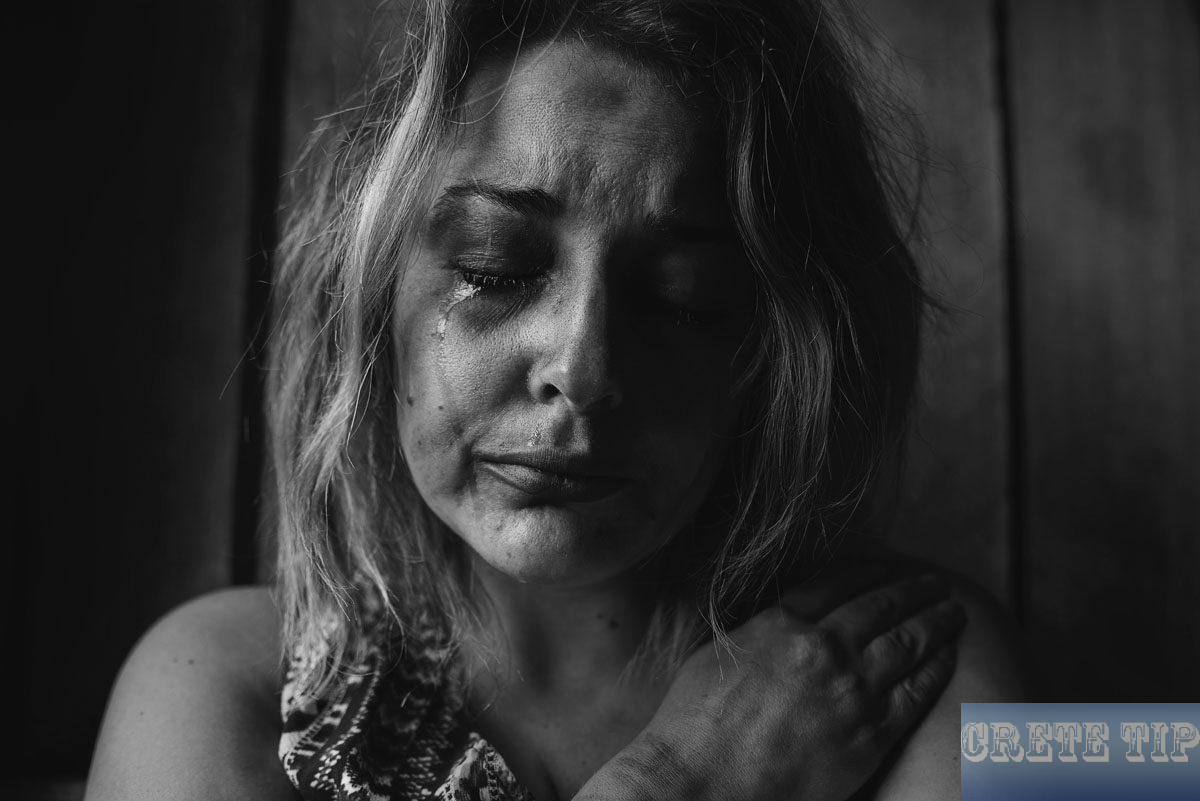
Behind Closed Doors: Recognizing the Warning Signs of Domestic Abuse in Greece
An abusive relationship can take root long before any physical violence appears. Controlling behavior, isolation, and constant surveillance are often the earliest warning signs — and experts say they deserve far more attention than they typically receive.
Katerina Aslanoglou, a psychologist at the Diotima Centre (an organization providing specialized support to women experiencing gender-based violence), spoke to the Athens-Macedonian News Agency about how early signs of an abusive relationship can be identified — and why the period surrounding a breakup can be especially dangerous.
Early warning signs to watch for
According to Aslanoglou, a pattern of control often builds gradually and can include:
- Excessive jealousy and possessiveness, especially demands to constantly know a partner’s whereabouts and company.
- Isolation from friends and family, including efforts to limit contact with trusted people.
- Digital surveillance — monitoring a partner’s phone and social media, or demanding access to passwords.
- Systematic belittling and humiliation, even when disguised as “jokes.”
- Threats, intimidation, or destruction of property, particularly as a reaction to disagreement or boundary-setting.
- Financial control or enforced economic dependence.
- Violation of personal or sexual boundaries.
“It’s particularly important to observe how a person reacts when their partner disagrees, says ‘no,’ or sets a boundary,” Aslanoglou notes.
No single behavior on its own guarantees future physical violence, she explains — but when these patterns combine and escalate over time, they form a recognizable cycle of control.
As she puts it: “A healthy relationship can withstand a ‘no,’ disagreement, and the other person’s autonomy. It doesn’t need fear to survive.”
When risk becomes more serious
Certain factors signal a higher level of danger, according to Aslanoglou, including:
- Previous incidents of physical violence
- Threats to kill or injure the partner
- Access to weapons
- Stalking or persistent surveillance
- Violation of restraining orders
The period when a woman is trying to leave a relationship — or has just left — can be especially critical, particularly if control, intimidation, or violence occurred beforehand.
Threats, repeated calls, and pressure to reconcile can simply be a continuation of the same controlling behavior.
‘Love’ is put forward as an argument, and in some sections of society this is repeatedly trivialised as ‘drama’.
“This doesn’t mean separation causes the violence. Responsibility for the violence lies solely with the perpetrator,” Aslanoglou clarifies — which is why she stresses that telling someone to “just leave” is not enough. Safe departures, she says, should ideally be planned with the help of specialized services, taking into account children, support networks, and potential post-separation risks.
The numbers behind the headlines
Data from the Hellenic Police paints a sobering national picture. From January through August 2026, 14,519 incidents of domestic violence were reported to police authorities, resulting in 8,920 arrests.
During the same period, 14,978 people were recorded as perpetrators of domestic violence offenses — 11,950 men and 3,028 women.
Since the Panic Button app launched in March 2023, 15,113 women and 1,470 men have registered, with 2,935 automated alerts sent to police following activations through the end of August 2026.
These figures reflect only reported cases reaching authorities and do not capture the full scope of domestic violence.
Crete’s Domestic Violence Numbers Keep Climbing — Psychologist Explains Why

New data from a regional watchdog group is raising fresh alarm about domestic violence across Crete, with figures showing another increase in reported cases for 2025.
The findings come from the 6th report of the “WOMEN_WATCH” Observatory for Violence Against Women, run by the Association of Members of Women’s Associations of Heraklion and the Heraklion Regional Unit. The report covers the period July–December 2025.
The numbers across Crete
Overall, 1,103 incidents of domestic violence were recorded across the Region of Crete in 2025, up from 1,047 in 2024. Of these, 592 cases involved women as victims — 53.7% of the total.
Broken down by regional unit:
- Rethymno (a city and region on Crete’s north coast): 73 incidents, down from 111 in 2024 and up from 44 in 2023.
- Heraklion (Crete’s largest city and regional capital): 320 incidents involving women victims, down from 379 in 2024 but up sharply from 211 in 2023.
- Chania (a city and region in western Crete): 153 incidents, down from 175 in 2024, and unchanged from 175 in 2023.
- Lasithi (the easternmost regional unit of Crete): 46 incidents, down from 51 in 2024 and up from 39 in 2023.
According to the report, the rise in complaints first recorded in 2024 was not fully reversed in 2025 — a trend that may reflect either a continuation of the underlying problem, or growing confidence among victims to come forward and report.
“An extremely complex social phenomenon”
Speaking to the newspaper “Rethemnos,” psychologist Chrysoula Papadaki described domestic violence as a deeply layered issue shaped by psychological, social, economic, and cultural factors.
Papadaki points to several underlying drivers:
- A need to control a partner or family member and avoid personal responsibility — with many incidents rooted more in power and control than in anger itself.
- Learned behavior: people raised in environments where violence was common and treated as an acceptable way to resolve conflict often unconsciously repeat this pattern, becoming either victims or perpetrators themselves.
- Poor emotional regulation, combined with psychological and financial stress.
- Substance abuse, particularly excessive alcohol consumption, which can lower inhibitions, increase impulsivity, and worsen existing violent tendencies.
Importantly, Papadaki notes that much of the apparent “rise” in cases may actually reflect better reporting rather than a genuine surge in violence. Increased public awareness, education campaigns, and access to helplines mean more incidents are now being recorded as they truly occur.
“Society, and even close family circles, have stopped treating incidents of violence as a ‘marital spat’ or a ‘private matter,’ and are instead encouraging victims to speak out,” she said.
“If someone notices something — don’t look away”
Asked how such a widespread issue can be properly addressed, Papadaki stressed that tackling domestic violence isn’t simply about protecting victims or punishing perpetrators.
The real goal, she said, is awareness and prevention — stopping the cycle before it produces new victims and new perpetrators. This means focusing on several areas simultaneously: education and prevention, legal frameworks, support and reintegration structures for both victims and perpetrators, and broader societal responsibility.
“It’s extremely important to break this cycle of violence before it even begins,” Papadaki said. “Children need to be systematically educated in school about equality, healthy relationships, setting boundaries, and — without question — managing anger.”
She added that traditional, historically rooted beliefs placing men in a dominant role need to be re-examined and renegotiated as part of this broader shift.
What does this mean for emigrants?
If you live in or are visiting Crete and need support — whether for yourself or someone you know — it helps to understand local resources available.
- Emergency situations: In case of immediate danger, call 100 (Greek police emergency number).
- No need to wait: Aslanoglou stresses that a woman does not need to experience physical violence before seeking help — early warning signs are reason enough to reach out.
- Support networks matter: If someone confides in you, listen without judgment — avoid questions like “why don’t you just leave?”, which can feel dismissive of real barriers like isolation, financial dependence, fear, or children involved.
- Language barriers: If you’re a foreign resident or tourist facing these issues, consider contacting your embassy or consulate for guidance on local resources in English or your native language.
- Staying in a relationship is not consent: As Aslanoglou puts it, remaining in an abusive relationship does not mean a person is accepting the abuse — circumstances often limit available choices.
Sources:
CretaLive
Rethemnos News


