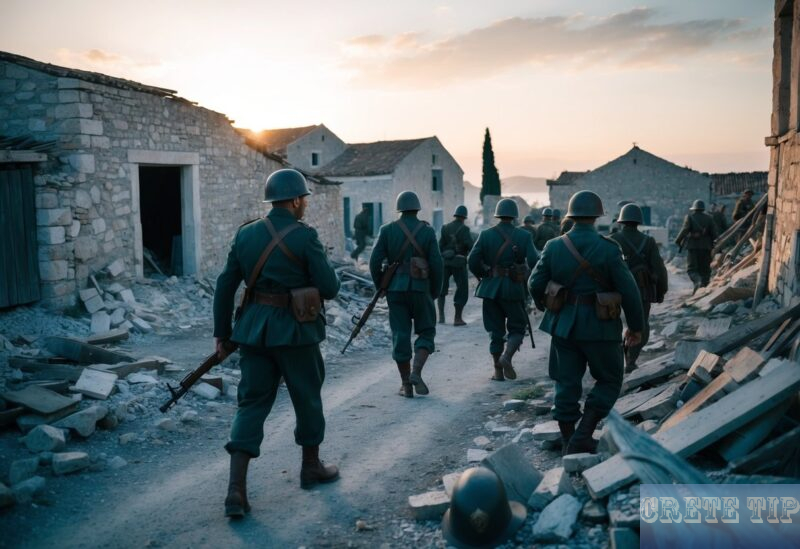
“Life is too short to waste it on blood and war”: Living alongside the Ottomans at Christmas 1896.
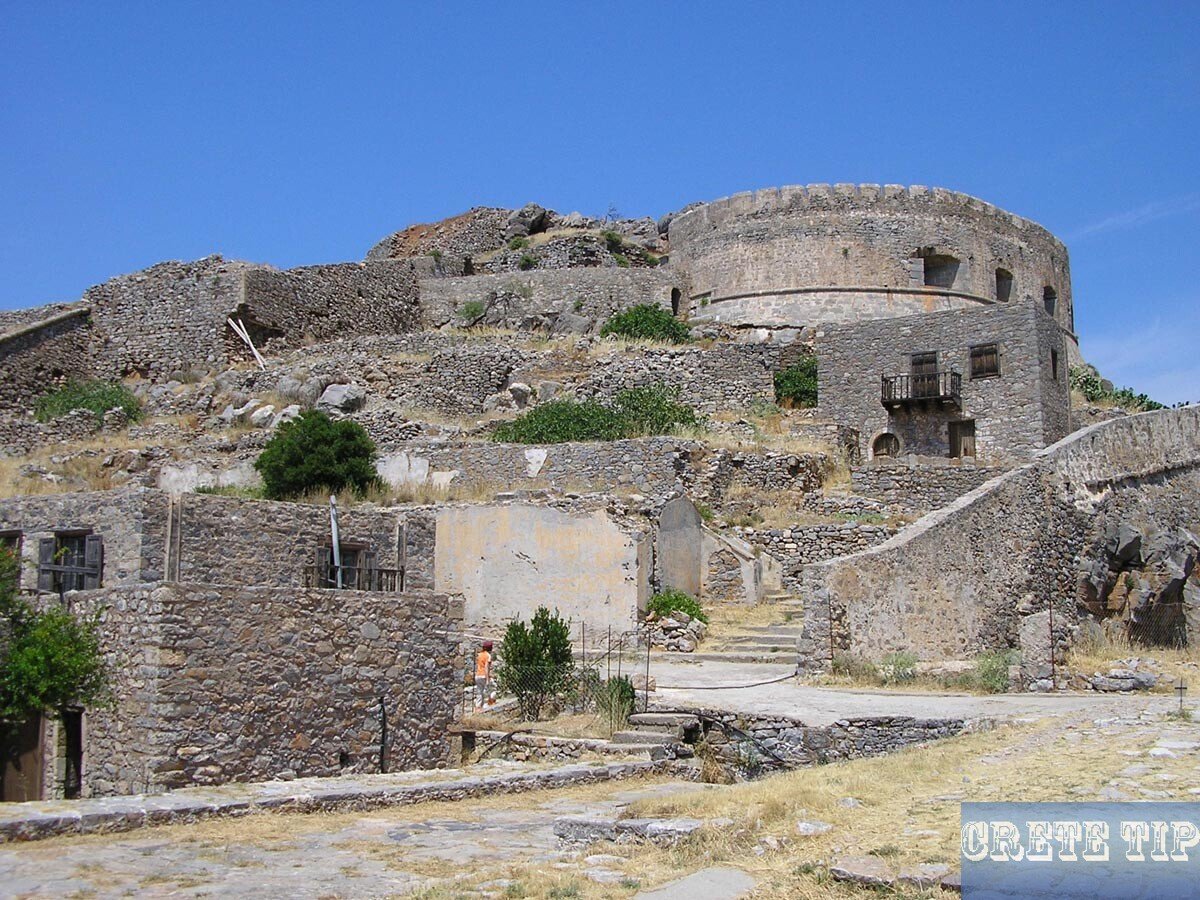
In the upper village, the men often sat together and pondered. Christmas was just around the corner, and they had to bring their gifts to Sekir Aga in the coastal fort.
The time of uprisings and bloodshed was over, at least for the moment. Most preferred peace and trade to strife and fighting.
The community had been living with the Ottomans for years now. This brought peace and secure business.
Oil, almonds, carob and even grindstones filled the pockets of those who traded wisely. Trade with distant ports such as Marseille, Smyrna and Constantinople was booming, as long as the sailing boats were fast enough.
Sekir Aga Papoutsoglou was considered a respected Ottoman official in the village. He presented himself as fair and cultured.
He treated Christians and Muslims equally and respected both religious texts. This created trust, and the villagers felt more stable and secure as a result.
Merchant Ali Dervis Reizaki from Spinalonga sailed to distant waters in his fast goletta ‘Gül Bahri’. His ship brought goods and money, from which many benefited.
The Sekir Aga’s connections helped to secure such trade routes. Without him, it would hardly have been so easy.
Practical advantages of peace:
- Stable markets brought better prices for farmers.
- Traders used safe routes to distant ports.
- Wealthier families invested in supplies and tools.
Social consequences of coexistence:
- Respect between communities reduced open violence.
- Shared rituals and mutual aid strengthened neighbourhoods.
- Leading figures bridged religious and cultural differences.
Everyday examples:
- A Muslim official regularly visited the Church of the Virgin Mary and donated candles.
- A bishop gave an Ottoman official the best seat in the church – simply out of respect.
- Merchants shared ports and ships to secure transport.
Economic figures (simplified):
Product | Impact on villagers |
|---|---|
Oil | Higher export revenues |
Almond kernels | Additional income from trade |
Carob | Storage capacity and export value |
Grinding stones | Demand from craftsmen, export opportunity |
The mood in the village was quite pragmatic. Many said: Better quiet days with good business than endless fighting again.
A few young rebels reminisced about the old days, but most took advantage of the peaceful times. They made plans for tomorrow, built up supplies and relied on secure trade routes.
Religious and cultural tolerance was evident every day. People attended their neighbours’ religious services and rituals – not out of obligation, but out of genuine interest.
This fostered mutual respect and dispelled mistrust. Local leaders, whether Christian or Ottoman, often worked together on matters of security or trade.
Of course, risks remained. Political tensions elsewhere could threaten peace at any time.
But in everyday life, pragmatism counted – and economic well-being. For many in the village, that meant more security, more food and perhaps a little more hope for the future.
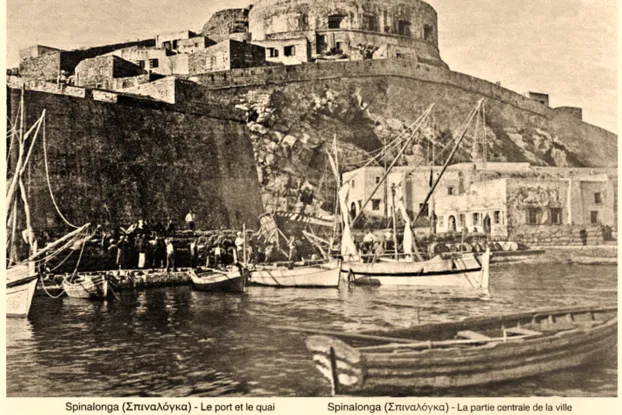
Seкиr Aga’s presence dominated the fort of Spinalonga. He wore a dark turquoise caftan, a pointed triangular beard and a white fez.
His gaze was somewhat eagle-like. Christians and Muslims respected him equally.
His possessions extended far beyond the fort. Fields and lands in Fourní, Sóchora, Ampélles, Míres and the plain of Megalo Kastro belonged to him.
On the shore opposite Spinalonga stood his summer konak with cellars, stables and guest rooms. The konak was spacious and built on two floors.
On the ground floor was a large hall with a vaulted ceiling. In the middle hung an ornate chandelier from Marseille.
A patterned pebble courtyard with a cistern, kitchen and toilets was sheltered inside the house. Upstairs was the large Onṭa with a wide wooden balcony.
From there, he could see the sea and his nearby summer konak in Tsifliki. In the morning, he heard the roosters and the deep snorting of his horses.
This coexistence gave him comfort and a connection to the coast. The interior reflected his position.
In one corner stood a massive chestnut wood desk. Above it hung a large portrait of the Sultan.
Next to it, a painting depicted scenes from Topkapi Palace. A huge fireplace with elaborate ironwork warmed the room.
He loved the tranquillity of the sea lapping against the Venetian walls. He often listened to the sound of the waves, which distracted him from his administrative duties.Despite his power, he wanted to act justly. His possessions were roughly divided into three areas:
- Coastal property: the summer konak at Tsifliki with wine cellars, guest rooms, hammam and loggias.
- Country estates: fields in Fourní, Ampélles, Míres and around Megalo Kastro.
- Properties in the fort: the two-storey konak in Musulúkia, near the large Friday mosque, which had been ceded by the state.
His daily routine remained clear and consistent.In the morning, he inspected the stables and listened to the animals. During the day, he received visitors in the front hall of his konak.In the evenings, he would retire to the Onṭa, read and look at the pictures on the walls. Personal items and rooms revealed a lot about him:
Item / Location | Meaning |
|---|---|
White fez | Symbol of his position and dignity |
Chestnut wood desk | Place of administration and decision-making |
Chandelier from Marseille | Sign of prosperity and taste |
Balcony with sea view | Place of retreat and connection to the coast |
Hammam and cellar | Comfort and everyday life of the summer konak |
He combined local traditions with elements from afar. Furniture and decorations revealed connections to foreign countries.
Some pieces came from Marseille, others were reminiscent of life in the capital. His neighbourhood in the fort was characterised by the sea, stones and religion.
The konak was located below the large mosque, behind the undulating concrete walls. The location offered protection, but also visibility.
Visitors saw his house as an integral part of the fort. He enjoyed certain rituals.Meals followed fixed routines. Guests sat according to rank, and conversations often revolved around land, trade and law.
Music and celebrations took place in his summer konak, especially on holidays such as Christmas, which also appear in local reports. Practical details about life at the fort:
- Access: The konak was easily accessible from the beach opposite.
- Storage: Underground cellars kept supplies and wine cool.
- Guest accommodation: Guest rooms and stables allowed for longer stays.
- Hygiene: Hamam and courtyard cistern provided for daily washing rituals.
His lifestyle combined power with everyday familiarity. He took care of administrative tasks, but also sought out simple pleasures – the sea, animals, the tranquillity of the balcony.
Architectural features of his konak:
- Two-storey building with courtyard layout.
- Large vaulted hall on the ground floor.
- Wooden balcony with sea view.
- Courtyard with cistern and functional areas (kitchen, WC).
- Decorative elements such as fireplace surround and chandeliers.
The place was more than just a residence. It served as the centre of his administration and social life.
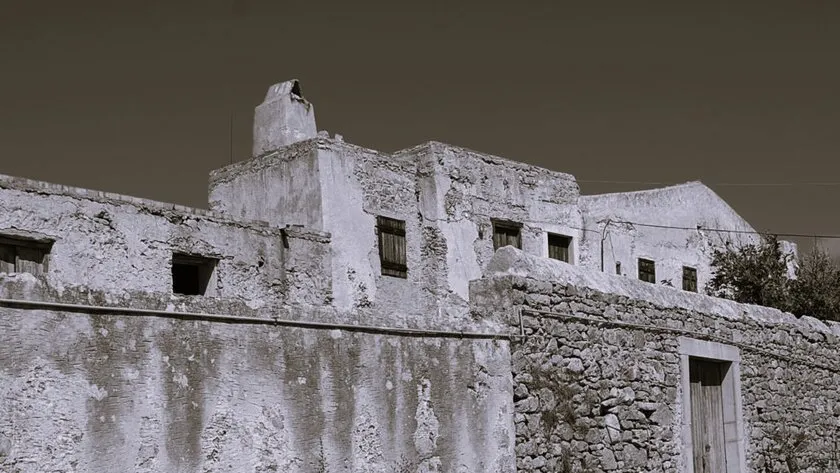
The historic Ottoman administrative building in Tsifliki (between Elounda and Plaka) is now a listed building.
There he made decisions, received envoys and held celebrations. His konak was a residence, official seat and public space all at once.
He shaped the local structure and relationships. His authority was based on his possessions, his demeanour and the recognition he received from various population groups.
Both Muslim and Christian communities sought his advice and showed him respect. His behaviour in the fort remained prudent.
He chose visible but not ostentatious signs of power. The representative elements were intended to show dignity, not dazzle.
Daily sounds defined life: the breaking of the waves, the crowing of roosters, the clatter of horses’ hooves. These sounds connected the konak with nature and the rhythm of the coast.
His connection to distant places was evident in art and furniture. Pictures from the capital and the chandelier from Marseille were reminders of networks beyond the island.
These connections gave his house an international flair without losing its local identity. His konak remained a prominent address in the fort.
Visitors remembered the large hall, the balcony and the sea. The mixture of practical rooms and representative elements made the house habitable and respectable.
Symbols of his position:
- Portrait of the Sultan: political loyalty.
- Topkapi pictures: cultural affinity.
- Rich furnishings: economic power.
He showed that position and possessions belong together. His life in the konak was orderly, but also marked by simple, human moments.

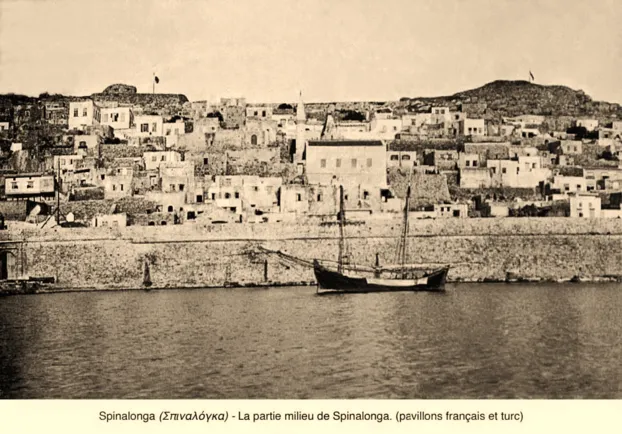
The mosque with its minaret in Spinalonga (1901)
He often sat alone inside the fortress. Outside, the world kept moving.
The winter air carried the smell of tar, hemp and dried fruit from the harbour. Fishing boats and small sailboats lay close together.
Men spoke quietly about trade, politics and the coming holidays. Visitors came in groups.
Farmers, blacksmiths and merchants carried gifts, food and offerings. A whole slaughtered pig hung neatly prepared, and sausages were smoked next to it.
Large loaves of bread were ready. Honey, raisins and two large bottles of wine found their place on the pack horses.
Everything was intended for the high-ranking official. And, of course, for the festival itself.
One special gift attracted everyone’s attention: a small icon depicting the birth of Christ. It came from a monastery and was intended to build a religious bridge.
The Christian villagers and the Muslim overseer usually kept their distance from each other. The image was artistically crafted, with fine colours and gold leaf.
It was said to have been created by a well-known Cretan painter. The gesture showed respect, gratitude and the desire for peace during the holidays.
The journey to the fortress was short. Nevertheless, the boat rocked considerably.
Two young men steered the oars with practised strokes. On deck, there was a smell of tar, oil and salt.
Some men sang old songs quietly. Others watched the fortress walls as if waiting for a sign.
Inside the fortress, there was a calm order. The high official welcomed the guests with polite friendliness.
He listened to their requests. He spoke clearly and concisely, without making any grand promises.
The villagers appreciated this honesty. Some hoped for help, others for mercy.
He gave his advice. But he made no easy promises.
The atmosphere was festive, but also serious. For the Christians in the village, Christmas meant family celebrations, candles and church services.
The celebration remained foreign to him. Nevertheless, he respected the rituals.
The community used the occasion to build connections. Gifts were exchanged, hands were shaken, and short words of blessing were exchanged.
The fortress offered protection, but also loneliness. Some nights he counted the stars and thought about political news.
Rumours of diplomatic negotiations and foreign troops were circulating. People sensed that the situation could change.
This uncertainty cast a shadow over the holiday cheer. Nevertheless, everyday life continued.
Men worked on ropes and nets. Women carried supplies in baskets.
Children, when they were nearby, watched the foreign visitors with curiosity. Conversations revolved around the harvest, trade, the weather and the sea.
The community sought normality in simple things. The gifts were shared.
Some remained with the official. Some went to those in need.
There was a silent agreement: holidays and helping others belonged together. This practice created a sense of duty and consideration.
Visual impressions remained: the shiny surface of the icon, rustic baskets full of nuts and dried fruit, smoke from fireplaces. Soundscapes mingled – the scraping of shoes, the creaking of wooden beams, occasional songs and the steady sound of water from the harbour.
These impressions connected people and place in a brief but intense moment. Political issues remained present.
The lords at sea and foreign forces in the harbours were topics of conversation. For many, it was unclear how the role of the region would change.
Some were concerned. Others hoped for stability.
In times like these, people sought signs of stability. Rituals such as gift-giving offered just that.
The fortress was both a stage and a refuge. It was a meeting place for different walks of life: merchants, fishermen, civil servants and clergy.
Each brought their own language, customs and expectations. Encounters were often polite, sometimes tense, but mostly pragmatically friendly.
The exchange of small gifts and large quantities of food was more than a polite gesture. It demonstrated solidarity in uncertain times.
With these gifts, people signalled: we belong together. They built bridges that could not immediately heal political rifts, but they did ease social tensions.
In the evening, when the guests left, the man stayed awake for a while. The gifts lay in the hall, the icon stood in a safe place.
Outside, the lights of the boats glittered. Inside, you could feel the calm after the visit.
It was a moment for reflection. Perhaps also for planning.
He knew that his decisions had consequences. And that simple human gestures such as respect and gratitude could open doors.
Diplomacy in small things often seemed more important to him than grand words. So he sorted the food and looked at the picture, which now had a permanent place.
The relationship between the fortress and the village remained complex. Both sides were dependent on each other.
The villagers brought food and information. The fortress provided security and administration.
This dependence shaped daily interactions. They were neither purely hostile nor entirely friendly.
The boys learned from these encounters. They saw how to behave politely and how to fulfil their duties.
Respect and brotherhood were part of this. These lessons helped to shape social skills that were useful when uncertainty prevailed.
The elders reminded them of traditions and appropriate forms of behaviour. The certainty remained that times would change.
Nevertheless, people sought solace in what they could shape themselves: in celebrations, in sharing and in small acts of kindness. The man in the fortress played a special role in this.
He was a hub where private hopes and public duties met. The festive days passed with simple rituals: shared meals, short prayers, songs.
These rituals helped to soften the night. For some, it was the only time of year when they came together, laughed and forgot their worries.
For others, it was a duty to be fulfilled with respect. The next morning, daily business began again.
Men repaired nets and forged tools. Traders loaded barrels onto small boats.
The routine helped to create stability. At the same time, the signs of coming political change remained visible.
Talks about contracts, movements of foreign ships – the need to remain flexible was in the air. This phase showed how people react to change.
They preserved traditions, adapted them to new circumstances and used fixed rituals as an anchor. The small icon remained a symbol of this mixture of old and new.
It stood for hope and, at the same time, for the acceptance that the world could change. The man in the fortress took a pragmatic view of things.
He accepted the gifts, sorted them and planned the next distribution. He spoke politely to the visitors, but remained firm.
His attitude gave some people peace of mind. This calm became particularly valuable in times when external forces exerted their influence.
Thus, the scene remained a picture of everyday life in historical times. People acted, gave, received and oriented themselves according to fixed forms.
Small gestures and big decisions existed side by side. The fortress remained a place of power and provision – and a space where community became visible.
by KOSTIS E. MAVRIKAKI in CretaLive