Crete’s first eight ‘turtle-friendly’ beach hotels, Caretta-Caretta sea turtles on the beaches of Rethymno, the danger posed by sun loungers and feeding in the Venetian harbour of Chania.
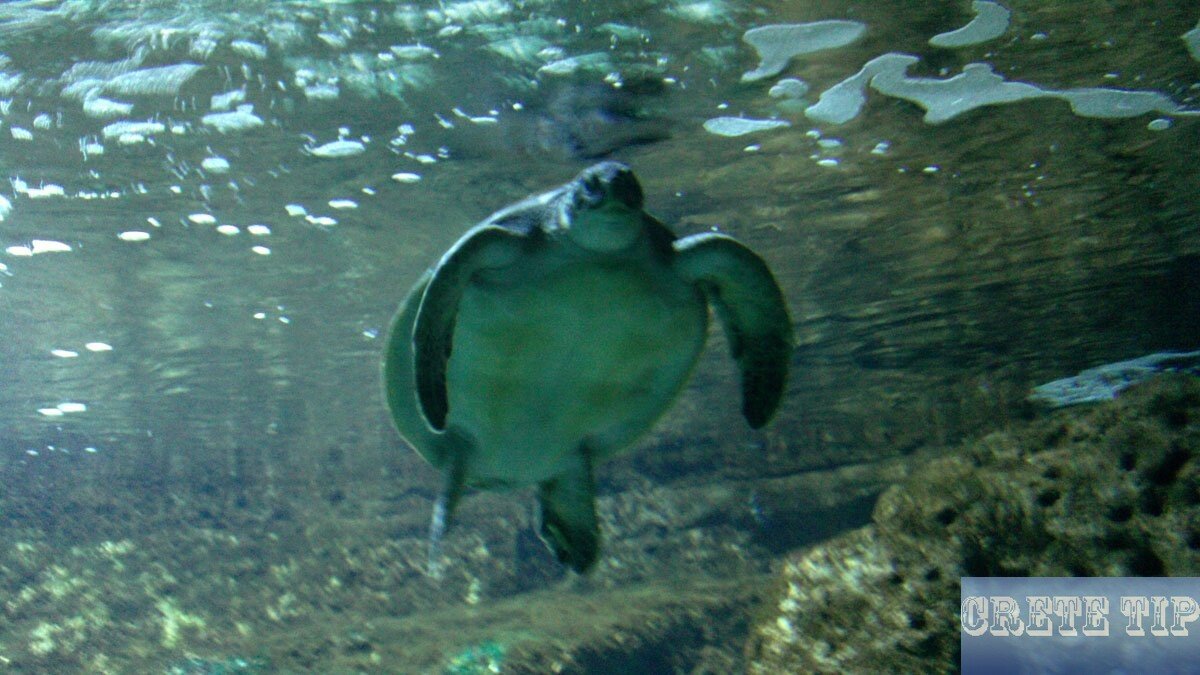
Swimming with Purpose: Crete’s First 8 “Turtle-Friendly Hotels” Champion Marine Conservation
After three years of dedicated conservation efforts, eight luxury hotels across Crete have earned a prestigious international certification for their commitment to protecting endangered sea turtles. The “Turtle-Friendly Hotel” certification marks a significant milestone in the collaboration between the environmental organization “Archelon” and the tourism industry to safeguard these remarkable creatures.
A Partnership for Change
The “TUI Turtle Aid Greece” program, which concluded in May 2026, represented a groundbreaking initiative funded by the TUI Care Foundation. Running from June 2023 to May 2026, the three-year project focused on protecting sea turtle nesting beaches along Crete and Rhodes, two of Greece’s most critical breeding grounds for the endangered Caretta caretta species.
This partnership has deep roots, tracing back to the mid-1990s when Dr. Wolf Michael Iwand, then head of TUI’s Environmental Department, first supported conservation efforts for sea turtles in Crete. The latest program extended these pioneering efforts with renewed vigor and expanded scope.

The Eight Certified Hotels
The following hotels have become the first to achieve the “Turtle-Friendly Hotel” certification in Crete:
- Aquila Rithymna Beach Hotel (Rethymno)
- Caldera Beach Hotel (Chania)
- Caldera Creta Paradise Resort (Chania)
- Euphoria Resort (Chania)
- Geraniotis Hotel & Resort (Platanias, Chania)
- Grecotel Caramel Resort (Rethymno)
- Grecotel Creta Palace Resort (Rethymno)
- Mike Hotels & Apartments (Chania)
These establishments have implemented practical conservation measures including removing beach equipment during nighttime hours and reducing artificial lighting—critical steps to protect nesting turtles and hatchlings.

Three Years of Impact
The scale of the program’s reach has been impressive. Over 66,557 tourists, visitors, and residents across northern Crete were educated about sea turtle conservation through various initiatives. Key activities included:
Educational Programs: A total of 423 “Sea Turtle Beach Walk” guided tours were conducted, allowing participants to witness the nesting cycle firsthand and understand the threats these creatures face. A seasonal information station operated at the old harbor of Chania, reaching thousands of visitors each summer.
Community Engagement: Four major awareness events were organized in collaboration with local authorities, targeting both tourists and tourism industry workers.
Scientific Research: In Rhodes, Archelon volunteers assessed and recorded 48 nests, including an exceptionally rare discovery of a Green Sea Turtle (Chelonia mydas) nest—a finding that led to new scientific publications.

A Remarkable Recovery Story
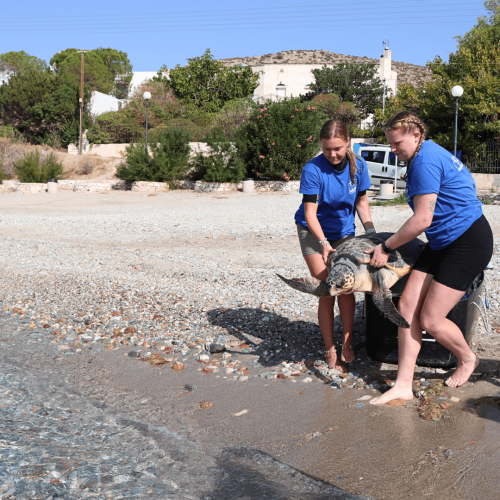
One of the program’s most heartwarming successes involves a sea turtle named “Triton.” Rescued and treated at Archelon’s Rescue Center, the turtle was released in November 2024 with a satellite tracker funded by the program. Within five months, Triton traveled over 2,800 kilometers, reaching the waters near Alexandria, Egypt—demonstrating the remarkable migratory capabilities of these ancient mariners.

Climate Change Poses New Challenges
While the program’s results are encouraging, Archelon emphasizes that climate change is creating complex new challenges for sea turtle survival. Nesting numbers had declined significantly over the past two decades—down 46% in Rethymno and 49% in Chania—though recent trends suggest the decline may be slowing.
During the three-year program, 1,728 nests were protected in northern Crete, but Archelon warns that more permanent and comprehensive protection measures are essential to ensure the long-term survival of these endangered species.
Looking Forward
The completion of the “TUI Turtle Aid Greece” program represents not an endpoint, but rather a foundation for continued conservation efforts. As tourism in Crete continues to grow, the example set by these eight “Turtle-Friendly Hotels” demonstrates that economic activity and environmental stewardship can coexist harmoniously.
For visitors to Crete, choosing to stay at certified hotels offers a meaningful way to contribute to sea turtle protection while enjoying a beach holiday. For the hotels themselves, the certification represents a commitment to sustainable tourism and corporate environmental responsibility.
With climate change intensifying pressures on nesting beaches, the collaboration between conservation organizations, tourism businesses, and local communities will be more crucial than ever in securing a future for Crete’s sea turtles.
Ancient Mariners Return: Caretta Caretta Sea Turtles Reclaim Rethymno’s Beaches for Historic Nesting Season
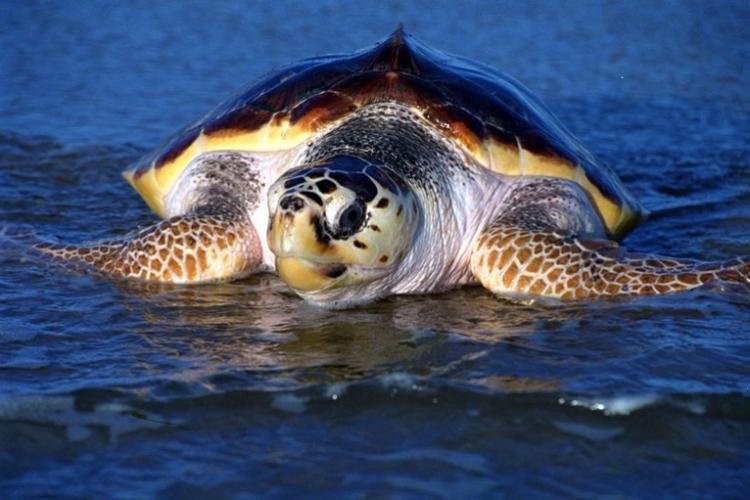
The beaches of Rethymno are witnessing a remarkable natural phenomenon as endangered Caretta caretta sea turtles return to nest in significant numbers. With 30 to 40 nests already documented in the early stages of this year’s breeding season, conservation experts are calling the results “particularly satisfying” and a sign that decades of dedicated protection efforts are finally paying off.
A Four-Decade Commitment to Conservation
The organization Archelon has been safeguarding sea turtles across Greece for nearly 40 years, implementing comprehensive research, monitoring, and environmental education programs in critical nesting areas. Crete has emerged as one of the organization’s most important operational centers, with three active programs currently protecting nesting sites in Chania, Rethymno, and the Messara Gulf.
In Rethymno specifically, a dedicated team of volunteers patrols approximately 12 kilometers of coastline daily—from the city of Rethymno to Scaleta—during the critical nesting months of May through October.
The Nesting Cycle: Nature’s Timeline
Understanding the sea turtle breeding cycle is essential to appreciating the conservation work underway. The nesting period begins in mid-May and extends through early August, when female turtles emerge from the sea under cover of darkness to deposit their eggs in the sand.
“Female turtles come ashore during the night to the beaches, selecting darker and quieter spots with suitable sand quality to construct their nests,” explains Danai Tsaparli, the program coordinator for Rethymno. “The nesting period lasts from mid-May through early August.”
Following the egg-laying phase comes the incubation period, which runs from late July through early October. During this approximately two-month window, the eggs develop within the sand, protected by the volunteers who monitor each nest continuously.
Early Season Success and Optimism
The 2026 nesting season opened with encouraging signs. The detection of 30 to 40 nests by early in the season represents a strong start, particularly given historical trends.
“This year we’ve begun our daily patrols as always,” Tsaparli noted. “To date, Rethymno has recorded 30 to 40 nests—a good number for the beginning of the season. Of course, we expect this number to increase significantly.”
These early figures are part of a broader positive trend. Since 2022-2023, researchers have documented an increasing trajectory in nesting numbers, reversing decades of decline that resulted from coastal development, urbanization, and overtourism.
Daily Vigilance and Hands-On Protection
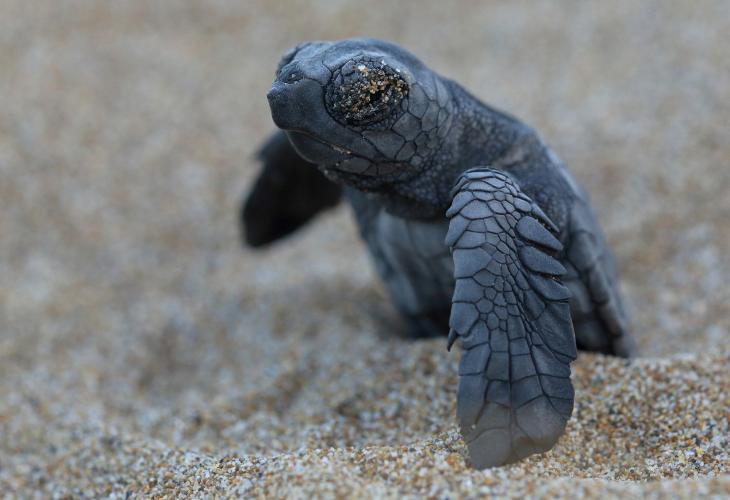
The work of Archelon’s volunteers extends far beyond simply counting nests. Daily patrols involve searching for turtle tracks in the sand, identifying nesting sites, and implementing protective measures to ensure hatchlings can safely reach the sea.
“Our work involves walking the beaches daily to find tracks and protect the nests, taking whatever measures are necessary to safeguard both the nests and guide the hatchlings safely to the sea,” explains Tsaparli.
Volunteers must remove obstacles, manage human activity near nests, and monitor for predators and other threats. This intensive, hands-on approach has proven essential to the program’s success.
The Critical Role of Community Involvement
While Archelon’s systematic monitoring covers a defined stretch of coastline, Crete’s extensive shoreline means that sporadic nesting occurs in areas beyond daily surveillance. This is where local residents and visitors become invaluable partners in conservation.
Authorities are actively encouraging the public to report any turtle tracks or nests discovered outside monitored areas—locations such as Episkopi and Georgioupoli have recorded nests in previous seasons.
“In Crete, due to the extended coastline, sporadic nesting occurs in various locations such as Episkopi and Georgioupoli. We don’t monitor these areas daily, so we urge people to notify Archelon if they discover a nest or find turtle tracks,” Tsaparli emphasized.
The organization provides guidance to citizens on temporary nest protection measures and operates a dedicated online reporting form on its website to collect valuable data about new nesting locations.
A Reversal of Alarming Decline
The current upward trend in nesting numbers represents a dramatic turnaround. For decades, Caretta caretta populations in Crete experienced severe declines, with numbers plummeting due to coastal construction, beach urbanization, and the pressures of mass tourism.
“From 2022-2023 through last year, we’ve observed an increasing trend in nests compared to previous decades, when nesting numbers had fallen significantly. This reversal is believed to be connected to Archelon’s long-term conservation work,” Tsaparli explained.
This recovery, though modest, offers hope that systematic, persistent conservation efforts can indeed reverse environmental damage and restore populations of endangered species.
One of the Mediterranean’s Most Important Species
The Caretta caretta sea turtle represents one of the Mediterranean Sea’s most significant and emblematic species. These ancient mariners have survived for millions of years, yet modern human activity has pushed them to the brink of extinction in many regions. Their recovery in Crete demonstrates that protection is possible when communities, organizations, and governments work together.
How You Can Help
If you’re visiting Rethymno this summer, several simple actions can support sea turtle conservation:
- Avoid walking on beaches during nighttime hours when turtles may be nesting
- Remove beach equipment and umbrellas in the evening
- Minimize artificial lighting near beaches
- Report any turtle tracks or nests to Archelon immediately
- Support tourism businesses certified as “Turtle-Friendly”
As the 2026 nesting season progresses through the summer months, the volunteers of Archelon will continue their daily patrols, protecting each nest and documenting the journey of the next generation of sea turtles. The beaches of Rethymno have become a symbol of hope for Mediterranean conservation—a place where ancient creatures continue their timeless cycle, protected by modern dedication to environmental stewardship.
Shocking Scene on a Cretan Beach: Sea Turtle Trapped Under Sun Loungers While Trying to Nest
A disturbing incident on a beach in Sitia, Crete, has highlighted the growing dangers that human activity poses to endangered sea turtles. A female Caretta caretta became trapped beneath a stack of sun loungers while attempting to lay her eggs—an essential and delicate process for the survival of the species.
The घटना occurred in the early morning hours, when sea turtles typically emerge from the water to nest under the cover of darkness. Instead of finding a safe, undisturbed stretch of sand, the turtle encountered obstacles left behind on the beach, ultimately becoming stuck beneath piled-up loungers.
Fortunately, the situation had a positive outcome. Volunteers from a local sea turtle protection group, along with staff from the nearby business, acted quickly to free the animal. Thanks to their coordinated efforts, the turtle was successfully released and returned to the sea.
While the rescue ended well, the incident serves as a stark reminder of how easily human infrastructure can interfere with wildlife. Even when beach equipment is handled responsibly, unexpected situations can still arise—especially during peak nesting season.
Human Impact on a Fragile Process
Sea turtles like the Caretta caretta rely on quiet, dark, and obstacle-free beaches to reproduce. The presence of sunbeds, umbrellas, artificial lighting, and nighttime disturbances can disorient or physically block turtles, preventing them from nesting successfully.
Conservation groups emphasize that such human-related hazards are among the leading causes of injury and death for sea turtles, both at sea and along coastlines. Each failed nesting attempt represents a lost opportunity for the continuation of an already threatened species.
A Call for Greater Awareness
This incident has renewed calls for increased awareness among beachgoers and businesses operating along nesting beaches. Simple actions—such as clearing equipment at night and maintaining open access to the shoreline—can make a crucial difference.
Local volunteers continue to play a vital role in monitoring nesting areas and responding to emergencies. Their work, often carried out quietly and without recognition, helps ensure that more turtles can safely complete their life cycle.
As tourism continues to thrive in Crete, balancing economic activity with environmental responsibility remains essential. Protecting nesting beaches is not only about preserving wildlife—it is about safeguarding the natural heritage that makes these destinations unique.
Giant Sea Turtle Steals the Show: Fisherman’s Feeding Moment Captivates Chania’s Venetian Harbor
A heartwarming and eye-catching scene unfolded in the iconic Venetian harbor of Chania, where a local fisherman was spotted feeding a massive sea turtle, drawing the attention of both locals and tourists.
The impressive marine creature, believed to be a Caretta caretta (loggerhead sea turtle), surfaced near the harbor as the fisherman offered it food. Onlookers quickly gathered, fascinated by the rare and intimate interaction between human and wildlife in such a busy and historic setting.
Videos and photos of the encounter began circulating online, with many viewers expressing amazement at the turtle’s size and calm demeanor. The moment added a touch of natural wonder to the picturesque harbor, already known for its scenic beauty and vibrant atmosphere.
A Unique Encounter in a Historic Setting
The Venetian harbor of Chania is one of Crete’s most visited landmarks, blending centuries-old architecture with modern-day life. While marine life is not uncommon in the area, such close encounters with large sea turtles are relatively rare, making this incident particularly memorable.
However, experts often caution that feeding wild animals—even with good intentions—can alter their natural behavior. Sea turtles may become dependent on human interaction or approach boats and harbors more frequently, increasing the risk of injury.

Balancing Wonder with Responsibility
While the scene delighted spectators, it also sparked discussion about responsible wildlife interaction. Conservation organizations emphasize that sea turtles are protected species, and maintaining a safe distance is crucial for their well-being.
Encounters like this highlight the unique biodiversity of Crete’s coastal waters, but they also serve as a reminder that human activity should not interfere with natural habits.
As the video continues to attract attention, it reinforces both the charm of Chania’s harbor and the importance of respecting the wildlife that inhabits it.
Rethemnosnews.gr – Sea turtles return to Rethymno with already recorded dozens of nests
Zoosos.gr – Sea turtle trapped under sun loungers while attempting to lay eggs in Sitia
ZarpaNews.gr – Fisherman feeds giant sea turtle in the Venetian harbor of Chania (video)