

Crete is one of those rare Mediterranean islands where you can still pitch a tent close to a genuinely good beach. You can eat at a taverna for under fifteen euros and wake up to nothing but birds and the sea.

This mix draws a steady stream of campers every year. Solo hikers on the E4 trail and families with campervans heading west towards Falassarna all find something here.
What a lot of visitors don’t realize until they arrive is that camping in Crete has its own legal quirks. While camping in Greece is popular, the rules for wild camping here are often misunderstood, especially by those used to northern European norms.
Knowing the difference before you go can spare you a fine, a rough night, or a tent pitched somewhere that annoys the locals.
This guide gets into the practical stuff: which official campsites are actually worth considering, what beach overnight rules mean on the ground, the best months to visit, and the small details that can really shape your trip.
What To Know Before You Camp In Crete
Crete rewards campers who show up with realistic expectations. The island’s official campsites are pretty modest compared to what you’ll find in northern Europe, but honestly, the scenery and the access to great beaches make up for it.
Conditions change a lot between the north coast, the south, and the mountain areas.
Who Camping On Crete Suits Best
Camping on Crete works best for people who are fine with basic facilities and care more about location than luxury. If you’re used to European sites with heated washrooms and perfect grass, you might need to adjust your expectations.
Independent travelers love the flexibility here. Hikers on the E4, couples with a camping caravan, and budget travelers who’d rather spend money on food and experiences than accommodation all do well.
Families can have a good time too, especially at places like Camping Elizabeth. Sites like Creta Camping offer reliable facilities for kids and easy beach access. These spots usually have better setups for children.
If you’re expecting the kind of infrastructure you’d find in France or Germany, you might be disappointed. Think gravel, hot sun, and sometimes patchy shade.
What Facilities To Expect
Most licensed campsites in Crete offer the basics: toilets, cold or sometimes warm showers, and usually a snack bar. Many also have a mini market for essentials.
Some sites have electricity hook-ups for €3 to €5 a night. A few, like Camping Elizabeth near Rethymno, even have a swimming pool. That’s a real treat during the afternoon heat.
Wi-Fi usually works near reception, but don’t expect a strong signal at every pitch. Electricity often gets cut late at night, so a portable power bank is a smart move.
Laundrettes, playgrounds, or full restaurants aren’t a given. Bring what you need, and treat anything extra as a bonus.
How Island Conditions Differ From Mainland Greece
Crete’s size and geography create all sorts of micro-climates. The north coast gets cooled and battered by the meltemi, a strong northwesterly wind that can shake your tent and cover everything in dust for days.
The south coast is sheltered from the wind but hotter and more remote. Getting there often means winding mountain roads, and you might not find many facilities nearby.
The interior, especially around the Lassithi Plateau, gets surprisingly cold at night, even in July. That catches people off guard.
Wild Camping And Beach Overnight Stays
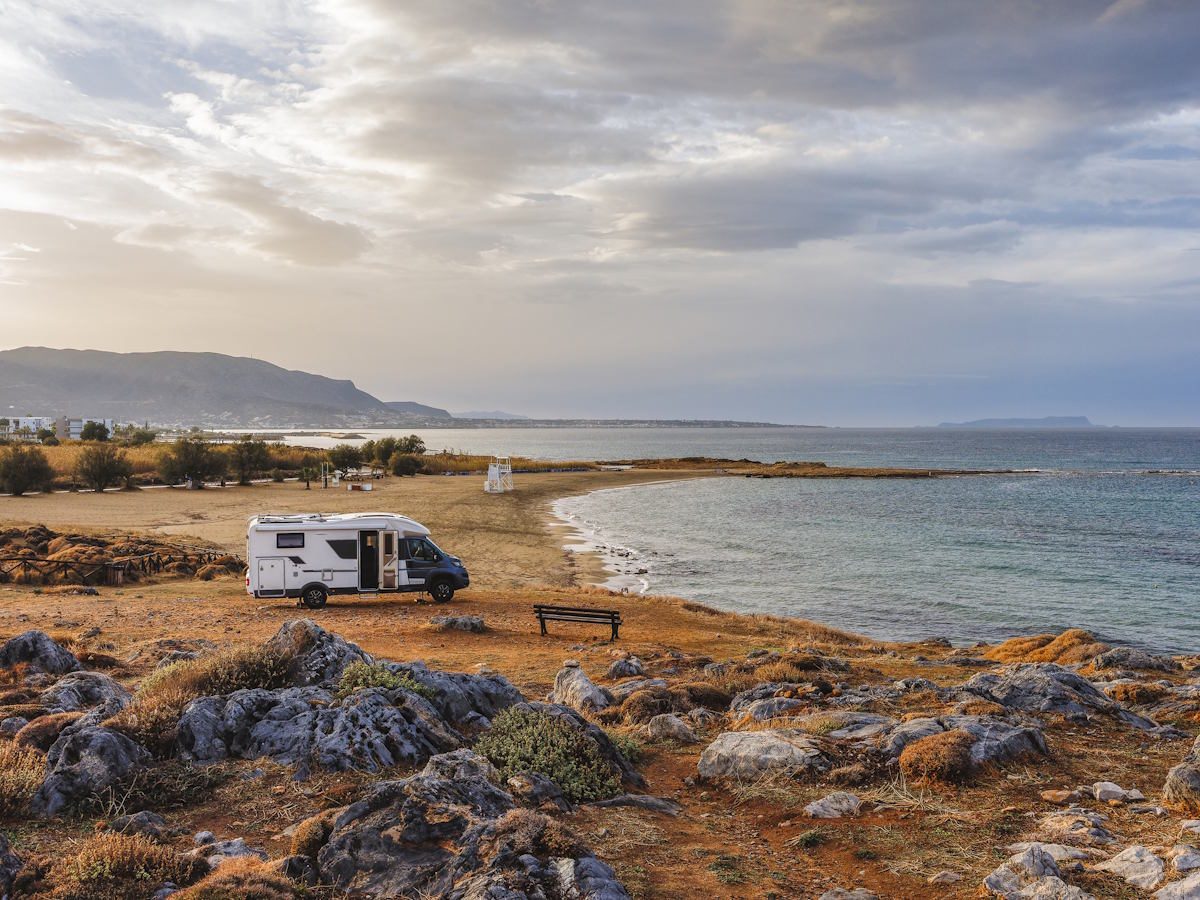
There used to be regular long-term campers here – today it’s extremely dangerous and you don’t see anyone staying for long anymore!
The legal situation for wild camping in Crete is clear, but reality is a bit messier. Understanding both sides keeps you out of trouble and helps you make better choices than whatever you read on a random forum.
What Greek Law Says In Practice
Wild camping is illegal in Greece under Law 1337/1983. This covers all of Greece, including Crete. Fines start at €300, and they’re higher in protected areas.
Enforcement, however, is inconsistent. Some remote places along the south coast, like Sougia and Agia Roumeli, have a sort of unofficial tolerance for hikers who pitch for a night, leave no trace, and keep things quiet.
Isolated spots on the Gramvousa peninsula in the far west and rocky inlets east of Ierapetra are similar.
But don’t get cocky—this isn’t a legal right. If a ranger, coast guard, or local official tells you to move, you move. No debate, no drama.
Where Enforcement Is Stricter
Some areas are patrolled regularly. Vai beach, way out east, has rangers all summer because of its protected palm forest. Balos lagoon is a Natura 2000 zone and gets coast guard patrols by boat.
Elafonisi is also patrolled during peak season, even though it feels wild when you get there. Samaria Gorge National Park bans camping, full stop. Archaeological sites and their buffer zones are also strictly off-limits, and that’s enforced.
If a beach is famous, busy, or on most tourist itineraries, just don’t plan to sleep there overnight.
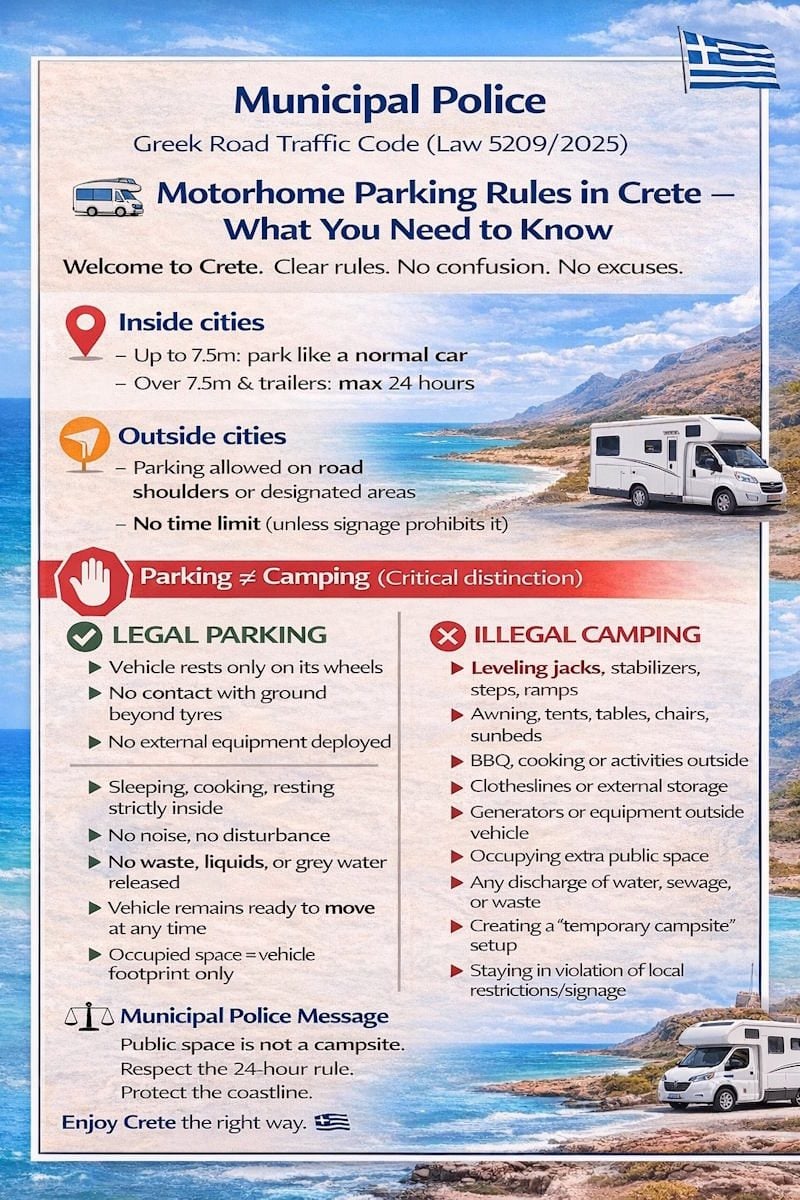
When Informal Tolerance Does Not Mean Permission
Just because you see other campers doesn’t mean it’s allowed. Maybe no one’s been caught yet, or maybe it’s just not busy enough to attract attention. This can change quickly, especially during peak season, after fires, or when local authorities tighten up.
Fire risk in Crete’s summer is no joke. Pitching near dry brush or olive groves is risky, and fire-related offences bring extra penalties.
Always check local fire alerts before heading to any unofficial spot, especially from July to September.
Best Time Of Year For A Tent Or Camper Trip
Timing really matters for camping in Crete. The difference between June and August isn’t just a few degrees—it’s comfort, cost, crowds, and whether you actually enjoy yourself.
Spring For Walking And Mild Nights
April and May are great for campers who want to hike or explore inland. Daytime temperatures hover between 18°C and 24°C, wildflowers are everywhere, and it’s not crowded yet.
Nights get chillier than you might think, so bring a sleeping bag rated for at least 10°C. Most official campsites open from late April, so you’re set for options.
You’ll often have your pick of pitches and get early-season prices. The sea is still cool in May, usually 19°C to 21°C, so swimming is brisk but doable.
Early Summer Before Peak Heat
June is probably the best compromise. Temperatures hit 26°C to 29°C during the day, the sea warms up to 23°C to 25°C, and campsites are much less busy than in August.
Some sites even offer shoulder-season rates. The meltemi wind gets stronger through June but usually stays manageable.
Bring sturdy tent pegs and a low tent if you’re camping on the exposed west or north coasts.
Autumn For Sea Temperatures And Fewer Crowds
September and October are some of the most comfortable months for camping here. The sea stays warm, often 24°C to 25°C in September, and daytime highs drop below 30°C.
Crowds thin out fast after early September. Many sites stay open until late October, so you’ll find better availability and often lower prices.
The light is softer, and the southern coast feels genuinely peaceful. If you missed spring or early summer, September is honestly a great time to go.
Where To Stay Around The Island
Crete’s big enough that picking a base actually matters. The island stretches almost 260 kilometers from west to east, and moving between regions takes longer than a map suggests, especially on those winding mountain roads.
Camping near the right part of the island for what you want to do saves you fuel, time, and probably your patience too.
North Coast Bases With Easier Access
The north coast road is the island’s main artery. It’s the easiest to navigate, especially if you’re driving a campervan or something bigger.
Sites near Rethymno and Malia are close to ferry ports and airports. You’ve also got a good mix of towns and beaches nearby.
Camping near Rethymno puts you a short drive from a lively town and a long sandy beach. You can head east toward Heraklion or west to Chania without much hassle.
Camping Chania sits close to the Venetian harbour and several coastal villages. It’s a handy spot if you want to explore the area without too much driving.
If you pick a campsite near Hania, you’ll find yourself close to the famous lighthouse and those old town markets. Travelers after a more traditional camping vibe might prefer Camping Apollon, which sits right near the sea.
Camping Mithimna, up in the northwest near Drapanias, offers a quieter atmosphere. If you want something that feels a bit more local, Mithimna is a solid choice.
For anyone arriving near the capital, Minoan Camp is convenient. Creta Camping, near Kato Gouves, is another north coast favorite.
Malia is all about direct beach access and tends to attract a younger crowd. These sites make it easy to get started if you’re coming off the ferry.
South Coast Options For Quieter Surroundings
The south coast feels completely different. Roads get narrower, villages shrink, and everything moves at a slower pace.
Many travelers head to ‘No-Problem’ Agia Galini for its laid-back vibe. It’s close to traditional fish tavernas and the Libyan Sea.
This area is also a jumping-off point for Triopetra beach, which is famous for those three big rocks. Camping Ierapetra on the south coast puts you in a good spot to explore the Libyan Sea coastline.
Camping Koutsounari sits a bit further east and gives you a sun-soaked beach with clear water. The long pebbly beach at Koutsounari is a real draw for anyone who likes to swim or just relax by the sea.
Further west, Camping Matala keeps you close to those iconic sandstone caves. You can swim below ancient Roman burial sites and soak up the area’s bohemian history.
If you’re after the rugged beauty of the Plakias region, Camping Apollonia is a name that comes up a lot. Accessing some southern beaches means walking or bouncing down rough tracks—it’s part of the fun, really.
Camping Paleochora puts you in a great spot for coastal adventures. You’ll also get a taste of southern hospitality in one of the island’s best-known villages.
Camping Grammeno, nearby, is another good option. It has direct access to the southwest’s pebble and sand shores, and it’s a favorite for watching sunsets over the Libyan Sea.
Plan ahead for supplies, water, and fuel. You don’t want to get caught short down here.
Good Areas For Exploring West, Central And East Crete
In western Crete, Camping Falassarna puts you near some iconic beaches. Camping Nopigia is a quieter alternative closer to Kissamos.
Nopigia gets a lot of praise for its cleanliness and solid facilities. Both campsites work well if you want to explore the Gramvousa peninsula.
They’re also strong bases for day trips into the White Mountains foothills and those peaceful far-west villages. Central Crete, between Heraklion and Rethymno, is great if you want to mix beach time with a few historical sites.
Creta Camping or Camping Koutsounari are a good base for the quieter coves of Mirabello Bay—that’s something CreteTip covers in depth if you’re looking to get off the beaten track.
Campsites To Compare
There are currently more then ten licensed campsites on Crete. Most open from late April to October.
Prices and quality can vary quite a bit, so it’s worth comparing before you book. If you’re traveling in July or August, the better sites fill up fast.
How To Judge Value Beyond The Pitch Price
The headline price per person per night doesn’t tell the whole story. A site might list €9 per person, but then add €5 for a vehicle, €4 for electricity, and €3 for a shower token—suddenly, a couple with a campervan is past €25 before food.
Check what the pitch fee actually covers. Is the shade from trees or just a tarp?
How are the toilets? Is there a pool?
Recent reviews are usually more helpful than promo photos.
Typical Price Ranges For People, Tents And Vehicles
Here’s a look at current pricing across the main licensed sites:
| Site | Location | From (per person/night) |
|---|---|---|
| Camping Elizabeth | Near Rethymno [Google Maps] | €10–14 |
| Minoan Camp | Near Heraklion [Google Maps] | €10–12 |
| Creta Camping | Kato Gouves [Google Maps] | €9–11 |
| Camping Nopigia | Kissamos Bay [Google Maps] | €9 |
| Camping Paleochora | Southwest Coast [Google Maps] | €8–10 |
| Camping Grammeno | Southwest Coast [Google Maps] | €9–12 |
| Camping Falassarna | West Crete [Google Maps] | €10 |
| Camping Mithimna | Northwest Coast [Google Maps] | €8–10 |
| Camping Koutsounari | Southeast Coast [Google Maps] | €8–10 |
| Camping Agia Galini | South Coast [Google Maps] | €9–11 |
| Camping Apollonia | South Coast [Google Maps] | €9–11 |
| Camping Matala | South Coast [Google Maps] | €10 |
| Camping Chania | Northwest Coast [Google Maps] | €11–13 |
Most sites charge €3 to €5 per night for electricity and €5 to €8 for a vehicle or campervan pitch. For two people with a vehicle at a mid-range site, plan on €25 to €35 per night all in.


What To Check Before Booking In High Season
July and August can be tricky if you don’t plan ahead. Camping Falassarna and Camping Elizabeth, for example, are worth booking at least two weeks in advance for peak season.
Ask if you need to pay in advance or just reserve. Make sure your pitch type (tent, caravan, campervan) is available and the price matches your travel dates.
Some sites switch to peak pricing in late June, so prices in May might not match what you see in August.
Practical Tips For A Comfortable And Respectful Stay

Getting the basics right on a Crete camping trip is all about preparation. The island is friendly, but summer conditions can be intense and shouldn’t be taken lightly.
Heat, Wind And Shade Planning
Shade isn’t guaranteed, even at official campsites. Try to arrive early so you can grab a spot under trees or a canopy.
Dark tents get hot fast. A light-colored tent with good mesh ventilation honestly makes a huge difference at midday.
The meltemi wind can make north and west-coast pitches pretty uncomfortable, especially in July and August. A low tent with strong, well-anchored pegs is a must if you’re anywhere near the coast or on a plateau.
The wind dries everything quickly—including you. Drink water regularly, not just when you feel thirsty.
Water, Toilets And Power Realities
Bring at least three litres of water per person per day. Wild spots just don’t have water, and even at official sites, the tap water sometimes isn’t safe to drink unless you treat it first.
Sealed bottles are cheap and easy to find locally. Don’t count on filling up from a tap unless you know it’s okay.
Campsite toilets and showers can be all over the place in terms of quality. Some sites keep things spotless, but others let them slide, especially when they’re crowded mid-season.
Flip-flops for shared showers? Honestly, that’s just basic self-preservation. Official sites often cut electricity after midnight, so charge your stuff in the evening, and keep a power bank on hand just in case.
Fire Safety, Rubbish And Local Etiquette
Open fires are banned across Crete in summer, and locals actually enforce this. Don’t risk it anywhere near dry scrub, olive trees, or on beaches and hillsides.
Stick with a proper camp stove, keep it stable, and don’t leave it unattended. Fires here aren’t just a nuisance—they’re dangerous and people notice.
Take all your rubbish with you if you’re wild camping. At official sites, use the bins provided.
Littering beaches or farmland just annoys locals and hurts the island. Keep the noise down after dark, especially in quieter areas—these villages aren’t party towns, and most people start their day early.
Frequently Asked Questions

Which campsites in Crete are best for pitching a tent near the beach?
Camping Falassarna in west Crete puts you within walking distance of one of the island’s best beaches. It’s a solid pick for tent campers.
Camping Malia, east of Heraklion, also has direct beach access and draws a younger crowd. Both places get busy in July and August, so it’s smart to book ahead.
Is wild camping allowed in Crete, and what are the rules to know?
Wild camping is illegal in Greece under Law 1337/1983, and that goes for all of Crete. Fines start at €300, and enforcement is stricter in protected areas.
Some remote south coast and western spots have an informal tolerance for low-key overnight stays, but don’t expect any legal backing if you run into trouble.
What does the ‘200-metre rule’ mean when camping near beaches in Crete?
Greek law says you can’t set up camp or temporary structures within certain distances of the shoreline or protected coastal zones. In practice, this means keep back from the waterline and avoid beaches marked under Natura 2000 or other protection schemes.
The exact distance varies by area, so if you’re not sure, just use a licensed campsite. It’s less hassle.
Are you allowed to sleep on the beach in Crete, and what can you be fined for?
Sleeping on the beach isn’t legal in Greece, and fines start at €300. Protected beaches like Vai, Balos, and Elafonisi get patrolled, and you’ll probably get caught if you try to sleep there.
Some quiet, remote beaches might see less attention, but honestly, there’s nowhere in Crete where overnight beach stays are legally okay.
Which areas in Crete are best to stay for easy access to the nicest beaches?
West Crete around Falassarna and Kissamos gives you some of the island’s cleanest and most beautiful beaches, without the crowds of the central north coast.
Rethymno has a good beach, a pleasant town, and it’s pretty central for exploring. Eastern Crete, especially around Mirabello Bay, has quieter coves and more traditional village vibes if you want a less crowded base.
Which parts of Crete are best avoided for first-time visitors looking for a relaxed base?
Malia on the north coast gets pretty wild in summer, and honestly, the whole vibe screams party central. The area feels a bit too commercial during peak season, so it might not be everyone’s cup of tea.
The far eastern tip around Sitia? Gorgeous, yes, but it’s remote. If you’re hoping for variety without endless drives, it’s just not practical as your first base.
If you ask me, planting yourself near Rethymno or somewhere in the west strikes a good balance. You get decent access, plenty of facilities, and a much more relaxed atmosphere.


