

Crete is one of those islands where planning ahead really pays off. It’s bigger than most people expect, the roads are slower than they look on a map, and a few smart decisions before you arrive can make your trip way more relaxed.

Getting your transport and base sorted early makes everything else easier, whether you’re chasing remote beaches or squeezing in a day trip without losing half the day in transit.
This guide helps you work through those decisions. It covers when to visit, where to stay, how long journeys actually take, and which transport options fit different kinds of trips.
Whether you’re visiting Crete for the first time or coming back to see what you missed, this resource gives honest, practical info. The focus is on logistics—less about the highlights, more about making your journey smooth.
Crete stretches over 8,000 square kilometres and runs about 260 kilometres from west to east. That size can surprise people.
Driving from Chania to the Lassithi Plateau, for example, takes well over two hours even on a good day. That’s not even counting mountain roads or a stop for lunch.
If you get a handle on Crete’s distances early, you can plan a trip that’s enjoyable instead of exhausting. This is especially true if you’re crossing the island’s mountainous interior.
When To Go And How Long To Stay

The timing and length of your trip shape almost every other decision. That includes how you’ll get around and which regions you can realistically see.
Crete’s seasons each have their own vibe, and not every time of year suits every traveller.
Best Seasons For Different Types Of Trip
Spring, from April to early June, is probably the best time for most visitors. Temperatures are warm but not scorching, wildflowers are everywhere, and popular spots like Knossos and Samaria Gorge aren’t packed.
July and August get really hot—think 35 to 40°C in places. Beaches fill up, prices climb, and it’s not the best for hiking or long drives inland. But if you love swimming and don’t mind crowds, summer works.
September and October hit a sweet spot: the sea stays warm, the crowds thin out, and the island feels more relaxed. Autumn is fantastic if you’re into walking or soaking up history and culture.
Winter is quiet. Some businesses close, especially in resort areas. Still, Heraklion, Chania, and Rethymno stay lively all year and make for solid off-season city breaks.
How Many Days You Need For Each Region
A week lets you dig into one main region and sneak in a couple of day trips. Two weeks means you can see two or three areas without rushing everywhere.
If you base yourself in the west near Chania, five or six days covers the city, Elafonissi or Balos Beach, and maybe part of Samaria Gorge. Heraklion and its surroundings need at least three days, especially if you want to see Knossos and the Archaeological Museum. Eastern Crete, with Agios Nikolaos and the Lassithi Plateau, is best enjoyed over three or four days.
What To Expect From Weather And Road Conditions
The north coast roads, including the E75 motorway, are generally in good shape and easy to drive. Mountain and south coast routes are a whole different story.
Roads narrow fast, surfaces get rough, and gradients can be steep. In spring, rain sometimes makes mountain roads slippery or even closes them at higher altitudes.
Summer road conditions are usually fine, but the heat and long drives can wear you out. Driving in Crete during peak season means you’ll need patience, especially if you’re heading into the White Mountains or down to the south coast on smaller roads.
Choosing Where To Base Yourself
Where you stay in Crete shapes how much you can see without wearing yourself out. The north coast has the most connections, but there are quieter options if you want a slower pace.
Picking the right base is honestly the best way to avoid spending too much time behind the wheel.
North Coast Towns For First-Time Visitors
The main towns on the north coast—Heraklion, Chania, Rethymnon, and Agios Nikolaos—are the obvious picks for first-timers. They’ve got good bus links, tons of places to stay, easy car hire, and airports nearby.
Rethymnon stands out for its charming old town and long sandy beach. Heraklion is the most central and works well if you’re focused on Knossos, the Archaeological Museum, or exploring the island’s centre.
Chania is the go-to if you want to base yourself in the west, and it’s arguably the prettiest of the bunch. Agios Nikolaos is perfect for eastern Crete, with quick access to Spinalonga Island, the Lassithi Plateau, and the quieter southeast coast.
South Coast Areas For A Quieter Stay
The south coast is way less developed than the north. Towns like Matala, Plakias, and Paleochora draw people looking for a slower pace, fewer crowds, and a more local feel.
Ierapetra, on the southeast, is Europe’s southernmost town and the main jumping-off point for Chrissi Island. It’s got its own distinct vibe.
The catch is that south coast bases mean more driving. Public transport is limited, so you’ll almost definitely need a hire car if you want to explore from here.
Combining West, Central And East Crete
If you’ve got two weeks or more, it’s worth splitting your stay between a couple of bases. Lots of people start in Heraklion for the history, then move to Chania for the west, or head east toward Agios Nikolaos for the last stretch.
Moving mid-trip adds a bit of hassle, but it saves you from endless return drives. Plus, you get a real feel for how different each region is.
Getting To The Island And Moving Between Regions

Most people fly to Crete, but ferries from the Greek mainland are a solid option too. How you arrive shapes your first transport choices on the island.
Knowing your options for getting around Crete from the start makes the transition smoother.
Flights And Ferry Arrivals
Crete has two main international airports. Heraklion Nikos Kazantzakis International Airport is the bigger one, handling most direct flights from the UK and Europe.
Chania Airport (CHQ) serves the west and is handy if you’re focusing on Chania or nearby. Ferries connect Crete to Piraeus (Athens), Santorini, and other Greek islands. The overnight ferry from Piraeus to Heraklion takes about nine hours and works well if you’re combining Crete with Athens or another island. Ferries also run to Souda Bay near Chania.
- Heraklion International Airport: Arrivals and Departures
- Chania International Airport “Daskalogiannis” (CHQ): Arrival Guide
- Best Airlines to Fly to Crete
- Ferries in Greece and to Crete
- By car to Crete
Transfer Options From Airports And Ports
Both airports sit close to their cities. Heraklion Airport is just a few kilometres from town and has good bus and taxi links.
Chania Airport is around 15 kilometres from the city with similar connections. You can pre-book private transfers from both airports—worth it if you arrive late, have kids, or are heading straight to a remote spot.
Hiring a car at the airport is easy and often the first thing people do after landing.
Realistic Travel Times Across Crete
The E75 motorway along the north coast is the fastest way to get around, but even that takes time. Heraklion to Chania is roughly 140 kilometres and takes about 90 minutes to two hours in normal traffic.
Heraklion to Agios Nikolaos is about 65 kilometres, but summer traffic can stretch it to an hour or more. If you’re heading inland or south, leave yourself plenty of wiggle room.
On a map, 40 kilometres might look quick, but on a winding mountain road, it can take over an hour. Planning for that from the start saves a lot of hassle later.
Driving, Car Hire And Local Roads

Renting a car really changes what you can do in Crete. With your own wheels, you can visit secluded spots at your own pace.
The island has way more to offer beyond the main resorts than most people realise. Driving lets you reach hidden corners you’d never see otherwise. Still, not every trip needs a car.
When Hiring A Car Makes The Most Sense
If you want to explore inland villages, hit south coast beaches, visit monasteries, hike into gorges, or spend time somewhere like the Lassithi Plateau, a car is just about essential. Same goes if you’re staying outside the main towns.
But if you’re sticking to one resort, taking organised tours, or planning day trips along main bus routes, you might not need a car. It really depends on how independent you want to be. For total freedom, renting a car is the way to go.
- Car Hire
- Car Rental Scams In Crete: What To Watch For
- The new road traffic regulations
- Directions and traffic in Crete
What To Know Before Booking A Rental
Book early, especially if you’re coming between June and September. High season means more competition for cars.
Local rental companies often have better rates than the big chains, and their service is usually just as good. Always check what your insurance actually covers before signing anything. Third-party insurance is standard, but extras like collision damage waivers vary.
Look at the fine print about gravel and tyre damage—some policies don’t cover these, even on normal roads. A standard car is fine for most north coast and main inland routes. If you’re planning to tackle rough tracks or remote areas, maybe get an SUV or something with higher clearance.
[the_ad id=”16990″]
Mountain Roads, Village Streets And Parking
Mountain roads in Crete are narrow, sometimes steep, and often shared with oncoming cars. Take it slow and soak up the scenery.
Locals know these roads well and drive with confidence, but there’s no need to keep up with them if you’re new to the area. Village streets weren’t built for cars, so parking in smaller places usually means leaving your car at the edge and walking in.
In busy summer spots, parking can be a headache. Arriving early or later in the day helps a lot.
Buses, Taxis And Other Transport Options
Visiting Crete without a car? It’s actually doable. The public transport network is better than most folks guess, especially if you stick to the north coast.
Using Intercity Buses For Major Routes
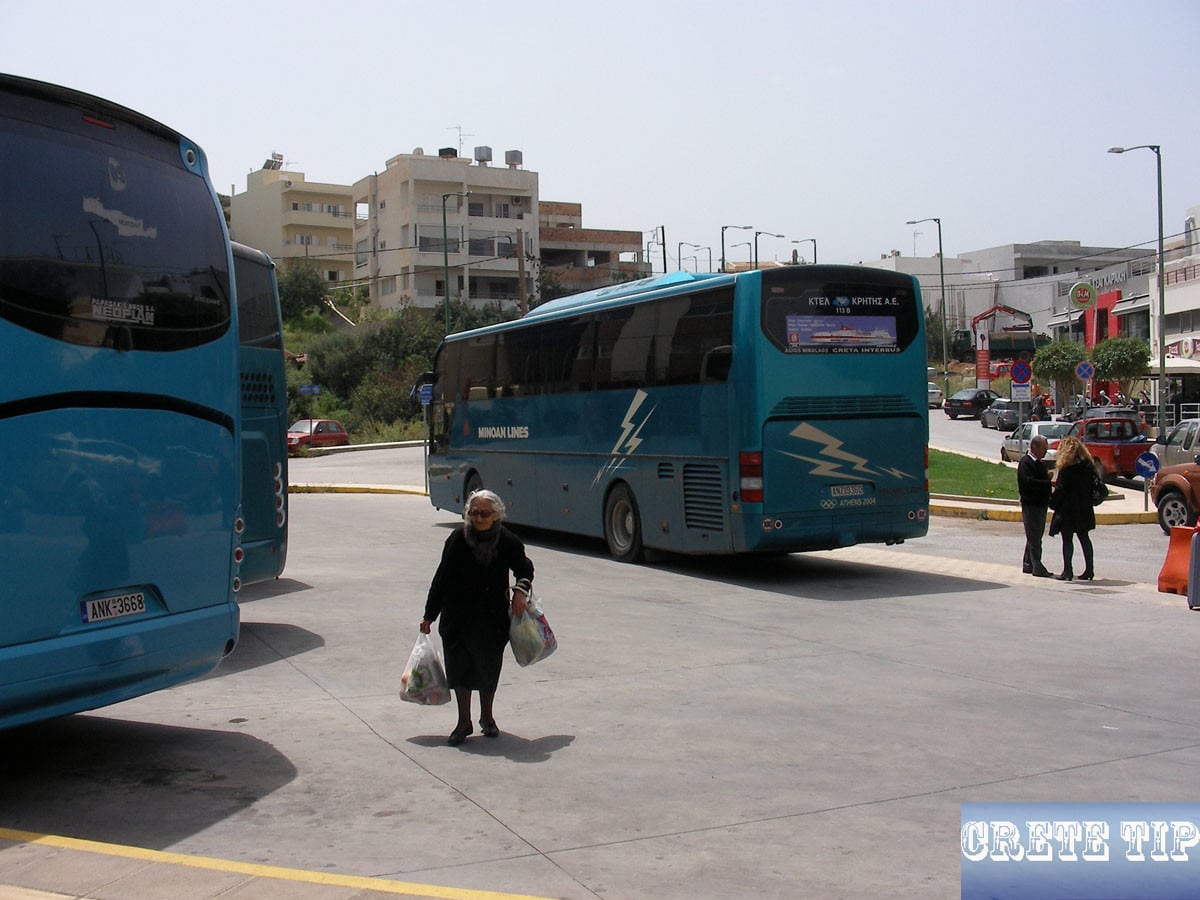
The KTEL bus network covers major towns like Heraklion, Rethymnon, Chania, and Agios Nikolaos. Buses run regularly all day and cost less than you’d expect.
They’re usually clean, air-conditioned, and pretty much on time on the main routes. Grab tickets at KTEL bus stations, sometimes on board, or online at e-ktel.com.
If you’re heading east or into central Crete, check ktelherlas.gr for up-to-date timetables. Every town has its own KTEL terminal, so it’s smart to check times before you travel.
Bus frequencies drop in the evening and on Sundays. For day trips between the bigger towns, buses are often the simplest way to go.
When Taxis Are Worth Considering
Taxis are metered and easy to find in bigger towns and at airports. They’re handy for short hops, though for longer trips, the cost jumps up fast.
For early or late flights, or places buses don’t reach, pre-booked taxis or private transfers make life easier. Always agree on the fare or check the meter before setting off—just to avoid any surprises.
Scooters, Private Transfers And Day Trips
Scooters are everywhere in resort areas and work well for quick coastal trips on flat roads. They’re not great for mountains or long distances, and honestly, gravel roads can be risky.
Check if your travel insurance covers scooters—many don’t. For tricky spots like Samaria Gorge, Spinalonga Island, or the Lassithi Plateau, organized day trips save you the hassle of driving after a long day.
Practical Tips For A Smoother Trip
Little habits and realistic expectations shape your experience more than you’d think. Crete’s not tricky, but it definitely has its own pace.
Planning Around Distances And Slow Routes
Don’t trust distances alone. Driving here is slower than you might guess.
A 50-kilometre mountain drive can easily take 90 minutes, sometimes more. Places like the Lassithi Plateau or Karfi take longer to reach than maps suggest.
Limit yourself to two or three destinations in a day. Trying to cram in more just turns your trip into a slog.
What To Pack For Beaches, Walks And Excursions
Sun protection is a must from May to September. Bring high-factor sunscreen, a hat, and sunglasses—even for short walks.
Dehydration sneaks up fast in the summer heat. For rocky beaches, water shoes are a game-changer. Inland or mountain walks? Go for closed shoes or light hiking boots—flip-flops just don’t cut it, no matter how short the walk looks. Extra water never hurts.
Local Etiquette, Costs And Everyday Essentials
Dress modestly for monasteries and churches. Cover shoulders and knees; most places lend wraps if you forget.
Some religious sites ask you to remove your shoes. Cash is still king in small villages, tavernas, and markets, though cards work in most bigger spots.
Don’t count on card payment everywhere. Tipping isn’t required, but rounding up the bill or leaving a little extra is common.
Petrol stations thin out away from the north coast. Fill up before heading inland or south, especially toward the White Mountains or the far southeast.
Frequently Asked Questions
What is the best way to get around Crete for first-time visitors?
Most visitors hire a car, and honestly, it makes sense. You get the freedom to reach beaches, villages, and sites that buses don’t cover.
If you want flexibility and don’t want to plan around bus timetables, book a hire car in advance. It’s by far the easiest way to start.
Is it practical to explore Crete without a car?
Yes, as long as you stick to main towns and north coast routes. The KTEL bus network links Heraklion, Rethymno, Chania, and Agios Nikolaos reliably.
The catch? Inland spots, remote beaches, and southern villages are tough to reach without a car, and taxis get expensive if you use them often.
How reliable are the buses in Crete, and how do you use the public transport system?
KTEL buses on the main routes are usually on time, clean, and run often in summer. Buy tickets at the station or, sometimes, on the bus.
Check timetables ahead—services drop off in the evening and on Sundays, and smaller routes might only go once or twice a day.
What’s the best area to stay in if you want to be well-connected for day trips?
Heraklion is the most central and gives you access to both east and west. Chania is better for exploring the west and is a smaller, walkable city.
If your focus is the east, Agios Nikolaos works well for the Lassithi Plateau, Spinalonga, and the quiet southeast coast.
How do you get to Crete from the USA, and which airports are most convenient?
No direct flights from the USA—sorry! You’ll connect through a European hub like Athens, London, Amsterdam, or Frankfurt, then fly to Heraklion or Chania.
Heraklion is the main international airport and best for central or eastern Crete. Chania Airport (CHQ) is perfect if you’re heading west.
What are the must-do sights and experiences for a first visit to Crete?
Knossos and the Heraklion Archaeological Museum are essential if you’re even a little curious about Minoan history. Honestly, you’ll get the most out of both if you visit them together.
Chania’s Venetian Old Town and the harbor easily fill an entire day. There’s just something about wandering those narrow streets and catching glimpses of the sea that never gets old.
If you’re into nature, Samaria Gorge delivers the most dramatic hike you’ll find on the island. Balos, Elafonissi, and Chrissi Island all show off some of the most jaw-dropping beach landscapes in the Mediterranean.
For a different vibe, resources like CreteTip dive into places like the Lassithi Plateau, the Diktaion Cave, and a handful of lesser-known inland villages. Exploring these spots adds a layer to your trip that most tourists miss—and honestly, isn’t that what you want?


